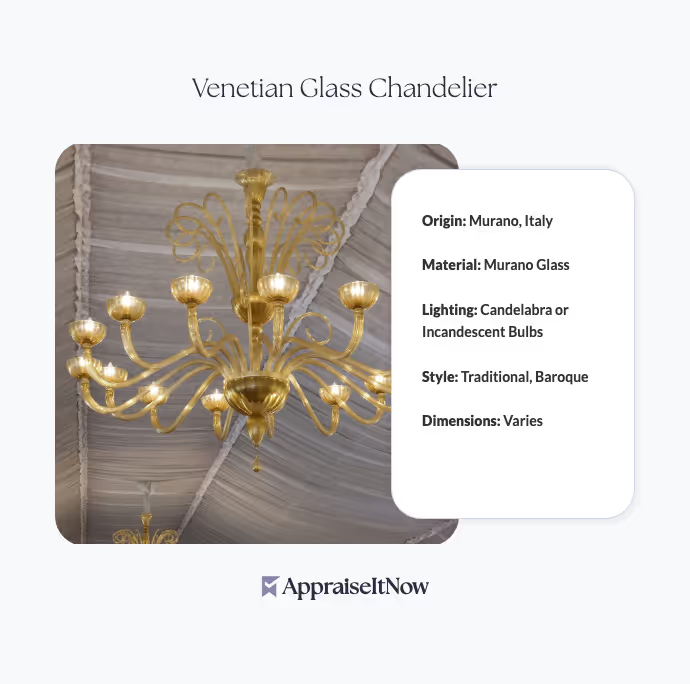










<h1>How to Get Your Venetian Glass Chandelier Appraised</h1>
<p>If you're considering selling, insuring, or simply curious about the true value of your Venetian glass chandelier, a professional appraisal provides the accurate, documented assessment you need. These handcrafted masterpieces—valued between <strong>$3,500 and $6,000</strong>—deserve expert evaluation to ensure you understand what you own and its true market worth.</p>
<h2>Why Your Venetian Glass Chandelier Deserves Professional Appraisal</h2>
<p>Venetian glass chandeliers represent some of the finest decorative arts ever produced, combining centuries of artistic tradition with exceptional craftsmanship. Each chandelier tells a story through its intricate glass elements, vibrant colors, and delicate construction. When you're dealing with an item of this caliber, professional appraisal becomes essential for several practical reasons.</p>
<p>Whether you're planning an estate sale, securing insurance coverage, or establishing value for legal purposes, the knowledge gap between casual estimation and professional valuation can be substantial. Your chandelier's true worth depends on factors that require trained eyes and market expertise to properly assess. A certified appraiser examines details that most owners never consider, translating those observations into documented, defensible valuations.</p>
<h2>Understanding What Makes Murano Chandeliers Valuable</h2>
<p>The question of whether Murano chandeliers are valuable receives an unequivocal yes from collectors and appraisers alike. Venetian glass chandeliers crafted in Murano—the celebrated glassmaking island near Venice, Italy—command respect in the <a href="/types/memorabilia-and-collectibles">fine art and collectibles market</a> for reasons rooted in history, technique, and rarity.</p>
<p>Murano glassmakers have perfected their craft since the 16th century, when artisans first introduced these chandelier designs that would become symbols of elegance and luxury. The creation of a single chandelier requires multiple skilled craftspeople working in harmony, each contributing specialized knowledge to produce those intricate glass elements in jewel-tone hues. This labor-intensive process, combined with limited production due to the scarcity of trained artisans, ensures that authentic pieces remain relatively rare on the market.</p>
<p>The distinction between Venetian glass and Murano glass often creates confusion. The two terms are related but not identical: Venetian glass refers to any glass made in Venice using traditional methods, while Murano glass specifically designates pieces created on the island of Murano itself, where the most prestigious artisans work. Your chandelier's origin—whether directly from Murano or another Venetian workshop—affects its appraisal value, with authentic Murano pieces typically commanding premium prices.</p>
<h2>Identifying Your Chandelier's Authenticity and Quality</h2>
<p>Before scheduling a professional appraisal, you might wonder about your own role in determining whether you possess a genuine piece. Identifying Murano glass chandeliers requires examining several specific markers that distinguish authentic creations from mass-produced imitations.</p>
<p><strong>Look for these authentication indicators</strong>: genuine Murano chandeliers typically feature a Murano label, though its absence doesn't necessarily indicate a piece is inauthentic—many antique examples predate modern labeling practices. What does a Murano label look like? Authentic labels appear etched, acid-stamped, or applied directly to the glass, usually on the chandelier's body or central shaft. Modern counterfeits often display obviously applied stickers that peel away or fade with time.</p>
<p>The question of whether Murano chandeliers are signed addresses another authentication concern. Historically, not all Murano pieces bear maker signatures—many respected workshops relied on recognizable stylistic elements rather than individual signatures. When signatures appear, they're typically etched into the glass or applied with specialized adhesion techniques rather than simply painted on.</p>
<p>Beyond labeling, examine the glass construction itself. Authentic handcrafted pieces display subtle variations in color intensity, tiny air bubbles trapped within individual glass elements (which actually indicate hand-blowing rather than molding), and slight irregularities in shape that prove human creation. If your chandelier exhibits perfectly uniform color and mechanically identical glass elements, it likely represents modern production rather than traditional Murano craftsmanship.</p>
<div class="callout tip"><p><strong>Authenticity Insight</strong></p>
<p>Real Murano chandeliers feel noticeably heavier than comparably-sized imitations due to the density of authentic handblown glass. Weight serves as one quick preliminary indicator before professional appraisal.</p></div>
<p>The question about whether TJ Maxx sells real Murano glass deserves mention: mass retailers occasionally stock items labeled as Murano glass that fall far short of authentic standards. Professional appraisers can immediately distinguish these commercial approximations from genuine pieces, which directly impacts valuation.</p>
<h2>What Makes Venetian Glass Special</h2>
<p>Understanding the distinctive characteristics of Venetian glasswork helps you appreciate why your chandelier commands such meaningful value. What is so special about Venetian glass? The answer lies in the convergence of artistic tradition, technical mastery, and cultural significance that distinguishes these pieces from all others.</p>
<p>Venetian glass artisans developed proprietary techniques over centuries—methods that remain closely guarded trade secrets within glassmaking families. The ability to achieve certain color saturation levels, create complex multi-layer glass effects, and maintain structural integrity while producing delicate decorative elements represents knowledge acquired through decades of dedicated practice. Your chandelier embodies this accumulated wisdom in physical form.</p>
<p>The warm, ambient glow that emanates from a Venetian glass chandelier distinguishes it from other lighting fixtures. This quality stems from how the handcrafted glass elements interact with light, diffusing and refracting illumination in ways that mechanically-produced glass cannot replicate. When evaluating chandeliers for <a href="/blog/understanding-artwork-appraisals">fine art and artwork appraisals</a>, appraisers consider not just visual aesthetics but also this functional lighting quality that contributes to the piece's appeal and value.</p>
<h2>Determining the Value of Your Murano Glass</h2>
<p>The question of how to determine the value of Murano glass encompasses several interconnected factors that professional appraisers systematically evaluate. Unlike standardized commodities with fixed pricing, each handcrafted chandelier commands its own valuation based on unique characteristics.</p>
<p><strong>Market-relevant factors your appraisal will address include</strong>: the age and production era (with 16th-century pieces commanding substantially higher premiums than 20th-century examples), the specific color palette and complexity of glass elements, the chandelier's condition and any restoration history, documented provenance linking the piece to notable collections or sellers, and regional variations in collector demand.</p>
<p>Your appraiser will compare your chandelier against recent comparable sales, examining auction results and private transactions to establish benchmarks within the <strong>$3,500 to $6,000</strong> range. Some pieces in excellent condition with significant provenance documentation may exceed this range, while examples requiring restoration or lacking clear origin documentation might appraise below it. The condition assessment proves particularly critical—any cracks, missing glass elements, or repairs substantially reduce value and require detailed documentation.</p>
<div class="callout note"><p><strong>Valuation Factor</strong></p>
<p>Chandeliers with documented exhibition history, celebrity ownership, or museum consideration often achieve valuations 30-50% above comparable pieces, justifying the appraisal investment for pieces with significant provenance.</p></div>
<h2>How to Tell If a Chandelier Is Worth Money</h2>
<p>Beyond Murano-specific considerations, certain universal indicators signal whether a chandelier merits professional appraisal. How to tell if a chandelier is worth money involves examining several practical characteristics that suggest investment-grade status.</p>
<p>First, assess the materials comprehensively. Your chandelier's weight, glass clarity, complexity of design, and use of precious metals (brass, bronze, or gilt components rather than plated materials) all indicate quality. Compare your piece against mass-produced alternatives available at home décor retailers—the difference in construction quality, material weight, and artistic detail immediately becomes apparent.</p>
<p>Second, evaluate the craftsmanship visible in execution. Handblown glass exhibits subtle variations and imperfections that distinguish it from mechanically-produced alternatives. The joints where different glass elements connect should display neat, careful assembly rather than rough or uneven transitions. Metal components should show quality finish without obvious casting defects or plating wear.</p>
<p>Third, consider documentation and provenance. Pieces with clear origin stories, exhibited at galleries or museums, featured in design publications, or connected to recognized Murano master artisans command premium valuations. Even without such provenance, a chandelier demonstrating obvious artistic quality and skillful execution likely warrants professional assessment.</p>
<h2>Preparing for Your Professional Appraisal</h2>
<p>When you engage <strong>AppraiseItNow</strong> or similar specialized appraisal services, preparation ensures you receive the most thorough and useful evaluation possible. Gather any documentation you possess—purchase receipts, previous appraisals, photographs from when you acquired the piece, or any written information about its origin or maker.</p>
<p>Document the chandelier's current condition through clear photographs showing overall appearance, individual glass elements, metal components, electrical fixtures (if any), and any visible marks, labels, or signatures. Our platform accepts secure photographic submissions along with detailed descriptions, allowing credentialed appraisers to conduct preliminary assessment before scheduling in-person evaluation if needed. Certified professionals from major organizations including <strong>AAA, ISA, ASA, CAGA, and AMEA</strong> review submissions to provide <a href="/blog/what-you-need-to-know-about-personal-property-appraisals">USPAP-compliant appraisals</a> suitable for insurance, legal, or sale purposes.</p>
<p>Measure your chandelier's dimensions and note the number of glass elements, predominant colors, and any distinctive stylistic features. Provide context about how long you've owned the piece, where it was acquired, whether it's been professionally cleaned or restored, and how it's currently displayed or stored. This information helps appraisers understand your chandelier's history and condition trajectory.</p>
<h2>Cleaning and Preservation Considerations</h2>
<p>Before submitting your chandelier for professional appraisal, you might wonder about cleaning. The safe approach to maintaining your piece involves using only soft cloths and avoiding harsh chemicals that could damage delicate glass or decorative finishes. When learning how to clean a Murano glass chandelier, remember that professional conservation specialists handle restoration rather than DIY approaches.</p>
<p>This preservation consideration actually supports the appraisal process. Appraisers specifically assess whether previous cleaning or restoration work has been properly executed or caused damage. Professionally-cleaned pieces in good condition often appraise higher than those showing signs of careless handling or inappropriate cleaning methods.</p>
<h2>Comparing Crystal and Glass Chandeliers</h2>
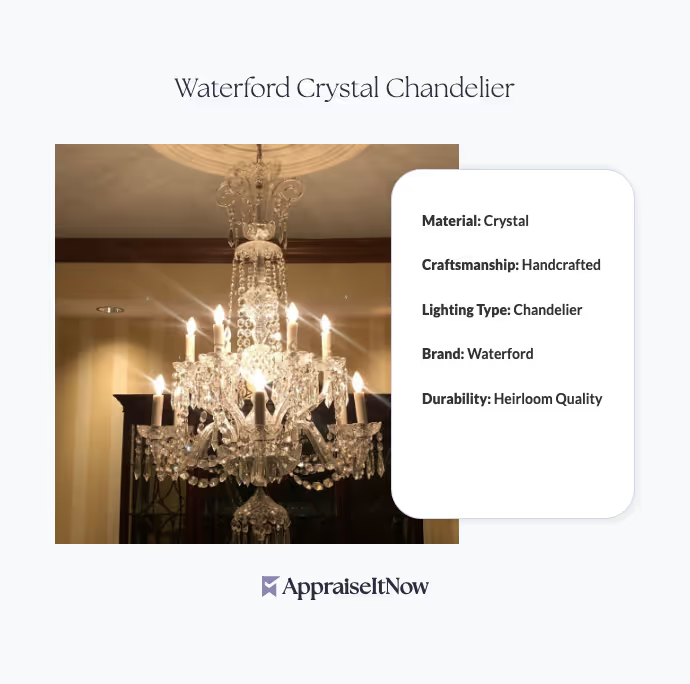
<p>When evaluating your chandelier, you might encounter questions about whether you own a glass or crystal piece. How do you tell if a chandelier is glass or crystal? The distinction matters for appraisal purposes, as genuine crystal typically commands higher values than standard glass.</p>
<p>Crystal contains lead oxide, which increases light refraction and creates the characteristic sparkle and weight associated with fine crystal chandeliers. Testing involves examining how light passes through the material and assessing the piece's weight compared to similarly-sized glass alternatives. Professional appraisers use established criteria to differentiate these materials, directly affecting valuation.</p>
<h2>Connecting to Broader Appraisal Resources</h2>
<p>Understanding your Venetian glass chandelier's context within the <a href="/blog/appraising-fine-glass-and-crystal-valuing-delicate-glassware-and-artistic-creations">fine arts and decorative objects</a> market helps you appreciate the expertise required for accurate appraisal. These specialized evaluations parallel assessments of <a href="/blog/how-to-get-an-accurate-antique-furniture-appraisal">antique furniture</a> and <a href="/blog/appraising-fine-art-a-comprehensive-guide-for-art-collectors-and-investors">fine artwork</a>, requiring trained eyes and market knowledge to properly establish value.</p>
<p>Your appraisal report becomes particularly valuable if you're conducting <a href="/blog/why-an-antiques-appraisal-is-essential-for-estate-planning">estate planning</a> or protecting your investment through insurance. A certified professional assessment provides the documentation that insurers require and that legal proceedings demand when establishing asset values for probate, divorce proceedings, or bankruptcy matters.</p>
<h2>The Most Valuable Murano Glass Pieces</h2>
<p>While your chandelier likely falls within the <strong>$3,500 to $6,000</strong> range, understanding what constitutes the most valuable Murano glass helps contextualize market dynamics. Exceptional pieces featuring rare colors (certain cobalt blues and deep purples command premiums), created by renowned master artisans, or possessing significant provenance, can exceed <strong>$10,000 to $15,000</strong> or more.</p>
<p>Historical importance drives premium valuation—chandeliers created during specific artistic movements or by celebrated designers attract serious collectors willing to pay substantially above base market rates. First edition designs, limited production pieces, and chandeliers featured in major exhibitions or publications occupy the highest value tier.</p>
<h2>Maximizing Your Appraisal's Value and Usability</h2>
<p>A professional appraisal serves multiple purposes beyond simple curiosity about value. Insurance companies require detailed appraisals before providing coverage exceeding standard homeowner's policy limits. Estate executors depend on certified valuations when distributing property or handling tax implications. Buyers and sellers benefit from independently-verified market assessments that prevent overpricing or accepting inadequate offers.</p>
<div class="callout note"><p><strong>Key Takeaway</strong></p>
<p>A professional appraisal of your Venetian glass chandelier provides accurate market valuation, comprehensive documentation, and expert authentication that protects your investment and ensures you understand the true worth of this handcrafted artistic creation. Whether you're planning to sell, insure, or preserve your piece, certified appraisers deliver the credible assessment that supports all these important decisions.</p></div>