









<h1>How to Get Your Phoenix Lamp Reverse Painted Appraised</h1>
<p>The Phoenix Lamp represents a remarkable intersection of artisanal craftsmanship and collectible value, commanding <strong>$4,500 to $6,500</strong> in today's market for quality examples. If you're considering buying, selling, or insuring one of these iconic pieces, understanding what drives their valuation helps you navigate the appraisal process with confidence.</p>
<h2>What Makes a Phoenix Lamp Reverse Painted Valuable</h2>
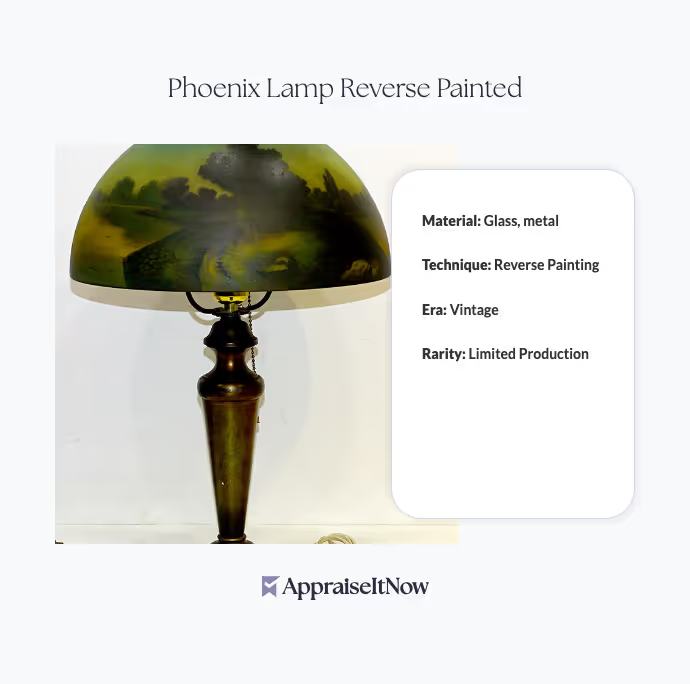
<p>Your Phoenix Lamp's worth stems from a unique combination of historical rarity, technical artistry, and cultural significance. First introduced in the 1930s, these handcrafted lamps represent the pinnacle of a labor-intensive technique where artisans apply detailed paintings to the interior surface of glass, creating a mesmerizing play of light and color when illuminated. The reverse painting method requires extraordinary skill and precision—each brushstroke must be executed backwards to achieve the desired depth and visual clarity when viewed from the exterior.</p>
<p>Only approximately 500 Phoenix Lamps were produced worldwide, making authentic examples increasingly scarce in today's market. The phoenix motif itself carries symbolic weight, representing renewal and rebirth, which resonates strongly with collectors of fine art and <a href="/types/antiques">antiques</a>. When evaluating <a href="/blog/appraising-fine-glass-and-crystal-valuing-delicate-glassware-and-artistic-creations">fine glass and crystal pieces</a>, appraisers recognize that this combination of rarity, symbolism, and technical mastery directly influences valuation.</p>
<div class="callout tip"><p><strong>Collector's Insight</strong></p>
<p>Examples with exceptional color vibrancy and intricate detail work often command premiums of 15-25% above standard market pricing, particularly when the reverse painting shows minimal fading or damage.</p></div>
<h2>Key Features Affecting Your Phoenix Lamp's Appraisal Value</h2>
<p>Several specific characteristics determine where your lamp falls within the $4,500–$6,500 range. The condition of the reverse painting is paramount—any cracking, peeling, or color loss significantly reduces value. Appraisers examine the glass base for chips or cracks, assess the lamp's electrical components (important for determining whether it's safe to display or illuminate), and verify that the original shade remains intact and securely attached.</p>
<p>The artist's signature or maker's marks, when present, can substantially enhance value. Some Phoenix Lamps carry hallmarks identifying the artisan or production workshop, adding provenance documentation that collectors prize. The quality of the painted imagery—particularly the detail work on the phoenix figure itself—distinguishes higher-valued examples from more modest pieces. Lamps featuring particularly vibrant colors, fine feather detailing, and well-executed backgrounds typically appreciate faster than simpler designs.</p>
<table class='appraisal-table'>
<thead>
<tr>
<th>Feature</th>
<th>Impact on Value</th>
<th>Details</th>
</tr>
</thead>
<tbody>
<tr>
<td>Paint condition</td>
<td>+30-40%</td>
<td>Vibrant colors, no fading or cracking</td>
</tr>
<tr>
<td>Artist signature</td>
<td>+15-25%</td>
<td>Documented maker adds provenance</td>
</tr>
<tr>
<td>Glass integrity</td>
<td>+20%</td>
<td>No chips, cracks, or cloudiness</td>
</tr>
<tr>
<td>Original shade</td>
<td>+10-15%</td>
<td>Matching period-appropriate shade enhances appeal</td>
</tr>
<tr>
<td>Electrical safety</td>
<td>Baseline</td>
<td>Essential for marketability</td>
</tr>
</tbody>
</table>
<h2>How to Identify Authentic Reverse Painted Lamps</h2>
<p>Before investing in an appraisal, understanding how to identify genuine reverse painted lamps helps you assess authenticity. Authentic examples from the 1930s display specific construction characteristics: hand-blown glass bases, visible variations in thickness where the artisan applied paint by brush to the interior surface, and period-appropriate electrical components. Modern reproductions sometimes attempt to replicate this technique, but they typically lack the subtle imperfections and patina that distinguish genuine vintage pieces.</p>
<p>The reverse painting itself tells the story of its authenticity. Real hand-painted work shows natural variations in color saturation, occasional evidence of artist corrections, and brushwork that catches light differently depending on viewing angle. When examining potential purchases or inherited pieces, look for these markers of genuine craftsmanship rather than mass-produced mechanical printing. Understanding how to distinguish vintage lamps from contemporary reproductions is essential when determining whether an appraisal investment is warranted.</p>
<div class="callout note"><p><strong>Authentication Tip</strong></p>
<p>Compare your lamp against museum collection photos or documented examples in collector guides. The Museum of Glass and similar institutions often maintain reference collections that clarify construction methods and dating.</p></div>
<h2>Dating Your Phoenix Lamp: Age and Collectibility</h2>
<p>How old does a lamp need to be to qualify as vintage? Most collectors and appraisers consider items from the 1930s-1950s era as vintage, making your Phoenix Lamp's original 1930s introduction date particularly significant. The production period—essentially a single decade of limited manufacturing—means that age alone isn't the determining factor; what matters is the specific production window and whether your lamp represents an early, middle, or late-period example.</p>
<p>Lamps from the earliest production years (1930-1933) often command higher prices due to their historical significance and the likelihood they display earlier artistic styles. Mid-period examples (1934-1937) represent the most commonly available versions, while late-production pieces (1938-1939) sometimes show different construction techniques as manufacturing processes evolved. Determining your lamp's production era requires careful examination of construction details, maker's marks, and comparison with documented examples.</p>
<h2>Understanding the Role of Condition in Your Lamp's Value</h2>
<p>Condition fundamentally determines your Phoenix Lamp's position within the valuation range. An excellent example—one with pristine reverse painting, no glass damage, working electrical components, and the original shade—typically appraises at the upper end of the $4,500–$6,500 range. Very good condition lamps with minor paint fading or light wear generally fall in the $3,500–$5,000 range, while pieces requiring restoration may appraise at $2,000–$3,500 or below.</p>
<p>The impact of condition on <a href="/blog/the-impact-of-condition-on-artwork-appraisals">artwork appraisals</a> applies equally to decorative glass pieces like your Phoenix Lamp. Small factors compound: a lamp with fading paint but intact glass will appraise higher than one with additional glass damage. Conversely, a lamp with perfect paint but a crack in the base loses significant value despite the intact decorative element. Professional appraisers evaluate these factors holistically, examining both the artistic merit and physical integrity that determine fair market value.</p>
<div class="callout tip"><p><strong>Preservation Priority</strong></p>
<p>Avoid attempting amateur restoration of reverse painted surfaces. Any intervention—even well-intentioned cleaning—risks damaging the delicate paint layer and irreparably reducing value. Professional conservation specialists should handle any restoration work.</p></div>
<h2>Why Professional Appraisals Matter for Collectible Lamps</h2>
<p>Determining lamp value yourself presents challenges that professional appraisers routinely navigate. Is there an app to scan antiques for value? While various smartphone applications attempt to estimate collectible prices, they lack the nuanced expertise required for items like reverse painted lamps. Digital tools cannot evaluate paint condition through a photograph, verify authenticity against known examples, or account for regional market variations and recent comparable sales.</p>
<p>A certified appraiser brings specialized knowledge of the decorative arts market, access to recent sales data for comparable pieces, and the ability to produce USPAP-compliant documentation accepted by insurance companies, courts, and financial institutions. When you're buying or selling a Phoenix Lamp, professional appraisal establishes defensible market value. For insurance purposes, documented appraisals ensure replacement coverage reflects actual current value rather than arbitrary estimates.</p>
<p>When exploring your lamp's worth, consider how professional appraisals of <a href="/blog/how-to-accurately-determine-the-value-of-your-memorabilia-and-collectibles">memorabilia and collectibles</a> provide detailed comparative analysis. Appraisers examine factors you might not consider—regional demand variations, collector preferences in your specific market area, and emerging trends in decorative arts pricing—that significantly impact valuation accuracy.</p>
<h2>Factors That Continue to Drive Phoenix Lamp Values</h2>
<p>The market for reverse painted decorative lamps remains remarkably resilient, driven by several enduring factors. Collectors increasingly recognize decorative glass as a serious alternative investment, particularly pieces combining artistic significance with technical mastery. The Phoenix Lamp's symbolism—renewal and rebirth—resonates with contemporary collectors seeking meaningful decorative art. Additionally, the fixed and limited supply of authentic examples supports continued appreciation as new collectors enter the market while existing pieces remain in private collections or museums.</p>
<p>Understanding <a href="/blog/exploring-the-role-of-provenance-in-art-appraisals-assessing-historical-significance">how provenance influences art appraisals</a> helps explain Phoenix Lamp values. Well-documented examples with clear ownership history command premiums. If your lamp includes documentation of previous ownership, exhibition history, or publication in collector guides, include this information when seeking professional appraisal. These provenance details, combined with the lamp's physical condition and artistic quality, establish its specific value within the broader market range.</p>
<h2>Getting Your Phoenix Lamp Appraised</h2>
<p>Ready to obtain a professional valuation? AppraiseItNow connects you with credentialed appraisers specializing in decorative arts and <a href="/blog/appraising-fine-art-a-comprehensive-guide-for-art-collectors-and-investors">fine artwork appraisals</a>. Our network includes AAA, ISA, ASA, CAGA, and AMEA-certified experts experienced in evaluating reverse painted glass pieces and similar collectibles. The process is straightforward: submit high-quality photographs from multiple angles (including close-ups of the reverse painting detail and maker's marks if present), provide detailed condition notes, and include any provenance documentation you possess.</p>
<p>Professional appraisers typically examine lamps in person for comprehensive evaluation, but initial consultations often begin with photographic documentation and detailed descriptions. When providing information about your Phoenix Lamp, specify the exact condition of the reverse painting (any fading, cracking, or damage), note the electrical components' functionality and age, describe the shade condition, and mention any markings, signatures, or documentation associated with the piece.</p>
<div class="callout note"><p><strong>Key Takeaway</strong></p>
<p>Your Phoenix Lamp Reverse Painted appraisal provides essential documentation for buying, selling, insuring, or estate planning purposes. Professional certified appraisers deliver defensible valuations grounded in market data, condition assessment, and specialized knowledge of decorative arts that smartphone applications and casual estimates simply cannot match. Investing in proper appraisal protects your financial and legal interests while honoring the remarkable craftsmanship and historical significance of this 1930s collectible treasure.</p></div>