








Certified, USPAP-compliant business appraisals for tax, legal, and financial reporting purposes.


AppraiseItNow provides independent, USPAP-compliant business valuations for tax, legal, and transaction-driven purposes. Our reports are prepared by qualified valuation professionals and are designed to withstand scrutiny from auditors, the IRS, courts, lenders, and sophisticated counterparties.
We support owners, investors, fiduciaries, and advisors who require defensible conclusions of value across a wide range of operating and investment structures.
Our team performs valuations across a broad spectrum of private market situations, including:
Each assignment is tailored to the legal rights, restrictions, and economics associated with the specific ownership interest being valued.
While every engagement is unique, we are most frequently retained for:
We regularly collaborate with CPAs, attorneys, trustees, and financial advisors to ensure the valuation aligns with the governing regulatory or transactional framework.
Business valuation fees are scope-based and quoted as fixed amounts rather than hourly. Complexity is typically influenced by the size of the company, capital structure, availability of reliable financial information, and the rigor required for the intended use.
These reports are commonly used for internal planning, M&A discussions, financial diligence, and other non-IRS transaction contexts.
Starting at $4,000
These assignments typically involve heightened documentation standards and are prepared to meet expectations for charitable donations, IRA conversions, estate and gift tax reporting, divorce, or legal proceedings.
Starting at $5,000
Based on past engagements, many projects fall within the range of $7,500 to $12,000.
More complex matters — such as multi-entity analyses, preferred equity structures, significant adjustments to financial statements, or situations anticipating regulatory or court review — may exceed this range.
Final pricing is always confirmed before work begins.
Fees are primarily influenced by:
AppraiseItNow serves major businesses and commercial clients, including:
AppraiseItNow also serves individual consumers with projects large and small. These clients often include:
Given the USPAP-compliant nature of AppraiseItNow’s appraisal reports, we prepare our deliverables for major legal, tax, and financial reporting purposes for individual and commercial clients.
Popular uses of our appraisal reports include:
A business valuation is an independent analysis that determines the value of an ownership interest in a company. The conclusion reflects the rights and privileges associated with the interest, the company’s financial performance, market conditions, and the assumptions required by the intended use.
Valuations are commonly needed for tax reporting, estate planning, transactions, financial compliance, and dispute resolution.
A valuation is typically required when ownership is being transferred, reported to a taxing authority, or relied upon in a financial or legal decision.
Common situations include:
While requirements vary, most engagements require historical financial statements, tax returns, ownership information, governing agreements, and an understanding of operations and future expectations.
We provide a detailed document request at the start of each assignment so clients and advisors know exactly what will be needed.
For many tax-related matters, Fair Market Value is the applicable standard. It generally represents the price at which property would change hands between a hypothetical willing buyer and seller, with neither under compulsion and both having reasonable knowledge of the relevant facts.
A Discount for Lack of Control reflects the reduced influence associated with owning a minority interest in a company. Non-controlling owners typically cannot direct management decisions, set compensation, declare distributions, or determine exit timing.
Because of these limitations, minority interests are often worth less on a per-unit basis than controlling positions.
A Discount for Lack of Marketability recognizes that privately held ownership interests are not easily converted into cash. Unlike publicly traded securities, there may be transfer restrictions, limited buyers, and uncertain timing for liquidity.
This reduced marketability can materially impact value depending on the facts and circumstances.
Not automatically. The applicability and magnitude of any discount depend on the specific ownership rights, governing documents, and economic realities of the interest being valued.
A professional analysis is required to determine what, if any, adjustments are appropriate.
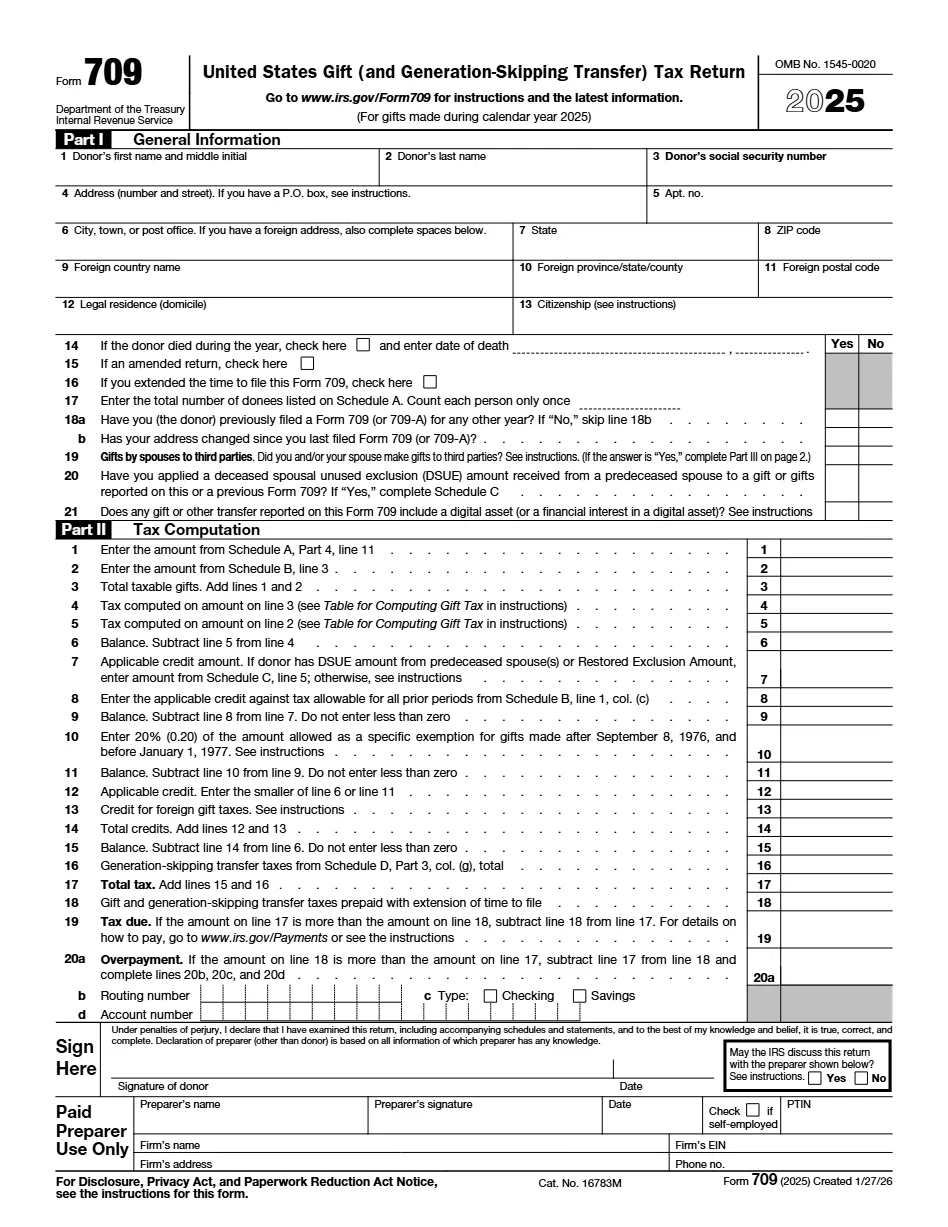
When ownership interests are transferred to family members, heirs, or trusts, a valuation is typically required to determine the reportable value of the gift for federal gift tax purposes.
The value conclusion becomes the foundation for calculating how much of the donor’s lifetime exemption is used, whether gift tax is owed, and how future appreciation will be treated inside the recipient’s estate structure. Even small differences in value can have significant long-term tax implications.
These assignments often involve minority or non-controlling interests, which means the appraiser must carefully analyze the specific rights transferred. Factors such as voting control, distribution authority, transfer restrictions, buy-sell provisions, and expected liquidity can materially influence value.
A properly prepared appraisal helps:
Because these valuations may be examined years after the transfer occurs, documentation quality, methodology, and professional independence are critical.
When a taxpayer donates a non-cash ownership interest in a business, the IRS generally requires a qualified appraisal to support the deduction claimed. The valuation must define the specific interest contributed, analyze the rights and restrictions attached to that interest, and explain how market participants would price it.
This documentation supports the amount reported on Form 8283 and helps establish that the deduction is reasonable if later reviewed. Because charitable deductions can attract scrutiny, taxpayers and their advisors typically rely on a formal appraisal prepared by an independent professional rather than informal estimates.
Retirement accounts that hold private company interests or other alternative assets usually lack a quoted market price. When an investor converts or distributes those assets, a defensible value is needed to determine the taxable amount and satisfy custodian reporting requirements.
The appraisal provides support for the fair market value at the effective date and helps advisors document the transaction in case of future review. Without an independent valuation, it can be difficult to demonstrate that the reported income or transfer amount was calculated appropriately.
Most engagements are completed within 2-3 weeks, depending on complexity, responsiveness, and the amount of analysis required. Matters involving multiple entities or heightened regulatory scrutiny may require additional time.
Yes! When required, assignments are prepared in accordance with the Uniform Standards of Professional Appraisal Practice (USPAP). Reports clearly describe the scope of work, assumptions, methodologies, and supporting data.
Our reports are commonly relied upon by:
Additionally, our reports are frequently used for IRS tax reporting and prepared with the utmost level of diligence for this purpose.
Contact us through our website, and we'll share next steps!