









<h1>How to Get Your Chippendale Mahogany Secretary Desk Appraised</h1>
<p>If you're considering selling a Chippendale mahogany secretary desk, evaluating one for purchase, or need documentation for insurance purposes, understanding the appraisal process is essential. These exquisite 18th-century pieces represent significant investments, with values typically ranging between <strong>$10,000 and $20,000</strong> for quality examples. Getting your secretary desk properly appraised ensures you have accurate market documentation and authenticated condition assessments.</p>
<h2>Understanding Chippendale Secretary Desk Value</h2>
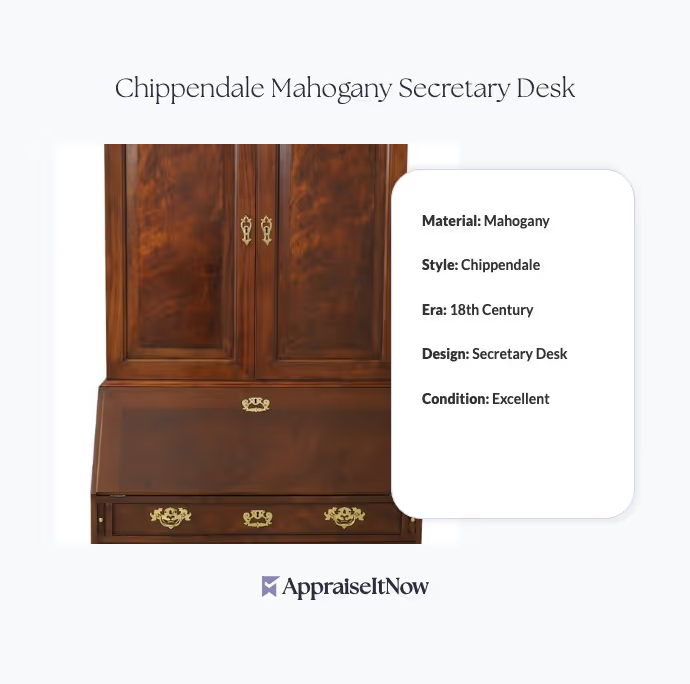
<p>The Chippendale mahogany secretary desk commands substantial collector interest because it represents the pinnacle of colonial-era craftsmanship. These desks were first introduced in the 1700s and became status symbols in the homes of American and British elite. Your secretary desk's value depends on multiple interconnected factors that professional appraisers assess systematically.</p>
<p>The iconic combination of solid mahogany construction paired with ornate Chippendale-style carvings creates both functional furniture and decorative artistry. The desk's practical design—featuring hidden compartments for storing important documents and correspondence—made it indispensable to merchants, lawyers, and wealthy merchants during its era. Today, collectors value these pieces not merely as furniture but as historical artifacts representing exceptional woodworking expertise. When evaluating <a href="/types/antique-furniture">antique furniture</a>, specialists examine how these elements combine to establish fair market value.</p>
<div class="callout tip"><p><strong>Valuation Insight</strong></p>
<p>Secretary desks with documented provenance—especially those linked to prominent historical figures or families—frequently command 30-50% premiums over similar unmarked examples.</p></div>
<h2>Key Factors Influencing Your Desk's Appraisal Value</h2>
<h3>Material and Construction Quality</h3>
<p>The mahogany used in authentic Chippendale secretary desks represents high-end woodworking material that adds substantial value to any piece. Is mahogany a high-end wood? Absolutely—eighteenth-century cabinet makers prized mahogany for its rich color, workability, and durability, making it the preferred wood for fine furniture. When an appraiser evaluates your secretary desk, they examine whether the mahogany is solid throughout or if veneers were used, as this distinction significantly impacts value.</p>
<p>The construction methods themselves tell stories about authenticity and age. Hand-cut dovetail joints, period-appropriate hardware, and evidence of hand-planed surfaces all indicate genuine 18th-century construction. Modern machinery leaves different marks than hand tools, and experienced appraisers can distinguish between authentic pieces and later reproductions through detailed examination. This expertise becomes crucial when you're asking "how to tell if a secretary desk is an antique?"—professional assessment answers this fundamental question with precision.</p>
<h3>Carvings and Decorative Elements</h3>
<p>Chippendale-style carvings distinguish secretary desks from simpler period furniture. The intricate details—ball-and-claw feet, carved shells, acanthus leaf motifs, and geometric patterns—required skilled artisans and represent hours of meticulous handwork. The depth, precision, and quality of these carvings directly correlate with value. Shallow or worn carvings reduce appraisal value, while crisp, well-preserved details command premium pricing.</p>
<p>The placement and execution of these decorative elements follow specific Chippendale design conventions. A knowledgeable appraiser recognizes authentic period design versus Victorian-era reproductions or later Chippendale-inspired pieces made in the 19th century. This distinction proves critical because reproductions, despite their own merit, appraise at substantially lower values than genuine colonial originals.</p>
<h3>Condition Assessment</h3>
<p>How do you tell if furniture is from the 1800s versus the 1700s? Part of the answer lies in wear patterns, wood patina, and repair history. Appraisers evaluate your secretary desk's condition across multiple dimensions—examining the structural integrity of joints, assessing wood color and finish authenticity, identifying any replacements or repairs, and documenting existing damage.</p>
<p>Original finish, even with age-appropriate patina and minor surface wear, typically commands higher values than refinished examples. Collectors often prefer seeing the original hand-rubbed finish and authentic color variations rather than modern polyurethane applications. However, structural repairs using period-appropriate methods and materials may have minimal impact on value, whereas modern interventions can reduce appraisal estimates.</p>
<h2>How to Tell a Real Chippendale from Reproductions</h2>
<p>Distinguishing authentic Chippendale furniture from later imitations represents one of the most important elements of appraisal. The Victorian era (1837-1901) saw significant reproduction of Chippendale designs, and many examples survive today. How to tell a real Chippendale? Several telltale differences emerge under professional examination.</p>
<p>Authentic 1700s secretary desks exhibit construction methods consistent with that era—hand-cut joinery, period-appropriate hardware, wood movement patterns, and specific tool marks. Hardware provides particular insight; 18th-century brass hardware features different casting characteristics than Victorian-era reproductions. The wood itself tells stories through growth ring patterns, color variations, and aging characteristics that differ significantly between genuine aged wood and artificially antiqued reproductions.</p>
<p>Professional appraisers use detailed visual examination, sometimes supplemented by technical analysis, to establish authenticity. This expertise proves invaluable whether you're evaluating a desk you've inherited or considering a significant purchase. Understanding these distinctions helps answer the broader question "how do I know if my old desk is valuable?"—authenticity forms the foundation of valuation.</p>
<div class="callout note"><p><strong>Authentication Tip</strong></p>
<p>Request your appraiser document their authentication methodology in the appraisal report, providing you with detailed reasoning supporting the age and authenticity determination.</p></div>
<h2>Historical Context and Rarity Considerations</h2>
<p>The time period when secretary desks were manufactured directly influences their collectibility and value. Secretary desks first appeared in the early 1700s and remained popular through the 19th century, but pieces made during the original Chippendale period (approximately 1750-1785) command the highest values. How old does a desk have to be to be an antique? According to the widely accepted "100-year rule," pieces must be at least 100 years old to qualify as antiques, though older examples naturally command stronger premiums.</p>
<p>Regional variations affect value significantly. Secretary desks made in major furniture centers like Philadelphia, Newport, or New York command different prices than those from secondary production areas. Documented makers—craftsmen whose work can be authenticated through signatures, stamps, or historical records—see values multiply substantially. A secretary desk bearing the mark of a known Philadelphia Chippendale maker might appraise at double or triple the value of a similar unmarked example.</p>
<div class="callout tip"><p><strong>Market Insight</strong></p>
<p>Secretary desks represent exemplary 18th-century craftsmanship, which is why collectors consider them valuable additions to serious <a href="/types/antique-furniture">antique furniture collections</a>.</p></div>
<h2>The Role of Professional Appraisers in Your Secretary Desk Evaluation</h2>
<p>When seeking professional appraisal services, you want specialists with demonstrated expertise in period furniture. The most valuable appraisers possess credentials from recognized organizations like the American Society of Appraisers (ASA), International Society of Appraisers (ISA), or American Association of Professional Appraisers (AAPA). These certifications indicate the appraiser has met rigorous education, experience, and ethical standards required for credible valuations.</p>
<p>A competent furniture appraiser examines your Chippendale mahogany secretary desk systematically, documenting condition through detailed photography, measuring dimensions, identifying wood species, assessing hardware authenticity, evaluating structural soundness, and researching comparable sales. The resulting USPAP-compliant appraisal report becomes your official documentation—useful for insurance coverage, estate settlement, donation deductions, or transaction negotiations.</p>
<p>AppraiseItNow connects you with <a href="/blog/what-expertise-is-necessary-when-appraising-antique-furniture">credentialed furniture specialists</a> across the United States who understand the nuanced factors determining secretary desk values. Our platform streamlines the process by allowing you to submit photographs and detailed descriptions securely online, receiving professional assessments from experts with specific antique furniture experience.</p>
<h2>Why Professional Appraisals Matter for Secretary Desks</h2>
<p>Obtaining a certified appraisal serves multiple practical purposes beyond satisfying curiosity about your desk's worth. Insurance companies require professional appraisals for <a href="/blog/how-to-get-an-accurate-antique-furniture-appraisal">fine furniture coverage</a>, particularly for items exceeding $5,000. This documentation protects your investment by establishing replacement cost should loss or damage occur.</p>
<p>For estate planning situations, a professional appraisal provides legally defensible valuation useful for will distribution, tax purposes, and family dispute resolution. When selling, potential buyers and auction houses expect appraisal documentation supporting asking prices. Conversely, if you're considering purchasing a secretary desk, an independent appraisal protects you from overpaying for reproductions or misrepresented condition.</p>
<p>The appraisal document itself becomes a permanent record of your desk's characteristics, condition, and market value at a specific point in time. This historical documentation proves valuable as your desk ages and eventually becomes estate property for future generations. Whether you're interested in learning <a href="/blog/the-basics-of-antique-furniture-appraisal">the basics of antique furniture appraisal</a> or require comprehensive evaluation for significant transaction purposes, professional appraisers deliver essential documentation and expertise.</p>
<h2>Investment and Collecting Considerations</h2>
<p>Chippendale mahogany secretary desks have demonstrated consistent value retention over decades, making them both functional furniture and investment-grade assets. The combination of historical significance, limited supply, and enduring aesthetic appeal supports steady collector demand. What makes Chippendale furniture so valuable extends beyond mere age—it represents the convergence of historical importance, artistic merit, and technical craftsmanship rarely found in modern furniture.</p>
<p>Understanding current market values helps you position your desk appropriately whether you're buying, selling, or simply maintaining accurate inventory of your collection. Market values fluctuate based on condition, provenance, and regional collector activity, which is why periodic reappraisals—typically every three to five years—ensure your insurance coverage and valuations remain current. This practice parallels how collectors maintain accurate records for <a href="/types/antiques">other valuable antiques</a>, ensuring comprehensive documentation of their holdings.</p>
<div class="callout note"><p><strong>Key Takeaway</strong></p>
<p>A professional appraisal of your Chippendale mahogany secretary desk provides authenticated valuation, detailed condition documentation, and official records essential for insurance, sale, estate planning, or collection management. Whether your desk appraises at the lower end ($10,000) or upper range ($20,000), certified expert evaluation ensures you understand both its historical significance and monetary value with confidence and accuracy.</p></div>