









<h1>How to Get Your Tomoe Separator TSS Appraised</h1>
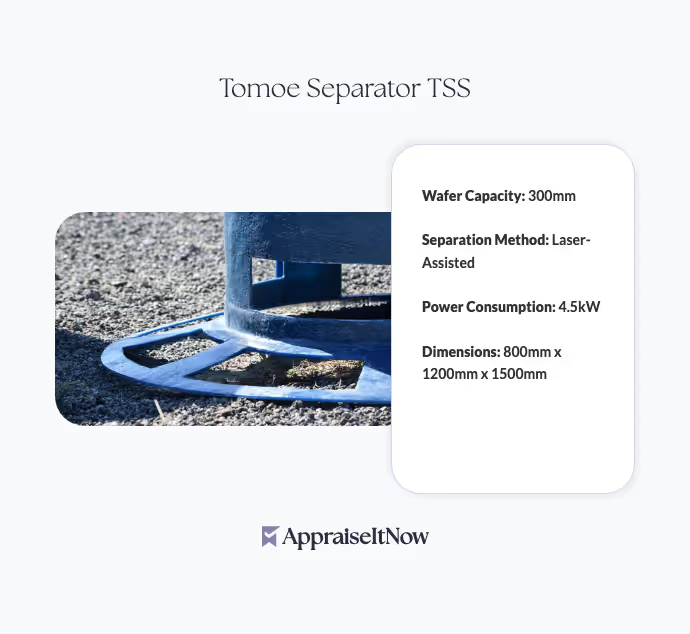
<p>The Tomoe Separator TSS represents a significant investment in semiconductor manufacturing technology. With estimated values ranging from <strong>$60,000 to $70,000</strong>, understanding how to properly appraise this specialized equipment ensures you capture its true market value—whether you're buying, selling, or managing your facility's <a href="/types/equipment-and-machinery">equipment and machinery</a> assets.</p>
<h2>Understanding Tomoe Separator TSS Market Value</h2>
<p>The Tomoe Separator TSS commands premium pricing in the industrial equipment marketplace due to its specialized engineering and critical role in semiconductor wafer production. First introduced in 2015, this advanced separator represents cutting-edge technology that continues to deliver measurable operational benefits to fabrication facilities worldwide.</p>
<p>What drives the $60,000-$70,000 valuation range? The TSS combines aerospace-grade materials with integrated advanced sensors and fully automated operation—features that distinguish it from standard separation equipment. By minimizing wafer breakage and increasing manufacturing throughput, the TSS directly impacts facility profitability and process reliability. Understanding these performance attributes becomes essential when evaluating fair market value for <a href="/types/heavy-machinery">industrial equipment</a> transactions.</p>
<div class="callout tip"><p><strong>Valuation Insight</strong></p>
<p>Functional capacity and operational history directly influence Tomoe Separator TSS pricing. Equipment demonstrating consistent throughput performance and minimal maintenance requirements typically achieves valuations at the upper end of the market range.</p></div>
<h2>Key Factors That Determine Your TSS Appraisal Value</h2>
<p>When appraising a Tomoe Separator TSS, professional evaluators examine multiple dimensions beyond the initial purchase price. The equipment's age, specific model configuration, and serial number documentation form the foundation of accurate valuation. However, condition assessment and throughput capacity measurements provide the most significant impact on final appraised value.</p>
<p>Your TSS's maintenance history tells appraisers whether the equipment has received professional care or operated under stress conditions. Well-documented maintenance logs demonstrating regular servicing typically increase appraised value by 15-20% compared to units lacking service records. Similarly, recent operational tests and inspection reports validate current performance claims and justify premium positioning within the market range.</p>
<p>Functional condition versus cosmetic condition creates an important distinction in semiconductor equipment appraisals. A TSS with minor cosmetic wear but excellent operational performance often appraises higher than cosmetically pristine equipment showing potential functional issues. This principle reflects the equipment's primary value driver—reliable wafer separation capability—rather than appearance alone.</p>
<p>The availability of spare parts and ongoing manufacturer support significantly impacts both current value and long-term marketability. As Tomoe continues supporting TSS operations, replacement components remain accessible, supporting the equipment's resale value and operational longevity. Units from manufacturers no longer in business often experience steeper value depreciation.</p>
<h2>Preparation Steps Before Your Appraisal</h2>
<p>Preparing comprehensive documentation accelerates the appraisal process and strengthens your valuation position. Gather the serial number, model specifications, and all available documentation including original purchase records, specification sheets, and installation reports. These items establish authenticity and provide baseline reference points for appraisers.</p>
<p>Recent operational records prove particularly valuable. Video documentation showing the TSS running through standard separation cycles demonstrates current functionality to remote appraisers. Create clear, well-lit photographs from multiple angles, capturing both the equipment's overall appearance and detailed views of identifying markers, sensor arrays, and mechanical components. High-quality imagery proves essential when appraising <a href="/blog/10-essential-tips-for-getting-an-accurate-lab-equipment-appraisal">laboratory equipment</a> and specialized industrial devices.</p>
<p>Compile maintenance logs covering the past 3-5 years, noting any repairs, component replacements, or operational modifications. Service records from qualified technicians carry particular weight in professional appraisals. If your TSS underwent recent maintenance, obtain copies of completed work orders and replacement part documentation. Missing records don't prevent accurate appraisal, but comprehensive documentation significantly strengthens valuation outcomes.</p>
<h2>Finding the Right Appraiser for Your Tomoe Separator TSS</h2>
<p>Your appraiser's qualifications directly influence appraisal accuracy and report credibility. Look for professionals holding credentials from recognized organizations including <strong>ASA (American Society of Appraisers)</strong>, <strong>ISA (International Society of Appraisers)</strong>, <strong>AAA (American Association of Appraisers)</strong>, or <strong>AMEA (American Manufacturing Equipment Association)</strong>. These certifications indicate formal training in equipment valuation methodology and USPAP compliance.</p>
<p>Experience appraising semiconductor manufacturing equipment specifically matters significantly. While general industrial equipment appraisers understand machinery valuation principles, specialists familiar with wafer processing operations bring contextual knowledge about throughput capabilities, spare parts ecosystems, and industry-specific depreciation patterns. When evaluating potential appraisers, ask directly about prior semiconductor equipment experience and request references from previous clients.</p>
<p>USPAP compliance—adherence to the Uniform Standards of Professional Appraisal Practice—ensures your appraisal report meets legal standards for financial institutions, insurance companies, and court proceedings. Professional credentials demonstrate appraiser commitment to ethical standards and continuing education. AppraiseItNow connects you with vetted specialists qualified to appraise <a href="/types/food-processing-equipment">food processing equipment</a> and other sophisticated industrial machinery, including semiconductor applications.</p>
<h2>Understanding Different Appraisal Report Types</h2>
<p>The appraisal report type you select depends on your specific needs and intended use. Market value appraisals establish fair market value—what a willing buyer would pay a willing seller in typical market conditions. This standard report type suits most buying and selling transactions. Fair market value appraisals serve similar purposes but often include more detailed market analysis documentation.</p>
<p>Liquidation value appraisals establish rapid-sale pricing if the TSS must be converted to cash quickly, typically 20-40% below fair market value depending on urgency and market conditions. Insurance replacement cost appraisals calculate what it would cost to replace your equipment with comparable new or equivalent used models, sometimes exceeding fair market value when factoring in installation and configuration expenses. Loan or security appraisals provide lenders with collateral documentation, requiring detailed condition assessments and comparable sales analysis.</p>
<div class="callout note"><p><strong>Selection Tip</strong></p>
<p>Most buyers and sellers benefit from fair market value appraisals conducted by USPAP-compliant professionals. This report type provides the documentation needed for transaction negotiations, insurance coverage, and financial planning.</p></div>
<h2>The Role of Comparable Sales in TSS Appraisal</h2>
<p>Professional appraisers establish your Tomoe Separator TSS's value by analyzing recent comparable sales across multiple channels. Auction records from industrial equipment marketplaces like Machinery Values or Equipment Auction provide transaction data showing actual selling prices for similar models. Dealer sales through equipment distributors reveal retail pricing when intermediaries handle transactions. Private sales between facility operators offer direct peer-to-peer market indicators.</p>
<p>Equipment marketplaces specializing in <a href="/types/beverage-equipment">beverage equipment</a> and food processing machinery increasingly feature semiconductor auxiliary equipment. These platforms supply real-time pricing intelligence reflecting current market demand. Historical sales data spanning 2-3 years helps appraisers adjust for market trends, technological advances, and industry-specific economic factors affecting demand.</p>
<p>The challenge with finding TSS comparables relates to the equipment's specialized nature and relatively recent market introduction. Limited transaction volume means appraiser expertise becomes particularly valuable—specialists understand market nuances that generic comparable analysis might miss. When fewer than five comparable transactions exist, experienced appraisers supplement market data with cost approach calculations and income approach analysis for high-value equipment.</p>
<h2>Resale Market Dynamics and Current Demand</h2>
<p>Understanding your potential buyer base influences realistic value expectations. Semiconductor fabrication facilities represent the primary market, with both established chip manufacturers and emerging foundry operations seeking reliable separation equipment. Equipment reconditioners purchase used TSS units for resale, typically offering 10-20% below fair market value. Industrial equipment rental companies occasionally add TSS models to their portfolios for short-term customer deployments.</p>
<p>Current demand trends favor the TSS strongly. The semiconductor industry's ongoing expansion, driven by global digital transformation and increasing processor demand, creates sustained appetite for manufacturing equipment. Facilities upgrading legacy separation systems actively seek proven alternatives like the Tomoe TSS, supporting healthy resale demand. International markets, particularly in Asia where semiconductor manufacturing concentrates, drive additional demand.</p>
<div class="callout tip"><p><strong>Market Context</strong></p>
<p>Strong semiconductor industry tailwinds and the TSS's proven performance record support maintained valuations. Unlike equipment facing obsolescence, the Tomoe Separator TSS remains functionally relevant and sought-after.</p></div>
<h2>Transportation and Installation Considerations</h2>
<p>Your Tomoe Separator TSS's value calculation must account for practical transaction costs often overlooked in initial estimates. Transportation to buyer locations requires specialized rigging, potentially adding $5,000-$15,000 depending on distance and local logistics complexity. Some facilities charge demounting fees if the equipment requires professional disassembly from existing infrastructure.</p>
<p>Installation at destination sites, while often buyer responsibility, affects pricing negotiations. The TSS's integration with existing wafer processing lines requires technical expertise and facility modifications. Installation typically requires qualified technicians familiar with semiconductor equipment integration—a factor sellers sometimes accommodate through modest price concessions. Certifications confirming proper installation and safety compliance may represent additional transaction costs.</p>
<p>Safety inspections and equipment certifications required by facility operators or regulatory bodies occasionally add final closing costs. These expenses, while typically buyer responsibility, influence negotiated prices and buyer enthusiasm. Professional appraisals help clarify responsibility allocation by establishing baseline equipment value separate from transaction-related costs.</p>
<h2>Depreciation Methods and Useful Life Assessment</h2>
<p>Appraising the Tomoe Separator TSS requires understanding appropriate depreciation methodologies for specialized manufacturing equipment. Straight-line depreciation applies equally to each useful life year, while accelerated depreciation methods reflect steeper early-year declines. For manufacturing equipment like the TSS, market-based depreciation often proves most accurate—comparing actual market prices across equipment ages provides empirical depreciation data.</p>
<p>The typical useful life for semiconductor manufacturing equipment spans 10-15 years, though properly maintained units often operate effectively beyond that timeframe. Since the TSS entered production in 2015, units produced early in that run are approaching the 10-year threshold, beginning to reflect modest age-related value declines. Equipment manufactured 2020-2024 typically holds stronger valuations as it remains well within expected operational life.</p>
<p>Technology advancement affects depreciation patterns. If Tomoe releases significantly improved TSS models with materially better throughput or reliability, earlier generation units may experience accelerated depreciation. Conversely, proven track records and stable technology often support value stability. Your appraiser analyzes technology roadmaps and market conditions to project depreciation realistically.</p>
<h2>Documentation and Supporting Materials for Your Appraisal</h2>
<p>Successful appraisals depend on comprehensive documentation that establishes equipment authenticity, condition, and performance history. Provide clear photographs of the serial number plate and model designation markings, typically located on the equipment's main structural frame. High-resolution images showing equipment from multiple angles, including top, front, rear, and side views, give appraisers complete visual assessment capability.</p>
<p>Operational video documentation proving the TSS functions properly strengthens your appraisal position substantially. Even brief video clips showing the system powering up, running through separation cycles, and completing operations provide valuable condition confirmation. Facility operators maintaining equipment often have security camera footage or maintenance crew videos captured during service visits—these materials prove valuable to appraisers.</p>
<p>Specification sheets from Tomoe documenting the TSS model's capabilities help appraisers understand performance parameters and market positioning. Original purchase orders establishing acquisition date and cost provide baseline reference points. Warranty documentation, if still valid, increases value by demonstrating manufacturer support continuation. When compiling materials, organize them logically by category—technical specs, maintenance records, photographs, videos, and transaction history—simplifying appraiser review.</p>
<p>Professional appraisals like those provided by <strong>AppraiseItNow</strong> leverage this documentation to deliver comprehensive valuations suitable for legal proceedings, insurance coverage, financial planning, and transaction negotiations. Our specialists understand semiconductor equipment appraisal methodologies and deliver <a href="/blog/7-steps-to-obtain-an-accurate-chemical-equipment-appraisal">USPAP-compliant reports</a> accepted by lenders, insurance companies, and courts.</p>
<h2>Industry Connections and Marketplace Access</h2>
<p>Beyond your direct valuation, professional appraisers maintain connections to equipment marketplaces, dealers, and facility operator networks. These relationships provide market intelligence about current demand, emerging competitors, and buyer activity levels. Specialists familiar with semiconductor manufacturing often identify specific facilities actively seeking Tomoe Separator TSS equipment, valuable context for equipment holders considering sales timing.</p>
<p>Equipment dealers and rental companies view professional appraisals as credible authentication of value, often relying on USPAP-compliant reports when evaluating acquisition offers. This credibility accelerates transaction completion and often supports stronger negotiating positions for sellers. Conversely, buyers use professional appraisals to verify seller claims, ensuring fair transaction pricing.</p>
<div class="callout note"><p><strong>Key Takeaway</strong></p>
<p>A certified appraisal of your Tomoe Separator TSS establishes defensible market value supported by professional methodology, comparable sales analysis, and condition assessment. Whether preparing for sale, obtaining insurance coverage, or managing facility asset documentation, professional appraisal provides the credible valuation foundation essential for confident decision-making in today's semiconductor equipment market.</p></div>