









<h1>How to Get Your Andritz Separator D-Series Appraised</h1>
<p>The Andritz Separator D-Series represents a significant industrial asset, with valuations typically ranging from <strong>$100,000 to $150,000</strong> depending on condition, age, and operational history. Whether you're planning to sell, seeking insurance coverage, or evaluating your manufacturing facility's equipment portfolio, obtaining a professional appraisal provides the certified documentation you need to make informed decisions. Understanding what goes into valuing these high-performance centrifuges helps you prepare for the appraisal process and maximize the accuracy of your asset assessment.</p>
<h2>Understanding the Andritz Separator D-Series Value</h2>
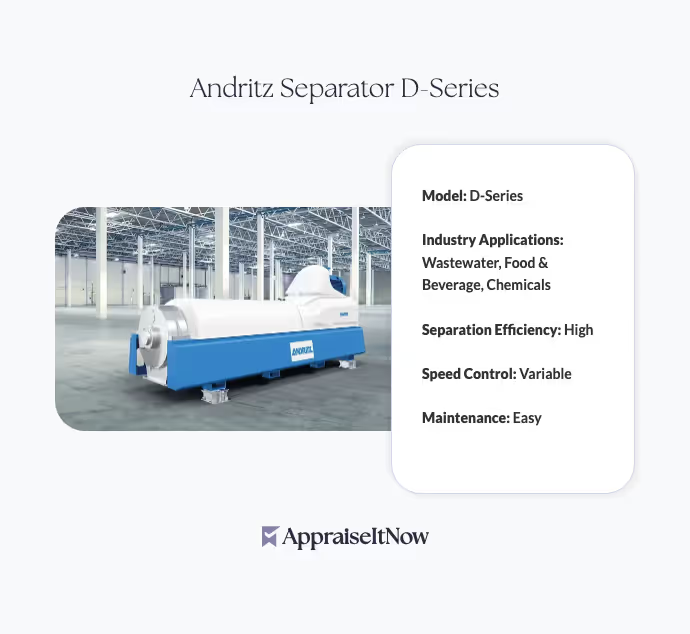
<p>The Andritz Separator D-Series has established itself as an industry workhorse since its introduction in <strong>1995</strong>, commanding respect in wastewater treatment, food and beverage processing, and chemical production applications. When asking "how much is the Andritz centrifuge," the answer depends significantly on several condition and specification factors. These industrial-grade machines are engineered for demanding environments with robust construction and precision engineering that ensures reliable separation performance for decades.</p>
<p>Your D-Series centrifuge's worth reflects its proven efficiency in liquid-solid separation, a critical capability that justifies the premium pricing in today's market. Unlike general <a href="/types/heavy-machinery">heavy machinery</a> that may have limited application-specific demand, Andritz separators maintain strong resale value because they're built to withstand intensive industrial use. The stainless steel construction combined with automated self-balancing technology creates a relatively narrow range of models competing at similar price points, making comparative valuation essential for accuracy.</p>
<div class="callout tip"><p><strong>Industry Insight</strong></p>
<p>Andritz separators with documented maintenance records and recent performance testing typically command 15-20% premiums over units with incomplete operational history.</p></div>
<h2>What Determines Your D-Series Appraisal Value</h2>
<p>When appraising <a href="/types/equipment-and-machinery">industrial equipment</a>, professional assessors examine specific technical and operational factors that directly affect market value. The D-Series model designation indicates advanced features including variable speed control, automated self-balancing, and energy optimization—specifications that modern buyers specifically seek out. Understanding these value drivers helps you comprehend why two seemingly identical separators might receive different appraisal values.</p>
<h3>Key Specifications Affecting Value</h3>
<p>Your D-Series centrifuge's specifications determine its position within the $100,000-$150,000 valuation range. Units with active variable speed control and responsive self-balancing mechanisms command higher values because they reduce operator intervention and energy consumption. The original stainless steel construction quality matters significantly—corrosion resistance that prevents costly replacements appeals to facility managers evaluating <a href="/types/chemical-equipment">chemical equipment</a> purchases.</p>
<p>The machine's operational history directly impacts appraisal results. Units that have processed lower-viscosity materials typically show less internal wear than those handling heavy sludges or abrasive slurries. Energy efficiency improvements built into the D-Series design appeal to sustainability-focused buyers, creating competitive advantage in resale markets. Professional appraisers factor in the separator's remaining useful life, comparing it against the original design specifications for expected operational duration.</p>
<h3>Age and Maintenance Documentation</h3>
<p>Since the D-Series entered the market in 1995, you'll find units ranging from approximately 5 to 30 years old in active circulation. Newer models within the product line naturally command higher values, though well-maintained older units can retain excellent market positioning. Documentation proving regular maintenance, parts replacement schedules, and technical servicing becomes critical evidence during appraisal—separators with comprehensive service records consistently exceed valuations for units lacking documented care histories.</p>
<p>When evaluating your equipment for <a href="/types/food-processing-equipment">food processing</a> or <a href="/types/beverage-equipment">beverage applications</a>, appraisers specifically examine whether scheduled maintenance followed manufacturer recommendations. Separators that have undergone major bearing replacements or seal upgrades demonstrate active preservation efforts that justify higher valuations. Conversely, units showing signs of deferred maintenance or rust accumulation face downward valuation adjustments reflecting required restoration costs.</p>
<h2>Current Market Demand for Industrial Centrifuges</h2>
<p>Understanding broader market dynamics helps explain your D-Series valuation within industry context. The industrial centrifuge market continues expanding as environmental regulations drive wastewater treatment investments and food safety standards demand reliable processing equipment. This sustained demand supports the upper range of Andritz valuations compared to generic <a href="/blog/appraising-industrial-equipment-assessing-machinery-and-manufacturing-assets">industrial equipment</a> with narrower application bases.</p>
<p>Several factors currently strengthening centrifuge valuations include regulatory pressures for efficient solids handling, pharmaceutical manufacturing growth requiring validated separation equipment, and agricultural processing expansion. The D-Series specifically benefits from its reputation for consistent performance in these regulated industries. Facilities requiring replacement separators often prioritize proven performers with established maintenance networks over unfamiliar alternatives, creating residual demand that supports valuations.</p>
<div class="callout note"><p><strong>Market Reality</strong></p>
<p>Specialized industrial equipment like Andritz separators typically maintains 40-50% of original purchase value over 15-20 years, depending on maintenance and market conditions.</p></div>
<h2>What's the Difference Between Centrifuge Types</h2>
<p>Prospective buyers frequently ask "what is a decanter centrifuge?" and how it compares to your D-Series separator. While both accomplish liquid-solid separation, they function through different mechanisms. Decanters use rotating baskets with conical bottoms and differential scroll design, whereas the D-Series employs vertical or horizontal centrifugal bowls with optimized G-force profiles. These distinct separation methodologies suit different applications—decanters excel with slurries containing fibrous materials, while separators like the D-Series handle fine suspended solids and emulsion breaking.</p>
<p>The difference between a decanter and separator fundamentally affects equipment selection and valuation. When asking "is a decanter worth it," facility managers compare separation efficiency, throughput requirements, and processing costs against their specific application needs. The D-Series addresses markets where traditional decanters underperform, creating distinct niches that preserve separate valuation ranges. Professional appraisers understand these distinctions, ensuring your separator isn't incorrectly compared to decanter-type equipment that would skew valuation analysis.</p>
<p>Understanding the distinction between a decanter centrifuge and a normal centrifuge involves recognizing design purpose differences. Decanter centrifuges optimize for moisture removal and clarification of thick slurries, while traditional centrifuges like the Andritz D-Series focus on precise liquid-liquid separation and fine particle classification. This specificity in design justifies premium valuations for equipment perfectly suited to its intended application rather than generic separation equipment with broader but less optimized capabilities.</p>
<h2>Maximizing Your D-Series Appraisal Results</h2>
<p>To achieve the highest appraisal value for your Andritz Separator D-Series, compile comprehensive documentation that demonstrates both technical condition and operational reliability. Professional appraisers benefit tremendously from written records showing maintenance intervals, parts replacements, performance testing results, and any upgrades implemented during the separator's operational life. Creating this documentation package before scheduling your appraisal streamlines the assessment process and supports higher valuations reflecting actual condition rather than assumptions.</p>
<p>Photograph your separator from multiple angles, capturing serial number plates, nameplate specifications, and any visible condition indicators. If your facility maintains digital records of throughput volumes, separation efficiency metrics, or performance testing reports, these quantitative indicators strengthen valuation support. Units currently in operation with running documentation prove ongoing functionality more convincingly than identical machines sitting dormant. Consider scheduling appraisal timing around your separator's regular maintenance cycle, allowing appraisers to observe the equipment operational condition firsthand.</p>
<p>When seeking professional appraisal services for <a href="/types/manufacturing-business">manufacturing equipment</a>, prepare to discuss the separator's original purchase price, installation date, and any major components replaced since commissioning. This contextual information helps appraisers understand depreciation curves and calculate remaining useful life projections. If you've invested in upgrades enhancing efficiency or extending operational capability, documentation of these improvements supports their value contribution to the overall appraisal.</p>
<h2>Finding the Right Appraiser for Your Equipment</h2>
<p>Selecting an appraiser with specific expertise in industrial centrifuges ensures accurate valuation reflecting market realities. <strong>AppraiseItNow</strong> connects you with certified equipment specialists holding credentials from recognized organizations including <strong>AAA, ISA, ASA, CAGA, and AMEA</strong>, ensuring your appraiser understands industrial separation equipment thoroughly. These certified professionals maintain networks across manufacturing and processing industries, positioning them to provide market-accurate valuations based on current demand patterns and comparable equipment sales.</p>
<p>When evaluating appraisers, confirm their experience with <a href="/types/equipment-and-machinery">equipment and machinery</a> specific to your facility's industry—food processing, chemical production, or wastewater treatment specialists offer distinct advantages over generalist appraisers. Request references from other manufacturers who've obtained appraisals for similar industrial equipment, allowing you to verify appraisal quality and professional service standards. Your appraiser should discuss valuation methodology with you, explaining how comparable sales, condition assessment, and market demand factors combine to establish your D-Series value within the $100,000-$150,000 range.</p>
<div class="callout tip"><p><strong>Selection Guidance</strong></p>
<p>Appraisers who visit your facility in person to evaluate the separator directly typically provide more accurate valuations than those relying solely on photographs or manufacturer specifications.</p></div>
<h2>Appraisal Documentation for Insurance and Legal Purposes</h2>
<p>Professional appraisals from certified experts provide documentation meeting insurance company requirements for coverage validation and claims support. Your facility's property insurance typically requires certified appraisals for equipment exceeding specific value thresholds, making professional assessment essential for protection. The comprehensive appraisal report becomes critical if equipment damage requires replacement cost documentation, ensuring you recover full value rather than depreciated book value.</p>
<p>For legal proceedings involving equipment valuation—whether for equipment financing, business dissolution, divorce settlements, or tax purposes—USPAP-compliant appraisals provide documentation accepted by courts and financial institutions. Creating an appraisal early in equipment ownership establishes baseline values supporting future valuations and condition comparisons. When planning facility expansion or equipment replacement, appraisals document existing asset values for financial reporting, helping you understand current portfolio worth and justifying capital expenditure decisions.</p>
<div class="callout note"><p><strong>Key Takeaway</strong></p>
<p>A certified appraisal of your Andritz Separator D-Series transforms equipment value from an estimated figure into documented asset worth, providing the professional documentation necessary for insurance coverage, business decisions, and successful transactions while protecting your investment through expert assessment.</p></div>