









<h1>How to Get Your Pieralisi Separator Hercules Appraised</h1>
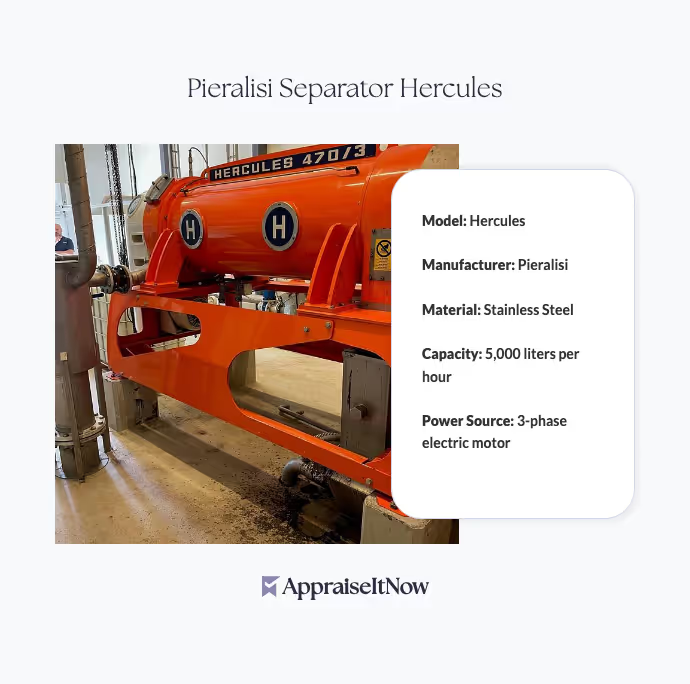
<p>The <strong>Pieralisi Separator Hercules</strong> stands as one of the most sought-after industrial separators in the manufacturing world, commanding market values between <strong>$90,000 and $100,000</strong> for well-maintained units. Whether you're buying, selling, or managing this precision equipment for your facility, understanding how to get a professional appraisal ensures you have accurate documentation and fair market pricing.</p>
<h2>Why Professional Appraisal Matters for Your Hercules</h2>
<p>A Pieralisi Separator Hercules isn't just another piece of <a href="/types/equipment-and-machinery">equipment and machinery</a>—it's a critical asset that impacts production efficiency across chemical, pharmaceutical, and food processing operations. When you're considering a transaction or need verified valuation for insurance or accounting purposes, a professional appraisal from a credentialed expert provides the documentation you need.</p>
<p>The difference between an informal estimate and a certified appraisal becomes clear when you examine what drives actual market value. Your Hercules's current worth depends on factors far beyond its original purchase price, including its production year, maintenance history, remaining useful life, and compliance with current safety standards. A certified appraiser can evaluate all these elements systematically, giving you defensible documentation that holds up in negotiations, insurance claims, or financial reporting.</p>
<blockquote>
<p>Pro Tip: Recent sales data shows that well-documented Pieralisi Separators with complete maintenance records command 15-20% premiums over units lacking service history.</p>
</blockquote>
<h2>Understanding What Affects Your Separator's Value</h2>
<p>Several specific factors influence how appraisers determine your Hercules's market value. The model's introduction in <strong>1985</strong> places many units in the 30-40 year age range, yet the Hercules's renowned reputation for reliability means age alone doesn't dictate depreciation the way it might for less durable equipment.</p>
<p><strong>Production year and serial data</strong> significantly impact valuation. Earlier models from the late 1980s and early 1990s may command different prices than 2000s-era examples, depending on engineering refinements and component availability. Your unit's specific serial number connects to production records that appraisers use to verify manufacturing date, original specifications, and any factory upgrades or modifications. This genealogical information about your separator becomes crucial when comparable sales data is limited, as it helps establish where your particular unit sits within the Hercules market spectrum.</p>
<p>The <strong>10-year warranty</strong> backing the Hercules signals manufacturing confidence, but what matters more for current appraisal is whether your separator still functions at original performance specifications. Appraisers examine the precision-machined components and advanced control systems to determine if your unit operates at nameplate capacity, reduced capacity, or requires maintenance to reach full output. This assessment directly translates into value adjustments during appraisal.</p>
<table class='appraisal-table'>
<thead>
<tr>
<th>Factor</th>
<th>Impact on Value</th>
<th>Assessment Method</th>
</tr>
</thead>
<tbody>
<tr>
<td>Production year</td>
<td>±5-15% variance</td>
<td>Serial number verification</td>
</tr>
<tr>
<td>Operating hours</td>
<td>±10-20% variance</td>
<td>Maintenance logs and meter readings</td>
</tr>
<tr>
<td>Compliance status</td>
<td>±5-10% variance</td>
<td>Safety standard certification review</td>
</tr>
<tr>
<td>Component condition</td>
<td>±15-25% variance</td>
<td>Physical inspection and testing</td>
</tr>
</tbody>
</table>
<h2>Maintenance Records and Documentation</h2>
<p>Your separator's documentation tells the story of how it's been maintained and operated. Maintenance logs showing regular servicing, spare parts replacements, and component upgrades paint a picture of an owner who understands that precision-engineered equipment requires consistent care. Conversely, units with spotty or missing documentation raise questions about potential hidden issues, often resulting in valuation discounts.</p>
<p>When preparing for appraisal, compile all available records including service tickets from authorized technicians, calibration certificates for control systems, and invoices for any major component replacements. If your facility hired contractors for installation or specialized maintenance, those OEM (original equipment manufacturer) invoices add credibility to your maintenance narrative. These documents transform your appraisal from a generic machinery assessment into a specific portrait of your particular unit's history.</p>
<p>Professional appraisers specializing in <a href="/types/chemical-equipment">chemical equipment</a> and <a href="/types/food-processing-equipment">food processing equipment</a> know that separators in pharmaceutical and beverage applications face particularly rigorous compliance requirements. Your documentation should demonstrate adherence to applicable safety standards, proper calibration intervals, and regulatory compliance—factors that directly support higher valuations for well-maintained equipment.</p>
<blockquote>
<p>Documentation Insight: Units with documented compliance to current FDA or EU sanitation standards often achieve valuations 10-15% higher than comparable models without such certification.</p>
</blockquote>
<h2>Regional Demand and Market Variations</h2>
<p>The Pieralisi Separator Hercules isn't uniformly valued across North America and Europe. Demand patterns vary significantly based on local industrial concentration and regulatory environments. European markets, particularly in established olive oil and beverage production regions, demonstrate stronger demand for Hercules separators than some North American markets. This geographic variance means your separator's value depends partly on where you intend to sell or have already deployed it.</p>
<p>Consider that retrofitting and upgrading capabilities affect regional valuations differently. A separator with documented recent upgrades to control systems or compliance enhancements may command premium prices in highly regulated European markets while achieving different pricing in North American regions with less stringent requirements. Your appraiser should understand these regional nuances when benchmarking comparable sales data.</p>
<p>Logistics also factor into regional considerations. Transportation, dismantling, reassembly, and installation costs vary substantially by geography. A separator in a facility with easy truck access and minimal structural modification requirements presents lower acquisition risk than one requiring specialized rigging, building modifications, or extended installation timelines. Appraisers factor these logistics into their market analysis, recognizing that apparent "comparable" sales might differ significantly once you account for relocation costs.</p>
<h2>Comparable Equipment and Benchmarking Challenges</h2>
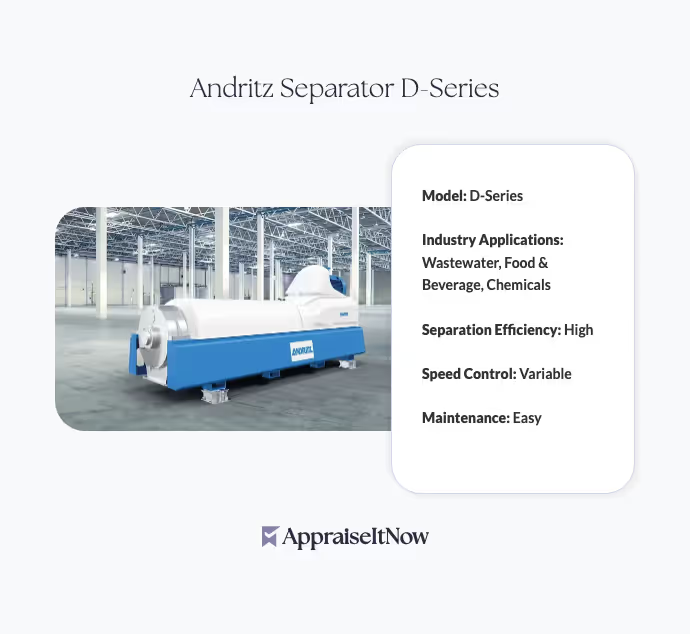
<p>When Pieralisi-specific comparable sales are scarce, appraisers must thoughtfully select comparable equipment from other manufacturers. The question of which brands and models properly benchmark against your Hercules requires expertise—not all industrial separators are equivalent, and substituting a lower-specification model as a comparable could undervalue your asset significantly.</p>
<p>Professional appraisers understand the technical differences between centrifuge designs, separation capacity, material handling capabilities, and control sophistication. They recognize that a Pieralisi Hercules's precision-engineered reputation and proven track record of low maintenance requirements might command premiums over cheaper competitors, even if specifications appear comparable on paper. This technical knowledge separates thorough appraisals from superficial valuations.</p>
<p>When studying how appraisals work, explore our resources on <a href="/blog/appraising-industrial-equipment-assessing-machinery-and-manufacturing-assets">appraising industrial equipment</a>, which address benchmarking methodologies and comparable selection strategies for specialized machinery.</p>
<blockquote>
<p>Valuation Strategy: When comparable Hercules models are unavailable, look for appraisers experienced with cost and income approaches to valuation, not just market approach comparables.</p>
</blockquote>
<h2>Retrofit Upgrades and Spare Parts Availability</h2>
<p>Your separator's remaining useful life hinges partly on spare parts availability and upgrade potential. A Hercules manufactured in 1995 that's been retrofitted with modern control systems may have 15+ years of productive life remaining, substantially affecting its valuation compared to an un-upgraded unit of the same age. Document any major component replacements or system upgrades, as these investments directly enhance residual value.</p>
<p>Pieralisi's track record for supporting legacy equipment with spare parts availability strengthens valuations. Unlike some industrial equipment where parts become obsolete, the Hercules benefits from manufacturer commitment to backward compatibility. This parts availability reduces risk for potential buyers, supporting stronger market values. Your appraiser should investigate current parts availability when assessing remaining useful life and replacement costs for critical components.</p>
<h2>Identifying Common Failure Points</h2>
<p>Understanding the Hercules's common maintenance issues helps frame appraisal context. While renowned for reliability, certain components experience predictable wear patterns. Seal assemblies, bearing systems, and motor bearings represent typical maintenance categories. When your unit shows evidence of proactive replacement of these wear items before failure, it demonstrates sophisticated operational management that appraisers recognize as value-supporting.</p>
<p>Conversely, units that have experienced catastrophic failures—motor burnout, seal system failures, or structural issues—often require substantial discounts unless thoroughly rehabilitated with documented repairs. The difference between "normal wear expected on a 30-year-old unit" and "equipment that failed due to poor maintenance" becomes a critical distinction in appraisal valuation.</p>
<h2>Compliance and Safety Standards Impact</h2>
<p>Your separator's compliance status with current food and beverage safety standards significantly affects market value. Hercules units installed in facilities subject to FDA 21 CFR Part 11 regulations, FSMA requirements, or EU food safety directives face specific validation requirements. If your separator maintains current compliance documentation, this represents substantial value that shouldn't be overlooked during appraisal.</p>
<p>Units requiring upgrades to meet current standards face valuation discounts reflecting the cost and complexity of achieving compliance. Professional appraisers experienced with <a href="/types/beverage-equipment">beverage equipment</a> understand these regulatory landscapes and can properly assess compliance status and its impact on residual value.</p>
<h2>Valuation Approaches for Used Separators</h2>
<p>Determining your Hercules's value often requires multiple valuation methodologies. The <strong>market approach</strong> compares your separator to recent sales of similar equipment, though limited comps may constrain its application. The <strong>cost approach</strong> calculates replacement cost using current pricing, then adjusts for depreciation, obsolescence, and remaining useful life. The <strong>income approach</strong> (occasionally applicable) evaluates equipment based on production capacity and profitability impact.</p>
<p>Professional appraisers typically employ all three approaches, weighing each based on data availability and reliability. For industrial equipment like separators, the cost approach often provides important context—knowing replacement cost helps establish a ceiling for fair market value. When recent comparable sales exist, the market approach typically receives primary emphasis.</p>
<p>Our comprehensive guide on <a href="/blog/the-basics-of-equipment-and-machinery-appraisal">the basics of equipment and machinery appraisal</a> explores these methodologies in greater depth, helping you understand how appraisers build defensible valuations for your specialized machinery.</p>
<blockquote>
<p>Appraisal Insight: Equipment nearing the end of its useful life but still fully functional often values better using cost approach methodology than market approach, as comparable newer sales may not properly reflect current market conditions for aging units.</p>
</blockquote>
<h2>Recent Regulatory and Market Changes</h2>
<p>Regulatory evolution affects separator valuations in ways worth understanding. Recent emphasis on energy efficiency, sanitation protocols, and digital monitoring capabilities means separators with modern control systems command premiums over mechanically-controlled legacy units. The shift toward Industry 4.0 connectivity and data logging capabilities influences buyer preferences and, consequently, market values.</p>
<p>If your Hercules has been retrofitted with modern control systems or upgraded to current sanitation standards, these investments should be reflected in higher appraisal values. Conversely, units that lack these upgrades and show limited opportunity for retrofit may face valuation challenges in increasingly regulated markets. Your appraiser should evaluate these market evolution factors when positioning your separator's value.</p>
<h2>When to Update Your Appraisal</h2>
<p>Equipment valuations aren't permanent. Market conditions shift, new technologies emerge, and your separator ages. If you're managing this asset for loan purposes, insurance coverage, or financial reporting, updating your appraisal every 2-3 years makes sense. Significant changes—major overhauls, compliance upgrades, or installation of enhanced control systems—warrant interim appraisals.</p>
<blockquote>
<p>Key Takeaway: A certified appraisal of your Pieralski Separator Hercules provides documentation that supports confident buying and selling decisions, ensures proper insurance coverage, and creates a defensible record of your asset's value. By understanding the factors that drive valuation—maintenance history, compliance status, remaining useful life, and market demand—you'll be prepared to engage meaningfully with professional appraisers and make informed decisions about this significant industrial asset.</p>
</blockquote>
<p>When you're ready to pursue formal valuation, <strong>AppraiseItNow</strong> connects you with credentialed appraisers specializing in industrial equipment who understand the Hercules's unique market position and can deliver comprehensive, USPAP-compliant appraisals suitable for sale, insurance, or financial planning purposes.</p>