









<h1>How to Get Your Reed & Barton Silver Francis I Appraised</h1>
<p>The Reed & Barton Silver Francis I flatware set stands as a cornerstone of American fine dining, commanding respect among collectors and homeowners alike. If you own this timeless sterling silver set—or are considering acquiring one—understanding how to properly appraise it ensures you know its true value for buying, selling, insurance, or estate planning purposes.</p>
<h2>Understanding Reed & Barton Silver Francis I Value</h2>
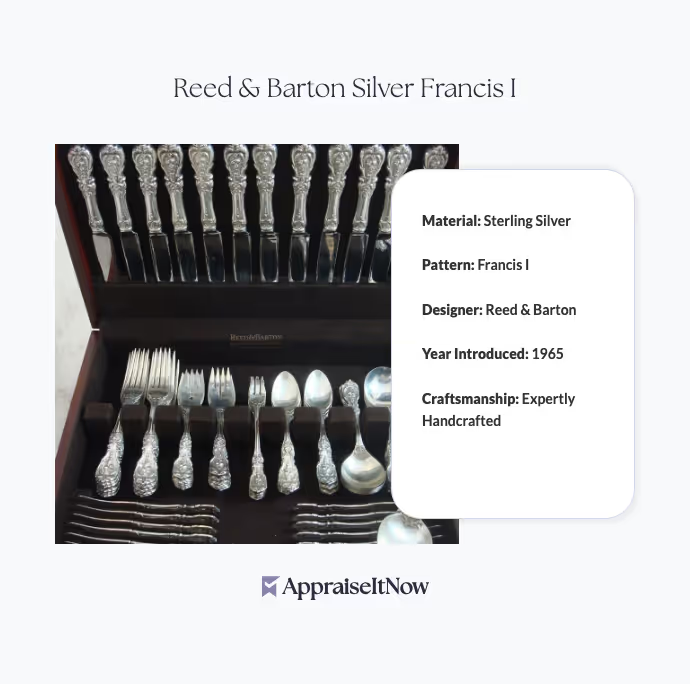
<p>Your Francis I flatware represents a significant investment in quality craftsmanship. First introduced in 1965, this sought-after pattern combines elegant floral and scroll motifs inspired by French Renaissance design with the durability of <strong>925 sterling silver</strong>. Current market estimates place quality Reed & Barton Silver Francis I sets in the <strong>$1,500 to $2,500 range</strong>, though individual valuations depend heavily on condition, completeness, and provenance.</p>
<div class="callout tip"><p><strong>Market Insight</strong></p>
<p>Sterling silver values fluctuate with precious metal markets, but Reed & Barton's Francis I pattern commands stable demand due to its timeless design and established collector base.</p></div>
<p>The value proposition here extends beyond mere metal content. Is Reed and Barton real silver worth anything? Absolutely. Your sterling silver flatware piece carries value as both functional tableware and a collectible that appreciates with proper care. Reed & Barton sterling pieces consistently demonstrate strong resale potential because of their exceptional craftsmanship and recognized brand heritage.</p>
<h2>What Makes Your Set Valuable</h2>
<p>Several factors distinguish your Francis I set in the marketplace. Authentic Reed & Barton sterling (versus silver-plated alternatives) carries substantially higher value due to its 92.5% pure silver composition. A magnet will not stick to genuine sterling silver, providing a quick authenticity check, whereas silver-plated items often show magnetic attraction depending on their base metal.</p>
<p>The distinction between sterling silver and silver-plated pieces matters significantly for appraisal purposes. Sterling silver maintains intrinsic value tied to precious metal prices, while silver-plated items derive value primarily from collectibility and condition. When asking "What is worth more, silver-plated or sterling silver?"—the answer depends on context, but sterling silver (particularly from established makers like Reed & Barton) generally holds stronger financial value.</p>
<p>Completeness directly impacts your set's worth. A full service for eight (typically 32 pieces including dinner forks, salad forks, knives, teaspoons, and serving pieces) commands premium pricing compared to partial sets or individual pieces. Original packaging, documentation of authenticity, and service records add credibility to your appraisal and can increase value by 15-20%.</p>
<h2>How Reed & Barton Silver Compares in the Market</h2>
<p>Reed & Barton occupies a distinct position among American silverware manufacturers. Founded in 1840, the company built a reputation for consistent quality and design innovation that attracts both functional users and serious collectors. Your Francis I pattern sits comfortably in the middle tier of Reed & Barton patterns—more valuable than everyday pieces but less rare than discontinued or limited-edition designs.</p>
<p>The question of whether your piece is particularly desirable hinges partly on pattern rarity. While Francis I isn't the scarcest Reed & Barton pattern, its enduring popularity means your set retains steady market demand. Understanding these nuances through professional appraisal helps position your flatware appropriately whether you're selling through auction houses, private sales, or consignment shops.</p>
<h2>The Appraisal Process for Sterling Flatware</h2>
<p>When you decide to appraise your Reed & Barton Silver Francis I set, professional appraisers evaluate multiple dimensions beyond simple weight calculations. The weight and fineness of your sterling silver form the baseline valuation, but condition, completeness, provenance, and market demand create the final assessment.</p>
<p>Start by verifying authentication marks on your pieces. Legitimate Reed & Barton sterling will bear hallmarks including "REED & BARTON," "STERLING," and ideally date marks or series numbers. These markings serve as critical documentation during professional <a href="/blog/everything-you-need-to-know-about-antique-silver-appraisal">antique silver appraisal</a>, providing experts immediate confirmation of authenticity and production details.</p>
<div class="callout note"><p><strong>Professional Tip</strong></p>
<p>Gather your complete set for appraisal rather than presenting individual pieces. Appraiser evaluation of a full service demonstrates the set's market value more accurately and may reveal additional collector value.</p></div>
<p>Certified appraisers from credentialed organizations like the <strong>American Society of Appraisers (ASA)</strong> bring specialized knowledge to <a href="/blog/appraisals-for-fine-silver-and-flatware-valuing-exquisite-tableware">fine silver and flatware valuation</a>. They document condition through detailed photography, assess market comparables through recent sales data, and provide USPAP-compliant reports suitable for insurance, estate purposes, or transaction documentation.</p>
<h2>Condition and Maintenance Impact on Appraised Value</h2>
<p>The condition of your Francis I flatware directly affects its appraisal results. Sets showing minimal wear, bright polished finish, and minimal tarnishing command top-tier valuations around the $2,500 mark. Conversely, heavily tarnished, bent, or worn pieces may appraise at the lower end of the range or require restoration quotes factored into valuation calculations.</p>
<p>Silver tarnish itself needn't damage your appraisal, as legitimate appraisers distinguish between cosmetic condition and structural integrity. Professional cleaning by conservation specialists can restore appearance without altering value, though overly aggressive polishing or buffing that removes metal may negatively impact appraisal results. Many collectors actually prefer the patina on vintage pieces, as it demonstrates authenticity and age.</p>
<p>Proper storage matters significantly for preserving your set's value. Keeping pieces in individual sleeves, cloth bags, or lined cases prevents damage and tarnish. Climate-controlled environments around 50-70°F with moderate humidity protect both the silver and any wooden handles or other materials present in your set.</p>
<h2>Insurance and Documentation Requirements</h2>
<p>If you're appraising your Reed & Barton Silver Francis I for insurance purposes, professional documentation becomes essential. Insurance companies require detailed appraisal reports including photographic evidence, weight calculations, condition assessments, and fair market value conclusions. This creates an official record protecting your investment against loss, theft, or damage.</p>
<p>Appraisal values for insurance differ from liquidation values (what you'd receive selling through a pawn shop or quick-sale venue). Professional appraisers typically provide "replacement value" estimates—what it would cost to replace your set at fair market prices today. This figure often exceeds auction or dealer buyback prices, reflecting the retail replacement market rather than wholesale recovery.</p>
<h2>Where to Sell Your Francis I Set</h2>
<p>Understanding your appraisal value helps you identify appropriate sales channels. Auction houses specializing in <a href="/types/antique-silver">antique silver</a> and decorative arts provide transparent market exposure and often attract serious collectors willing to pay premium prices for quality sets. Online marketplaces like eBay or specialized sites reach broader audiences but require you to manage photography, descriptions, and buyer communication.</p>
<p>Antique dealers and consignment shops offer convenience and immediate evaluation, though typically at lower returns than direct sales or auctions. These venues expect commission percentages of 25-40%, reducing your net proceeds from your appraised value. Pawn shops represent the lowest-return option for sterling silver, as they price for rapid turnover and profit margins rather than fair market value.</p>
<div class="callout tip"><p><strong>Selling Strategy</strong></p>
<p>Obtaining a professional appraisal before approaching potential buyers strengthens your negotiating position by anchoring discussions to documented fair market value rather than subjective assessments.</p></div>
<h2>The Sterling Silver Market and Precious Metal Factors</h2>
<p>Your Reed & Barton Silver Francis I's value interconnects with broader precious metals markets, though far more modestly than pure bullion. Does sterling silver go up in value? The answer involves both precious metal price appreciation and collectible demand dynamics working in tandem.</p>
<p>Sterling silver spot prices fluctuate daily based on global market forces. At current market prices, the raw metal content of your flatware set might represent $400-600 of intrinsic silver value alone. However, the crafted nature of your pieces, brand reputation, pattern desirability, and collectibility add substantial premiums above simple metal weight calculations—explaining why your set appraises for $1,500-$2,500 rather than its melt value.</p>
<p>This distinction matters when evaluating different ownership options. Collectible sterling flatware typically holds value better than silver-plated alternatives precisely because the sterling silver maintains precious metal utility as a value floor. Are Reed and Barton pure silver? Yes, their marked pieces carry 92.5% purity guarantees, providing tangible asset value independent of fashionability or pattern popularity.</p>
<h2>Authentication and Identifying Authentic Reed & Barton</h2>
<p>Learning to identify authentic Reed & Barton silver flatware protects you during appraisal and purchase decisions. How to identify authentic Reed & Barton silver involves checking for maker's marks on the back of pieces, weight consistency, construction quality, and pattern consistency across the set.</p>
<p>Authentic pieces display crisp, clear hallmarks stamped into the metal. The marks include the manufacturer name, sterling certification, and sometimes pattern names or series numbers. Counterfeit pieces often show poorly defined stamps or incorrect font characteristics. Weight provides another authentication clue—legitimate sterling should feel substantial and consistent across similar pieces, whereas poorly made reproductions sometimes feel oddly heavy or light.</p>
<p>Pattern consistency offers a final authentication check. Legitimate Reed & Barton Francis I pieces display consistent motif execution, symmetrical design elements, and uniform construction quality. Variations between pieces in a set suggest mixing pieces from different manufacturers or periods, which appraisers note as reducing overall set value and consistency.</p>
<h2>Why Professional Appraisal Matters for Collectors</h2>
<p>Whether you're a generalist inheriting your grandmother's flatware set or a serious collector curating a distinguished silver collection, professional appraisal provides objective documentation of value. This matters for estate planning, insurance coverage, collection management, and potentially for sharing with family members about inheritance worth.</p>
<p>AppraiseItNow connects you with qualified appraisers experienced in <a href="/types/jewelry">jewelry</a> and precious metals, providing tech-enabled convenience combined with credentialed expertise. Our appraisers deliver detailed condition assessments, market analysis, and USPAP-compliant documentation accepted by insurance companies, attorneys, and financial institutions.</p>
<div class="callout note"><p><strong>Key Takeaway</strong></p>
<p>A certified appraisal of your Reed & Barton Silver Francis I transforms an heirloom or acquisition from an unknown quantity into a documented asset with clear market positioning, ensuring you understand its true value for buying, selling, insuring, or estate planning purposes.</p></div>