









<h1>How to Get Your George Ohr Pottery from Biloxi Appraised</h1>
<p>If you own a piece of George Ohr pottery—whether inherited, purchased, or recently discovered—understanding how to properly appraise this American art pottery treasure is essential. These distinctive ceramics, created by the legendary "Mad Potter of Biloxi," typically range in value from <strong>$25,000 to $50,000</strong>, though exceptional pieces can exceed these estimates significantly. Getting your George Ohr pottery appraised by a qualified expert ensures you understand its true market value, whether for insurance, sale, or collection documentation purposes.</p>
<h2>Who Was George Ohr and Why His Pottery Matters</h2>
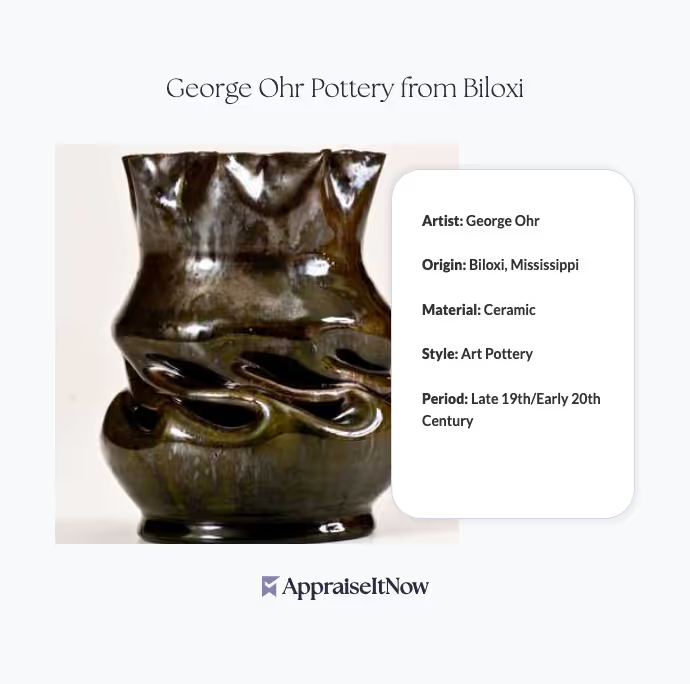
<p>George Ohr revolutionized American ceramics through his unconventional approach to pottery-making in late 19th and early 20th century Biloxi, Mississippi. First introducing his innovative techniques in the 1880s, Ohr earned the nickname "Mad Potter of Biloxi" for his refusal to conform to traditional pottery aesthetics. His work featured asymmetrical shapes, pinched and twisted clay, and vibrant glazes that challenged conventional beauty standards of the era.</p>
<p>What makes Ohr's pottery so valuable today? His pieces are considered pioneering examples of American art pottery, representing a turning point in ceramic history. Collectors and institutions recognize his work as foundational to modern ceramic art, and his influence extends far beyond his lifetime. When considering <a href="/blog/what-do-appraisers-look-for-when-appraising-antique-artwork">antique artwork appraisals</a>, George Ohr's pottery stands apart due to its technical innovation and historical significance within the American art movement.</p>
<div class="callout tip"><p><strong>Collector's Insight</strong></p>
<p>Ohr's organic forms and visually striking textures defy traditional pottery classifications, making each piece unique and historically important—factors that directly support strong market valuations.</p></div>
<h2>Understanding What Makes Your Piece Valuable</h2>
<p>The value of George Ohr pottery hinges on several interconnected factors that professional appraisers carefully evaluate. While the $25,000 to $50,000 range provides a baseline, individual pieces vary dramatically based on specific characteristics and market positioning.</p>
<p><strong>Rarity and uniqueness</strong> form the foundation of Ohr's pottery value. Unlike mass-produced ceramics, each Ohr piece represents a singular creative expression—no two are identical. This one-of-a-kind nature creates strong collector demand within the <a href="/blog/appraising-antiques-unveiling-the-hidden-treasures-in-your-collection">fine art and antique market</a>. Pieces with exceptional glaze effects, unusual forms, or documented exhibition history command premium prices. The scarcity of certain glaze colors or innovative pinching techniques can elevate a piece from the mid-range toward the upper echelon of valuations.</p>
<p><strong>Condition assessment</strong> significantly impacts market value. Professional appraisers examine your Ohr pottery for chips, cracks, repairs, and restoration work. Pieces showing original finishes and structural integrity maintain optimal value, while those requiring conservation work typically see reduced estimates. Understanding restoration's impact becomes crucial when <a href="/blog/appraisals-for-fine-porcelain-and-ceramics-valuing-delicate-artistry">assessing the worth of antique ceramics</a>, as collectors prioritize authentic, unaltered examples.</p>
<p><strong>Provenance documentation</strong> strengthens valuation considerably. If you can trace your piece's ownership history, exhibition record, or publication in significant collections or catalogs, you're looking at potential value increases of 20-30%. This documentation parallels the importance of <a href="/blog/exploring-the-role-of-provenance-in-art-appraisals-assessing-historical-significance">provenance in art appraisals</a>, where ownership chain and historical record substantiate both authenticity and market standing.</p>
<h2>When to Seek a Professional Appraisal</h2>
<p>You should obtain a professional appraisal for your George Ohr pottery in several key situations. If you're planning to sell through auction, galleries, or private treaty, a certified appraisal establishes market baseline and supports negotiation. For insurance purposes, an appraisal documents replacement value and protects against underinsurance. Estate planning and inheritance situations require documented valuations for tax and distribution purposes. Additionally, if you're considering acquisition of another Ohr piece, a recent appraisal of your existing collection helps establish comparative pricing.</p>
<p>The timing of appraisals matters as market conditions shift. Obtaining a fresh appraisal every 3-5 years ensures your insurance reflects current market values, particularly important given continued appreciation in American art pottery markets. This mirrors professional practices in <a href="/blog/appraisals-for-estate-inventory-cataloging-assets-for-executor-duties">estate inventory appraisals</a>, where accurate, current valuations support informed decision-making.</p>
<h2>Finding the Right Appraiser for Your Ohr Pottery</h2>
<p>Selecting a qualified appraiser requires understanding credentials and expertise. Look for appraisers holding certifications from recognized organizations such as the American Society of Appraisers (ASA), International Society of Appraisers (ISA), or American Association of Appraisers (AAA). These credentials indicate professional standards, USPAP compliance, and commitment to continuing education in specialty areas.</p>
<p>Your appraiser should demonstrate specific experience with American art pottery, particularly work from the Arts and Crafts and Art Nouveau periods. Experience evaluating other Ohr pieces, familiarity with major museum collections, and knowledge of recent market sales prove essential. A qualified appraiser will examine comparable sales, understand regional market dynamics, and recognize how Ohr's work compares to contemporary potters in <a href="/blog/how-to-find-a-qualified-appraiser-for-antique-artwork">the broader ceramics collecting landscape</a>.</p>
<p>Specialization matters significantly. While a general <a href="/blog/appraising-fine-art-a-comprehensive-guide-for-art-collectors-and-investors">fine art appraiser</a> may provide basic valuations, specialists in American decorative arts or pottery command deeper market knowledge. They understand the nuances of glaze chemistry, hand-thrown versus wheel-thrown techniques, and how these elements affect desirability and pricing.</p>
<h2>What to Prepare for Your Appraisal</h2>
<p>Before meeting with your appraiser, gather comprehensive information about your George Ohr piece. Document the piece's dimensions, weight, and current condition through detailed photography from multiple angles—including base, underside, and any maker's marks or signatures. If documentation exists about when or where you acquired the piece, how long you've owned it, or any previous appraisals, compile these materials.</p>
<p>Ohr frequently marked his pottery with his distinctive signature or impressed marks on the base. Some pieces carry exhibition labels or museum documentation. Any available provenance—auction catalogs, gallery records, or family history—strengthens the appraisal process. This preparation mirrors <a href="/blog/a-guide-to-professional-personal-property-appraisals">documentation requirements for personal property appraisals</a>, where comprehensive information enables accurate and defensible valuations.</p>
<div class="callout note"><p><strong>Preparation Tip</strong></p>
<p>Professional photography of your piece before appraisal helps establish condition baseline and creates valuable documentation for insurance and records.</p></div>
<h2>Regional Market Considerations</h2>
<p>Geographic factors influence George Ohr pottery valuations. Biloxi, Mississippi holds special significance as Ohr's home and workshop location, and regional collectors may show particular interest in pieces with strong local provenance. However, the national and international art market ultimately determines values for serious collectors. Museum collections in major cities and established auction houses like Christie's and Sotheby's regularly feature Ohr's work, setting benchmarks for current market pricing.</p>
<p>Understanding where Ohr settled becomes contextually important—he established his revolutionary Biloxi pottery in the 1880s and remained there throughout his career, creating strong historical ties between the artist and location. This geographic specificity adds interpretive richness to pieces and may appeal to regional collectors seeking hometown artistic heritage. However, truly exceptional examples command national and international bidding, transcending regional boundaries.</p>
<h2>Insurance and Legal Documentation</h2>
<p>A certified appraisal provides essential documentation for insurance purposes. Insurance companies require professional valuations to establish replacement cost coverage, and your policy likely stipulates that items above certain values need independent appraisal documentation. This process ensures fair compensation if loss or damage occurs, protecting your investment appropriately.</p>
<p>For legal situations—estate settlements, divorce proceedings, or tax matters—appraisals prepared in accordance with USPAP standards carry professional weight. Courts and attorneys recognize certified appraisals as credible documentation, making them invaluable when valuations significantly impact distribution or settlement amounts. Professional appraisals from credentialed experts like those connected through AppraiseItNow ensure your George Ohr pottery receives proper legal consideration.</p>
<h2>Understanding Market Trends in American Art Pottery</h2>
<p>The market for American art pottery has demonstrated consistent appreciation over the past two decades. Collectors increasingly recognize the significance of early 20th-century potters, and Ohr's revolutionary contributions have gained particular attention as institutions reassess American decorative arts history. This growing recognition supports continued value appreciation for quality examples.</p>
<p>Contemporary collecting trends show increasing diversity in what collectors value. While perfection once dominated preferences, today's market appreciates pieces showing artist's hand and creative process—characteristics Ohr's work exemplifies. Asymmetrical forms, visible hand-working, and unconventional glazing techniques now command premium pricing rather than depreciation. This <a href="/blog/the-influence-of-artist-reputation-on-art-appraisals-examining-the-artists-market-standing">shift in how we value fine art</a> reflects broader appreciation for artistic authenticity and innovation.</p>
<table class='appraisal-table'>
<thead>
<tr>
<th>Factor</th>
<th>Impact on Value</th>
</tr>
</thead>
<tbody>
<tr>
<td>Glaze innovation and color</td>
<td>+15-30% for exceptional examples</td>
</tr>
<tr>
<td>Size and scale</td>
<td>Larger pieces often command premiums</td>
</tr>
<tr>
<td>Form uniqueness</td>
<td>Significant variations in asymmetry/pinching</td>
</tr>
<tr>
<td>Condition</td>
<td>-20-50% reduction for significant damage</td>
</tr>
<tr>
<td>Provenance documentation</td>
<td>+20-30% with verified history</td>
</tr>
</tbody>
</table>
<h2>Preservation Strategies That Protect Value</h2>
<p>Proper storage and handling directly impact your George Ohr pottery's long-term value. Unlike some <a href="/blog/how-to-properly-store-and-maintain-your-memorabilia-and-collectibles">collectibles requiring climate-controlled environments</a>, pottery benefits from stable temperature and humidity conditions—ideally 65-75°F with 45-55% relative humidity. Fluctuating conditions cause ceramic expansion and contraction that can lead to cracking or glaze crazing.</p>
<p>Display your Ohr pottery securely on appropriate supports, avoiding shelving that vibrates or experiences sudden movement. Handle pieces minimally and only when necessary, using both hands and avoiding gripping at narrow points. If conservation becomes necessary, consult with ceramics specialists experienced with art pottery rather than attempting amateur restoration, which significantly diminishes value. Professional conservation, when documented and performed by qualified experts, maintains value better than unaddressed damage or amateur repairs.</p>
<h2>How Appraisals Support Your Collecting Goals</h2>
<p>Whether you're a serious collector building a comprehensive collection or someone who inherited a single significant piece, professional appraisals support your objectives. Collectors use appraisals to understand market positioning and make informed acquisition decisions. If you're considering selling, an appraisal establishes fair asking price and supports negotiations. For collectors concerned about <a href="/blog/appraisals-for-estate-auctions-setting-reserves-and-attracting-bidders">insurance and asset protection</a>, appraisals provide the documentation insurance companies require for adequate coverage.</p>
<p>The appraisal process itself educates you about your piece's significance and market context. Professional appraisers explain why certain characteristics matter, how your example compares to others, and what factors might affect future values. This knowledge enriches your appreciation of Ohr's artistic contributions and strengthens your collecting expertise.</p>
<div class="callout tip"><p><strong>Collector's Strategy</strong></p>
<p>Regular appraisals every 3-5 years help track value appreciation and ensure insurance remains current with market changes.</p></div>
<h2>Taking the Next Step</h2>
<p>Getting your George Ohr pottery from Biloxi appraised begins with connecting with qualified specialists who understand this market thoroughly. AppraiseItNow connects you with credentialed appraisers experienced in American decorative arts and ceramics valuation. Our experts provide USPAP-compliant appraisals that stand up to professional scrutiny, whether for insurance, sale, or estate documentation purposes.</p>
<p>The process is straightforward—submit detailed photographs and descriptions of your piece through our secure online platform, and our team matches you with appropriate specialists. Appraisers can often work remotely using high-quality photography for initial assessment, with in-person examination available if needed. Whether you're evaluating a single exceptional piece or an entire collection, professional appraisal ensures accurate valuation and proper documentation.</p>
<div class="callout note"><p><strong>Key Takeaway</strong></p>
<p>A certified appraisal of your George Ohr pottery provides accurate market valuation, essential insurance documentation, and professional confidence in your understanding of this historically significant American ceramic treasure. Whether buying, selling, or protecting your investment, expert appraisal services ensure your Ohr piece receives the specialized attention it deserves.</p></div>