









<h1>How to Get Your Chinese Export Porcelain Armorial Appraised</h1>
<p>Chinese export porcelain armorials represent some of the most coveted decorative arts from the 18th century, commanding prices between <strong>$6,000 and $12,000</strong> depending on condition, rarity, and provenance. If you own one of these exceptional pieces or are considering acquiring one, understanding the appraisal process helps you make informed decisions about this valuable <a href="/types/artwork">artwork</a>.</p>
<h2>What Makes Chinese Export Porcelain Armorial So Valuable?</h2>
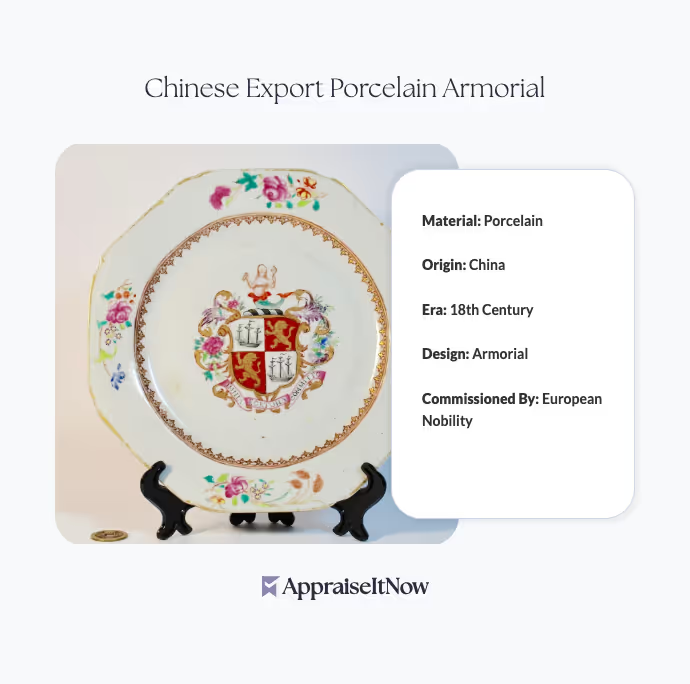
<p>Chinese export porcelain armorals emerged during the 18th century as a direct result of unprecedented cultural exchange between Eastern and Western civilizations. <strong>European nobility and wealthy merchants commissioned these pieces specifically</strong>, requesting intricate designs featuring family crests, heraldic symbols, and personalized coat-of-arms. This bespoke nature makes each piece essentially one-of-a-kind, fundamentally driving collector demand.</p>
<p>The value of your armorial piece stems from multiple factors working in concert. First, these items showcase the exceptional craftsmanship of Chinese porcelain production at its peak—artisans hand-painted vibrant colors, often incorporating delicate blue and white designs with remarkable precision. Second, the historical significance of armorial porcelain reflects the prosperity of European merchant classes who could afford such luxuries. Finally, the artistic merit and impressive size of these pieces position them as functional art objects deserving serious <a href="/types/antique-artwork">antique artwork</a> consideration.</p>
<div class="callout tip"><p><strong>Collector's Insight</strong></p>
<p>Armorial porcelain with documented provenance from prominent European families typically commands premiums of 15-25% above standard market estimates, making documentation crucial during appraisal.</p></div>
<h2>Identifying Authentic Chinese Export Porcelain</h2>
<p>Before seeking professional appraisal, understanding how to identify authentic Chinese export porcelain helps establish baseline knowledge. The question "How do you identify Chinese export porcelain?" requires examining several technical markers that distinguish genuine 18th-century pieces from later reproductions.</p>
<p>Authentic Chinese export porcelain exhibits specific characteristics including a smooth, slightly warm-toned porcelain body with a translucent quality when held to light. The decorative techniques used hand-painted underglaze blue and overglaze enamels in vibrant reds, greens, and gilding. Armorial designs should feature sophisticated heraldic compositions reflecting European noble family traditions, often incorporating supporters, mottoes, and carefully rendered coat-of-arms elements.</p>
<p>The base of genuine pieces typically shows signs of age including kiln grit adhering to the foot ring and a slightly rough texture consistent with 18th-century production methods. Unlike modern reproductions with uniformly perfect bases, authentic armorals display natural firing variations and subtle imperfections that actually authenticate rather than diminish value.</p>
<h2>What Makes a Chinese Porcelain Mark Valuable?</h2>
<p>Understanding porcelain marks directly answers the question of "What are the most valuable Chinese porcelain marks?" Most 18th-century export porcelain armorals lack formal Chinese manufacturer marks, instead relying on quality and design as authentication. However, when marks appear—often on the base—they typically indicate the kiln location and production period. Appraisers who specialize in <a href="/types/antiques">antiques</a> recognize these marks as valuable authentication tools that can increase estimated value significantly.</p>
<p>The absence of a mark on your armorial should not concern you, as export porcelain commissioned for European clients typically prioritized the decorative scheme over manufacturer identification. However, any present markings should be carefully documented during professional appraisal, as they provide crucial dating and authenticity evidence.</p>
<h2>Assessing Condition and Its Impact on Value</h2>
<p>Condition dramatically affects Chinese export porcelain appraisals. When evaluating "How to tell if porcelain is valuable?" condition ranks among the primary considerations alongside provenance and design quality. Examine your piece for chips, cracks, hairline fractures, and previous restoration work. Even minor damage visible under close inspection can reduce estimated value by 20-40% compared to pristine examples.</p>
<p>Professional appraisers conducting <a href="/blog/appraisals-for-fine-porcelain-and-ceramics-valuing-delicate-artistry">fine porcelain and ceramics valuations</a> look beyond surface appearance to assess structural integrity and restoration history. Modern conservation techniques—while preserving functionality—may reduce collector value if restoration is too extensive. Your appraiser will document condition using standardized photography and detailed written descriptions suitable for insurance purposes or potential sale.</p>
<div class="callout note"><p><strong>Condition Documentation</strong></p>
<p>Minor wear consistent with age and use typically has minimal impact on armorial porcelain value, whereas inappropriate repairs or heavy restoration can significantly diminish worth.</p></div>
<h2>The Role of Provenance in Establishing Value</h2>
<p>Provenance—the documented ownership history of your armorial piece—substantially influences appraisal value. If you can trace your porcelain back to prominent European collections, museum deaccessioning, or notable auction history, this documentation may increase value by 25-35%. This directly addresses the question of "How do I find out what my china is worth?" since provenance often represents the difference between mid-range and top-tier valuations.</p>
<p>Professional appraisers understand that <a href="/blog/exploring-the-role-of-provenance-in-art-appraisals-assessing-historical-significance">the role of provenance in art appraisals</a> extends beyond monetary value to include cultural and historical significance. When seeking appraisal, gather any available documentation including previous auction catalogs, insurance papers, family correspondence describing acquisition, or museum loan records. This supporting material strengthens your appraisal report and facilitates future sales.</p>
<h2>Market Dynamics and Investment Potential</h2>
<p>The Chinese export porcelain market has demonstrated consistent appreciation over recent decades, with armorial pieces particularly outperforming general ceramics categories. The finite supply of authentic 18th-century pieces combined with growing international collector interest creates favorable long-term value potential. When collectors ask "Was porcelain a valuable export?" the answer reflects current market enthusiasm where quality examples regularly achieve or exceed published estimates.</p>
<p>Understanding market trends helps position your armorial appropriately. Recent auction results show collectors actively competing for well-documented examples, particularly pieces featuring specific heraldic traditions or exceptional artistic quality. This reflects broader enthusiasm for <a href="/blog/appraising-asian-art-and-antiques-understanding-cultural-significance-and-value">Asian art and antiques</a> as collectors increasingly recognize cultural significance alongside monetary value.</p>
<h2>Why Professional Appraisal Matters</h2>
<p>Attempting to value Chinese export porcelain armorials through online resources or general antique dealer estimates often results in significant undervaluation. Professional appraisers bring specialized knowledge of 18th-century Chinese production methods, European heraldic traditions, current market comparables, and authentication techniques that amateur evaluation cannot replicate. When you need accurate valuation for insurance, estate planning, or potential sale, professional certification from <strong>USPAP-compliant appraisers</strong> provides legally defensible documentation.</p>
<p>Appraisers from AppraiseItNow connect you with credentialed experts holding certifications from recognized organizations including <strong>AAA, ISA, ASA, CAGA, and AMEA</strong>. These specialists conduct comprehensive assessments including detailed condition documentation, comparative market analysis, and historical research that establishes your armorial's true value. They understand that answering "How do I sell old Chinese porcelain?" effectively begins with accurate professional valuation.</p>
<div class="callout tip"><p><strong>Professional Advantage</strong></p>
<p>Certified appraisers provide documentation recognized by insurance companies, auction houses, and financial institutions, ensuring your armorial's value receives appropriate recognition regardless of future disposition.</p></div>
<h2>Understanding Armorial Design Elements</h2>
<p>The specific heraldic elements depicted on your porcelain significantly influence value assessments. Armorials featuring complex shield compositions with multiple quarterings, supporters, and decorative flourishes typically command higher prices than simpler designs. Similarly, porcelain depicting coats-of-arms from historically prominent European families carries enhanced value compared to lesser-known heraldic traditions.</p>
<p>Design quality matters tremendously when evaluating Chinese export porcelain. Artisans who executed particularly detailed or sophisticated heraldic compositions typically worked for kilns with superior reputations, potentially affecting both current market value and historical significance. Professional appraisers leverage expertise in European heraldry to recognize significant coat-of-arms and understand their cultural importance, directly translating to more accurate valuations.</p>
<h2>Documentation for Insurance and Estate Purposes</h2>
<p>If you're seeking appraisal to establish insurance coverage, your appraiser's report should clearly state the replacement cost value—the amount needed to acquire a similar piece in today's market. This differs from historical or sentimental value, focusing instead on what insurance would pay if loss occurred. Professional reports include high-resolution photography, detailed condition descriptions, and market analysis supporting the valuation, creating documentation your insurance company requires.</p>
<p>For estate planning purposes, appraisals serve as official documentation of asset value, facilitating equitable distribution among heirs or clarifying tax implications. When dealing with <a href="/types/household-goods">household goods</a> and <a href="/types/personal-property">personal property</a> appraisals, professional certification ensures family members understand true asset values and can make informed decisions about retention, sale, or donation.</p>
<h2>Getting Started with Your Appraisal</h2>
<p>When submitting your Chinese export porcelain armorial for appraisal, prepare clear photographs showing the front, back, base, and any decorative details. Document any existing markings, measurements, and condition concerns including chips, repairs, or restoration work. Compile available provenance information such as auction catalogs, insurance papers, or family records describing acquisition.</p>
<p>AppraiseItNow's online platform allows you to submit photographs, descriptions, and documentation securely, connecting you with qualified appraisers specializing in <a href="/types/antiques">antiques</a> and decorative arts. Our process ensures your armorial receives thorough evaluation from credentialed professionals who understand the nuanced factors affecting Chinese export porcelain valuation.</p>
<div class="callout note"><p><strong>Key Takeaway</strong></p>
<p>Professional appraisal of your Chinese export porcelain armorial provides accurate valuation, expert authentication, and credible documentation essential for insurance, estate planning, or sale purposes. Understanding what drives these exceptional pieces' value—from historical significance to market demand—helps you recognize the investment quality of your 18th-century treasure and make confident decisions about its future.</p></div>