









<h1>How to Get Your Apache Basket, Coiled Willow Appraised</h1>
<p>An Apache basket crafted from coiled willow represents far more than a functional piece of household goods—it embodies centuries of Native American craftsmanship, cultural heritage, and artistic mastery. If you own one of these distinctive baskets and want to understand its true value, knowing how to get it properly appraised is essential whether you're considering selling, seeking insurance coverage, or preserving it for future generations.</p>
<h2>Understanding Apache Basket Value and Market Demand</h2>
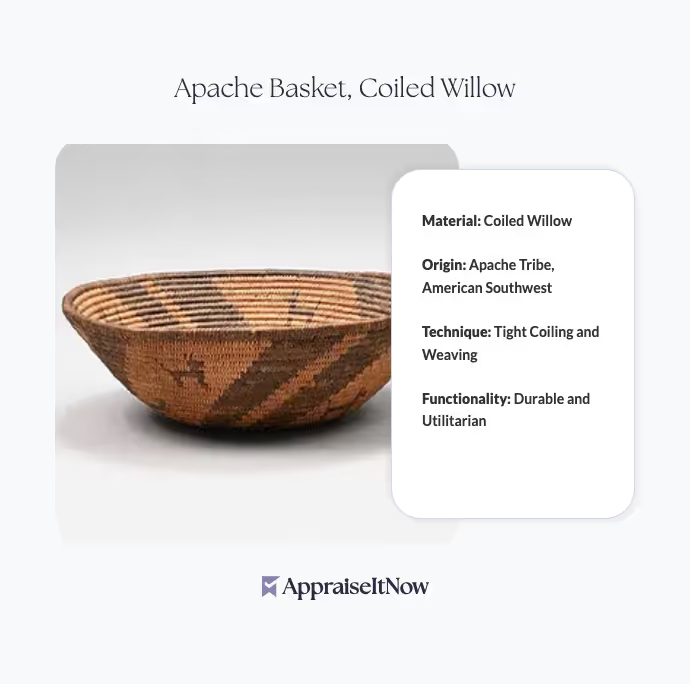
<p>Your coiled willow Apache basket commands estimated values between <strong>$1,500 and $2,500</strong> in today's market, though specific pieces may exceed or fall below this range depending on multiple factors. These baskets represent some of the most sought-after examples of traditional Native American basketry, originally woven by Apache tribes of the American Southwest using techniques refined over generations.</p>
<p>The tight coiling and deliberate weaving methods that define Apache baskets create pieces that are simultaneously functional and collectible. Unlike mass-produced alternatives, each authentic Apache basket tells its own story through the maker's distinctive style, materials sourcing, and construction choices. This rarity and cultural significance drive collector interest and make professional valuation particularly important.</p>
<div class="callout tip"><p><strong>Market Insight</strong></p>
<p>Apache baskets first introduced in the 19th century continue appreciating as collectors recognize their historical significance and the scarcity of authentic examples crafted using traditional methods.</p></div>
<h2>Identifying an Authentic Apache Basket</h2>
<p>Before seeking appraisal, you'll want confidence in your basket's authenticity. How do you identify an authentic Indian basket? This becomes your first critical step, as the market includes reproductions and baskets from other tribal traditions that command different values.</p>
<p>Genuine Apache coiled willow baskets exhibit specific characteristics. The construction should feature tight, evenly-spaced coils with no gaps between rows, demonstrating the superior craftsmanship these pieces are prized for. The willow itself—the traditional material choice—should feel naturally aged rather than artificially treated. Authentic examples often display slight color variations within the coils, reflecting the basket maker's work across multiple sessions.</p>
<p>What is the best willow for basket weaving? Apache weavers traditionally selected specific willow species known for their flexibility, strength, and ability to hold tight coils. This expertise in material selection distinguishes authentic Apache work from amateur or commercial attempts. When examining your basket, look for evidence of thoughtful material preparation rather than generic construction.</p>
<p>Your basket's base construction also provides authentication clues. Apache baskets typically begin with a carefully formed foundation, with each subsequent coil deliberately attached using plant fiber stitching. How do you identify a basket willow? Experienced appraisers examine the willow's cellular structure and aging patterns, comparing them against documented examples from known Apache weavers or tribal collections.</p>
<div class="callout note"><p><strong>Authentication Priority</strong></p>
<p>Documentation supporting your basket's origin—whether tribal attribution, maker information, or provenance—significantly increases its appraised value and collector appeal.</p></div>
<h2>Preparing Your Basket for Professional Appraisal</h2>
<p>Getting your coiled willow Apache basket appraised begins with thoughtful preparation. Gather any documentation you possess, including where you acquired the basket, previous owner information, or tribal attribution if known. Even partial provenance adds credibility to professional valuations.</p>
<p>Examine your basket's current condition carefully. How long does a willow basket last? Well-maintained examples can preserve their integrity for decades or centuries, making condition assessment central to appraisal work. Look for any loose coils, damage to the fiber stitching, or deterioration requiring conservation attention. Don't attempt amateur cleaning or repair—appraisers prefer to evaluate baskets in their current state and recommend appropriate conservation approaches.</p>
<p>Photograph your basket from multiple angles, capturing detail shots of the coiling pattern, the base construction, and any maker's marks or identifying features. These images help appraisers conduct preliminary assessment before in-person evaluation. Document any repairs or restoration work performed previously, as this information affects valuation.</p>
<h2>Selecting a Qualified Appraiser</h2>
<p>Your appraiser's expertise directly impacts valuation accuracy and credibility. When seeking an appraisal professional, prioritize those with specific experience in ethnographic artifacts and indigenous art. Look for credentials from recognized appraisal organizations like the <strong>American Society of Appraisers (ASA)</strong>, <strong>International Society of Appraisers (ISA)</strong>, or <strong>Appraisers Association of America (AAA)</strong>, as these indicate formal training and ethical standards adherence.</p>
<p>Appraisers evaluating cultural heritage items should demonstrate knowledge of tribal basketry traditions, market dynamics for indigenous art, and authentication methodologies. Their expertise in <a href="/blog/evaluating-cultural-heritage-appraisals-of-indigenous-art-and-artifacts">evaluating cultural heritage appraisals</a> and <a href="/blog/appraising-ethnographic-artifacts-evaluating-cultural-heritage-for-institutions">ethnographic artifact evaluation</a> becomes particularly valuable when assessing items as culturally significant as Apache baskets.</p>
<p>AppraiseItNow connects you with USPAP-compliant appraisers across the U.S. who specialize in <a href="/types/antiques">antiques</a> and <a href="/types/memorabilia-and-collectibles">memorabilia and collectibles</a>. Our credentialed experts understand the nuances of Apache basketry valuation, market trends, and the cultural context that informs fair market value determination.</p>
<h2>Market Factors Affecting Your Basket's Value</h2>
<p>Several dynamics influence where your Apache basket falls within the <strong>$1,500-$2,500</strong> range. Maker identification significantly impacts value—baskets attributed to renowned Apache weavers command premiums over unattributed examples. Age also matters substantially. A basket documented to the 19th century reflects the traditional methods you're paying for and typically values higher than 20th-century pieces.</p>
<p>Size represents another key variable. Larger baskets requiring more material and labor command higher values, though exceptionally small or unusually-shaped pieces may offer their own collector appeal. The intricacy of design patterns and any specialized techniques employed—such as particularly tight coiling or distinctive decorative elements—contribute to premium pricing.</p>
<p>Condition directly affects market value. Baskets with tight coiling, minimal damage, and evidence of careful preservation appraise higher than pieces requiring conservation attention. Unlike some antiques where patina adds value, Apache baskets benefit from good condition that demonstrates longevity and proper storage.</p>
<table class='appraisal-table'>
<thead>
<tr>
<th>Factor</th>
<th>Impact on Value</th>
<th>Details</th>
</tr>
</thead>
<tbody>
<tr>
<td>Maker attribution</td>
<td>+25-40%</td>
<td>Known weaver identification</td>
</tr>
<tr>
<td>Age (19th century)</td>
<td>+20-35%</td>
<td>Earlier examples command premiums</td>
</tr>
<tr>
<td>Size and complexity</td>
<td>+15-30%</td>
<td>Larger, intricate pieces valued higher</td>
</tr>
<tr>
<td>Condition</td>
<td>+10-20%</td>
<td>Well-preserved examples maximize value</td>
</tr>
<tr>
<td>Provenance</td>
<td>+10-25%</td>
<td>Documented ownership history</td>
</tr>
</tbody>
</table>
<h2>Understanding Regional and Market Variations</h2>
<p>Apache basket values fluctuate based on regional collector concentration and market accessibility. Southwestern markets with stronger indigenous art communities may support premium pricing compared to national averages. However, national auction houses and specialized dealers increasingly recognize Apache basketry's significance, creating more standardized valuation across regions.</p>
<p>Can you make money basket weaving? This question often arises among those considering contemporary weaving as investment or income. While modern Apache weavers create beautiful work, historical baskets from the 19th and early 20th centuries command substantially higher values due to scarcity, documented traditional methods, and cultural heritage significance. Understanding this distinction helps collectors appreciate why your inherited or acquired basket holds particular monetary value beyond its aesthetic appeal.</p>
<h2>The Role of Provenance in Your Appraisal</h2>
<p>Documentation of your basket's history—where you acquired it, previous owners, any historical records—substantially influences appraisal outcomes. Strong provenance might answer questions like tribal affiliation, estimated age, or maker identity. Even informal records, such as family notes about when and where the basket was purchased, contribute valuable context.</p>
<p>When seeking comprehensive valuation, appraisers evaluate <a href="/blog/understanding-the-role-of-provenance-in-art-appraisals-assessing-historical-significance">understanding the role of provenance in art appraisals</a> thoroughly. Clear ownership chains and documented exhibition history, if applicable, may support premium valuations. Conversely, baskets with unknown backgrounds receive standard market assessments based purely on condition, construction quality, and comparable sales data.</p>
<div class="callout tip"><p><strong>Documentation Matters</strong></p>
<p>Even partial provenance information—a receipt, family letter, or museum catalog reference—strengthens your appraisal's credibility and may increase your basket's assessed value.</p></div>
<h2>Conservation and Preservation Considerations</h2>
<p>Before and after appraisal, proper care preserves your Apache basket's condition and value. Storage in controlled environments—ideally 50-70°F temperature with 45-50% humidity—prevents deterioration common in fluctuating conditions. Keep your basket away from direct sunlight, which fades willow color and can weaken fibers over time.</p>
<p>How to clean antique Indian baskets becomes an important question if your piece has accumulated dust. Use only soft brushes or cloths, never water-based solutions or harsh chemicals. Professional conservation specialists should handle any restoration work, ensuring methods respect the basket's cultural integrity and historical authenticity. Appraisers can recommend qualified conservators if your basket requires attention.</p>
<h2>Valuation Methods and Market Comparisons</h2>
<p>Professional appraisers employ multiple methodologies when assessing Apache baskets. Comparable sales analysis examines recent transactions for similar pieces, accounting for condition, size, age, and attribution differences. This market-based approach grounds valuations in real-world pricing while acknowledging your basket's unique characteristics.</p>
<p>Condition assessment using established grading standards ensures consistency. Income approach, while less common for collectible baskets, considers potential rental or exhibition value in museum settings. Cost approach examines replacement considerations, though the cultural and historical nature of Apache baskets makes replacement value somewhat theoretical.</p>
<p>Your appraisal report should clearly detail the methodology used, explain how comparable sales were selected, and justify the final valuation conclusion. USPAP-compliant reports from AppraiseItNow provide documentation suitable for insurance coverage, legal proceedings, or informed sale decisions.</p>
<h2>Insurance and Legal Documentation</h2>
<p>An official appraisal becomes essential for insurance purposes, particularly for valuable pieces within the $1,500-$2,500 range. Your homeowner's or renters' insurance typically covers personal property only to limited amounts, making supplemental coverage necessary for collectible baskets. Insurance companies require certified appraisals from credentialed professionals to establish agreed-upon values for replacement coverage.</p>
<p>Beyond insurance, appraisals support estate planning, tax deductions for charitable donations, and conflict resolution during property division. For these purposes, <a href="/blog/what-you-need-to-know-about-personal-property-appraisals">USPAP-compliant valuations</a> provide the professional documentation that courts, tax authorities, and financial institutions require.</p>
<h2>Next Steps in the Appraisal Process</h2>
<p>Getting your Apache basket appraised through AppraiseItNow is straightforward. Submit high-quality photographs from multiple angles along with any documentation you possess. Our platform securely processes your information and connects you with qualified appraisers experienced in indigenous art and <a href="/types/antiques">antique basketry</a>. You'll receive a detailed, certified appraisal report suitable for any personal or professional purpose.</p>
<p>The timeline typically spans 2-4 weeks, allowing adequate research and comparative analysis. You can discuss findings with your appraiser to understand the valuation rationale and ask questions about market factors or condition concerns affecting your basket's assessed value.</p>
<div class="callout note"><p><strong>Key Takeaway</strong></p>
<p>Your Apache basket, coiled willow represents genuine cultural and monetary value worth $1,500-$2,500. A certified appraisal from a qualified professional provides the documentation and expertise you need for insurance, sale, estate planning, or simply understanding the worth of this remarkable piece of Native American heritage.</p></div>