







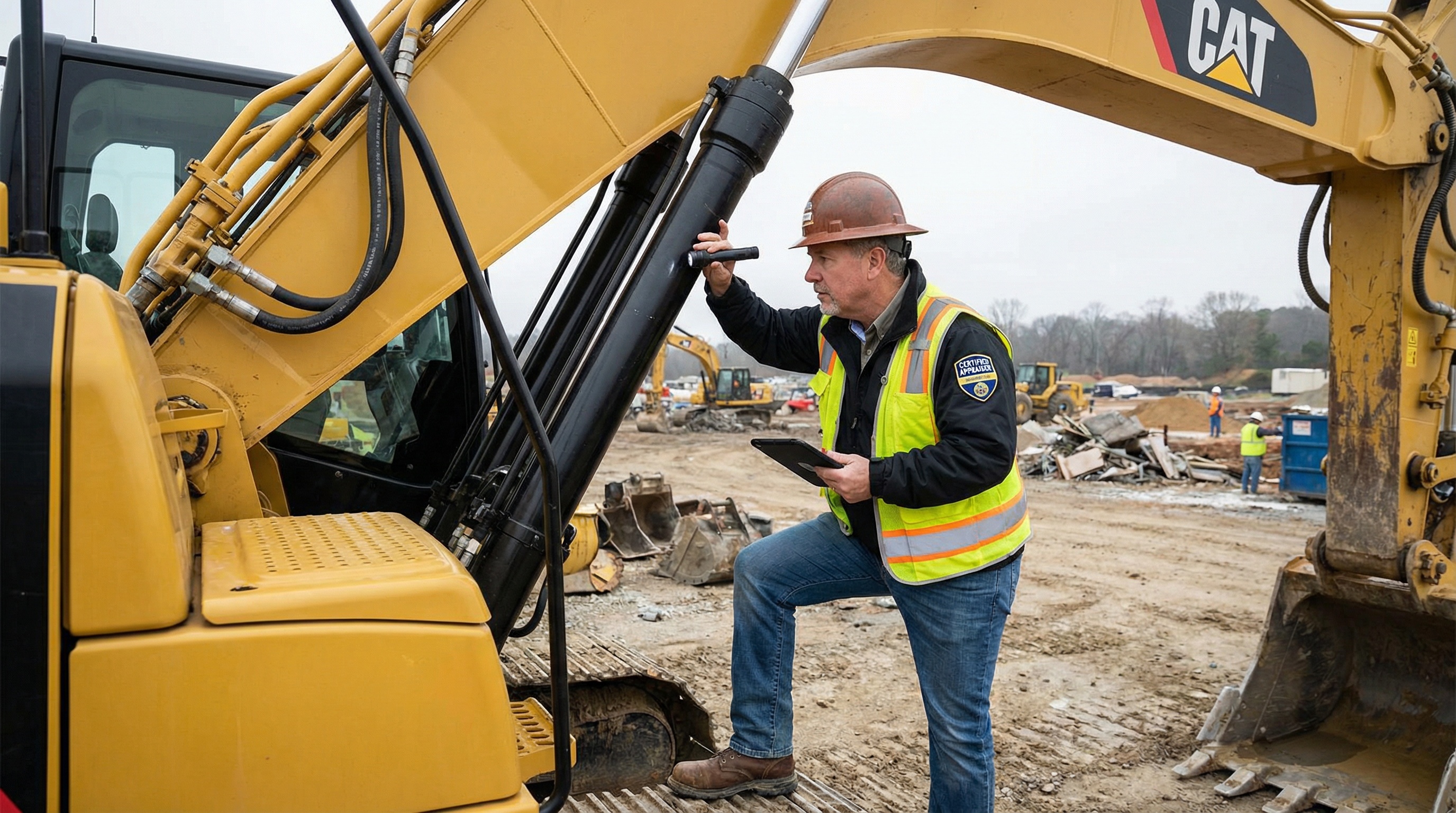
Using the wrong heavy equipment appraiser can cost you six figures in a single insurance claim or IRS audit because their report won't stand up to scrutiny. When lenders, insurers, and the IRS review your appraisal, they expect more than just "experience with machinery"—they demand USPAP-compliant reports prepared by credentialed professionals.
The difference between a qualified appraiser and someone who simply knows equipment values can determine whether your insurance claim gets paid, your loan gets approved, or your tax deduction stands up to an audit. A qualified heavy equipment appraiser is a licensed professional who evaluates machinery using standardized methods, providing defensible valuations that courts, banks, and government agencies accept.
Key insight: USPAP-compliant appraisals are required by most lenders and accepted by the IRS, while dealer opinions or informal valuations typically aren't considered legally defensible.
By the end of this guide, you'll know exactly what credentials to look for, which questions to ask, and how to compare appraisers to protect your investment and avoid costly mistakes.
A qualified heavy equipment appraiser differs significantly from dealers, auctioneers, or equipment brokers. While dealers focus on selling and may have inherent bias toward higher or lower values depending on their position, certified appraisers maintain independence and follow strict professional standards.
The most important qualification is adherence to the Uniform Standards of Professional Appraisal Practice (USPAP). These standards ensure consistent methodology, proper documentation, and ethical conduct. Courts, the IRS, and major lenders specifically require USPAP-compliant reports because they meet legal standards for evidence and reliability.
Professional designations matter tremendously. The American Society of Appraisers (ASA) offers the Machinery and Technical Specialties (MTS) designation, which requires comprehensive education, rigorous examination, documented experience, and ongoing ethics compliance. Other respected credentials include certifications from the American Machinery and Equipment Appraisers (AMEA).
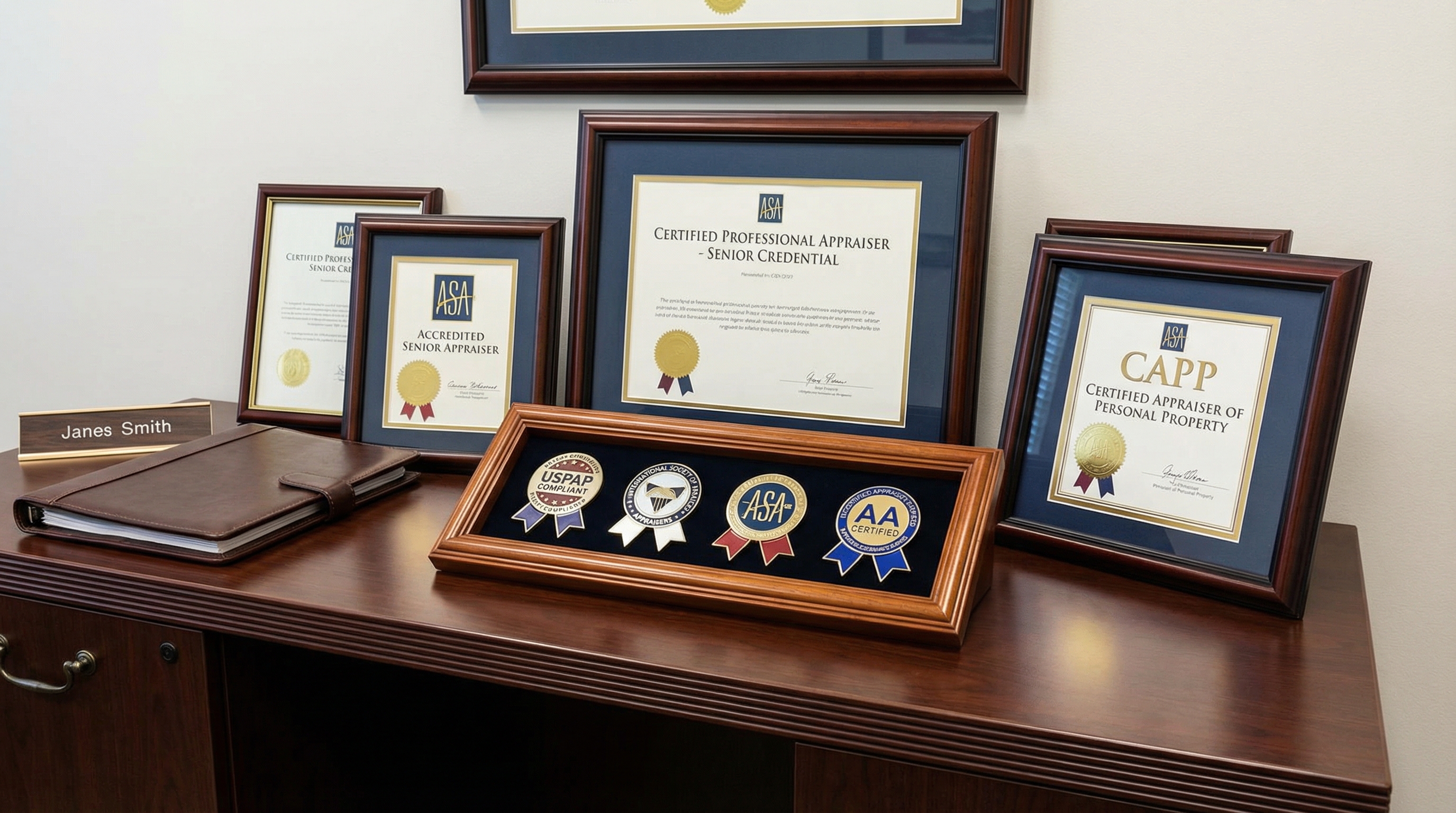
Industry expertise goes beyond general appraisal knowledge. You want someone who understands your specific sector—whether construction, mining, agriculture, or manufacturing. They should know how usage hours, maintenance history, and operating conditions affect value for your particular equipment types.
When evaluating potential appraisers, start by verifying their professional designations through official association websites. The ASA directory allows you to search by specialty and location, confirming active membership status and credential levels.
Look for appraisers who specialize in machinery rather than general personal property. A Certified Machinery and Technical Specialist (CMTS) has completed a four-step process: education in valuation principles, comprehensive examination, documented experience appraising similar equipment, and commitment to ethical standards.
Experience matters, but specific experience matters more. Ask how many years they've been appraising heavy equipment (not just doing appraisals generally) and what percentage of their work involves your equipment type. Someone who primarily appraises artwork but occasionally values construction equipment isn't your best choice.
USPAP compliance should be explicitly confirmed. Ask directly: "Are your appraisals USPAP-compliant?" and "Can you provide a sample report showing your methodology?" A qualified appraiser will readily provide this information and explain their process, similar to what you should expect when getting a construction equipment appraisal.
Important note: Not all "certified" labels are equal—verify designations directly through professional association websites rather than taking claims at face value.
Your conversation with potential appraisers should cover specific qualifications and experience. Ask about their professional designations and which organizations granted them. Request details about their experience with your equipment type and the purposes you need (insurance, lending, litigation, tax reporting).
Inquire about their report format and turnaround time. A comprehensive USPAP-compliant report typically takes longer than a simple letter of value, but provides the documentation necessary for legal and financial purposes. Ask to see a redacted sample report to evaluate their thoroughness and professionalism.
Discuss their inspection process. Will they conduct an on-site inspection or rely on photos and documentation? While desktop appraisals can work for certain purposes, complex or high-value equipment typically requires physical inspection for accurate assessment.
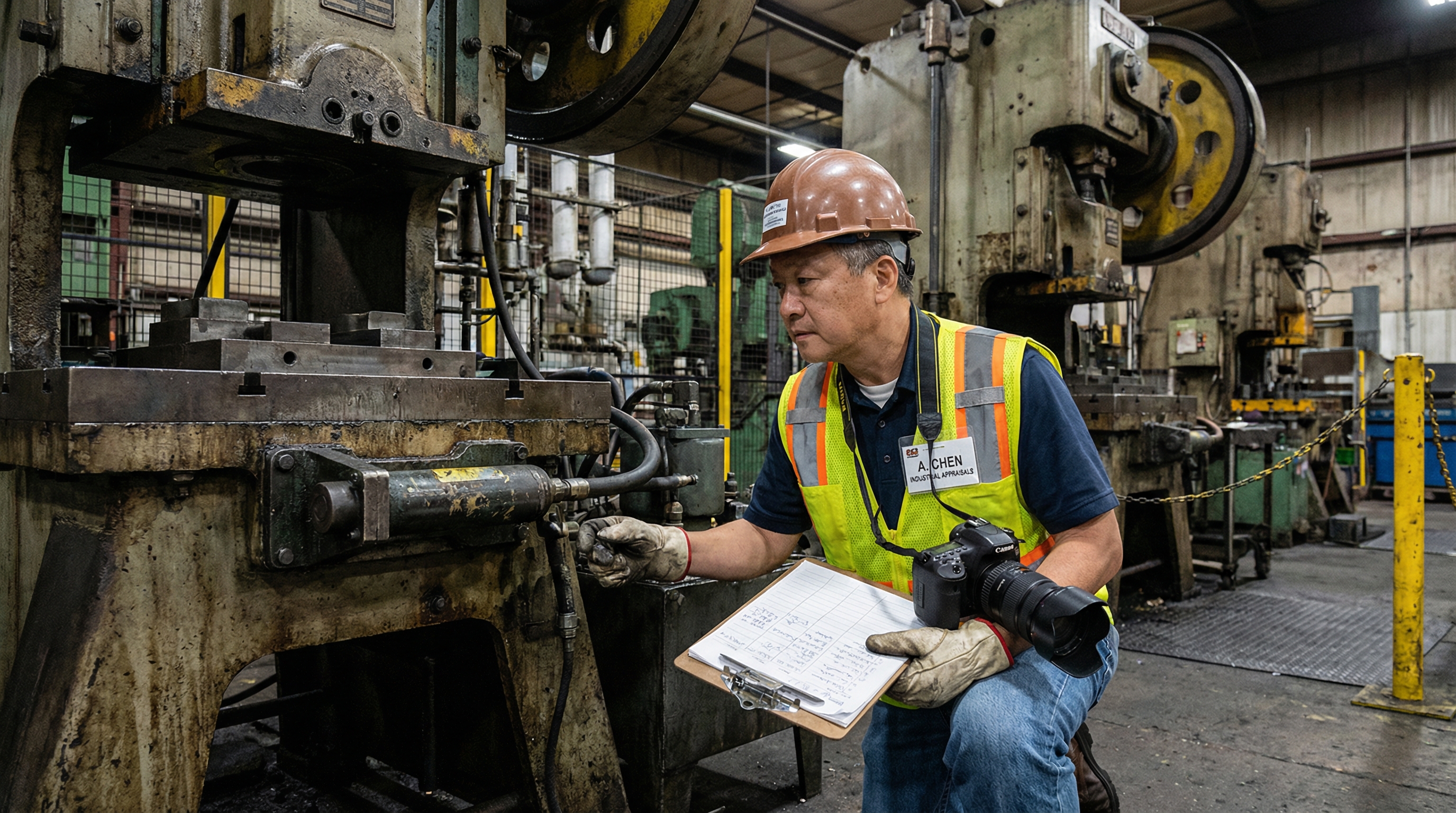
Verify their independence by asking about potential conflicts of interest. Professional appraisers should not have financial interests in the outcome and should never guarantee specific value conclusions or agree to "hit a number" to satisfy a client's needs. Understanding common mistakes to avoid when getting an equipment & machinery appraisal can help you ask the right questions.
Heavy equipment appraisal costs vary based on several factors. The number and complexity of assets, geographic location, inspection requirements, and report detail level all influence pricing. Rush jobs and remote locations typically cost more due to travel time and scheduling constraints.
Most appraisers use flat-fee structures rather than hourly billing, with separate pricing for desktop versus on-site inspections. Be wary of appraisers whose fees are tied to the appraised value, as this creates conflicts of interest prohibited by professional standards.
Service TypeTypical Use CasesCost FactorsDesktop appraisalInsurance updates, portfolio reviewsAsset count, documentation qualityOn-site inspectionLending, litigation, major transactionsTravel, equipment complexity, site accessComprehensive reportCourt proceedings, IRS mattersDetail level, research depth, expert testimony
To get accurate quotes, provide detailed information about your equipment: types, quantities, locations, and appraisal purpose. The more specific your initial information, the more accurate the estimate. Ask for written quotes that itemize all fees and specify what's included in the base price versus additional charges.
When comparing quotes, consider value beyond just price. The cheapest option may not provide the defensible documentation you need, while the most expensive doesn't guarantee better quality. Focus on credentials, experience, and the appraiser's track record with similar assignments.
Finding qualified heavy equipment appraisers requires knowing where to look and how to evaluate candidates. Professional associations provide the most reliable starting point, while referrals from trusted advisors can lead to appraisers with proven track records.
Start with the American Society of Appraisers directory, filtering by machinery specialties and your geographic area. The search function allows you to find appraisers with specific credentials and experience levels. Similarly, check the American Machinery and Equipment Appraisers association for certified professionals in your region.
Industry referrals often provide valuable insights. Banks that regularly make asset-based loans, attorneys handling equipment-related litigation, and CPAs working with equipment-intensive businesses frequently work with appraisers whose reports have withstood scrutiny. These professionals can recommend appraisers they trust for critical assignments.
Online directories and review platforms can supplement your research, but interpret reviews carefully. Look for comments about professionalism, report quality, and successful outcomes rather than just friendliness or speed. Remember that the most important "review" is whether the appraiser's work stands up when challenged by opposing parties, auditors, or regulatory agencies.
Pro tip: The best appraisers often come recommended by professionals who stake their own reputations on the quality of the appraisals they rely on.
Whether you need agricultural equipment appraisal, industrial equipment valuation, or specialized assessments for medical equipment, choosing the right professional is critical to protecting your investment.
At AppraiseItNow, our certified heavy equipment appraisers combine extensive industry experience with the highest professional credentials. We provide USPAP-compliant reports accepted by courts, the IRS, and major financial institutions nationwide. Our team includes ASA-designated specialists with decades of experience in construction, agricultural, mining, and industrial equipment valuation. Whether you need a single-asset appraisal or comprehensive fleet valuation, we deliver defensible reports that protect your interests and support your business decisions.
Look for appraisers with professional designations from recognized organizations like the American Society of Appraisers (ASA) Machinery & Technical Specialties, the Association of Machinery and Equipment Appraisers (AMEA), or Certified Machinery and Equipment Appraiser (CMEA) credentials. These designations require formal education, rigorous examinations, documented experience, and ongoing ethics compliance. Most importantly, ensure they provide USPAP-compliant reports that meet legal standards for courts, lenders, and the IRS.
Unlike real estate appraisers, heavy equipment appraisers in the United States are generally not licensed by state governments. Instead, they are accredited by professional organizations. This means you must carefully evaluate their professional designations, USPAP compliance, industry experience, and track record rather than relying on state licensing as a quality indicator.
Heavy equipment appraisal costs vary based on the number and complexity of assets, geographic location, inspection requirements, and report detail level. Simple desktop appraisals may cost several hundred dollars, while comprehensive on-site inspections of large fleets or complex industrial equipment can cost several thousand dollars. Most qualified appraisers use flat-fee structures and provide written quotes based on your specific requirements.
You need a formal appraisal from a certified professional for bank financing, insurance claims, litigation, tax reporting, estate planning, or any situation where the value may be challenged by third parties. Dealer estimates or auction opinions typically aren't considered legally defensible and may not be accepted by lenders, courts, or the IRS. Professional appraisals provide the documented methodology and independence required for these critical business purposes.




