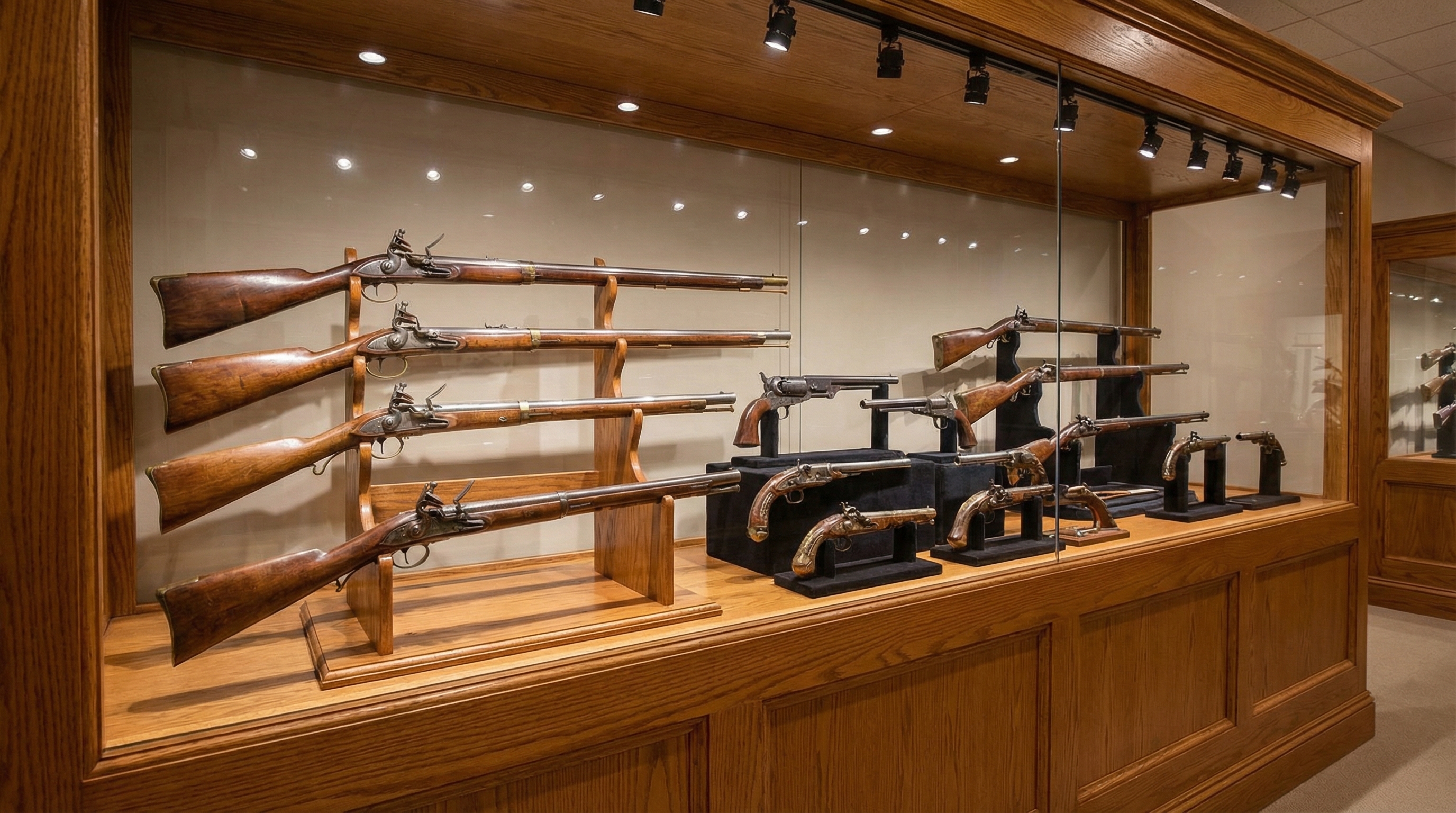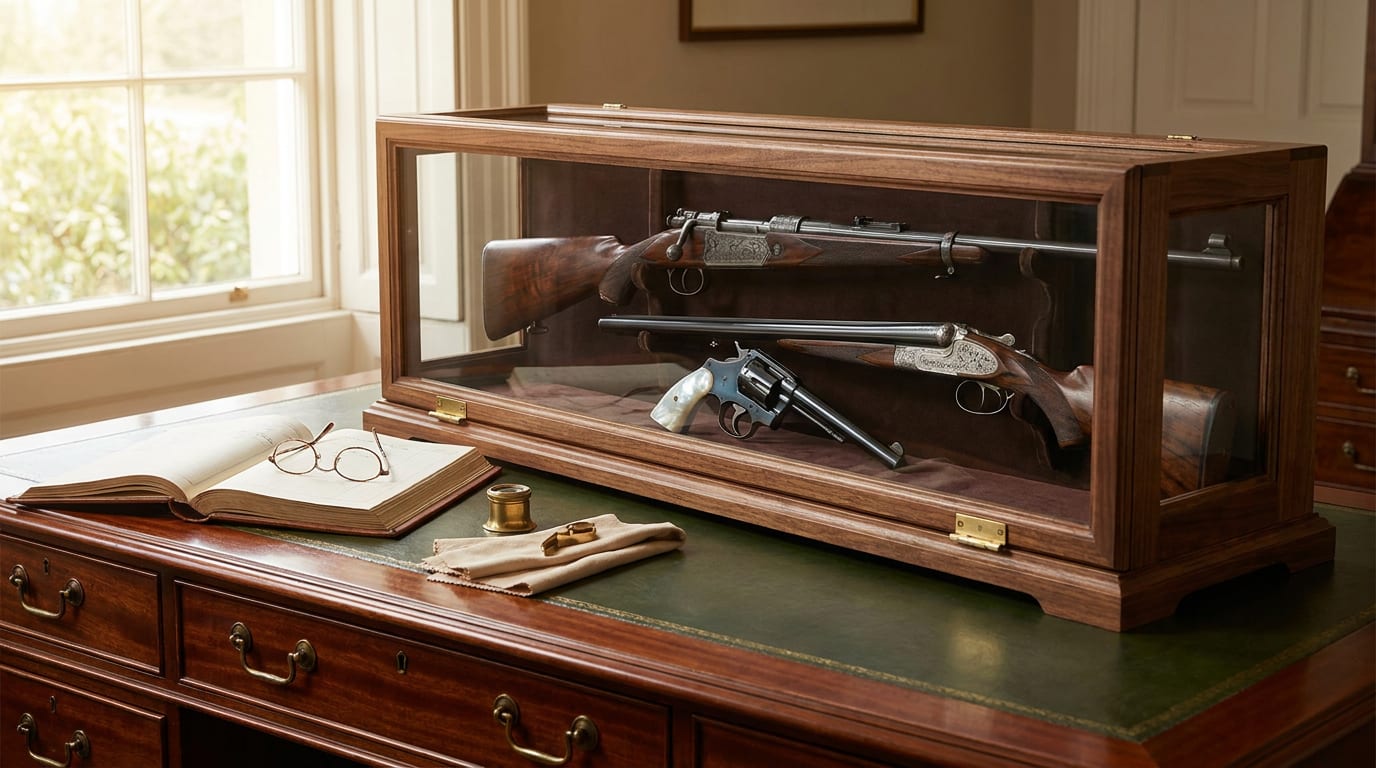
Firearms rarely get the same attention as real estate or investment accounts when an estate is settled, but they carry their own legal and valuation complications. A rifle collection, a grandfather's shotgun, or a registered suppressor all need to be identified, valued, and accounted for like any other asset in the estate, and getting that wrong can create real problems for the executor. This guide covers why a gun appraisal for an estate matters, what makes firearm values hard to pin down, and how NFA-regulated firearms move through probate differently than everything else in the gun safe.
Why Firearms Need Their Own Line Item in an Estate
An accurate, documented firearm value protects the executor and the heirs in three distinct ways: it supports equitable distribution among beneficiaries, it satisfies IRS reporting requirements, and it informs whether the estate should sell, donate, or distribute individual pieces.
When multiple heirs are involved, firearms are often the asset most likely to cause disagreement. A family member who wants to keep dad's deer rifle needs to know its value relative to what other heirs are receiving, or the estate can't divide things fairly. A documented, independent appraisal gives everyone the same number to work from instead of a guess based on what someone saw at a gun show.
Firearms are also reportable assets. They belong in the gross estate on IRS Form 706 alongside furniture, jewelry, vehicles, and every other category of personal property, and there is no firearm-specific dollar threshold that exempts them. If the estate files an estate tax return, the guns go on it at fair market value, the same as anything else the decedent owned.
Watch out: Families sometimes assume a gun collection is too modest to matter for estate purposes and skip a formal valuation entirely. That assumption can backfire if the estate is later questioned on total value, or if heirs later dispute what a particular firearm was worth at the time of distribution.
What Fair Market Value Means for an Estate Firearm
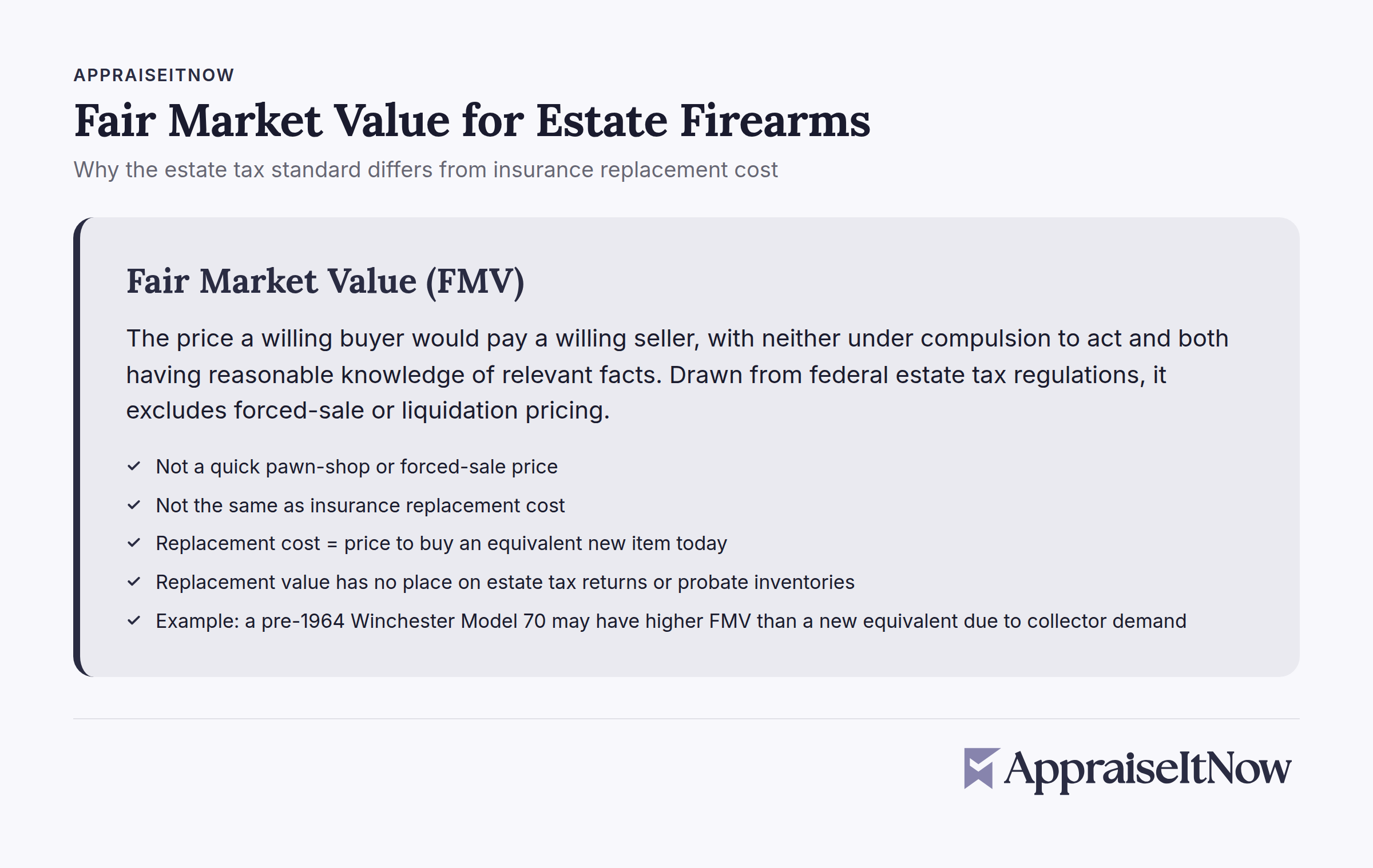
Fair market value for estate purposes is the price a willing buyer would pay a willing seller, with neither party under any compulsion to act and both having reasonable knowledge of the relevant facts. This standard, drawn from federal estate tax regulations, explicitly excludes forced-sale or liquidation pricing.
That distinction matters more than it sounds. A firearm's fair market value is not what it would fetch at a quick pawn-shop sale, and it's also not its insurance replacement cost. Replacement value answers a different question (what would it cost to buy an equivalent new item today) and has no place on an estate tax return or a probate inventory. Estate work calls for the open-market, willing buyer/willing seller standard, full stop.
Example: A pre-1964 Winchester Model 70 in excellent condition might carry a meaningfully higher fair market value than a comparable current-production rifle, because collector demand, not replacement cost, sets the price a knowledgeable buyer would actually pay.
What Makes Firearm Values Difficult to Pin Down
Firearm valuation is more specialized than most personal property categories because small details change the number significantly. An appraiser has to weigh several variables that a generalist wouldn't necessarily catch:
- Collectible or antique status versus modern production: A firearm manufactured decades ago may carry historical or collector premiums that a functionally identical modern model does not.
- Condition of bore, finish, and stock: Wear, corrosion, refinishing, and stock repairs all move value up or down, sometimes substantially.
- Provenance and documentation: Original boxes, factory letters, or a documented chain of ownership can add real value to a collectible piece.
- Matching serial numbers: Firearms where the barrel, receiver, and other components share original matching serials typically command more than guns with replaced parts.
- Curio & Relic (C&R) status: Firearms recognized as C&R items under federal classification often draw a distinct collector market that differs from ordinary sporting or defensive firearms.
Because of this complexity, firearm appraisers typically hold credentials with recognized personal property organizations such as the American Society of Appraisers, the International Society of Appraisers, and the Appraisers Association of America, and prepare reports in accordance with the Uniform Standards of Professional Appraisal Practice. That combination of credential and standard gives an executor a report that holds up to scrutiny from co-heirs, courts, or the IRS.
NFA and Title II Firearms Require Special Handling During Probate
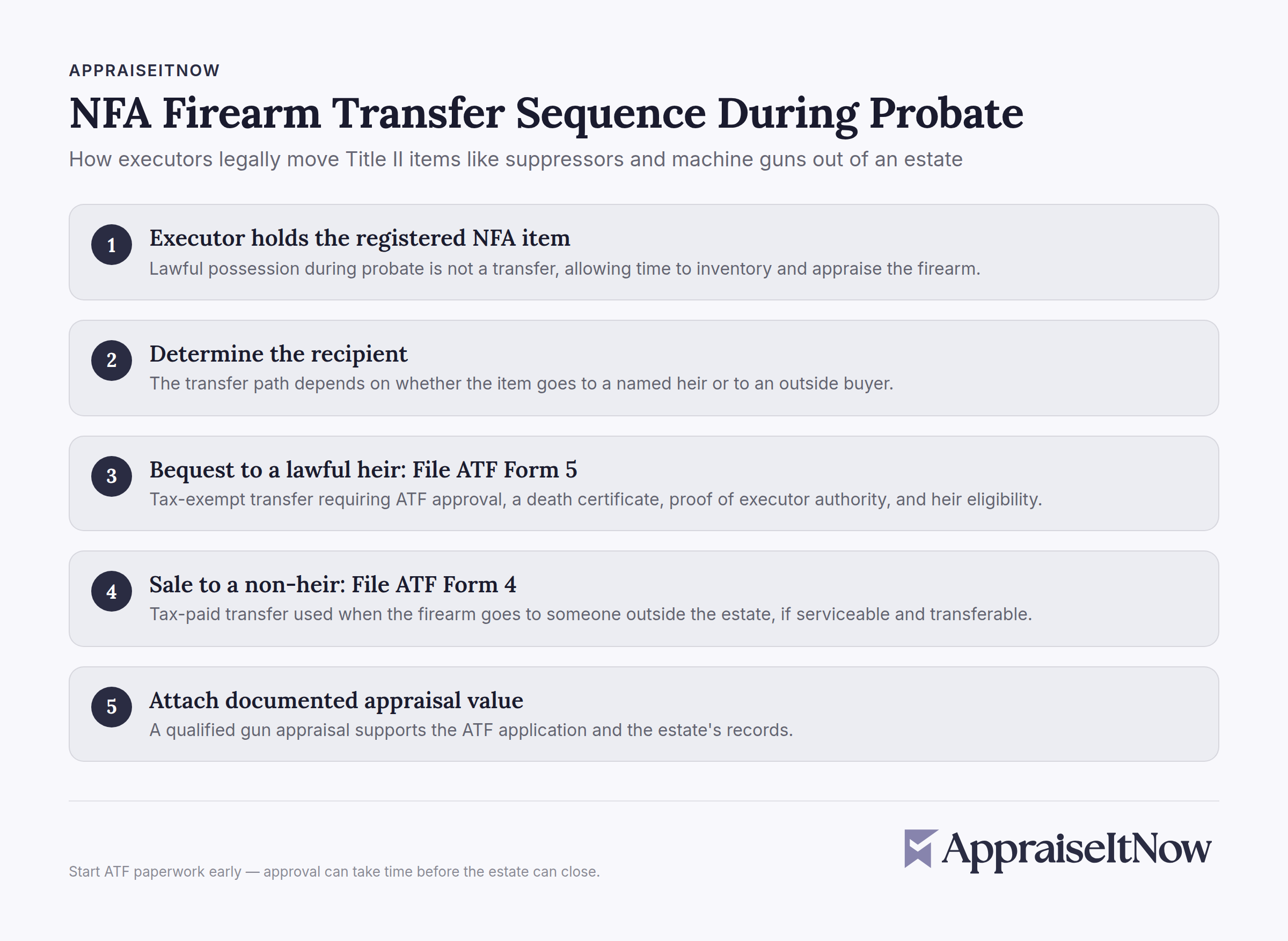
Suppressors, short-barreled rifles, and machine guns registered under the National Firearms Act follow a different transfer path than the rest of the collection, and getting this sequence wrong risks a federal firearms violation.
An executor or administrator may lawfully possess a decedent's registered NFA firearm during the probate process without that possession counting as a transfer, which gives the estate room to inventory and appraise the item properly before it moves anywhere. Once the estate is ready to distribute the firearm, the path depends on who receives it:
- Bequest to a lawful heir or beneficiary named in the estate. This is generally handled as a tax-exempt transfer using ATF Form 5 (5320.5), with ATF approval required before the firearm is actually delivered. The application typically needs supporting documents such as a death certificate and proof of the executor's authority, and the receiving heir must be legally eligible to possess the item.
- Transfer to someone outside the estate. If the NFA item is going to a buyer who is not an heir or beneficiary, that is normally a tax-paid transfer using ATF Form 4 (5320.4), assuming the firearm is serviceable and transferable.
Pro tip: Because ATF approval can take time, executors who know an estate contains NFA items should start that paperwork early rather than waiting until the rest of the estate is ready to close. A qualified gun appraisal gives the estate a documented value to attach to the ATF application and the estate's own records at the same time.
What Does a Gun Appraisal for an Estate Cost?
A firearm appraisal for estate purposes is quoted as a fixed fee before any work begins, never billed hourly. Fee ranges depend on scope: the number of firearms in the collection, whether the intended use requires an IRS-qualified report versus a standard valuation, and the depth of research needed for collectible or antique pieces.
At AppraiseItNow, standard gun appraisals start at $195, and IRS-qualified reports start at $295. Most estate gun appraisals fall in the $195 to $995 range, though larger or highly specialized collections, particularly those with rare, antique, or historically significant pieces, can run from $1,600 to $3,500 or more. The exact fee is always scoped and confirmed before the engagement begins, so there are no surprises once the report is delivered.
How the Appraisal Process Works
Most estate firearm appraisals can be completed online, using detailed photographs, serial numbers, and condition notes submitted by the executor or a designated custodian, which is especially useful when firearms are already secured with a licensed dealer during probate. For larger collections, or when NFA items and provenance documentation need in-person review, an on-site inspection can be arranged.
Either way, the deliverable is the same: a written appraisal report identifying each firearm, its condition, and its fair market value, prepared to a standard an executor can rely on for probate inventories, IRS Form 706 reporting, or dividing the collection fairly among heirs.
Settling an Estate That Includes Firearms
A gun appraisal for an estate is not a formality. It is the document that lets an executor divide a collection fairly, report it correctly to the IRS, and move NFA-regulated items through the ATF process without missing a step. Whether the estate includes a single hunting rifle or a collection built over decades, a documented, standards-based valuation protects everyone with a stake in the outcome.
AppraiseItNow's personal property appraisal team prepares USPAP-compliant firearm appraisals for estate settlement, probate inventories, and IRS filings, with reports scoped to the size and complexity of the collection.
This article is provided for general informational purposes only and does not constitute legal, tax, or financial advice. Readers should consult a qualified attorney or CPA, and coordinate with a licensed firearms dealer for any NFA transfer questions, regarding their specific circumstances.