









<h1>How to Get Your Varian NMR 500 MHz Appraised</h1>
<p>The Varian NMR 500 MHz represents one of the most sophisticated analytical instruments in modern chemistry laboratories, commanding appraisal values between <strong>$325,000 and $450,000</strong> depending on condition, calibration status, and accessory configuration. If you're managing this high-value equipment for research, sale, or insurance purposes, understanding the appraisal process ensures you capture its true market worth.</p>
<h2>Understanding the Varian NMR 500 MHz's Market Position</h2>
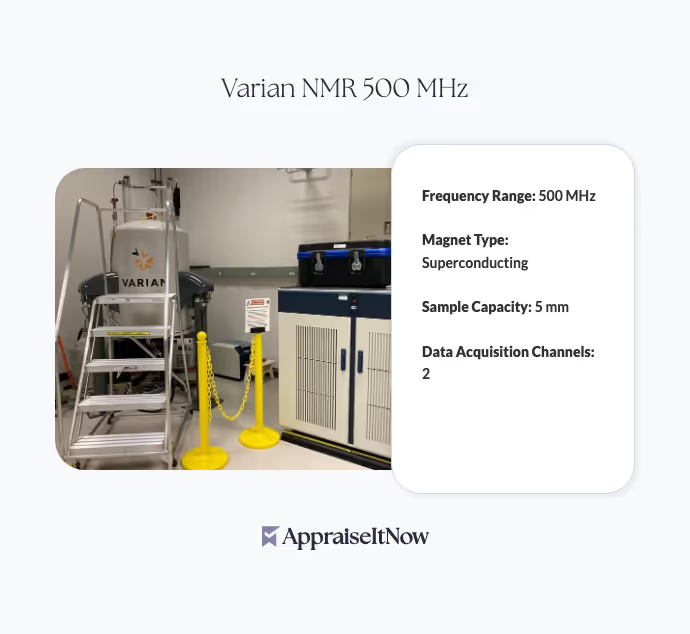
<p>First introduced in 1985, the Varian NMR 500 MHz established itself as a gold standard in high-resolution nuclear magnetic resonance spectroscopy. Your instrument's value stems from its exceptional precision in analyzing molecular structure and chemical composition—capabilities that make it invaluable for researchers in chemistry, biochemistry, and materials science. The 500 MHz frequency range allows detection and quantification of subtle nuclear spin interactions that lower-field instruments simply cannot achieve, positioning this equipment among the most sought-after analytical tools in <a href="/types/lab-equipment">lab equipment</a> markets.</p>
<p>The distinction between MHz ratings directly affects valuation. A 500 MHz NMR operates at significantly higher field strength than lower-frequency models—typically around 11.7 Tesla compared to 7.0 Tesla for 300 MHz instruments or 9.4 Tesla for 400 MHz systems. This superior field strength enables faster data acquisition, better spectral resolution, and capability for advanced 2D and 3D experiments that command premium pricing in both new and used markets.</p>
<div class="callout tip"><p><strong>Technical Clarity</strong></p>
<p>MHz (megahertz) indicates the frequency at which the instrument operates. Higher MHz ratings mean stronger magnetic fields, faster experiments, and greater chemical shift separation—directly translating to higher appraisal values.</p></div>
<h2>Key Specifications That Influence Your Appraisal Value</h2>
<p>When appraisers evaluate your Varian NMR 500 MHz, they assess multiple technical and operational factors. The instrument's <strong>cryogenic superconducting magnet</strong> represents the single largest value component—this sophisticated system maintains extremely low temperatures to preserve superconductivity, and replacement costs alone can reach $100,000 or more. Proper magnet maintenance directly impacts your equipment's market value, as any degradation in superconducting performance significantly reduces appraisal estimates.</p>
<p>The state-of-the-art console and sophisticated software suite constitute additional critical value drivers. Your NMR's data acquisition capabilities, processing power, and analysis software determine its functionality and market desirability. Instruments featuring advanced capabilities for 2D experiments (COSY, HSQC, HMBC) and 3D NMR protocols command higher values than basic models limited to 1D spectroscopy.</p>
<p>Accessory configurations substantially affect appraisal outcomes. Variable temperature modules, broadband probes, specialized probe sets for specific applications, and upgraded software packages can add $50,000 to $100,000 to base valuations. Automated sample changers and flow probe systems particularly enhance value for instruments destined for high-throughput pharmaceutical research environments.</p>
<h2>Calibration Status and Operational Condition</h2>
<p>An often-overlooked but critical appraisal factor is your NMR's calibration status and recent maintenance history. Instruments with current calibration certifications and documented regular maintenance command 15-20% premiums over uncalibrated examples. This reflects real operational value—properly calibrated NMRs deliver accurate spectroscopic data essential for pharmaceutical research, drug development, and quality assurance applications across the industry.</p>
<p>The magnetic field strength measurement, expressed in parts per million (ppm), determines spectral accuracy. When interpreting appraisals, understand that ppm represents the chemical shift scale used in NMR analysis—better ppm stability indicates superior instrument condition and commands higher market value. Appraisers verify field stability through technical documentation and may conduct performance testing.</p>
<p>How much sample do you need for NMR analysis? While this question affects operational costs rather than appraisal value directly, it indicates your instrument's sensitivity and capability level. More sensitive instruments command higher valuations because they enable analysis of dilute solutions and trace compounds—capabilities particularly valuable in pharmaceutical quality control where regulatory compliance depends on accurate spectroscopy.</p>
<div class="callout note"><p><strong>Market Insight</strong></p>
<p>Instruments with recent factory servicing, magnet re-shimming, and probe calibration documents typically appraise 20-30% higher than comparable units lacking maintenance records.</p></div>
<h2>Condition Assessment and Wear Evaluation</h2>
<p>Professional appraisers conducting <a href="/types/chemical-equipment">chemical equipment</a> valuations examine both external and internal condition indicators. External cosmetic condition—cabinet finish, panel function, connector integrity—contributes approximately 10-15% to overall appraisal value. More significantly, internal components including the probe assembly, gradient coils, and radiofrequency electronics require detailed technical assessment.</p>
<p>The probe represents your NMR's most wear-susceptible component. Quality probes cost $15,000-$40,000 to replace, so probe condition directly impacts appraisal value. Appraisers evaluate probe performance through impedance matching, tuning range, and sensitivity measurements—declining performance from wear can reduce appraisals by $30,000 or more.</p>
<p>Magnet field homogeneity assessment typically requires professional evaluation. Excellent shimming and stable field strength indicate recent maintenance and proper storage conditions, supporting higher valuations. Conversely, instruments showing field drift or instability suggest maintenance issues that reduce market value significantly.</p>
<h2>Market Demand in Pharmaceutical and Research Settings</h2>
<p>Your Varian NMR 500 MHz's appraisal value reflects strong institutional demand for these instruments. Pharmaceutical companies conducting drug development, universities supporting chemistry research programs, and contract research organizations all actively purchase used 500 MHz systems to supplement laboratory capacity. This sustained demand maintains valuations within the $325,000-$450,000 range for equipment in good condition.</p>
<p>Notably, the pharmaceutical research sector drives premium pricing for NMR instruments because regulatory compliance requires high-resolution spectroscopic data for drug characterization and quality assurance. Understanding "What is the peak of NMR at 4.7 ppm?" matters for appraisers because it indicates the instrument analyzes water or specific molecular environments—a capability that labs desperately need and will pay premium prices to access.</p>
<p>The field strength distinction between 400 MHz and 600 MHz NMR systems creates market segmentation affecting your 500 MHz valuation. Your instrument occupies the sweet spot—more capable than 400 MHz models yet more affordable than 600 MHz systems. This positioning maintains steady demand and stable pricing compared to equipment at market extremes.</p>
<h2>Depreciation Patterns and Valuation Timeline</h2>
<p>NMR instruments depreciate approximately 8-12% annually during their first decade, then stabilize at lower rates once they reach 15+ years old. Your Varian NMR 500 MHz, introduced in 1985, represents an older but still highly functional platform. This creates interesting appraisal dynamics—while age suggests lower value, the instrument's proven reliability, abundant spare parts availability, and robust design sometimes increase values for well-maintained examples compared to newer but less reliable competitors.</p>
<p>Recent market transactions show 500 MHz Varian systems consistently appraising within the stated $325,000-$450,000 range when properly maintained. Instruments requiring significant repairs, featuring outdated software, or showing magnet degradation appraise at the lower end of this spectrum or below. Conversely, recently serviced systems with upgraded electronics and current software command premiums pushing toward the $450,000 ceiling.</p>
<div class="callout tip"><p><strong>Valuation Strategy</strong></p>
<p>If you're planning an appraisal, timing matters. Obtaining professional valuation before equipment develops problems preserves higher appraisal values and supports better sale negotiations or insurance coverage.</p></div>
<h2>Professional Appraisal Requirements and Standards</h2>
<p>When you seek professional appraisal services for your Varian NMR 500 MHz, expect comprehensive assessment following <strong>USPAP standards</strong> (Uniform Standards of Professional Appraisal Practice). Qualified appraisers specializing in scientific equipment examine your instrument's specifications, condition, market demand, and recent comparable sales to establish defensible valuations accepted by insurance companies, courts, and financial institutions.</p>
<p>Your appraisal should document the instrument's serial number, manufacturing date, current operational status, and any modifications or upgrades from original specifications. For equipment destined for <a href="/types/equipment-and-machinery">institutional or research applications</a>, appraisers verify that the Varian NMR meets current safety standards and regulatory compliance requirements affecting market value.</p>
<p>Professional valuations prove particularly important for NMR instruments because these complex systems involve subjective assessments of component condition and operational capability. An appraiser's expertise in interpreting technical performance data—understanding how to calculate NMR frequency from field strength, convert Hz to ppm in NMR analysis, and evaluate probe sensitivity—directly impacts appraisal accuracy and credibility.</p>
<h2>Insurance and Documentation Purposes</h2>
<p>Understanding your Varian NMR 500 MHz's current market value protects your financial interests whether you're managing institutional equipment or preparing for equipment sale. Comprehensive appraisals provide essential documentation for insurance coverage, establishing replacement cost values that reflect current market conditions. This proves critical because new 500 MHz NMR systems cost $600,000-$800,000, yet your used equipment's depreciated value reflects more realistic replacement cost for institutions seeking capable alternatives.</p>
<p>For estate planning or asset distribution purposes, certified appraisals establish fair market value acceptable to tax authorities and beneficiaries. When family businesses, research institutions, or laboratories undergo ownership transitions, professional valuations prevent disputes and ensure equitable asset allocation.</p>
<div class="callout note"><p><strong>Key Takeaway</strong></p>
<p>A certified appraisal of your Varian NMR 500 MHz provides essential documentation for insurance protection, sales transactions, and regulatory compliance, ensuring you understand both the technical capabilities and monetary value of this sophisticated analytical instrument. AppraiseItNow's credentialed experts deliver USPAP-compliant valuations that stand up to professional and financial scrutiny, giving you confidence in your equipment's true market worth.</p></div>