









<h1>How to Get Your Thermo Fisher Sorvall Centrifuge Appraised</h1>
<p>A Thermo Fisher Sorvall Centrifuge represents a significant investment in laboratory infrastructure, and whether you're planning to sell, replace, insure, or donate one, understanding its current market value is essential. These sophisticated instruments typically command <strong>$60,000 to $90,000</strong> in today's used equipment market, though your specific model's worth depends on several interconnected factors that professional appraisers evaluate systematically.</p>
<h2>Understanding Your Centrifuge's Market Position</h2>
<p>The Thermo Fisher Sorvall Centrifuge has earned its reputation among leading research institutions since its introduction in 1985, making it a cornerstone of modern laboratory operations. Your centrifuge likely serves critical roles in cell biology, molecular biology, and biochemistry applications—fields where equipment reliability directly impacts research outcomes and grant-dependent budgets.</p>
<p>What makes your Sorvall valuable isn't just its current functionality, but the trust it has built over decades. The advanced error detection capabilities, precise speed controls, and temperature regulation features that define this equipment create substantial demand in the secondary market. When considering whether to pursue a professional appraisal, recognize that these instruments retain significant value precisely because research institutions recognize their performance standards and continue seeking quality used models to supplement or replace aging equipment.</p>
<div class="callout tip"><p><strong>Market Insight</strong></p>
<p>Sorvall centrifuges typically command 40-60% of their original purchase price in the used market, making them more resilient than many laboratory instruments as values decline.</p></div>
<h2>What Affects Your Centrifuge's Appraisal Value</h2>
<p>The $60,000 to $90,000 estimate represents a broad range because multiple variables influence where your specific unit lands within that spectrum. Understanding these factors helps you prepare documentation and recognize what professional appraisers will examine during evaluation.</p>
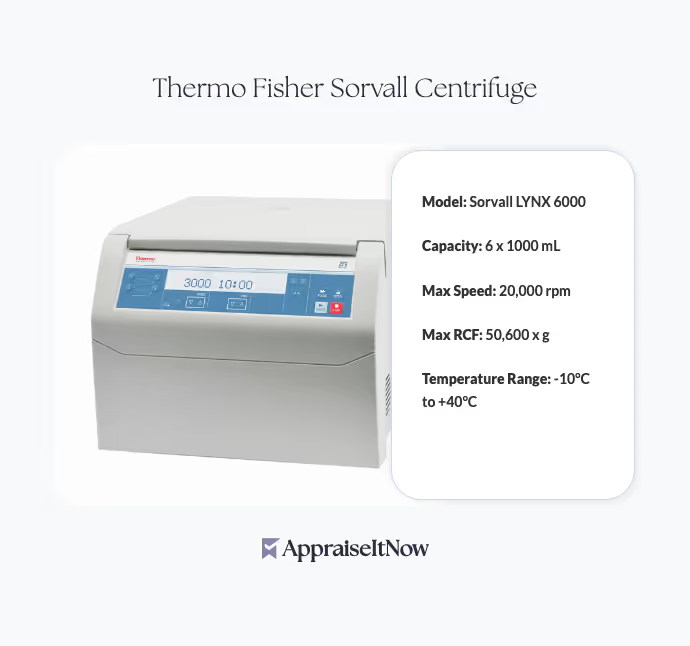
<p><strong>Model specifications</strong> form the foundation of valuation. Your centrifuge's maximum RPM (revolutions per minute), relative centrifugal force capacity (measured in xg or g-force), and whether it features refrigeration capabilities directly impact utility and therefore value. A refrigerated floor model with high-speed capabilities typically appraises higher than a benchtop non-refrigerated unit, since many biological samples require temperature control for preservation during separation processes.</p>
<p>Age and actual hours of operation matter significantly, though not always in straightforward ways. A 15-year-old Sorvall with documented light use and meticulous maintenance records often appraises higher than a 5-year-old unit that experienced heavy use in a busy core facility. The relationship between manufacturing date and condition resembles <a href="/types/equipment-and-machinery">equipment and machinery appraisal</a> more broadly—hours on the machine matter less than how well those hours were logged and managed.</p>
<p><strong>Rotor compatibility and availability</strong> creates substantial value variation. Your Sorvall's worth depends partly on which rotor types it supports, since rotors represent significant consumable or replacement costs for purchasing institutions. Centrifuges that accommodate multiple rotor standards—fixed-angle rotors, swing rotors, and specialty rotors for microplate or tube formats—appeal to broader buyer pools and command premiums. If your instrument includes rotors in the sale, that inventory directly increases appraisal value.</p>
<p>The presence of <strong>calibration certificates and service records</strong> functions as a trust-building mechanism in the used equipment market. When you provide documentation showing routine maintenance from certified Thermo Fisher service technicians, calibration verification performed within the past 12-24 months, and detailed maintenance logs, appraisers can confidently position your unit at the higher end of comparable sales. Conversely, centrifuges without recent calibration documentation typically see 10-20% value reductions due to uncertainty about current performance accuracy.</p>
<div class="callout note"><p><strong>Documentation Priority</strong></p>
<p>Original manuals, parts lists, and technical specifications significantly enhance appraisal values—have these assembled before your professional evaluation.</p></div>
<h2>Preparing Your Centrifuge for Appraisal</h2>
<p>Professional appraisers typically evaluate laboratory equipment through a combination of in-person inspection and documentation review. For <a href="/types/lab-equipment">lab equipment</a> like your Sorvall, preparation directly influences appraisal accuracy and outcome.</p>
<p>Begin by thoroughly cleaning the exterior and accessible internal components. Remove dust from cooling fins, verify that display screens function properly, and ensure all physical damage or wear is clearly visible (rather than hidden under dust). Photograph the centrifuge from multiple angles—front, rear, sides, with door open, displaying rotor compartments, and showing any identifying serial number plates or logos. This documentation becomes part of the appraisal record and helps justify valuation conclusions.</p>
<p>Assemble all technical documentation in one location: the original user manual, any parts manuals or service bulletins, calibration certificates, maintenance logs covering at least the past three years, and the original purchase documentation if available. If your institution moved the centrifuge or performed any repairs, gather those records as well. For remote appraisals that many institutions now prefer, this documentation package becomes your appraisal foundation.</p>
<p>Test the basic functions before the appraiser arrives: Does it power on reliably? Do temperature controls respond appropriately? Does the rotor spin smoothly without unusual vibration or noise? While appraisers understand that used equipment may show minor wear, demonstrating that the unit operates safely and predictably strengthens your valuation case.</p>
<h2>Regional Market Variations and Timing Considerations</h2>
<p>Laboratory equipment values fluctuate based on regional demand, institutional budget cycles, and broader economic conditions affecting research funding. Universities and medical research facilities typically have concentrated buying periods aligned with fiscal year budgets and grant funding schedules. Understanding these cycles helps you time your appraisal and potential sale strategically.</p>
<p>Institutions in research-heavy regions—areas surrounding major medical centers, research universities, or biotech clusters—tend to support higher equipment prices due to concentrated demand. Conversely, rural areas may have fewer potential buyers, affecting pricing. A professional appraiser familiar with your geographic market can provide realistic guidance on how location influences your Sorvall's current market value and optimal sale strategies.</p>
<p>Current market demand for Thermo Fisher centrifuges remains strong. Budget constraints in research institutions mean many prefer quality used equipment over new purchases, sustaining demand in the $60,000 to $90,000 range for well-maintained units. This demand stability differs from some laboratory instruments that experience sharper value declines as newer technology emerges.</p>
<h2>The Role of Service Records and Compliance Documentation</h2>
<p>Beyond basic maintenance records, certain compliance and certification documents carry substantial weight in appraisals, particularly if your institution used the centrifuge in regulated environments. HIPAA compliance documentation, biosafety certifications, or decontamination records add credibility to your unit's history and may support premium positioning.</p>
<p>Service records from authorized Thermo Fisher technicians carry more weight than in-house maintenance logs, since they provide independent verification of the equipment's condition and performance. If your institution performed major repairs or component replacements—new motor, bearings, or electronic control boards—documentation of these significant interventions is valuable. Appraisers use this information to understand the centrifuge's remaining useful life and predict future maintenance needs for potential buyers.</p>
<div class="callout tip"><p><strong>Value Protector</strong></p>
<p>Recent calibration certificates (within 12 months) can justify positioning your centrifuge toward the $80,000-$90,000 range versus the $60,000-$70,000 floor.</p></div>
<h2>Comparable Sales and Market Research</h2>
<p>When evaluating appraisals you receive, understanding how professional valuers establish their conclusions helps you assess reasonableness. Certified appraisers conduct comparable sales analysis for <a href="/blog/understand-the-value-of-your-equipment-and-machinery-with-an-appraisal">equipment and machinery</a> using recent transactions of similar Sorvall models in similar condition with comparable features and rotor configurations.</p>
<p>Unlike unique collectibles where only a handful of sales exist, centrifuges generate more consistent market data through online marketplaces, laboratory equipment resellers, and academic institution sales listings. A professional appraiser can cite 3-5 comparable recent sales that justify their valuation within the $60,000 to $90,000 range. When requesting an appraisal, ask appraisers to provide the comparable sales data supporting their conclusions—this transparency validates their methodology.</p>
<h2>Choosing Between Appraisal Types</h2>
<p>Different appraisal purposes require different approaches. If you're preparing for a potential insurance claim, you'll need a replacement cost appraisal establishing what a similar used unit would cost in today's market—exactly what your Sorvall's $60,000 to $90,000 valuation addresses. If you're donating the equipment and need a tax deduction, appraisers may employ slightly different methodologies focused on fair market value rather than replacement cost.</p>
<p>For <a href="/types/personal-property">personal property</a> and institutional equipment appraisals, certified professionals associated with organizations like the American Society of Appraisers (ASA) or International Society of Appraisers (ISA) provide credibility that insurers and tax authorities recognize. These credentials ensure your appraisal follows USPAP (Uniform Standards of Professional Appraisal Practice) guidelines, meeting legal standards for evidentiary use.</p>
<h2>Understanding USPAP-Compliant Appraisals</h2>
<p>A USPAP-compliant appraisal provides the legal and professional documentation necessary for institutional, legal, and financial purposes. Unlike informal equipment valuations, compliant appraisals require licensed professionals to document their methodology, examination process, comparable sales analysis, and conclusions in detailed written reports suitable for insurance claims, tax purposes, or legal proceedings.</p>
<p>When you engage AppraiseItNow or similar certified services for your Sorvall, you receive documentation that stands up to professional scrutiny. The appraisal report includes photographs, condition assessment, technical specifications verification, comparable sales justification, and the appraiser's professional credentials. This level of documentation becomes essential when your appraisal must support insurance claims, facility inventories, or institutional asset management systems.</p>
<h2>Timeline and Cost Expectations</h2>
<p>Professional appraisals for <a href="/blog/what-to-expect-from-a-laboratory-equipment-appraisal">lab equipment</a> typically require 1-3 weeks from initial contact to completed report delivery. The process begins with documentation submission and detailed equipment description, followed by appraiser examination (which may be remote for straightforward evaluations or on-site for comprehensive assessments), and concludes with report writing and delivery.</p>
<p>Appraisal costs vary based on equipment complexity and whether evaluation is remote or in-person. For a single Sorvall centrifuge with complete documentation, expect professional appraisal fees in the $400-$800 range, though complex institutional equipment inventories may cost more. Consider this investment protection for a $60,000-$90,000 asset—the appraisal cost represents less than 1% of your equipment value and provides documentation essential for insurance, accounting, and legal purposes.</p>
<h2>Maximizing Your Appraisal's Usefulness</h2>
<p>Beyond establishing market value, your completed appraisal serves multiple institutional functions. Use it to document current assets for balance sheet reporting, support insurance coverage verification, establish baseline conditions for equipment relocation, or justify equipment replacement decisions to administrators. A professional appraisal creates institutional records that persist beyond individual staff member tenure, ensuring future decision-makers understand your Sorvall's documented value and condition.</p>
<p>If you're considering selling your centrifuge, the appraisal provides objective valuation to guide asking prices when contacting laboratory equipment resellers or listing on specialized marketplaces. Rather than guessing at pricing or anchoring to unrealistic expectations, you'll approach potential buyers with professional documentation supporting your price positioning within the $60,000 to $90,000 range appropriate to your specific unit's condition and features.</p>
<div class="callout note"><p><strong>Key Takeaway</strong></p>
<p>A certified, USPAP-compliant appraisal of your Thermo Fisher Sorvall Centrifuge provides the professional documentation necessary for insurance, institutional asset management, and potential sale purposes—transforming a generic $60,000-$90,000 market estimate into a specific, defensible valuation supported by detailed condition assessment and comparable sales analysis.</p></div>