









<h1>How to Get Your TESCAN MIRA3 Microscope Appraised</h1>
<p>The TESCAN MIRA3 scanning electron microscope (SEM) represents a substantial investment in analytical capabilities, with current market valuations ranging between <strong>$180,000 and $190,000</strong> for quality used units. Whether you're evaluating equipment for insurance coverage, estate planning, facility upgrades, or resale purposes, understanding how to navigate the appraisal process ensures you receive accurate documentation backed by certified expertise.</p>
<h2>Understanding Your TESCAN MIRA3's Value</h2>
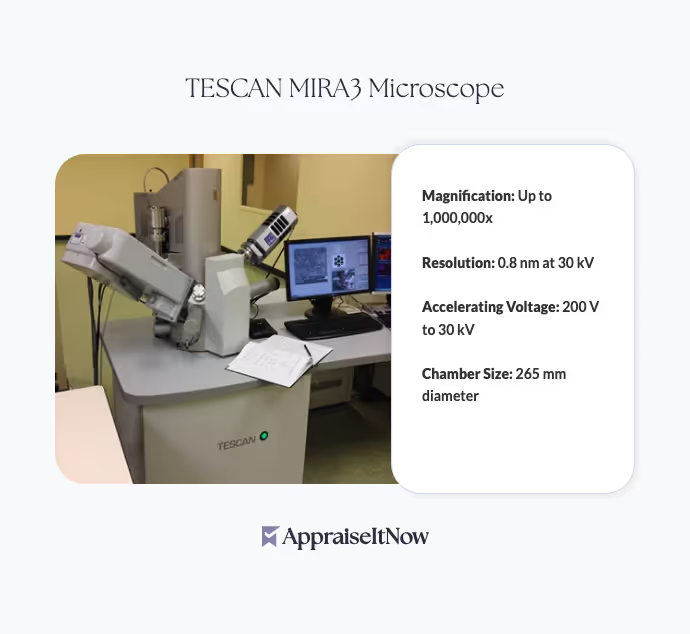
<p>The TESCAN MIRA3 stands as a high-performance instrument trusted by leading research institutions worldwide. Introduced in 2010, this SEM combines state-of-the-art electron optics with a sophisticated Schottky field emission gun, enabling ultra-high-resolution imaging of everything from biological samples to advanced nanomaterials. Your microscope's specific value depends on multiple technical and operational factors that professional appraisers examine systematically.</p>
<p>The question many facility managers ask—<strong>How much is the electron microscope worth?</strong>—doesn't have a one-size-fits-all answer. The MIRA3's valuation reflects its advanced detector systems, modular design flexibility, and proven track record across diverse applications. Understanding these value drivers helps you prepare for the appraisal process and ensures realistic expectations about your equipment's current market position.</p>
<div class="callout tip"><p><strong>Valuation Insight</strong></p>
<p>Used TESCAN MIRA3 units typically retain 50-65% of original purchase value, depending on operational hours, maintenance history, and available upgrades or attachments.</p></div>
<h2>What Affects Your MIRA3's Appraisal Value</h2>
<p>When professional appraisers evaluate a TESCAN MIRA3, they assess numerous technical specifications and operational factors. Your microscope's age is just the starting point—the real value drivers involve the condition of critical components, installed detector packages, software versions, and documented maintenance records.</p>
<p>Operating hours represent a significant value factor similar to mileage on equipment like <a href="/types/heavy-machinery">heavy machinery</a>. A MIRA3 with fewer than 10,000 operational hours typically commands higher valuations than heavily used examples. The condition of the Schottky emission source, which is a wear component requiring eventual replacement, directly impacts market positioning. High-quality samples require reliable, consistent performance—any degradation in vacuum systems or detector functionality reduces equipment value proportionally.</p>
<p>Available detector configurations substantially influence pricing. A MIRA3 equipped with energy-dispersive X-ray (EDX) analysis capability, electron backscatter diffraction (EBSD), or wavelength-dispersive spectrometry (WDS) typically appraises 20-30% higher than basic secondary and backscattered electron detection models. Specialized attachments for environmental imaging or heating/cooling stages add measurable value to your configuration.</p>
<h2>Why SEM Equipment Commands Premium Valuations</h2>
<p>When researchers ask <strong>Why is SEM so expensive?</strong> the answer involves sophisticated technology, precision manufacturing, and limited market alternatives. Scanning electron microscopes like your TESCAN MIRA3 represent years of engineering refinement, representing solutions to complex analytical challenges. Unlike general-purpose <a href="/types/lab-equipment">lab equipment</a>, an SEM performs specialized functions that typically cannot be replicated by less expensive alternatives.</p>
<p>The barrier to entry for SEM equipment creates consistent demand among research institutions, industrial quality control departments, materials science laboratories, and academic facilities. This sustained demand helps maintain relatively stable valuations even for older units in good condition. However, technological advancement means newer microscope models with superior resolution or faster processing capabilities can affect the desirability of earlier generations.</p>
<p>Your MIRA3's versatility across material analysis applications—from metallurgy to nanotechnology—supports its market value. The modular design philosophy that TESCAN emphasized means your microscope can often be upgraded with newer detectors or analytical modules, extending its useful lifespan compared to fixed-configuration competitors.</p>
<h2>How Operating Costs Impact Equipment Value</h2>
<p>Understanding <strong>How much does a SEM scanner cost?</strong> in terms of total cost of ownership helps contextualize your MIRA3's value. Annual maintenance, detector repairs, vacuum pump servicing, and eventual component replacements add significant cumulative expenses to scanning electron microscope ownership. A well-maintained MIRA3 with documented service records appraises higher because buyers recognize the reduced likelihood of unexpected major repairs.</p>
<p>Professional appraisers request complete maintenance documentation when evaluating <a href="/types/medical-equipment">medical equipment</a> and specialized analytical instruments. Your facility's service history—including vacuum system maintenance, detector recalibration, software updates, and any component replacements—substantially influences the appraiser's assessment of remaining useful life and operational reliability.</p>
<div class="callout note"><p><strong>Cost Consideration</strong></p>
<p>Professional appraisals typically increase equipment value confidence by 15-25% compared to informal estimates, making them excellent investments for insurance or transaction purposes.</p></div>
<h2>Market Comparisons and Pricing Context</h2>
<p>When considering <strong>What is the most expensive electron microscope?</strong> market positioning, realize that scanning electron microscopes span a wide price range. Entry-level SEMs start around $80,000, while advanced research instruments with multiple analytical capabilities exceed $500,000. The TESCAN MIRA3's <strong>$180,000-$190,000</strong> valuation places it in the reliable mid-to-premium segment, balancing capability, maintainability, and market demand.</p>
<p>Competitive scanning electron microscope models from companies like <strong>Hitachi</strong>, <strong>Thermo Fisher</strong>, and <strong>Carl Zeiss</strong> similarly value comparable generations in the same range. This competitive equilibrium suggests the MIRA3 market benefits from established brand recognition and proven performance reliability. When you consult professional appraisers familiar with <a href="/types/equipment-and-machinery">equipment and machinery</a> valuations, they'll reference comparable recent sales of similar configurations and operational conditions.</p>
<h2>Preparing for Your Professional Appraisal</h2>
<p>Gathering comprehensive documentation before your appraisal appointment significantly streamlines the process and enhances accuracy. Your TESCAN MIRA3 appraisal will be more reliable when you provide original purchase documentation, complete maintenance records, detector specifications, and any upgrade receipts. Digital records showing operational hours, software versions, and recent performance verification tests help appraisers establish your equipment's current state objectively.</p>
<p>Photographic documentation of your microscope's physical condition—including the vacuum chamber, stage mechanisms, detector housing, and control interface—allows remote preliminary assessment before on-site inspection. Clear images of any wear, modifications, or upgrades provide context for condition grading. If your MIRA3 has been modified from original specifications or has received recent major component replacements, detailed documentation of these modifications proves essential for accurate valuation.</p>
<p>Taking time to organize this information before your appraisal appointment demonstrates professionalism and typically results in faster, more thorough evaluation. Professional appraisers specializing in <a href="/blog/a-guide-to-understanding-the-value-of-laboratory-equipment">scientific and technical equipment</a> appreciate well-documented histories because comprehensive records reduce uncertainty in value determination.</p>
<h2>Why Professional Appraisals Matter for Your MIRA3</h2>
<p>Attempting to estimate your TESCAN MIRA3's value through casual inquiry or generic pricing guides often leads to significant inaccuracy. Professional appraisals provide <strong>USPAP-compliant valuations</strong> that stand up to insurance company scrutiny, legal challenges, and financial institution requirements. Whether you're pursuing insurance coverage adjustments, estate valuation, facility decommissioning, or equipment replacement decisions, a certified appraisal from qualified specialists offers defensible, accurate documentation.</p>
<p>AppraiseItNow connects you with credentialed experts holding certifications like AAA, ISA, ASA, and CAGA—professional designations requiring demonstrated expertise in equipment valuation. These specialists understand the nuanced factors affecting scanning electron microscope values, including market trends, technological advancement implications, and condition assessment protocols specific to analytical instrumentation.</p>
<div class="callout tip"><p><strong>Expert Advantage</strong></p>
<p>Certified appraisers often identify valuable attached accessories or upgrade opportunities you might overlook, potentially increasing your equipment's total valuation by 5-15%.</p></div>
<h2>Documentation Your Appraisal Report Should Include</h2>
<p>A comprehensive TESCAN MIRA3 appraisal report goes beyond a simple price estimate. Your final documentation should detail the microscope's technical specifications, operational condition assessment, photographic evidence, comparable market analysis, and the appraiser's professional credentials. Clear description of any modifications, detector configurations, or custom attachments ensures the valuation specifically addresses your exact equipment configuration.</p>
<p>The report should also specify the valuation purpose—whether for insurance replacement cost, fair market value determination, or liquidation pricing. Different purposes sometimes warrant different valuations, and transparent documentation of the appraisal's intended use ensures you receive appropriately tailored professional assessment. This clarity also helps when presenting appraisals to insurance carriers, legal representatives, or potential buyers.</p>
<h2>Transportation and Storage Considerations</h2>
<p>Your MIRA3's current location and condition significantly affect its market value and appraisal process. Scanning electron microscopes require climate-controlled environments and sensitive handling during any relocation. If your microscope has remained stationary in a stable facility environment, this supports higher valuations than equipment that has experienced multiple moves. Professional appraisers take note of storage conditions, vibration exposure, and environmental stability when assessing equipment condition.</p>
<p>Should you need to relocate your TESCAN MIRA3 after appraisal, specialized transportation services designed for precision analytical instruments are essential. The appraisal process itself doesn't require physical relocation in most cases—professional appraisers can evaluate your equipment on-site where it currently operates, ensuring minimal disruption to your facility.</p>
<h2>Building Confidence in Your Equipment's Value</h2>
<p>Receiving a professional appraisal of your TESCAN MIRA3 provides more than a number—it offers documented confidence that your equipment's value is accurately assessed and defensible. Whether facing insurance coverage questions, planning capital equipment replacements, or making strategic facility decisions, reliable valuation documentation supports informed decision-making with professional credibility backing your conclusions.</p>
<div class="callout note"><p><strong>Key Takeaway</strong></p>
<p>A certified TESCAN MIRA3 appraisal at the <strong>$180,000-$190,000</strong> range provides insurance-quality documentation that protects your investment, supports accurate financial planning, and ensures professional credibility when managing one of your facility's most valuable analytical assets.</p></div>