









<h1>How to Get Your Supersonic Ultrasound AixplorerTM Appraised</h1>
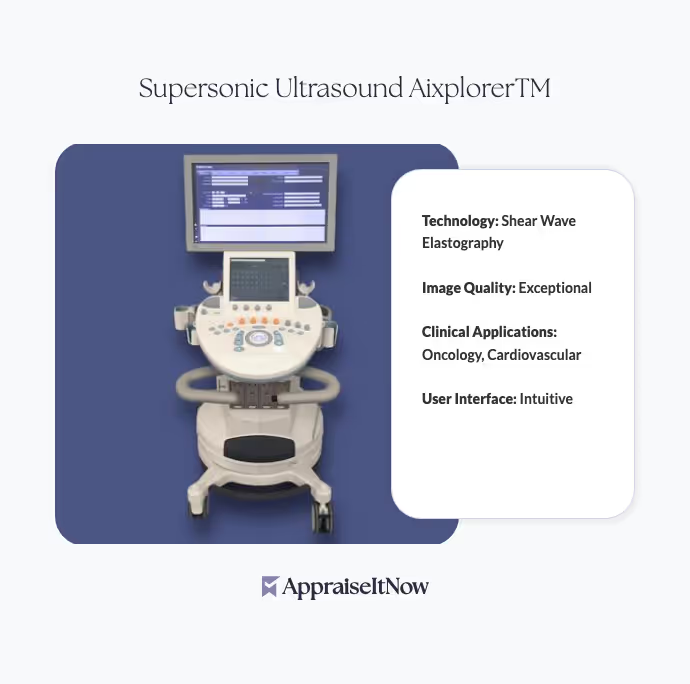
<p>The Supersonic Ultrasound AixplorerTM represents a significant investment in diagnostic imaging technology, combining advanced Shear Wave Elastography with exceptional image quality to deliver unprecedented clinical insights. If you're evaluating this cutting-edge system for sale, insurance, financing, or institutional acquisition, understanding the appraisal process ensures you capture its true market value—typically ranging from <strong>$40,000 to $50,000</strong> depending on condition, configuration, and usage history.</p>
<h2>Understanding the AixplorerTM's Market Position</h2>
<p>Developed by <strong>Supersonic Imagine</strong> and first introduced in 2009, the AixplorerTM fundamentally transformed diagnostic ultrasound by quantifying tissue stiffness through patented <strong>ShearWave Elastography</strong> technology. This breakthrough capability enhanced diagnostic accuracy across oncology, cardiovascular medicine, and other clinical specialties, making it a trusted tool in leading medical institutions worldwide. The device's seamless integration into healthcare workflows and intuitive user interface established it as a premium offering in the <a href="/types/medical-equipment">medical equipment</a> market.</p>
<p>When evaluating your AixplorerTM's value, recognize that this isn't merely imaging hardware—it's a sophisticated diagnostic platform with proven clinical utility that commands stable market demand from healthcare providers, imaging centers, and research institutions.</p>
<div class="callout tip"><p><strong>Market Insight</strong></p>
<p>Healthcare facilities seeking cost-effective alternatives to new systems often compete aggressively for well-maintained used AixplorerTM units, supporting strong resale values.</p></div>
<h2>Key Factors Influencing AixplorerTM Appraisal Value</h2>
<p>Your ultrasound system's appraisal value depends on multiple interconnected factors that professional appraisers systematically evaluate. Understanding these drivers helps you prepare documentation and interpret appraisal results.</p>
<p><strong>Model variant and generation</strong> directly impact pricing. Earlier AixplorerTM configurations may command different values than newer iterations with enhanced software capabilities or expanded probe compatibility. Similarly, the <strong>specific probe inventory</strong> accompanying your system significantly affects value—linear, convex, and endocavitary probes represent substantial capital components, and each variant has distinct market utility across different clinical applications.</p>
<p><strong>Hours of operational use</strong> serves as a critical depreciation metric, analogous to mileage on vehicles. Systems with documented low utilization typically command 15-25% premiums over heavily used examples, assuming proper maintenance records support the usage history. The <strong>maintenance and calibration records</strong> you can provide become essential evidence—units with comprehensive service histories, including regular calibration certificates and preventive maintenance documentation, demonstrate responsible stewardship that appraisers and buyers value significantly.</p>
<p><strong>Software version and regulatory compliance</strong> matter substantially. Systems running current software versions with updated FDA clearances and security patches maintain higher value than those requiring software updates or operating on legacy versions. Some healthcare facilities hesitate to acquire systems with outdated software due to integration challenges and compliance concerns, which depresses market value for non-current versions.</p>
<div class="callout note"><p><strong>Documentation Priority</strong></p>
<p>Gather service records, calibration certificates, purchase invoices, software licenses, and any regulatory correspondence before appraisal—this documentation can increase your system's appraised value by 10-20%.</p></div>
<h2>Determining the Right Appraisal Approach</h2>
<p>The distinction between <strong>online/photo-based appraisals</strong> and <strong>full on-site inspections</strong> significantly impacts accuracy and credibility for complex <a href="/types/equipment-and-machinery">equipment and machinery</a> like the AixplorerTM. While photographic documentation provides initial value estimates, comprehensive on-site inspections reveal condition details that photographs cannot capture—image sensor functionality, mechanical integrity of probe articulation, screen display quality, and overall system responsiveness.</p>
<p>For insurance purposes or institutional acquisitions, full on-site appraisals provide the documentation rigor that stakeholders require. If you're evaluating a quick estimate for preliminary decision-making, photo-based assessment may suffice; however, final valuations for transaction purposes should involve physical inspection by credentialed appraisers specializing in diagnostic imaging equipment.</p>
<h2>Appraiser Credentials and Expertise Matter</h2>
<p>The qualifications of your appraiser significantly affect both appraisal accuracy and document acceptability across intended uses. Look for appraisers holding credentials from recognized organizations like <strong>ASA (American Society of Appraisers)</strong>, <strong>AMEA (American Medical Equipment Association)</strong>, or <strong>ISA (International Society of Appraisers)</strong> with demonstrated specialization in medical imaging equipment. These certifications indicate formal training in valuation methodologies, equipment-specific knowledge, and professional standards compliance.</p>
<p>Appraisers specializing in medical equipment understand the nuanced factors affecting diagnostic imaging system values—they recognize how software updates influence functionality, appreciate the significance of probe compatibility across different manufacturers' systems, and understand regulatory implications affecting clinical deployment. This specialized expertise directly translates to more defensible and accurate appraisals than generalist equipment appraisers might provide.</p>
<div class="callout tip"><p><strong>Selection Strategy</strong></p>
<p>Request references from previous clients in healthcare settings who have appraised similar diagnostic imaging equipment to verify appraiser competence with AixplorerTM systems specifically.</p></div>
<h2>Documentation Requirements for USPAP-Compliant Appraisals</h2>
<p>Professional appraisals must comply with the <strong>Uniform Standards of Professional Appraisal Practice (USPAP)</strong>, ensuring they stand up to scrutiny from insurance companies, courts, and financial institutions. This compliance requires comprehensive documentation that professional appraisers systematically gather and evaluate.</p>
<p>Your appraiser will request and review <strong>service history documentation</strong> detailing all maintenance performed, including dates, technician credentials, parts replaced, and any repairs addressing malfunctions or wear. <strong>Calibration certificates</strong> from approved service centers provide objective evidence of technical accuracy—these documents are particularly important for ultrasound systems where imaging quality directly affects diagnostic value.</p>
<p><strong>Purchase invoices and original receipts</strong> establish acquisition cost and provide context for depreciation calculations. <strong>Software license documentation</strong> proves legal ownership of operating systems and clinical applications, which affects both functionality and market value. Any <strong>warranty documentation or extended service contracts</strong> remaining should be included, as transferable coverage enhances system value for prospective buyers.</p>
<p>Additionally, gather <strong>regulatory correspondence</strong> including FDA clearance notifications, any compliance updates, and documentation of recalled components that were addressed. This regulatory trail demonstrates that your system maintains current compliance standards—a crucial factor for institutions subject to healthcare facility regulations.</p>
<h2>Market Positioning Across Different Use Cases</h2>
<p>The appraised value and documentation requirements for your AixplorerTM vary depending on its intended use. If you're <strong>selling the system</strong> through medical equipment dealers or directly to healthcare providers, buyers will conduct their own inspections but your pre-appraisal documentation accelerates transactions and supports negotiation positions.</p>
<p>For <strong>insurance coverage</strong>, appraisals establish replacement cost values that determine premium levels and claims payouts if damage or loss occurs. Healthcare facilities typically update equipment appraisals every 3-5 years to reflect current replacement costs and depreciation schedules.</p>
<p><strong>Collateral financing</strong> for equipment-secured loans requires appraisals that financial institutions accept as proof of asset value supporting the loan amount. Lenders typically request USPAP-compliant appraisals from independent, credentialed appraisers to minimize risk.</p>
<p><strong>Tax and estate planning</strong> uses appraisals to establish fair market value for donation deductions, inheritance distributions, or partnership buy-sell agreements. These appraisals require detailed reporting and transparent methodology to withstand IRS scrutiny.</p>
<h2>Depreciation and Value Retention</h2>
<p>Understanding how the AixplorerTM depreciates over time helps contextualize your appraisal results. Medical imaging equipment typically follows accelerated depreciation patterns during the first 3-5 years of ownership—roughly 30-40% annual depreciation in early years, moderating to 10-15% annually thereafter as systems stabilize into mature market phases.</p>
<p>The AixplorerTM's position as a premium diagnostic platform provides stronger value retention than commodity ultrasound systems. Its proprietary <strong>ShearWave Elastography</strong> technology and clinical reputation support demand among healthcare buyers seeking proven diagnostic capabilities. Systems approaching 10+ years old may face value pressure due to software obsolescence concerns and component availability questions, but well-maintained examples with current software versions often maintain 40-50% of original acquisition value.</p>
<p>Regional variations affect depreciation rates—AixplorerTM systems in areas with robust medical equipment markets typically retain value better than those in regions with limited diagnostic imaging infrastructure. Healthcare facility consolidation and equipment standardization trends in specific regions can also influence demand and therefore appraised values.</p>
<div class="callout note"><p><strong>Valuation Context</strong></p>
<p>Your AixplorerTM's appraised value of $40,000-$50,000 represents mature market equilibrium, reflecting systems typically 5-10 years old in excellent-to-very-good condition with proper documentation and maintenance records.</p></div>
<h2>Regional and Specialty Considerations</h2>
<p>Appraised values reflect regional healthcare market dynamics and institutional demand patterns. Densely populated metropolitan areas with multiple tertiary care centers and imaging centers typically support higher equipment values due to concentrated buyer pools. Conversely, rural healthcare markets may see lower values due to fewer potential buyers and longer marketing timelines.</p>
<p>Specialty variations matter significantly—AixplorerTM systems configured for vascular imaging with advanced hemodynamic assessments may command premiums in cardiology-heavy markets, while oncology-focused configurations command value in cancer treatment centers. Your appraiser should understand these regional and specialty-specific factors to position your system accurately within its target market.</p>
<h2>Turnaround Time and Appraisal Costs</h2>
<p>Professional AixplorerTM appraisals typically require <strong>7-14 business days</strong> from initial inspection to final report delivery, depending on documentation availability and appraiser scheduling. More complex cases involving extensive repair histories or regulatory questions may extend timelines.</p>
<p>Appraisal fees for medical imaging equipment generally range from <strong>$500-$1,500</strong> depending on system complexity, documentation volume, and whether on-site inspection is required. The provided estimate of <strong>$40,000-$50,000</strong> for system value should factor these appraisal costs into your transaction planning—typically they represent 1-2% of system value and are often negotiable between buyer and seller.</p>
<p>Factors driving appraisal costs include the extent of documentation requiring review, whether multiple probes or accessories require individual assessment, and appraiser travel distances for on-site inspections. Comprehensive appraisals involving detailed condition assessments and regulatory compliance verification justify higher fees through increased accuracy and defensibility.</p>
<h2>Taking Action: Preparing for Your AixplorerTM Appraisal</h2>
<p>When you're ready to appraise your Supersonic Ultrasound AixplorerTM, prepare your documentation in advance. Compile service records chronologically, organize regulatory correspondence, gather original purchase documentation, and document the current system's physical condition with clear photographs of the display screen, probe articulation, and any visible wear.</p>
<p>Identify whether you need a rapid photo-based estimate or a comprehensive on-site appraisal. Connect with <a href="/">AppraiseItNow</a>, which specializes in professional valuations of diagnostic imaging and <a href="/types/lab-equipment">lab equipment</a> through credentialed experts holding ASA, ISA, AMEA, and CAGA certifications. Our appraisers understand the clinical significance and market dynamics of advanced ultrasound systems, ensuring your AixplorerTM receives accurate valuation supported by comprehensive documentation.</p>
<p>Learn more about the appraisal process for diagnostic imaging equipment by exploring our resources on <a href="/blog/maximizing-your-medical-equipment-s-value-through-appraisals">maximizing medical equipment value through appraisals</a> and understanding <a href="/blog/establishing-value-how-to-determine-the-worth-of-medical-equipment">what documentation supports accurate medical equipment valuations</a>.</p>
<div class="callout note"><p><strong>Key Takeaway</strong></p>
<p>A certified appraisal of your Supersonic Ultrasound AixplorerTM delivers the documentation, accuracy, and credibility necessary for confident decision-making whether you're selling, insuring, financing, or planning estate distribution. Professional appraisers specialized in medical imaging equipment provide transparent methodology and USPAP-compliant reports that stand up to institutional and legal scrutiny, ensuring your system's true market value—typically $40,000-$50,000—is properly recognized and documented.</p></div>