









<h1>How to Get Your Sigma Centrifuge 3-30KS Appraised</h1>
<p>The Sigma Centrifuge 3-30KS represents a significant laboratory investment, with current market valuations ranging between <strong>$15,000 and $25,000</strong>. Whether you're evaluating this high-performance instrument for insurance purposes, liquidation, or equipment portfolio assessment, understanding how professional appraisal determines its worth ensures you receive accurate valuation backed by certified expertise.</p>
<h2>Understanding Your Sigma Centrifuge 3-30KS's Market Value</h2>
<p>Your Sigma 3-30KS occupies a unique position in the <a href="/types/lab-equipment">lab equipment</a> market as a precision instrument designed for demanding research environments. Manufactured in Germany and first introduced in 2010, this centrifuge commands premium pricing due to its advanced specifications and proven reliability. When seeking appraisal services, understanding what drives the <strong>$15,000-$25,000</strong> valuation range helps you prepare appropriately and establishes realistic expectations.</p>
<p>The centrifuge's actual value depends on multiple factors beyond simple model identification. An instrument in pristine condition with full documentation and recent calibration might approach the upper valuation range, while units showing wear or lacking service records typically fall toward the lower end. Professional appraisers specializing in <a href="/types/chemical-equipment">chemical equipment</a> and laboratory instruments evaluate these nuances systematically using comparative market analysis and condition assessments.</p>
<div class="callout tip"><p><strong>Valuation Insight</strong></p>
<p>A Sigma 3-30KS with current calibration certificates and complete documentation typically commands 15-20% premium over units requiring recertification or servicing.</p></div>
<h2>Key Technical Specifications That Affect Appraisal Value</h2>
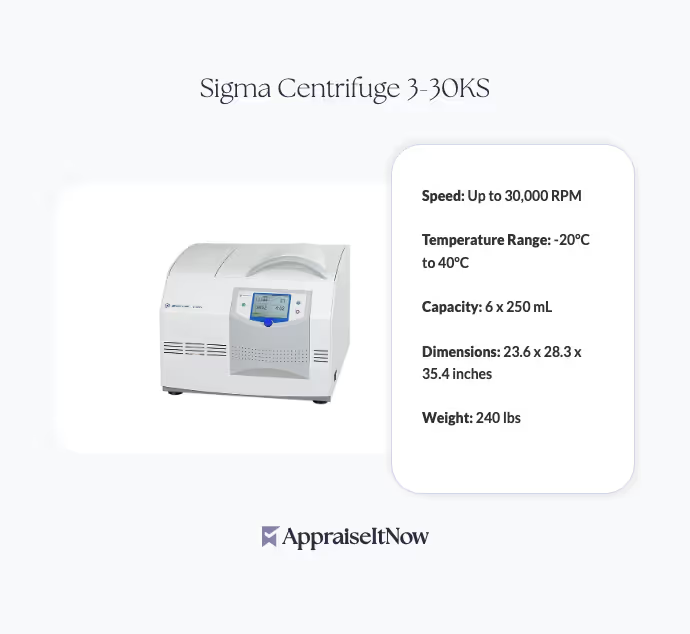
<p>The Sigma 3-30KS achieves its market positioning through exceptional performance characteristics that professional appraisers evaluate carefully. Its brushless, maintenance-free motor enables continuous operation at speeds up to <strong>30,000 RPM</strong>, generating a maximum relative centrifugal force (RCF) of <strong>52,387 x g</strong>—specifications that situate it among the top-tier laboratory centrifuges for research applications.</p>
<p>Understanding RPM conversion to g-value matters when assessing operational capability. The relationship between RPM and g-value depends on rotor radius, calculated as: <em>g-value = (RPM² × radius in cm) / 89,884</em>. This mathematical relationship means two centrifuges running identical RPMs may produce different g-forces based on rotor configuration. Your 3-30KS's ability to achieve such high RCF ratings makes it suitable for demanding applications in biochemistry, molecular biology, and materials science—applications that justify its premium market valuation.</p>
<p>The centrifuge's advanced temperature control system represents another significant value driver. Precise sample temperature management prevents thermal degradation of sensitive biological materials, a critical feature in research environments where sample integrity directly impacts results. When evaluating <a href="/types/medical-equipment">medical equipment</a> or specialized laboratory instruments, these sophisticated capabilities substantially influence appraisal determinations.</p>
<div class="callout note"><p><strong>Technical Consideration</strong></p>
<p>The maximum RCF rating of 52,387 x g places the Sigma 3-30KS in the "ultracentrifuge" category, justifying valuations significantly higher than standard bench-top models.</p></div>
<h2>Condition Assessment and Certification Impact</h2>
<p>Professional appraisers examining your Sigma centrifuge conduct comprehensive condition evaluations that directly determine valuation within the stated range. An instrument certified for use in <strong>biosafety level 3 laboratories</strong> carries inherent value confirmation—this certification means the unit has demonstrated compliance with rigorous safety and performance standards. If your centrifuge retains current BSL-3 certification, this significantly supports the appraisal's upper valuation range.</p>
<p>Operational status heavily influences appraised value. A 3-30KS that runs smoothly through complete speed cycles, maintains temperature stability, and demonstrates responsive controls commands premium pricing. Conversely, instruments requiring rotor replacement, electronic repairs, or recalibration may see 20-30% valuation reductions. The brushless motor design reduces maintenance concerns compared to older brush-equipped models, meaning your centrifuge's wear patterns primarily affect rotor condition and electronic component longevity rather than motor degradation.</p>
<p>Visual condition also matters during appraisal. Units with original paint, legible control panel labeling, and intact safety features typically receive higher condition grades than those showing significant cosmetic wear. However, cosmetic appearance matters far less than functional integrity—laboratory professionals prioritize reliable operation over aesthetic presentation. When balancing centrifuges properly, you prevent the internal vibration issues that actually damage value-critical components.</p>
<h2>Operational Features That Enhance Valuation</h2>
<p>The <strong>10 programmable speed/time presets</strong> represent significant operational convenience that appraisers recognize as value-adding features. These presets reduce operator error and streamline routine procedures, making the centrifuge attractive to high-volume research facilities. An instrument with documented preset programming for common applications suggests heavy productive use, which paradoxically can support valuation when combined with proper maintenance records.</p>
<p>Noise levels below <strong>60 dB</strong> position the Sigma 3-30KS as notably quiet compared to earlier-generation models. This quiet operation facilitates placement in shared laboratory spaces without disturbing adjacent work—a practical benefit that laboratory managers recognize as valuable. When assessing <a href="/types/equipment-and-machinery">equipment and machinery</a> for research facilities, operational noise ratings influence purchasing decisions and thus support market valuation.</p>
<p>Your centrifuge's warranty status during appraisal preparation matters significantly. The <strong>5-year manufacturer's warranty</strong> backing the instrument represents third-party confidence in build quality. If your unit falls within the warranty period or recently expired, appraisers note this as supporting evidence of proper manufacturing and likely continued reliability.</p>
<h2>Preparing for Your Appraisal</h2>
<p>To maximize appraisal accuracy and efficiency, compile comprehensive documentation before your certified appraiser visits. Gather the original purchase documentation, any service records showing maintenance or repairs, calibration certificates, and the warranty documentation. These materials allow appraisers to establish acquisition date, verify proper maintenance history, and confirm safety certifications that directly impact valuation.</p>
<p>Preparing your centrifuge for inspection helps appraisers conduct thorough evaluations. Ensure the instrument is accessible, with surrounding workspace cleared to allow full visual inspection and operational testing. If your facility's safety protocols permit, having a trained technician available during appraisal streamlines the process—though this isn't required. Note any known issues or recent service work in advance, as transparency about condition concerns actually strengthens the appraisal's credibility.</p>
<p>Documentation of the rotor configuration and available accessories substantially affects valuation. If your 3-30KS includes multiple rotor types suitable for different tube capacities, these accessories add value as they expand the instrument's application range. Fixed-angle rotors command different values than swinging-bucket rotors, so itemizing exactly what accompanies your centrifuge ensures accurate appraisal calculations.</p>
<div class="callout tip"><p><strong>Preparation Tip</strong></p>
<p>Photographs documenting your centrifuge's overall condition, control panel status, and rotor configuration support the appraisal process and provide valuable records for insurance purposes.</p></div>
<h2>Market Demand and Usage Considerations</h2>
<p>The Sigma 3-30KS maintains strong secondary market demand among research institutions, clinical laboratories, and educational facilities. As German-manufactured precision equipment representing proven reliability across two decades of production, used instruments attract buyers seeking quality equipment at reduced capital expenditure. This sustained demand supports the <strong>$15,000-$25,000</strong> valuation range even for units several years old, assuming proper maintenance.</p>
<p>Academic institutions represent significant buyers in the used laboratory equipment market. Universities and research centers often prefer purchasing certified used instruments over new equipment when budget constraints apply, creating steady demand for quality centrifuges. This institutional buyer base provides floor support for valuations, ensuring even well-used instruments find market value when properly appraised and documented.</p>
<p>How to tell if a centrifuge is unbalanced matters during appraisal assessment, as vibration issues indicate maintenance neglect or improper operation. An appraiser running operational tests listens for unusual vibrations, observes rotor wobble, or notes irregular noise patterns—all indicators of balance problems that reduce value. Conversely, smooth silent operation during speed cycling validates the unit's mechanical integrity and supports higher appraisal determinations.</p>
<h2>Comparative Market Analysis in Laboratory Equipment</h2>
<p>When professional appraisers determine your Sigma 3-30KS's specific value within the $15,000-$25,000 range, they conduct comparative analysis of recently sold similar instruments. The market for quality laboratory centrifuges shows relatively stable pricing, though condition variations and regional demand fluctuations affect individual transactions. Appraisers access specialized equipment valuation databases and recent sales data to establish data-driven valuations grounded in demonstrable market activity.</p>
<p>Similar high-performance centrifuges from comparable manufacturers typically command prices within comparable ranges, though the Sigma brand's German manufacturing and reputation for durability often support premium positioning. When reviewing comparable sales for your appraisal, expect your certified appraiser to reference instruments with similar specifications, manufacturing origins, and condition ratings—a rigorous process ensuring your valuation reflects genuine market activity rather than speculation.</p>
<p>Understanding how to fix an unbalanced centrifuge affects resale value significantly. An instrument requiring balance correction work might temporarily support lower valuation, but the repair cost relative to valuation change varies considerably. Professional appraisers account for needed repairs when determining value, typically deducting reasonable repair estimates from the "as-is" market price to arrive at accurate fair market valuation.</p>
<h2>Professional Appraisal Requirements and Standards</h2>
<p>Certified appraisals of laboratory equipment like your Sigma 3-30KS must comply with <strong>USPAP standards</strong> (Uniform Standards of Professional Appraisal Practice), ensuring valuations meet professional and legal requirements. When engaging appraisal services through AppraiseItNow, you receive certified valuations from credentialed experts holding designations such as AAA, ISA, ASA, CAGA, or AMEA certifications—qualifications that validate specialized expertise in equipment appraisal.</p>
<p>USPAP compliance matters significantly for insurance purposes, equipment financing, asset accounting, and litigation support. Your certified appraisal report documents the valuation methodology, comparable market data, condition assessment, and professional opinion—a comprehensive document that stands up to professional scrutiny and satisfies regulatory requirements. Insurance companies, financial institutions, and courts all recognize USPAP-compliant appraisals as credible valuation evidence.</p>
<p>Professional appraisers bring specialized knowledge beyond simple price comparison. They understand the specific market dynamics affecting laboratory equipment, recognize condition factors that influence value, and can identify counterfeits or misrepresented units that might otherwise deceive non-specialists. This expertise, combined with detailed documentation, justifies the appraisal investment by ensuring your Sigma 3-30KS receives accurate valuation that serves your actual business or financial needs.</p>
<h2>Leveraging Your Appraisal</h2>
<p>Your completed appraisal serves multiple practical purposes beyond establishing current market value. For insurance purposes, a detailed appraisal provides replacement cost documentation that ensures adequate coverage—critical protection for laboratory equipment representing significant capital investment. Organizations conducting equipment audits, depreciation tracking, or asset reporting use professional appraisals to maintain accurate financial records with defensible valuations.</p>
<p>If you're planning to sell your Sigma 3-30KS or liquidate laboratory equipment as part of facility consolidation, professional appraisal pricing guidance helps you establish competitive asking prices that reflect genuine market value. Buyers of used laboratory instruments increasingly request or require current appraisals, making professional documentation a practical sales tool. For more guidance on laboratory equipment valuation, explore our comprehensive resource on <a href="/blog/how-to-determine-the-fair-market-value-for-lab-equipment">how to determine fair market value for lab equipment</a>.</p>
<p>Estate settlements and tax matters frequently require equipment appraisals to establish distribution values or substantiate charitable donation deductions. A certified appraisal provides the documentation necessary for these applications, offering protection against subsequent valuation challenges. When professional appraisal becomes necessary, the small investment typically delivers substantial value through accurate, defensible pricing supported by expert analysis and market data.</p>
<div class="callout note"><p><strong>Key Takeaway</strong></p>
<p>A certified appraisal of your Sigma Centrifuge 3-30KS delivers accurate market valuation ($15,000-$25,000), comprehensive documentation for insurance and financial purposes, and professional validation that protects your laboratory equipment investment. Whether buying, selling, or managing assets, professional appraisal expertise ensures your centrifuge receives pricing that reflects its genuine condition, capabilities, and market demand—eliminating guesswork and providing confidence in every financial decision involving this valuable research instrument.</p></div>