









<h1>How to Get Your Puritan Bennett Ventilator 980 Appraised</h1>
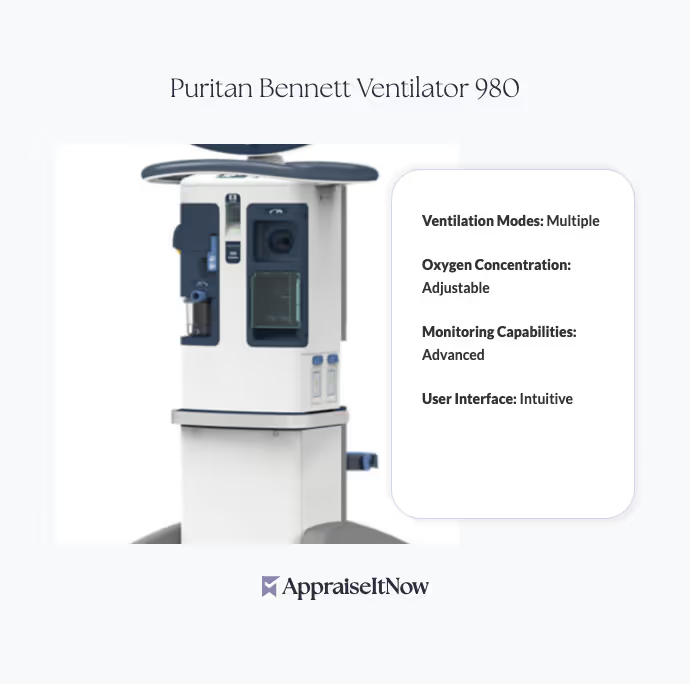
<p>The Puritan Bennett Ventilator 980 stands as one of the most sophisticated medical devices in critical care settings, representing a significant asset for healthcare facilities, medical equipment distributors, and institutions managing valuable equipment portfolios. Whether you're evaluating this advanced ventilator for purchase, sale, insurance purposes, or estate planning, obtaining an accurate appraisal is essential. Current market valuations for the Puritan Bennett 980 range from <strong>$40,000 to $50,000</strong> depending on condition, configuration, and operational status—making professional appraisal services a worthwhile investment in documenting and protecting this substantial asset.</p>
<h2>Understanding Puritan Bennett 980 Market Value</h2>
<p>The Puritan Bennett Ventilator 980, first introduced in 2005, remains one of the most sought-after ventilators in the secondary market due to its reliability, advanced features, and integration capabilities with modern hospital systems. Your specific model's value depends on multiple interconnected factors that extend far beyond simple age or hours of operation.</p>
<p>The $40,000-$50,000 valuation range reflects several market realities. New Puritan Bennett 980 units command significantly higher prices directly from manufacturers, but institutional resale and refurbished markets create distinct pricing tiers. Understanding where your ventilator falls within this spectrum requires careful examination of its condition, documentation, and market demand. Whether you're looking at a unit from a hospital liquidation, a facility upgrade, or equipment redistribution, the current secondary market for these devices remains robust, particularly among hospitals in developing regions, refurbishing companies, and medical equipment brokers seeking quality critical care solutions.</p>
<div class="callout tip"><p><strong>Market Insight</strong></p>
<p>Units with complete original accessories, full calibration records, and recent software updates typically command prices at the higher end of the valuation range.</p></div>
<h2>Key Factors That Determine Your Ventilator's Value</h2>
<p>Several critical factors influence where your Puritan Bennett 980 falls within the current market range. Age alone doesn't tell the complete story—a unit from 2010 in pristine condition with extensive maintenance documentation may be worth more than a newer model with poor records or heavy use. How long does a ventilator typically last? The Puritan Bennett 980's robust construction means well-maintained examples can remain viable for 15+ years, though appraisers carefully assess remaining useful life and technological currency when establishing value.</p>
<p><strong>Operating hours represent one of the most significant value drivers.</strong> A unit with 5,000 documented operating hours differs substantially in value from one with 50,000 hours. Professional appraisers examine service records meticulously, as hospitals typically maintain detailed logs of equipment usage, maintenance, and repairs. Your documentation package becomes crucial evidence in this assessment.</p>
<p><strong>Software versions and recent updates substantially impact marketability.</strong> The Puritan Bennett 980's integration with modern hospital information systems and ventilator protocols depends heavily on current firmware. Units running outdated software may require expensive recalibration or updates, reducing their attractiveness to purchasing institutions. Appraisers familiar with <a href="/blog/establishing-value-how-to-determine-the-worth-of-medical-equipment">medical equipment appraisals</a> understand these technical considerations and factor them into valuations accordingly.</p>
<p><strong>Maintenance history and calibration certificates</strong> directly correlate with appraised value. Institutions purchasing used ventilators prioritize equipment with comprehensive service records demonstrating regular calibration, preventive maintenance, and any repairs performed by qualified technicians. Missing service records can reduce value by 15-25% even for physically excellent units, since buyers must invest in recalibration before deployment.</p>
<p><strong>Accessories and original components</strong> matter significantly. Your ventilation system's value includes accompanying sensors, patient circuits, humidifiers, and connectivity modules. A complete package with all original accessories and spare parts commands premium pricing compared to a bare-bones unit. Partial equipment or replaced components may reduce valuations, though quality OEM replacements maintain value better than generic substitutes.</p>
<h2>The Appraisal Process for Medical Equipment</h2>
<p>Understanding what happens during a professional appraisal helps you prepare documentation and set realistic expectations. Unlike general property appraisals, <a href="/blog/how-to-receive-the-most-accurate-results-from-medical-equipment-appraisals">medical equipment valuations</a> require specialized expertise combining medical knowledge, equipment specifications, and market analysis.</p>
<p>Professional appraisers will conduct a comprehensive physical inspection examining the ventilator's exterior condition, screen functionality, mechanical components, and connections. They'll verify serial numbers match documentation and assess whether the unit powers on and cycles through basic functions. For <a href="/types/equipment-and-machinery">equipment and machinery appraisals</a>, this inspection establishes baseline operational status essential for insurance and resale purposes.</p>
<p>Your appraiser will then compile all available documentation—purchase receipts, maintenance records, service logs, calibration certificates, and any regulatory compliance documentation. This documentation phase determines whether required certifications and regulatory approvals remain valid or require renewal. Critical care equipment like the Puritan Bennett 980 operates within strict regulatory frameworks, and appraisers assess compliance status as part of value determination.</p>
<div class="callout note"><p><strong>Important Consideration</strong></p>
<p>Regulatory, safety, and market restrictions significantly impact selling or appraising ventilators. Equipment must comply with current FDA standards and healthcare facility requirements, which can affect marketability and value.</p></div>
<h2>Documentation Requirements for Accurate Appraisal</h2>
<p>Assembling comprehensive documentation dramatically improves your appraisal's accuracy and your ventilator's market positioning. When you request a professional appraisal, providing complete records streamlines the process and often results in more favorable valuations. Essential documentation includes ownership documentation establishing clear title, original purchase receipts or transfer documents, complete maintenance and service records with technician notes, calibration certificates demonstrating regulatory compliance, software version information and update history, and any manufacturer or hospital-specific maintenance protocols.</p>
<p>Photographs or videos showing the equipment's current operational status also support the appraisal process. Clear images of the display screen, connection ports, and exterior condition help appraisers assess condition remotely and reduce on-site inspection requirements. If your Puritan Bennett 980 has been in institutional storage, photographs documenting power-on status, display functionality, and overall cleanliness strengthen the appraisal narrative.</p>
<p>Without this documentation, appraisers must rely primarily on visual assessment and operational testing, potentially resulting in conservative valuations that don't reflect the unit's actual quality or remaining utility. Conversely, comprehensive records allow appraisers to document why your equipment justifies positioning toward the higher end of market ranges.</p>
<h2>Specialized Expertise: Why Professional Appraisers Matter</h2>
<p>While some might consider simply listing equipment online and observing asking prices, professional appraisals provide legal documentation and expert analysis that casual market observation cannot replicate. When you work with certified professionals through services like <strong>AppraiseItNow</strong>, you receive appraisals conducted by credentialed experts with medical equipment specialization—many holding credentials from recognized organizations like AAA, ISA, ASA, CAGA, or AMEA.</p>
<p>These specialists understand the nuanced differences between new, refurbished, and used ventilator markets. They recognize that institutional buyers (hospitals, medical equipment refurbishers, international healthcare organizations) evaluate equipment differently than private practitioners. Your appraiser's market knowledge helps establish values that reflect what actual purchasers will pay, not merely theoretical replacement costs or manufacturer pricing.</p>
<p>Professional appraisals also address the ethical considerations inherent in valuing life-sustaining medical devices. Appraisers understand the regulatory environment surrounding critical care equipment and ensure valuations comply with relevant standards and guidelines. This professional oversight becomes particularly important when equipment involves sensitive applications like life support systems.</p>
<div class="callout tip"><p><strong>Professional Advantage</strong></p>
<p>Certified appraisers have access to comprehensive market data, recent comparable sales, and institutional pricing trends that individual sellers cannot easily obtain independently.</p></div>
<h2>What Equipment Appraisal Services Cost</h2>
<p>Understanding typical appraisal costs helps you budget appropriately and recognize value in professional services. High-value <a href="/types/medical-equipment">medical equipment</a> appraisals typically range from $500 to $2,500 depending on equipment complexity, documentation requirements, and travel distance. For a Puritan Bennett 980 valued at $40,000-$50,000, appraisal costs represent 1-3% of the equipment's value—a reasonable investment for documentation that protects your financial interests.</p>
<p>Cost considerations include whether the appraiser conducts on-site inspection or remote evaluation, how extensively they research comparable sales and market conditions, and whether they prepare reports suitable for insurance, legal proceedings, or institutional sales purposes. Some appraisers charge flat fees for standard medical equipment valuations, while others use hourly rates reflecting their expertise and research requirements.</p>
<p>When selecting an appraiser, avoid the temptation to choose based solely on lowest price. Comprehensive valuations from credentialed professionals cost more than quick estimates but provide documentation that satisfies lenders, insurers, courts, and institutional buyers. The cost differential typically reflects the difference between a casual opinion and a legally defensible, USPAP-compliant appraisal.</p>
<h2>Market Buyers for Your Puritan Bennett 980</h2>
<p>Knowing who purchases used Puritan Bennett 980 units helps you understand the market dynamics affecting your equipment's value. Healthcare facilities upgrading equipment represent the primary institutional buyer category, particularly hospitals in rural areas, developing regions, or institutions managing budget constraints. These buyers prioritize reliable equipment with proven track records over cutting-edge features, making the 980's 15+ year service history a marketing advantage rather than a liability.</p>
<p>Medical equipment refurbishers and dealers constitute another significant market segment. These specialized businesses purchase used ventilators, perform comprehensive refurbishment and testing, and resell equipment to healthcare institutions, often with warranties. Refurbishing businesses typically purchase at wholesale prices enabling their margin structure, so understanding this buyer category matters when negotiating sales.</p>
<p>International healthcare organizations and NGOs purchasing equipment for deployment in developing nations represent growing market participants. These buyers prioritize durability and simpler technology over the latest features, positioning the Puritan Bennett 980's proven reliability and established support infrastructure favorably.</p>
<p>Private medical practices and ambulatory surgical centers occasionally purchase used ventilators for backup or occasional use. These buyers typically purchase at higher prices than institutional bulk purchasers but in smaller quantities.</p>
<p>Understanding which buyer category might acquire your equipment helps you position it appropriately during marketing and valuation discussions.</p>
<h2>Turnaround Time and Service Expectations</h2>
<p>When you engage professional appraisal services for your Puritan Bennett 980, understanding typical timelines helps you plan your equipment transaction. Standard turnaround time for <a href="/blog/what-to-expect-during-a-medical-equipment-appraisal">medical equipment appraisals</a> ranges from 5-15 business days depending on appraiser workload, documentation availability, and whether inspection requires travel to your location.</p>
<p>The appraisal timeline typically unfolds as follows: Initial consultation where you describe the equipment and discuss your appraisal purpose requires 15-30 minutes. Documentation review and appraiser scheduling follow, potentially adding 2-3 days if you're gathering additional records. The actual inspection (if conducted on-site) usually requires 1-2 hours for medical equipment like ventilators. Research and analysis, where appraisers investigate comparable sales, market conditions, and technical specifications, often represents the most time-intensive phase, particularly for specialized equipment. Final report preparation and delivery typically adds 2-5 business days.</p>
<p>If you require rushed appraisals for time-sensitive transactions, discuss expedited options with your appraiser. Many professionals can accelerate timelines for additional fees or by prioritizing remote evaluation over on-site inspection.</p>
<h2>Insurance and Documentation for Protection</h2>
<p>Professional appraisals serve as the foundation for insurance coverage protecting your significant equipment investment. Whether you own a single Puritan Bennett 980 or manage a portfolio of <a href="/types/medical-equipment">medical equipment</a>, certified appraisals establish replacement values insurers recognize when claims arise. Insurance companies increasingly require professional appraisals for equipment valued above $10,000, making your appraisal both protective documentation and insurance prerequisite.</p>
<p>The insurance application process typically requires copies of the appraiser's report, which insurers use to establish replacement cost coverage. Professional appraisals provide the detailed condition assessments and fair market value documentation that insurers need to evaluate coverage appropriately. Without professional appraisals, you may face coverage denials or disputes should equipment require replacement.</p>
<p>Beyond insurance, professional appraisals create legally defensible documentation for equipment disposition. Whether you're donating equipment for tax deduction purposes, settling estates, or facilitating equipment sales, certified appraisals provide the documentation necessary to support your claimed values and comply with relevant regulations.</p>
<h2>Maximizing Your Ventilator's Appraisal Value</h2>
<p>To position your Puritan Bennett 980 for the most favorable appraisal, invest modest effort in preparation before your appraiser arrives. Clean the equipment thoroughly without disassembling components—external cleanliness influences perception and reflects on overall care quality. Gather all available documentation including original purchase receipts, maintenance records spanning the equipment's history, calibration certificates, service records, and any manufacturer communications regarding updates or recalls.</p>
<p>If your ventilator has been in storage, power it on well before the appraisal to allow systems to stabilize and ensure normal operation during inspection. Verify the display screen illuminates clearly, buttons respond normally, and the unit cycles through its startup sequence. These simple operational checks demonstrate the equipment functions as expected.</p>
<p>Prepare a written summary documenting the equipment's care history—facility where it was used, typical monthly operating hours, any notable incidents or maintenance, and reasons for replacement or divestment. This narrative context helps your appraiser understand the equipment's service experience and assess remaining utility more accurately.</p>
<div class="callout note"><p><strong>Key Takeaway</strong></p>
<p>A certified appraisal of your Puritan Bennett Ventilator 980 provides legal documentation, accurate market valuation, and professional credibility essential whether you're selling, insuring, or managing equipment for institutional purposes. Professional expertise in <a href="/blog/the-benefits-of-having-a-professional-medical-equipment-appraisal">medical equipment valuations</a> transforms your equipment transaction from uncertain to confident and documented.</p></div>