









<h1>How to Get Your Mindray WATO Anesthesia Machine Appraised</h1>
<p>If you're managing healthcare assets, planning equipment upgrades, or navigating an estate settlement, determining the accurate value of your Mindray WATO anesthesia machine is essential. This sophisticated medical device represents a substantial investment in modern operating room and intensive care infrastructure, and professional appraisal ensures you understand its true market position.</p>
<h2>Understanding Mindray WATO's Market Position</h2>
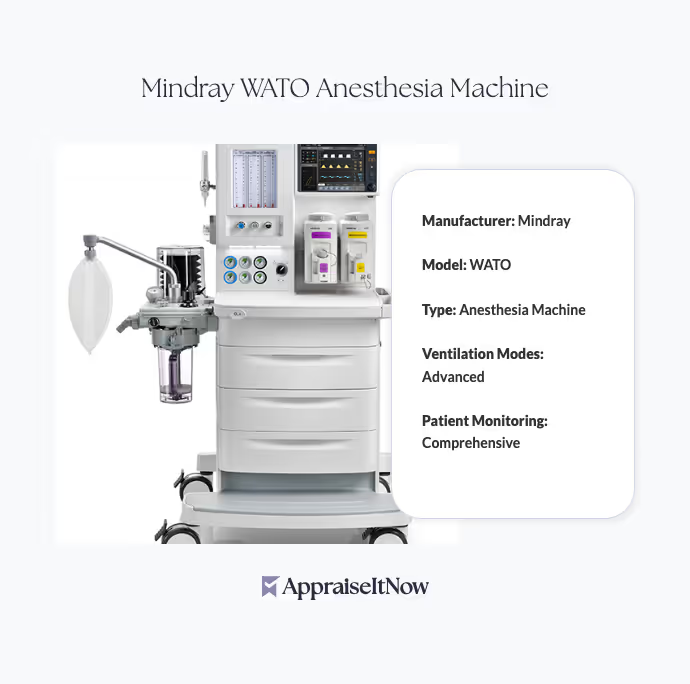
<p>The Mindray WATO anesthesia machine commands an estimated value between <strong>$30,000 and $40,000</strong> depending on condition, age, and specific configuration. Introduced in 2015, this advanced system quickly established itself as a critical piece of equipment in modern healthcare settings worldwide. Whether you're evaluating equipment for acquisition, insurance purposes, or disposition, understanding what drives anesthesia machine pricing helps you make informed decisions about your <a href="/types/medical-equipment">medical equipment</a> portfolio.</p>
<div class="callout tip"><p><strong>Market Insight</strong></p>
<p>The WATO's comprehensive monitoring capabilities and intuitive interface have made it increasingly sought-after in secondary markets, supporting stable valuations across institutions.</p></div>
<h2>Key Specifications Affecting Your WATO's Value</h2>
<p>The Mindray WATO's market value reflects its sophisticated technical capabilities. Your system features precision gas delivery mechanisms that ensure accurate anesthetic administration, advanced ventilation modes supporting diverse patient populations, and comprehensive patient monitoring integration that streamlines operating room workflows. These engineering advantages directly influence how appraisers evaluate your equipment against comparable anesthesia systems.</p>
<p>When comparing equipment for valuation purposes, understanding what differentiates the WATO from other solutions matters. Unlike some anesthesia machines known for complicated interfaces or limited monitoring integration, the WATO's intuitive design reduces operator training requirements and minimizes clinical errors. This reliability factor, combined with its proven track record across operating rooms and ICUs globally, sustains demand and supports pricing through secondary market channels.</p>
<p>The system's state-of-the-art technology package includes precision safety features protecting patient welfare during complex procedures. Whether you're examining your equipment's worth for insurance documentation or preparing equipment for resale, these technical specifications form the foundation of professional valuation.</p>
<h2>Condition and Configuration Impact on Pricing</h2>
<p>Your individual WATO's market value depends significantly on its operational condition and specific configuration. An appraisal expert examining your system will assess whether the gas delivery mechanisms function within manufacturer specifications, confirm that ventilation modes respond appropriately to parameter changes, and verify that monitoring systems provide accurate patient data. Equipment displaying normal wear but maintaining full functionality typically commands values at the higher end of the range, while systems requiring service or showing extended use may appraise toward the lower estimate.</p>
<p>Configuration variations also affect pricing. Some facilities utilize enhanced monitoring packages or supplemental safety modules that increase initial system cost and enhance secondary market appeal. Documenting your WATO's exact configuration—including any optional accessories or upgraded monitoring components—helps appraisers position your system accurately within the established value range. When you're exploring comparable equipment valuations through resources on <a href="/blog/establishing-value-how-to-determine-the-worth-of-medical-equipment">establishing value for medical equipment</a>, professional configuration documentation becomes particularly important.</p>
<h2>Comparable Anesthesia Equipment Considerations</h2>
<p>Understanding how your Mindray WATO compares to other anesthesia systems provides helpful context for valuation. The Mindray SV800 patient monitor, another product in Mindray's healthcare technology portfolio, addresses different equipment categories and serves distinct clinical functions—making direct comparison less straightforward than comparing anesthesia machines to anesthesia machines. Similarly, questions about Mindray vaporizer pricing or Mindray SV 300 equipment costs address separate product categories with distinct market dynamics.</p>
<p>When healthcare facilities evaluate anesthesia machine options, they typically consider systems from manufacturers including GE Healthcare, Draeger, and Philips alongside Mindray solutions. The WATO's positioning within this competitive landscape influences how secondary market valuations develop. For detailed insights into how professional appraisers evaluate complex <a href="/blog/how-to-receive-the-most-accurate-results-from-medical-equipment-appraisals">medical equipment</a>, understanding this competitive context proves valuable.</p>
<div class="callout note"><p><strong>Valuation Context</strong></p>
<p>The cost of anesthesia machines generally ranges from $25,000 to $60,000 depending on manufacturer and capabilities, positioning your WATO within the modern equipment category rather than legacy systems.</p></div>
<h2>Documentation Supporting Your Appraisal</h2>
<p>Preparing comprehensive documentation significantly enhances your WATO appraisal experience and result accuracy. Essential documentation includes the system's original purchase date and invoice, maintenance records demonstrating regular service compliance, any warranty documentation still in force, and photographic records showing the equipment's overall condition. If your facility recently performed calibration verification or safety testing, including those reports demonstrates proactive equipment management and supports higher valuations.</p>
<p>Professional appraisers specializing in medical equipment valuation benefit tremendously from detailed maintenance histories. Systems with documented preventive maintenance schedules typically command premiums over equipment lacking service records, as maintenance history indicates likely remaining operational life and future reliability. When preparing for your appraisal, compile these documents in accessible format—your appraiser will use them to develop comprehensive, defensible valuations suitable for insurance, accounting, or transaction purposes.</p>
<h2>When to Pursue Professional Appraisal</h2>
<p>You should obtain a certified medical equipment appraisal for your Mindray WATO when facing several common scenarios. Healthcare facilities upgrading operating room equipment need accurate current valuations for equipment disposition and depreciation accounting purposes. When equipment transitions through estate settlements or institutional reorganizations, professional appraisal provides neutral, documented valuations acceptable to all interested parties. Insurance carriers frequently require certified appraisals before issuing coverage for high-value medical equipment, making professional documentation essential for comprehensive risk management.</p>
<p>Our guide on <a href="/blog/what-to-expect-during-a-medical-equipment-appraisal">what to expect during a medical equipment appraisal</a> details how credentialed appraisers approach equipment evaluation systematically. Their expertise ensures your WATO receives comprehensive assessment considering both its technical specifications and current market positioning.</p>
<h2>Specialized Considerations for Operating Room Equipment</h2>
<p>Anesthesia machines differ from general <a href="/types/equipment-and-machinery">equipment and machinery</a> in several important ways that affect appraisal methodology. These systems are FDA-regulated Class II medical devices subject to specific manufacturing and maintenance standards. Professional appraisers evaluating your WATO apply specialized knowledge of FDA regulations, manufacturing standards, and clinical safety requirements alongside standard valuation approaches. This regulatory context distinguishes medical equipment appraisals from general machinery assessments and explains why specialized expertise matters for accurate valuations.</p>
<div class="callout tip"><p><strong>Professional Advantage</strong></p>
<p>Appraisers credentialed through AAA, ISA, ASA, or CAGA bring specific expertise in regulated medical equipment valuation that general equipment appraisers may not possess.</p></div>
<p>The complexity of anesthesia machine technology also influences appraisal rigor. Unlike simpler equipment, your WATO integrates multiple interconnected systems—gas delivery, ventilation control, monitoring integration, and safety systems—requiring evaluators with deep technical understanding. This specialized knowledge commands appropriate appraiser selection, ensuring your valuation reflects genuinely informed assessment rather than surface-level evaluation.</p>
<h2>Regional and Institutional Market Factors</h2>
<p>Your Mindray WATO's appraisal value may vary based on geographic location and institutional demand patterns. Healthcare facilities in regions with aging operating room infrastructure sometimes show stronger demand for reliable, proven equipment like the WATO, potentially supporting valuations toward the higher end of estimated ranges. Conversely, areas where newer generations of anesthesia machines have become prevalent may see slightly softer demand dynamics affecting secondary market pricing.</p>
<p>Institutional factors also influence value. Teaching hospitals and surgical centers maintaining aging equipment inventories may seek proven systems to expand OR capacity, while facilities with recently modernized equipment may have limited purchase interest. Understanding these demand dynamics helps appraisers position your WATO appropriately within current market conditions. When exploring your equipment's value through professional channels, appraisers with broad healthcare facility knowledge provide more nuanced valuations reflecting actual market demand patterns.</p>
<h2>Asset Management and Disposition Strategies</h2>
<p>Beyond simple valuation, professional appraisal supports strategic asset management decisions. When facilities evaluate whether to refurbish existing equipment or purchase new systems, accurate current valuations inform cost-benefit analysis. If your organization is planning equipment disposition—whether through sale, donation, or trade-in—knowing your WATO's realistic market value enables informed negotiation and maximizes asset recovery.</p>
<p>The appraisal process for your Mindray WATO also creates valuable documentation for institutional records, accounting purposes, and regulatory compliance. Healthcare facilities managing complex equipment inventories benefit from detailed appraisal documentation that tracks asset values over time, supports depreciation calculations, and provides defensible valuations for insurance and tax purposes.</p>
<div class="callout note"><p><strong>Key Takeaway</strong></p>
<p>Professional appraisal of your Mindray WATO anesthesia machine provides accurate, defensible valuation supporting insurance coverage, equipment disposition decisions, and institutional asset management. With expertise from credentialed specialists, AppraiseItNow ensures your sophisticated medical equipment receives the informed evaluation it deserves, delivering confidence in your asset's true market value.</p></div>