









<h1>How to Get Your LECO GC-MS Pegasus Appraised</h1>
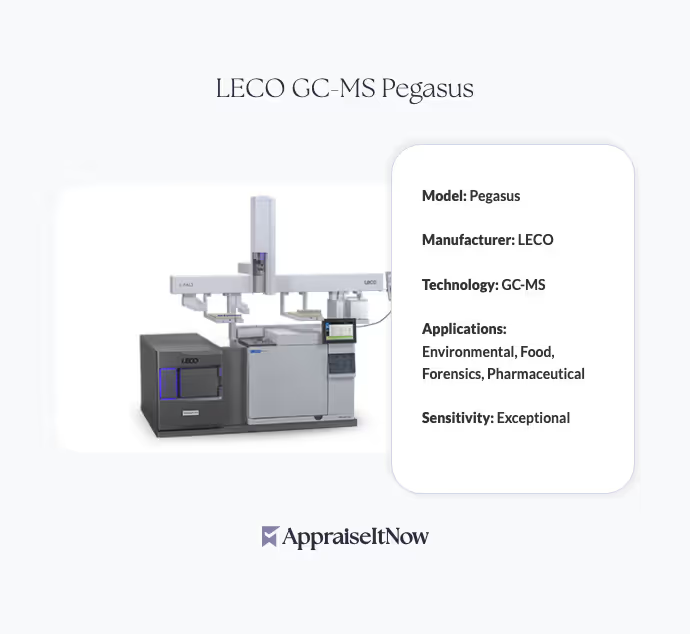
<p>The LECO GC-MS Pegasus represents a significant investment in analytical laboratory capability. Whether you're evaluating a used system for purchase, documenting equipment value for insurance purposes, or preparing for asset liquidation, understanding how to obtain an accurate appraisal of this sophisticated instrument is essential. Current market estimates place a quality LECO GC-MS Pegasus in the <strong>$100,000 to $150,000 range</strong>, making professional valuation critical for protecting your financial interests.</p>
<h2>Understanding the LECO GC-MS Pegasus Market Value</h2>
<p>The LECO GC-MS Pegasus stands as a cornerstone analytical tool in laboratories worldwide, combining gas chromatography's separating power with mass spectrometry's unparalleled sensitivity. This combination makes it indispensable across environmental analysis, food and beverage testing, forensics, and pharmaceutical research applications. The instrument's exceptional performance and robust design have maintained steady demand in the used equipment market, though values fluctuate based on age, condition, and operational history.</p>
<p>Since its introduction in 1995, the Pegasus has evolved through multiple generations, with later models commanding premium prices due to enhanced data acquisition speeds and advanced analytical software. The question of what factors most affect the resale value of a LECO Pegasus GC-MS often centers on these technological improvements, alongside calibration history and maintenance records.</p>
<div class="callout tip"><p><strong>Market Insight</strong></p>
<p>Systems with recent calibration certificates and documented preventive maintenance typically command 15-25% premiums over units requiring immediate service or recalibration.</p></div>
<h2>What Makes LECO Equipment Valuable in the Used Market</h2>
<p>LECO Corporation has established itself as a trusted manufacturer of laboratory instruments, and the Pegasus specifically represents the company's commitment to accurate mass determination and high-speed data acquisition. Understanding what a LECO machine does—providing precise elemental and molecular analysis—helps explain why these instruments retain significant residual value even after years of operation.</p>
<p>The instrument's certified use in regulated laboratories adds another valuation layer. Pharmaceutical companies, environmental testing facilities, and forensic laboratories depend on LECO systems for compliance-critical analysis, meaning reliable used equipment serves genuine market demand. When evaluating your system's worth, this regulatory acceptance becomes a tangible asset rather than merely a technical specification.</p>
<p>Unlike some analytical equipment where technological obsolescence rapidly erodes value, the Pegasus maintains utility across diverse applications. This broad market appeal distinguishes it from niche instruments with limited buyer pools, contributing to more stable resale values within that <strong>$100,000 to $150,000</strong> range.</p>
<h2>Key Factors Influencing Your GC-MS Pegasus Appraisal</h2>
<h3>Operational Hours and Usage History</h3>
<p>The number of operational hours directly impacts your Pegasus's market value. Systems with documented maintenance records showing regular servicing at manufacturer-recommended intervals typically appraise 20-30% higher than units with unknown or irregular service histories. Your appraisal documentation should include maintenance logs detailing column replacements, detector servicing, and calibration dates.</p>
<p>Professional appraisers examining <a href="/types/lab-equipment">laboratory equipment</a> look beyond surface condition to understand actual system usage. Has the detector been replaced? Are the original columns still installed, or have they been upgraded? These operational details significantly influence value assessments and buyer confidence.</p>
<h3>Calibration and Certification Status</h3>
<p>Current calibration status represents perhaps the single most important factor affecting a Pegasus's immediate utility and market value. A system with valid calibration certificates for both the mass spectrometer and chromatography components can command premium pricing, as buyers avoid immediate recalibration costs that typically range from $3,000 to $8,000.</p>
<p>Documentation requirements for equipment appraisals include calibration certificates, service history records, and original system manuals. When gathering these materials for your appraiser, prioritize calibration documentation—this often determines whether a buyer can immediately deploy the system in a regulated environment or must invest in costly recertification before operational use.</p>
<h3>Hardware Condition and Remaining Useful Life</h3>
<p>The physical condition of your Pegasus substantially influences appraisal values. Systems with well-maintained vacuum systems, functioning detectors, and properly operating chromatography components appraise significantly higher than units showing signs of detector degradation or vacuum leaks. An experienced appraiser will assess the condition of critical components including the ionization source, mass filter, and detector electronics.</p>
<p>Age alone doesn't dictate value obsolescence for the Pegasus. Systems from the early 2000s with excellent maintenance often appraise higher than newer equipment with questionable service histories. This contrasts with some technology categories where newer automatically means more valuable—the LECO market rewards reliability and documentation over production year.</p>
<div class="callout note"><p><strong>Appraisal Factor</strong></p>
<p>Systems requiring significant repairs or detector replacement typically depreciate $15,000-$30,000 from baseline market value, while routine maintenance needs affect pricing minimally.</p></div>
<h2>What Documentation You Need for Your Appraisal</h2>
<p>Preparing comprehensive documentation significantly improves your appraisal accuracy and timeline. The appraiser will need specific materials to properly value your GC-MS Pegasus, and assembling these beforehand accelerates the evaluation process.</p>
<p>Essential documentation includes original purchase receipts or invoices showing acquisition cost and date, complete service and maintenance records detailing all repairs and component replacements, current or most recent calibration certificates from accredited calibration services, and the original system manuals or downloadable PDF versions from LECO. Additionally, photographs of the instrument from multiple angles, documentation of the software version currently installed, and any performance validation reports or standard reference materials certificates provide valuable context.</p>
<p>If your Pegasus has operated in a regulated laboratory environment, compliance documentation including any FDA audits, ISO certifications, or pharmaceutical validation protocols strengthens the appraisal. These records demonstrate the system's reliability in high-stakes applications, justifying higher valuations within that $100,000-$150,000 range.</p>
<h2>Timeline and Cost Considerations for Your Appraisal</h2>
<p>How long does a laboratory equipment appraisal typically take? Most professional appraisals of <a href="/types/equipment-and-machinery">equipment and machinery</a> systems like the Pegasus require 5-10 business days from documentation submission through final report delivery. The process involves physical inspection (often conducted on-site or through detailed photography if distance prevents in-person assessment), comparative market analysis examining recent sales of similar systems, condition documentation, and comprehensive reporting suitable for insurance, litigation, or transaction purposes.</p>
<p>The cost range for professional GC-MS appraisals typically falls between $800 and $2,500, depending on system complexity, documentation availability, and appraisal purpose. Insurance appraisals and litigation valuations may command premium pricing due to the additional rigor and courtroom-defensibility required. When engaging AppraiseItNow or similar services, understand whether quoted fees cover written report delivery, photographic documentation, and multiple revisions.</p>
<h2>Comparing Your Pegasus to Alternative Systems</h2>
<p>Understanding how the LECO Pegasus compares to common alternatives helps contextualize its market value. Agilent Technologies' GC-MS systems, particularly the 5973 and 5975 series, represent the primary competitive equipment in similar price ranges. Thermo Fisher Scientific's TRACE GC-MS units and PerkinElmer Clarus systems also command comparable valuations, though specific model generation significantly affects individual pricing.</p>
<p>The question of what alternatives exist to LECO GC-MS units rarely results in complete substitution—different laboratories have invested in specific equipment ecosystems with trained operators, existing methods validations, and established supplier relationships. This fragmentation means your Pegasus appeals to buyers already committed to the LECO platform, creating a dedicated buyer pool that supports consistent market values.</p>
<div class="callout tip"><p><strong>Market Intelligence</strong></p>
<p>Systems from competing manufacturers often sell in similar price ranges, but LECO's reputation for accuracy and reliability sometimes commands 5-10% premiums in direct comparisons with equivalent condition Agilent or Thermo Fisher systems.</p></div>
<h2>How Depreciation and Technological Obsolescence Affect Value</h2>
<p>The LECO Pegasus demonstrates relatively modest depreciation compared to many analytical instruments, depreciating approximately 5-8% annually under normal circumstances. This contrasts sharply with some technology equipment experiencing 15-20% annual value erosion, reflecting the Pegasus's enduring analytical relevance despite advancing technology.</p>
<p>Technological obsolescence affects different GC-MS aspects distinctly. While new Pegasus models offer faster data acquisition and enhanced software capabilities, these improvements primarily benefit high-throughput operations or complex sample matrices. Routine pharmaceutical or environmental applications achieve identical analytical results on 15-20 year old systems compared to current models. This reality supports stronger residual values for older Pegasus units than might be expected in other equipment categories.</p>
<p>The depreciation trajectory typically shows steeper value decline in the first 5-7 years following purchase, then stabilizes as the instrument reaches established market equilibrium. A system purchased for $180,000 in 2010 might have depreciated to $95,000 by 2015, but subsequent depreciation proceeds more gradually, potentially reaching $85,000-$95,000 in today's market depending on maintenance quality and operational hours.</p>
<h2>Specialized Training Requirements and Market Implications</h2>
<p>The LECO GC-MS Pegasus requires specialized training for operation, representing both a limitation and a value determinant. Laboratory technicians cannot simply transfer from competing systems without manufacturer-provided or third-party training. This training requirement reduces the pool of potential buyers but also creates a stable market for systems within established LECO-trained laboratory environments.</p>
<p>Your appraisal should note this specialized training requirement, as it both limits buyer availability and strengthens buyer commitment once they've invested in operator training. Systems located near major research institutions or pharmaceutical centers often appraise higher due to proximity to trained operators and established service infrastructure.</p>
<h2>Why Professional GC-MS Appraisals Matter Beyond Dollar Value</h2>
<p>Beyond establishing a specific valuation within the $100,000-$150,000 range, professional appraisals serve critical functions for equipment owners. Insurance documentation requires certified valuations meeting USPAP standards, providing evidence that coverage limits reflect actual equipment worth. Estate planning demands accurate asset valuations for equitable distribution among beneficiaries. Business asset sales necessitate defensible valuations for purchase agreement negotiations and tax documentation.</p>
<p>Selecting the right appraiser matters significantly. Look for professionals with direct experience appraising analytical laboratory equipment rather than general machinery valuators. Certification through organizations like AAA, ISA, ASA, or CAGA indicates commitment to professional standards and methodology. AppraiseItNow connects equipment owners with credentialed appraisers specializing in <a href="/blog/7-steps-to-obtain-an-accurate-chemical-equipment-appraisal">chemical equipment</a> valuations, ensuring expertise appropriate to your specific Pegasus system and appraisal context.</p>
<div class="callout note"><p><strong>Key Takeaway</strong></p>
<p>A professional LECO GC-MS Pegasus appraisal provides defensible documentation of your equipment's fair market value, essential for insurance coverage, regulatory compliance, asset sales, and financial planning. Whether your system falls toward the lower end ($100,000) or upper range ($150,000) of current market values, certified appraisal documentation protects your interests while providing buyers or insurance carriers with confidence in your equipment's worth.</p></div>