









<h1>How to Get Your John Deere Drill 1590 Appraised</h1>
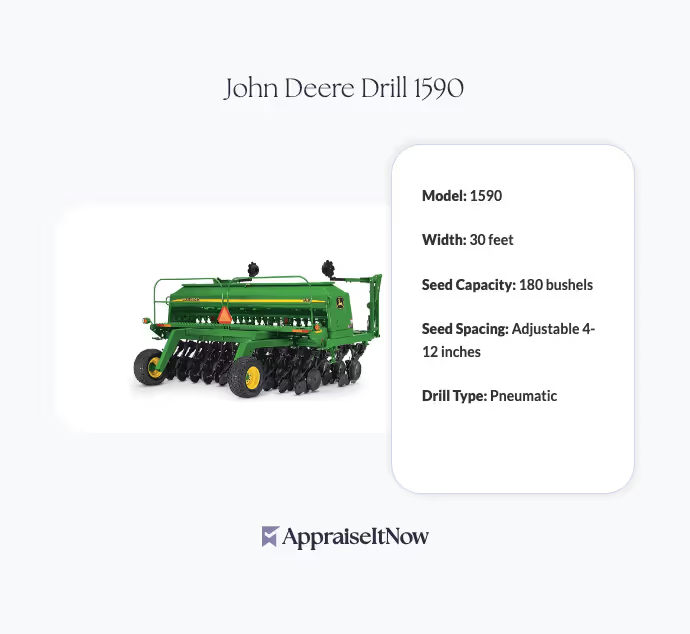
<p>The John Deere Drill 1590 stands as a cornerstone of precision agriculture, delivering exceptional seed placement accuracy and reliability across large-scale farming operations since its introduction in 1987. If you're buying, selling, financing, or insuring this versatile agricultural workhorse, understanding its current market value—typically <strong>$25,000 to $30,000</strong>—requires more than simple online research. A professional appraisal provides the certified documentation and expert analysis that protects your investment and ensures fair market positioning.</p>
<h2>Understanding the John Deere 1590's Market Position</h2>
<p>Your 1590 drill represents a significant <a href="/types/agricultural-equipment">agricultural equipment</a> asset. This model's reputation for durability and precision makes it highly sought after in the used equipment market, particularly among operations focused on large-scale crop production. The drill's advanced seed metering system, adjustable row spacing, and heavy-duty construction have made it a reliable standard across North America, which directly supports its strong resale value.</p>
<p>The 1590's proven track record in the field—delivering consistent seed placement accuracy that optimizes crop yields and minimizes waste—means its market demand remains steady even as newer models enter production. Understanding these fundamentals helps explain why appraisals matter: you need to know where your equipment falls within its market range based on specific condition factors, not just generic online estimates.</p>
<div class="callout tip"><p><strong>Market Insight</strong></p>
<p>John Deere drills from the late 1980s forward hold their value remarkably well compared to many agricultural implements, making accurate appraisals essential for financial planning.</p></div>
<h2>Key Factors That Affect Your Drill's Appraisal Value</h2>
<p>When professional appraisers evaluate your John Deere 1590, several condition and operational factors determine where your equipment sits within that $25,000 to $30,000 range. Unlike purchasing a used tractor where you might focus mainly on engine hours, drill appraisals require attention to specific wear components and operational history.</p>
<p>The drill's age matters significantly—your 1590 may have been produced anywhere from 1987 forward, and machines from the original production run versus those made in the 1990s or early 2000s show different wear patterns and value trajectories. Similarly, the hours of actual field use directly correlate to wear on critical components like the seed discs, openers, and transmission system. A machine with 500 operating hours shows substantially different condition than one with 2,000 hours, even if both are the same calendar age.</p>
<p>Condition extends beyond hours, though. Appraisers assess the integrity of your drill's sturdy frame, evaluating any bent or cracked components that could affect structural reliability. The seed metering system's functionality—whether the advanced mechanisms operate smoothly and consistently—heavily influences value. Likewise, the drill's hydraulic system condition, coulter blade sharpness, and general maintenance history all factor into professional valuation.</p>
<table class='appraisal-table'>
<thead>
<tr>
<th>Value Factor</th>
<th>Impact on Appraisal</th>
<th>Key Considerations</th>
</tr>
</thead>
<tbody>
<tr>
<td>Operating Hours</td>
<td>Critical</td>
<td>500-1,000 hours = premium; 3,000+ hours = reduced value</td>
</tr>
<tr>
<td>Frame Condition</td>
<td>High</td>
<td>Structural damage significantly reduces value</td>
</tr>
<tr>
<td>Seed System Function</td>
<td>High</td>
<td>Advanced metering system must operate smoothly</td>
</tr>
<tr>
<td>Hydraulic System</td>
<td>Medium</td>
<td>Leaks or poor performance reduce efficiency value</td>
</tr>
<tr>
<td>Maintenance Records</td>
<td>Medium</td>
<td>Documented care increases confidence in condition</td>
</tr>
</tbody>
</table>
<h2>The Role of Working Width and Specifications</h2>
<p>One common question appraisers encounter: does the working width of your John Deere 1590 influence its market value? Yes—the drill's operational footprint affects its utility for different farming operations. Width impacts how quickly you can cover acreage, which directly correlates to efficiency and farmer preference. A 1590 in perfect condition delivers different practical value to a farmer with 500 acres versus one managing 2,500 acres.</p>
<p>Similarly, the horsepower recommendation for pulling your 1590 affects its practical market value. Most 1590 models require a 60-90 horsepower tractor for optimal performance, and appraisers note whether your drill's specifications align with common tractor availability in your region. This tractor compatibility factor influences local demand and thus affects regional pricing within the national $25,000-$30,000 range.</p>
<h2>Documentation and Photos: What Appraisers Need</h2>
<p>Professional appraisals for equipment like your John Deere 1590 require specific documentation and photographic evidence. Rather than guessing what details matter, you should provide clear, well-lit photographs showing your drill's overall condition, the seed system components, frame integrity, hitch points, and any wear areas. These photos establish baseline condition documentation that supports the appraiser's analysis.</p>
<p>Equally important are the records you maintain: original purchase documentation, service records, maintenance logs, and any receipts for repairs or component replacements. This documentation trail demonstrates your drill's operational history and maintenance commitment. While you might wonder whether online or remote appraisals sufficiently capture equipment condition, professional appraisers typically combine submitted photography and documentation with specific inspection protocols to ensure accuracy suitable for financing, insurance, or legal proceedings.</p>
<div class="callout note"><p><strong>Pro Tip</strong></p>
<p>Compile your maintenance records, warranty information, and any documentation showing recent repairs or parts replacement—this paperwork directly supports a higher appraisal value by demonstrating responsible stewardship.</p></div>
<h2>How the 1590 Compares to the 1560 Model</h2>
<p>Another question that affects appraisal positioning: how does the John Deere 1590 differ from the 1560 model, and does that affect resale value? The 1590 represents an evolution of the 1560 design, incorporating refinements to the seed metering system and improved adjustability for varied crop types. The 1590's enhanced precision capabilities and construction improvements mean it typically commands slightly higher market prices than comparable 1560 models, particularly when both machines show similar operating hours and condition.</p>
<p>This distinction matters when you're researching comparable sales or understanding your equipment's specific market niche. Your professional appraiser uses this model knowledge to position your 1590 accurately, ensuring comparisons focus on genuinely equivalent equipment rather than different generations with different capabilities.</p>
<h2>Common Wear Items and Defects to Expect</h2>
<p>Appraisers conducting professional <a href="/blog/appraising-agricultural-equipment-assessing-machinery-and-equipment">farm equipment valuations</a> focus particular attention on components that show predictable wear patterns. For your John Deere 1590, these inspection points directly influence value. The seed discs—often the most heavily used consumable—show obvious wear on older machines. Bent or worn openers reduce seed placement precision, a key selling feature of your 1590 model.</p>
<p>The drill's closing wheels and packing wheels deteriorate through soil contact, and worn or damaged units reduce the machine's effectiveness. Hydraulic hose condition matters significantly since leaks or failing hoses reduce operational reliability. Frame cracks, even minor ones, concern appraisers because they affect structural integrity under field stress. Recognizing these common defects helps you understand what professional appraisers identify during inspection.</p>
<h2>Financing, Insurance, and Legal Uses for Your Appraisal</h2>
<p>A fundamental question many equipment owners ask: can online or remote appraisals be used for buying, selling, insurance, or financing purposes? Yes—but with important qualifications. Professional appraisals from certified appraisers work effectively for all these purposes when they follow established standards like USPAP (Uniform Standards of Professional Appraisal Practice). Many lenders, insurance companies, and courts accept remote appraisals supplemented with detailed photography and mechanical assessment.</p>
<p>However, the credibility of your appraisal depends entirely on the appraiser's credentials and methodology. This is why working with established <a href="/blog/what-sets-professional-farm-equipment-appraisers-apart">farm equipment appraisal services</a> that employ credentialed professionals—such as those holding AAA, ISA, or ASA certifications—ensures your documentation meets institutional standards. Whether you need an appraisal for equipment financing, insurance coverage, estate planning, or sale verification, the same professional standards apply.</p>
<h2>Timeline and Typical Appraisal Fees</h2>
<p>You're naturally curious about practical matters: how long does an appraisal take for a drill like the John Deere 1590, and what are typical fees? Professional appraisals typically require 1-3 business days for completion, depending on the appraiser's location and workload. Physical inspection usually takes 1-2 hours on-site, with additional time spent researching comparable sales, analyzing condition data, and preparing documentation.</p>
<p>Fees for agricultural equipment appraisals generally range from $300 to $600 depending on complexity, location, and the appraiser's credentials. Given your 1590's $25,000-$30,000 value, this investment represents a small percentage of the asset's worth—typically 1-2% of estimated value—making it economically sensible for any transaction or insurance purpose. Services like <strong>AppraiseItNow</strong> streamline this process by connecting you with local, credentialed appraisers who provide transparent fee structures and USPAP-compliant documentation suitable for all professional purposes.</p>
<h2>Building Confidence in Your Equipment's Value</h2>
<p>Whether you're preparing to sell your John Deere 1590, seeking financing for an expansion that requires collateral valuation, or updating your farm insurance policy, a professional appraisal delivers more than just a number. It provides certified documentation that supports your decision-making with expert analysis, comparable market data, and detailed condition assessment. This confidence matters particularly when negotiating with buyers or justifying equipment valuations to lenders and insurance carriers.</p>
<p>The appraisal also creates a valuable historical record. Years down the line, when you're managing tax matters, estate planning, or insurance adjustments, having documented proof of your equipment's condition and value at specific points in time protects your interests and simplifies administrative processes.</p>
<div class="callout note"><p><strong>Key Takeaway</strong></p>
<p>A certified professional appraisal of your John Deere Drill 1590 transforms market uncertainty into actionable financial documentation, giving you the confidence to buy, sell, finance, or insure this valuable agricultural asset with complete accuracy and institutional credibility.</p></div>