









<h1>How to Get Your John Deere 2730 Disk Ripper Appraised</h1>
<p>If you're considering selling, purchasing, or insuring a John Deere 2730 Disk Ripper, understanding its current market value is essential. This heavy-duty agricultural implement typically ranges between <strong>$50,000 and $60,000</strong>, but several factors can shift that valuation significantly. A professional appraisal provides the documentation and confidence you need to make informed decisions about this substantial piece of <a href="/types/farm-equipment">farm equipment</a>.</p>
<h2>Understanding the John Deere 2730 Disk Ripper's Value Drivers</h2>
<p>The 2730 Disk Ripper commands premium pricing in the <a href="/types/agricultural-equipment">agricultural equipment</a> market because of its specialized design and proven performance. Introduced in 2005, this ripper was engineered specifically for deep soil preparation—a critical task that directly impacts crop yields. When you're evaluating its worth, you're essentially valuing a tool that consistently delivers measurable returns through improved soil management.</p>
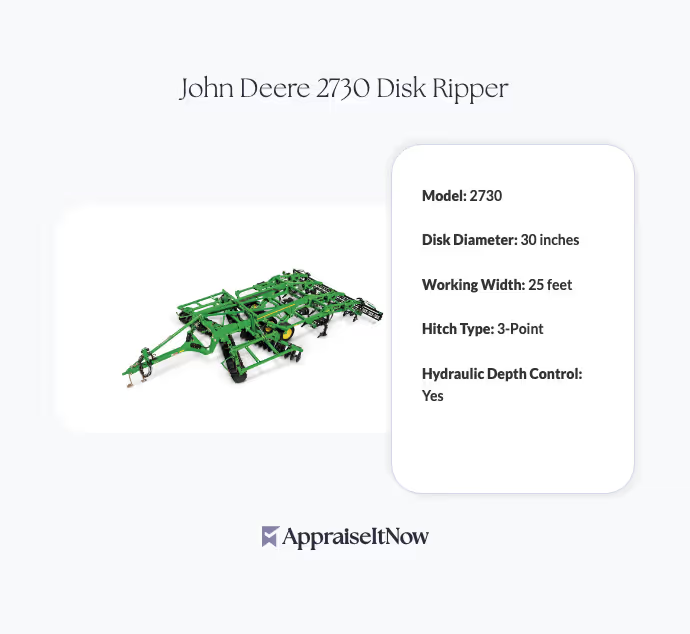
<p>What makes this equipment particularly valuable? The combination of a 25-foot working width with 30-inch disk diameter creates exceptional efficiency for large-scale operations. Farmers and contractors rely on the hydraulic depth control system to achieve precise working depths, transforming compacted soil into ideal seedbeds. Unlike equipment that struggles with consistency, the 2730's robust frame construction ensures reliable performance across multiple seasons, which appraisers recognize when establishing market value.</p>
<div class="callout tip"><p><strong>Appraisal Insight</strong></p>
<p>Equipment maintained with regular servicing and documented repairs typically appraises 15-25% higher than machines with minimal maintenance records.</p></div>
<h2>Key Specifications That Impact Appraisal Value</h2>
<p>When a professional appraiser evaluates your 2730 Disk Ripper, they examine specific technical features that influence its market position. The 3-point hitch connection means compatibility with standard tractor configurations, reducing the specialized equipment requirement and broadening its appeal to potential buyers. This universality supports stronger valuations compared to proprietary attachment systems.</p>
<p>The 25-foot working width positions the 2730 as ideal for larger farming operations and contract work. This capacity directly relates to operational cost-per-acre efficiency—a metric experienced farmers use when justifying equipment investment. Appraisers understand that equipment capable of covering more ground generates more interest from buyers with substantial acreage, supporting stronger pricing.</p>
<p>Hydraulic depth control distinguishes premium soil preparation equipment from basic models. This feature allows operators to optimize performance for different soil conditions and planting strategies, making the 2730 versatile enough for diverse agricultural applications. Equipment flexibility typically commands value premiums in professional appraisals.</p>
<h2>Condition Assessment and Market Position</h2>
<p>Your 2730 Disk Ripper's current condition represents the most significant variable affecting its appraisal value within the $50,000-$60,000 range. A machine maintained since 2005 with documented regular servicing likely appraises toward the higher end, while equipment with deferred maintenance or uncertain service history may fall considerably lower.</p>
<p>Appraisers examine operational functionality, frame integrity, and disk blade condition when conducting professional valuations. The hydraulic system's responsiveness, cylinder seal condition, and pressure consistency directly influence equipment reliability—a primary concern for buyers investing in <a href="/types/heavy-machinery">heavy machinery</a> for production-critical tasks. When you're considering selling, addressing minor maintenance issues often yields returns exceeding the repair costs through improved appraisal outcomes.</p>
<table class='appraisal-table'>
<thead>
<tr>
<th>Assessment Area</th>
<th>Impact on Value</th>
<th>Details</th>
</tr>
</thead>
<tbody>
<tr>
<td>Hydraulic system condition</td>
<td>High</td>
<td>Fully functional with no leaks</td>
</tr>
<tr>
<td>Frame integrity</td>
<td>High</td>
<td>Structural damage reduces value significantly</td>
</tr>
<tr>
<td>Disk blade wear</td>
<td>Medium</td>
<td>Worn blades can be replaced affordably</td>
</tr>
<tr>
<td>Hitch connections</td>
<td>Low</td>
<td>Minor maintenance items</td>
</tr>
<tr>
<td>Documentation</td>
<td>High</td>
<td>Service records support premium pricing</td>
</tr>
</tbody>
</table>
<h2>How Equipment Age and Usage Affect Pricing</h2>
<p>Although the 2730 has been available since 2005, age alone doesn't dictate value in agricultural equipment appraisals. Instead, utilization patterns matter significantly. A machine used seasonally on 500 acres annually depreciates differently than equipment subjected to intensive contract work year-round. Professional appraisers assess historical usage through wear patterns, maintenance records, and operational hours to establish realistic market values.</p>
<p>The question "How much horsepower does a John Deere 2730 ripper need?" reflects an important consideration in appraisals—your equipment's compatibility with available tractor power sources. The 2730 typically requires 70-100 horsepower from the tractor PTO (Power Take-Off) system, positioning it as suitable for mid-range to large-scale operations. This requirement range actually supports stronger valuations because it meets needs across a substantial buyer pool without requiring excessive tractor capacity.</p>
<h2>Comparative Equipment Market Context</h2>
<p>Understanding how your 2730 Disk Ripper positions relative to competing equipment helps establish realistic appraisal expectations. When buyers ask "How much is a John Deere 2720 tractor worth?", they're often evaluating complete farming systems rather than individual equipment pieces. Your 2730 ripper integrates into these systems as a specialized soil preparation tool, competing with alternatives like the 2100 ripper in terms of capabilities and price positioning.</p>
<p>Equipment in the $50,000-$60,000 range serves a specific market segment—operations large enough to justify specialized equipment investment but not quite positioned for premium multi-implement systems. This sweet spot maintains strong buyer interest, supporting consistent appraisal values compared to niche equipment with limited applications.</p>
<div class="callout note"><p><strong>Market Reality</strong></p>
<p>The agricultural equipment market shows stronger price stability for multi-purpose implements like disk rippers compared to highly specialized equipment with limited buyer pools.</p></div>
<h2>Documentation and Maintenance Records</h2>
<p>Professional appraisals rely heavily on supporting documentation when establishing defensible valuations. Your maintenance records become critical evidence—service intervals, repair dates, parts replaced, and servicing costs collectively tell the equipment's operational history. When seeking an appraisal, compile these records in chronological order to demonstrate consistent care and responsible stewardship.</p>
<p>Original purchase documentation, equipment registration, and any performance records specific to your operation also support higher appraisals. These items prove you've properly maintained a significant agricultural asset, justifying premium pricing within the market range. Conversely, missing documentation often reduces appraiser confidence and results in more conservative valuations, even if the equipment appears mechanically sound.</p>
<h2>Why Professional Appraisal Matters for Your Investment</h2>
<p>Whether you're navigating insurance coverage, estate planning, or preparing to sell, a certified appraisal provides essential documentation that stands beyond personal estimates. Professional appraisers bring market expertise, comparable sales analysis, and understanding of condition factors that influence realistic valuations. For equipment representing 5-8% of your total farm asset value, professional documentation protects against both over-insurance premiums and under-valuation during sales.</p>
<p>When you're evaluating whether to invest in equipment improvement before selling—addressing hydraulic leaks, replacing worn disks, or repainting worn sections—a professional appraiser can guide decisions about cost-benefit returns. Our detailed guide on <a href="/blog/appraising-agricultural-equipment-assessing-machinery-and-equipment">appraising agricultural equipment</a> explains how to prepare effectively for professional evaluations and maximize your equipment's documented market position.</p>
<h2>Preparing for Your Disk Ripper Appraisal</h2>
<p>Start by gathering operational information: current condition observations, recent service history, maintenance receipts, and usage patterns. Document any recent repairs or improvements you've completed. If hydraulic work was performed recently, collect those service records specifically—appraisers weight current condition heavily when adjusting valuations. Taking clear photographs from multiple angles showing overall condition, frame integrity, and any visible wear patterns supports the appraisal process.</p>
<p>Consider the timing of your appraisal request. Equipment values fluctuate seasonally in agricultural markets, with spring typically showing stronger demand and pricing. Understanding these market dynamics through professional expertise helps position your 2730 Disk Ripper appropriately when timing your sale or insurance update.</p>
<div class="callout note"><p><strong>Key Takeaway</strong></p>
<p>A professional appraisal of your John Deere 2730 Disk Ripper transforms the $50,000-$60,000 estimated value into a defensible, documented assessment that protects your investment whether buying, selling, insuring, or planning your agricultural operation. Certified appraisers bring market expertise and detailed analysis that personal estimates simply cannot match, giving you confidence in significant equipment decisions.</p></div>