









<h1>How to Get Your JEOL GC-MS AccuTOF Appraised</h1>
<p>The JEOL GC-MS AccuTOF represents a significant investment in analytical laboratory capability, commanding estimated values between <strong>$170,000 and $200,000</strong> in today's scientific equipment market. Whether you're planning to sell, documenting assets for your research institution, or need updated valuations for insurance purposes, understanding how to properly appraise this sophisticated instrument ensures you capture its true market worth and maintain comprehensive documentation.</p>
<h2>Understanding Your JEOL GC-MS AccuTOF's Market Position</h2>
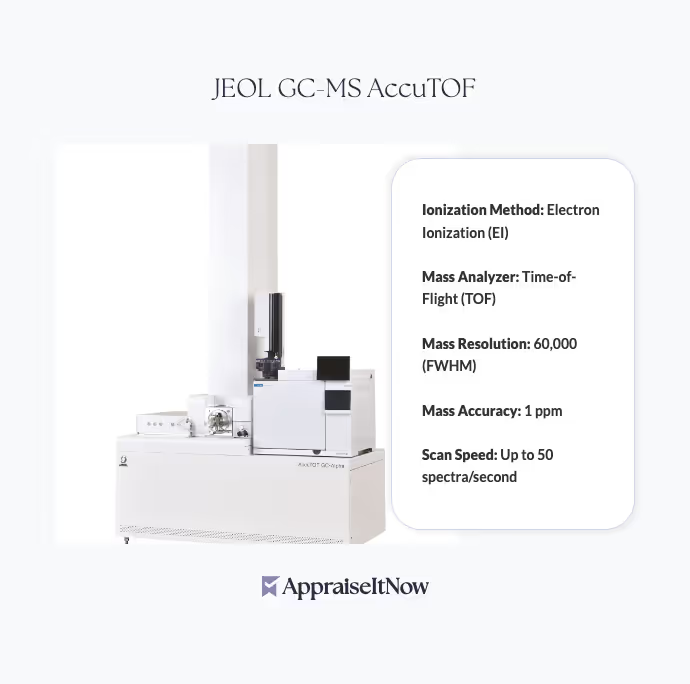
<p>Since its introduction in 2003, the JEOL GC-MS AccuTOF has established itself as one of the most capable analytical instruments available for research laboratories worldwide. This gas chromatography-mass spectrometry system combines ultra-high resolution analysis with exceptional mass accuracy and rapid data acquisition capabilities, making it indispensable across environmental monitoring, forensics, and pharmaceutical research applications.</p>
<p>Your instrument's value isn't arbitrary—it reflects the sophisticated technology embedded within. The AccuTOF's time-of-flight mass spectrometry design provides mass resolution and sensitivity that laboratory professionals rely on for complex analytical work. When evaluating your system's worth, you're essentially valuing both the hardware and the decades of engineering refinement that went into its design.</p>
<div class="callout tip"><p><strong>Market Insight</strong></p>
<p>Leading research institutions and forensic laboratories worldwide actively seek well-maintained JEOL AccuTOF systems, creating consistent demand that supports strong market values for quality used equipment.</p></div>
<h2>Key Factors That Determine AccuTOF Appraisal Value</h2>
<p>Several specific factors influence where your particular JEOL system falls within the <strong>$170,000 to $200,000</strong> range. Understanding these variables helps you prepare for the appraisal process and potentially identify value-enhancement opportunities before seeking professional evaluation.</p>
<p><strong>Condition and maintenance history</strong> represent the most significant value drivers for laboratory equipment. An AccuTOF that has received consistent preventive maintenance, regular calibration according to manufacturer specifications, and documented service records will command premium pricing over a system with questionable history. The instrument's robust construction and user-friendly interface make it reliable even in demanding laboratory environments, but only when properly maintained.</p>
<p><strong>Calibration status and certification records</strong> carry substantial weight in appraisal determinations. Prospective buyers want assurance that your system maintains the mass accuracy and scan speed that define the AccuTOF's value proposition. Current calibration certificates, GLP (Good Laboratory Practice) and GMP (Good Manufacturing Practice) compliance documentation, and records showing adherence to manufacturer maintenance protocols all contribute positively to your appraisal value. This documentation parallels what professional appraisers examine when evaluating <a href="/types/lab-equipment">laboratory equipment</a> across various specialties.</p>
<p><strong>Original equipment and software components</strong> significantly impact value. Systems that retain original software licenses, haven't required major component replacements, and include all original accessories command higher valuations than those with modifications or substitute parts. The question of whether you're appraising <a href="/types/chemical-equipment">chemical equipment</a> or general <a href="/types/lab-equipment">lab equipment</a> affects methodology, but for JEOL systems, complete originality consistently enhances market positioning.</p>
<h2>What Documentation You'll Need for Accurate Appraisal</h2>
<p>Professional appraisers require specific information to generate accurate, defensible valuations. Gathering this documentation before scheduling your appraisal accelerates the process and demonstrates your commitment to thoroughness—a factor that often translates to appraiser confidence in your reported maintenance practices.</p>
<p><strong>Service records and calibration certificates</strong> form the foundation of equipment appraisals. Your JEOL system's complete maintenance history—including dates of service calls, parts replaced, and work performed—provides crucial evidence of proper stewardship. Calibration certificates showing that your AccuTOF has been regularly verified against manufacturer specifications prove that the instrument maintains the analytical precision that drives its value. The cost of GC-MS analysis reflects the instrument's precision and reliability, both of which depend on documented calibration and maintenance.</p>
<p><strong>Original manuals, software licenses, and documentation</strong> should be compiled and made available to the appraiser. These items prove legitimacy of the installation, demonstrate familiarity with proper operation protocols, and establish that you haven't obtained counterfeit or unlicensed software components. Educational institutions and research facilities particularly value complete documentation packages because they facilitate knowledge transfer when equipment changes hands.</p>
<p><strong>Purchase receipts and warranty records</strong> help establish the system's original cost basis and document any extended warranty coverage that might transfer to a new owner. These historical records don't directly determine current value, but they provide context that professional appraisers use to verify equipment authenticity and understand the system's operational history.</p>
<div class="callout note"><p><strong>Documentation Tip</strong></p>
<p>Organize all service records chronologically and note any major repairs, component replacements, or software updates. This timeline helps appraisers identify potential concerns and understand how you've maintained the system over time.</p></div>
<h2>Selecting the Right Professional Appraiser</h2>
<p>Finding an appraiser qualified to value your JEOL GC-MS AccuTOF requires identifying professionals with specific expertise in analytical laboratory equipment. Not all appraisers possess the technical knowledge to evaluate sophisticated instruments like gas chromatography-mass spectrometry systems, so qualification verification is essential.</p>
<p>Look for appraisers holding credentials from recognized professional organizations: the <strong>American Society of Appraisers (ASA)</strong>, <strong>Appraisers Association of America (AAA)</strong>, <strong>International Society of Appraisers (ISA)</strong>, or similar organizations that maintain rigorous standards. These credentials indicate that the appraiser has committed to ongoing education, ethical standards, and adherence to the <strong>Uniform Standards of Professional Appraisal Practice (USPAP)</strong>—the same standards that ensure your appraisal documentation holds up under legal or insurance scrutiny.</p>
<p>Specialized expertise matters tremendously when appraising scientific instruments. Your appraiser should understand GC-MS technology specifically, recognize different JEOL AccuTOF configurations, and know the current market for used analytical equipment. AppraiseItNow connects you with credentialed experts across the United States who possess exactly this combination of qualifications and experience with <a href="/types/equipment-and-machinery">equipment and machinery valuations</a>.</p>
<p>When contacting potential appraisers, ask about their experience with JEOL systems specifically and analytical laboratory equipment generally. How many AccuTOF systems have they appraised? Do they understand the differences between various model configurations? Have they worked with research institutions, pharmaceutical companies, or forensic laboratories? These questions help you assess whether you've found an appraiser capable of generating accurate, professionally defensible valuations.</p>
<h2>Why Are Mass Spectrometers So Expensive?</h2>
<p>Understanding the reasoning behind your JEOL AccuTOF's significant cost—and resulting appraisal value—helps you articulate its worth and appreciate the engineering that drives pricing. Mass spectrometers command premium prices because they represent the convergence of sophisticated physics, precision engineering, and decades of research refinement.</p>
<p>The instrument's core capability—ionizing molecules and separating them by mass-to-charge ratio with extraordinary precision—requires extraordinary engineering. Time-of-flight mass spectrometry specifically demands extremely precise electronic components, vacuum systems that maintain specific pressures, and detection mechanisms capable of registering individual ions. Manufacturing these components to the tolerances required for AccuTOF performance drives substantial production costs.</p>
<p>Beyond hardware, the software systems that control your JEOL AccuTOF and process analytical data represent years of development investment. The advanced software for data processing mentioned in the system specifications enables researchers to extract meaningful information from complex samples—functionality that commands premium pricing in the marketplace. Software licenses, regular updates, and technical support add ongoing value throughout the instrument's operational life.</p>
<h2>Current Market Conditions for Analytical Equipment</h2>
<p>The market for used GC-MS systems remains robust, driven by research institutions, pharmaceutical companies, forensic laboratories, and environmental monitoring facilities seeking cost-effective access to sophisticated analytical capabilities. Your JEOL AccuTOF's <strong>$170,000 to $200,000</strong> valuation reflects consistent demand from organizations unable or unwilling to invest in new equipment but requiring the analytical precision that a well-maintained system provides.</p>
<p>Educational institutions represent a significant market segment for used equipment like your AccuTOF. Universities and teaching hospitals need analytical capabilities for research and instruction but often face budget constraints that make used equipment more accessible than new systems. Our guide on <a href="/blog/how-to-prepare-for-laboratory-equipment-appraisal">preparing for laboratory equipment appraisals</a> addresses academic sector considerations when managing valuable analytical assets.</p>
<p>International markets also influence JEOL AccuTOF values, particularly in regions where analytical chemistry research has grown substantially. As global pharmaceutical development expands and environmental monitoring requirements increase internationally, used equipment from well-established manufacturers like JEOL finds active buyer interest across multiple continents. Understanding these market dynamics—what factors determine the resale value of a GC-MS instrument—helps you position your system appropriately whether selling domestically or internationally.</p>
<div class="callout tip"><p><strong>Market Reality</strong></p>
<p>Used analytical equipment from reputable manufacturers like JEOL typically depreciates more slowly than many assets because demand remains strong among cost-conscious institutions seeking proven technology.</p></div>
<h2>Preparing Your System for Appraisal</h2>
<p>Before the appraiser arrives, take steps to ensure they can properly evaluate your JEOL AccuTOF and understand its condition. A clean, well-organized system allows the appraiser to work efficiently and signals that you've maintained the equipment seriously rather than leaving it neglected.</p>
<p>Clean the instrument according to manufacturer guidelines—never use harsh chemicals or procedures that might damage sensitive components. Verify that the system powers on normally and displays expected startup screens. While the appraiser won't typically run analytical samples, demonstrating that the basic systems respond properly builds confidence in your reported maintenance practices.</p>
<p>Arrange documentation in logical order—service records first, then calibration certificates, followed by software documentation and original purchase paperwork. Don't overwhelm the appraiser with excessive materials, but ensure everything relevant remains accessible. For comprehensive guidance on preparation steps, explore resources on <a href="/blog/how-to-determine-the-fair-market-value-for-lab-equipment">how to accurately determine analytical equipment value</a>, which address appraiser workflow and documentation expectations.</p>
<h2>Understanding GC-MS Specifications in Appraisal Context</h2>
<p>The technical specifications that make your JEOL GC-MS AccuTOF valuable directly inform appraisal methodology. An appraiser must understand how the ultra-high resolution analysis, exceptional mass accuracy, rapid data acquisition, and advanced software capabilities translate to market value.</p>
<p>The system's ability to handle a wide range of samples—from environmental contaminants to pharmaceutical compounds to forensic evidence—expands its potential buyer base. This versatility supports the higher end of the valuation range because more potential purchasers can envision using the system for their specific applications. Conversely, a system heavily configured for a specific narrow application might appeal to fewer buyers and potentially command lower appraisal value.</p>
<p>Your JEOL's compliance with GLP and GMP standards matters particularly for pharmaceutical companies and regulated laboratories. Appraisers specifically verify these compliance capabilities because they directly affect where the instrument can be deployed. An AccuTOF that maintains GMP compliance might command premiums over identical systems that have been modified in ways affecting compliance status.</p>
<h2>The Importance of Accurate Appraisal for Your Situation</h2>
<p>Whether you're selling your JEOL AccuTOF, documenting institutional assets, seeking insurance coverage, or planning estate distribution, an accurate professional appraisal provides essential value. Insurance companies require certified appraisals to establish replacement cost coverage—and without proper documentation, you risk being underinsured if loss or damage occurs. When facing equipment valuation for <a href="/types/business-assets">business assets</a> purposes, a USPAP-compliant appraisal creates the documentation that financial institutions, legal professionals, and tax authorities recognize and accept.</p>
<p>Institutional asset managers use appraiser valuations to maintain accurate equipment inventories and support financial reporting. Estate planners and executors rely on professional appraisals to ensure fair distribution of valuable equipment among beneficiaries. In each situation, your JEOL GC-MS AccuTOF's accurate market valuation becomes the foundation for proper decision-making. For more insight on connecting with qualified specialists, consider reading about <a href="/blog/guidelines-for-selecting-a-professional-appraiser-for-lab-equipment">selecting the right appraiser for specialized equipment</a>.</p>
<div class="callout note"><p><strong>Key Takeaway</strong></p>
<p>A certified appraisal of your JEOL GC-MS AccuTOF provides the accurate market valuation, comprehensive documentation, and professional credibility you need for selling, insuring, institutional management, or estate purposes—ensuring you understand this sophisticated equipment's true worth in today's analytical laboratory market.</p></div>