









<h1>How to Get Your IMS Mammography Giotto Appraised</h1>
<p>The IMS Mammography Giotto represents a significant capital investment for healthcare facilities, and understanding its current market value is essential whether you're buying, selling, or maintaining insurance coverage. This advanced diagnostic imaging system commands an estimated value range of <strong>$75,000 to $95,000</strong>, depending on condition, age, detector configuration, and service history. A professional appraisal ensures you have accurate documentation for financial and legal purposes.</p>
<h2>Understanding the IMS Giotto's Market Position</h2>
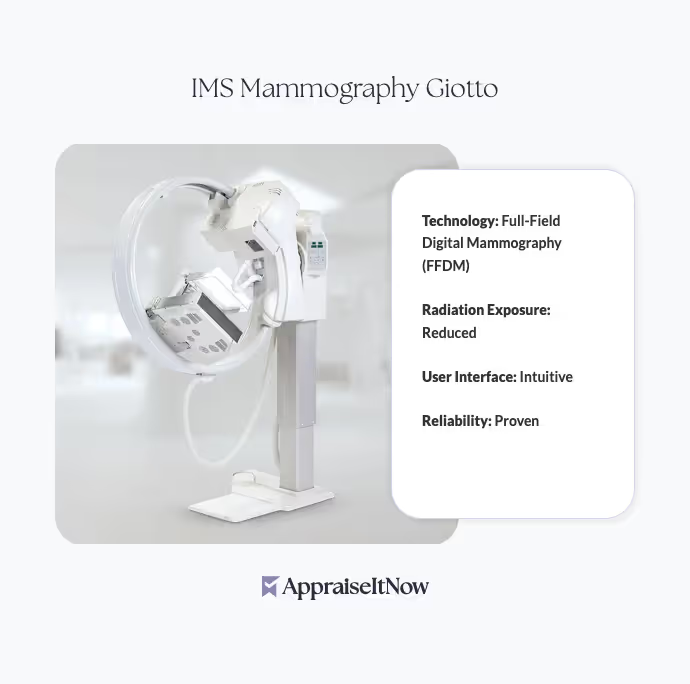
<p>The IMS Mammography Giotto established itself as a sought-after diagnostic tool since its introduction in 2010. This state-of-the-art full-field digital mammography (FFDM) system combines ergonomic design with proven reliability, making it valuable in modern healthcare facilities focused on early cancer detection. Understanding your Giotto's specific positioning within the broader <a href="/types/medical-equipment">medical equipment</a> market helps contextualize its appraisal value.</p>
<p>The equipment's popularity stems from several core advantages: its innovative imaging technology reduces radiation exposure while maintaining diagnostic quality, and its user-friendly interface enhances clinical workflow efficiency. These features, combined with the system's durability, have created sustained demand in the secondary market. When evaluating <a href="/types/equipment-and-machinery">equipment and machinery</a> like the Giotto, appraisers must account for both technical specifications and market demand dynamics.</p>
<div class="callout tip"><p><strong>Market Insight</strong></p>
<p>Healthcare facilities upgrading to 3D mammography systems (tomosynthesis) often sell their Giotto units as used equipment, creating consistent market supply for buyers seeking reliable diagnostic solutions at reduced costs.</p></div>
<h2>Key Factors Affecting Your Giotto's Appraised Value</h2>
<p>Several critical elements determine where your specific unit falls within the $75,000-$95,000 range. Age represents perhaps the most significant factor—a 2010 Giotto differs substantially in value from a 2018 model due to technological advancements and remaining useful service life. The detector type also matters considerably; systems with advanced detector technology or upgraded imaging capabilities command premium valuations compared to earlier generations.</p>
<p>The presence of 2D versus 3D/tomosynthesis capability creates meaningful value differentiation in today's market. While many healthcare facilities initially invested in 2D-capable Giotto systems, the industry's shift toward 3D mammography has influenced how appraisers value these configurations. Service history and maintenance records provide concrete evidence of proper care, directly affecting both functionality assessment and market desirability. A Giotto with documented regular calibration, preventive maintenance, and MQSA (Mammography Quality Standards Act) compliance inspections typically appraises higher than units lacking this documentation.</p>
<div class="callout note"><p><strong>Valuation Driver</strong></p>
<p>Transport and installation costs—typically ranging from $5,000 to $15,000 depending on facility setup requirements—should be understood as separate from equipment valuation but relevant to total acquisition cost discussions.</p></div>
<h2>Compliance Documentation and Its Impact on Appraisal Value</h2>
<p>Professional appraisals for the IMS Giotto require specific compliance documentation that directly influences valuation. MQSA certification proves your system meets federal standards for mammography equipment operation, and this documentation significantly supports appraised value. Similarly, calibration records demonstrate that your Giotto maintains diagnostic accuracy standards, which healthcare purchasers and insurance companies scrutinize carefully during acquisition or coverage evaluation.</p>
<p>Quality assurance (QA) documentation, including phantom image testing and performance verification records, provides tangible evidence of the system's reliable operation. When seeking your appraisal, compile these materials: purchase invoices establishing original value and acquisition date, service logs showing maintenance intervals and parts replaced, and any DICOM (Digital Imaging and Communications in Medicine) reports demonstrating imaging performance. This comprehensive documentation package enables appraisers to provide USPAP-compliant valuations accepted by healthcare facilities, insurers, and financial institutions.</p>
<h2>Comparing the Giotto to Competitive Systems</h2>
<p>The mammography equipment market includes several significant competitors that influence Giotto pricing dynamics. How do buyers typically price a Giotto system compared with Hologic or Mammomat models? The comparison reveals important market positioning: Hologic systems, particularly their Selenia Dimensions platform with tomosynthesis, often command higher valuations in the new equipment market but create strong secondary market competition for Giotto units. Mammomat systems, manufactured by Siemens, occupy a similar market tier with comparable feature sets and pricing structures.</p>
<p>Understanding these competitive dynamics helps explain why your Giotto's specific configuration matters. A 2D Giotto system, while still valuable and functional, may face pricing pressure from healthcare facilities evaluating newer 3D-capable alternatives. Conversely, upgraded Giotto systems with advanced detector technology or enhanced software maintain stronger valuations because they approach or match competitive feature sets. Professional appraisers experienced in <a href="/blog/common-questions-about-appraising-laboratory-equipment">lab equipment</a> and medical imaging systems understand these market nuances and position your equipment accordingly.</p>
<h2>Depreciation and Useful Life Considerations</h2>
<p>Are there standard depreciation schedules for mammography equipment used in appraisals? Yes—the medical equipment industry recognizes relatively consistent depreciation patterns that appraisers apply. Most diagnostic imaging systems like the Giotto follow a five to seven-year useful life estimate for financial purposes, though actual operational life often extends longer. This means a 2010 Giotto, now over a decade old, may appraise at the lower end of the valuation range, while more recent models command higher values.</p>
<p>Depreciation accelerates when new competitive technology emerges. The industry-wide shift toward 3D tomosynthesis has compressed valuations for 2D-only systems, creating approximately 30-40% value reduction compared to equivalent 3D-capable equipment. Understanding this depreciation trajectory helps you set realistic expectations for your specific unit's appraisal. Professional appraisers apply market-based depreciation analysis rather than simple straight-line calculations, reflecting actual secondary market conditions for medical imaging equipment.</p>
<h2>The Role of Maintenance Records and Service History</h2>
<p>Healthcare purchasers and insurance companies pay particular attention to service and maintenance documentation when evaluating used mammography systems. Comprehensive service records demonstrating regular preventive maintenance, parts replacement, and system upgrades significantly support appraised value. Your Giotto's maintenance history provides appraisers with concrete evidence regarding the system's condition, remaining useful life, and likelihood of reliable future performance.</p>
<p>When compiling information for your appraisal, gather documentation showing: routine preventive maintenance intervals, any major component replacements (tubes, detectors, high-voltage supplies), software updates and upgrades, calibration verification records, and any repairs performed following equipment malfunctions. This documentation establishes your Giotto as a well-maintained asset, which directly correlates to higher appraised values. Facilities investing in proper equipment care typically realize stronger secondary market returns, making maintenance documentation as valuable as the equipment itself.</p>
<h2>Professional Appraisal Requirements and Timeline</h2>
<p>Obtaining a USPAP-compliant appraisal for your IMS Giotto involves several important steps. Professional appraisers specializing in medical equipment will conduct a comprehensive physical inspection, review all documentation you provide, analyze comparable recent sales of similar Giotto systems, and prepare detailed reports suitable for insurance, sale, or estate purposes. The timeline for this process typically ranges from 5-15 business days depending on your equipment's complexity and documentation availability.</p>
<p>AppraiseItNow connects you with credentialed appraisers (AAA, ISA, ASA, CAGA, AMEA certified) experienced in medical imaging equipment valuation. You can submit photographs, descriptions, and documentation securely online, allowing appraisers to evaluate your Giotto efficiently. The appraisal fees vary based on equipment complexity and required analysis, but expect professional valuations to provide detailed condition assessments, market research, and certified documentation that healthcare purchasers and insurance companies require.</p>
<div class="callout tip"><p><strong>Getting Started</strong></p>
<p>Photograph your Giotto's serial number plates, control interfaces, detector housing, and overall condition from multiple angles. Include images showing any wear, modifications, or notable features that distinguish your specific unit in the market.</p></div>
<h2>Market Channels and Buyer Availability</h2>
<p>Who typically purchases used Giotto systems? The secondary market for mammography equipment includes hospitals upgrading to newer technology, imaging centers seeking diagnostic capability at reduced capital cost, international healthcare facilities entering mammography screening programs, and medical equipment refurbishment companies. Understanding these potential buyers helps contextualize your equipment's market value and liquidity.</p>
<p>Hospitals and imaging centers in developing regions represent an increasingly significant buyer segment, particularly for functional Giotto systems with solid maintenance histories. These buyers often prioritize reliability and established technology over bleeding-edge features, positioning mature Giotto systems favorably. International sales channels may offer different valuation parameters than domestic markets, reflecting differing regulatory environments and healthcare facility economics. Professional appraisers understand these market dynamics and position your equipment strategically within applicable sales channels.</p>
<h2>Insurance and Financial Documentation</h2>
<p>Your IMS Giotto likely represents a significant asset on your facility's balance sheet, making accurate appraisal essential for insurance coverage, asset management, and financial reporting purposes. Insurance carriers require professional valuations before issuing equipment coverage policies, ensuring premiums reflect true replacement cost. Similarly, healthcare facilities undergoing financial audits or asset reconciliation need certified appraisals for balance sheet accuracy.</p>
<p>For facilities considering equipment sales or lease transactions, a professional appraisal provides defensible documentation of fair market value. Banks and lease companies evaluating equipment financing arrangements often require independent appraisals to establish collateral value. Whether for insurance, financial reporting, or transactional purposes, a USPAP-compliant appraisal from a credentialed professional provides documentation that meets institutional standards and regulatory requirements.</p>
<div class="callout note"><p><strong>Key Takeaway</strong></p>
<p>A professional appraisal of your IMS Mammography Giotto provides accurate market valuation, comprehensive documentation, and certified reports that support insurance coverage, financial decisions, and equipment transactions. Understanding the factors affecting your system's value—including age, detector configuration, maintenance history, and compliance documentation—ensures you receive appropriate compensation whether buying, selling, or insuring this significant medical asset.</p></div>