









<h1>How to Get Your CareFusion Ventilator AVEA Appraised</h1>
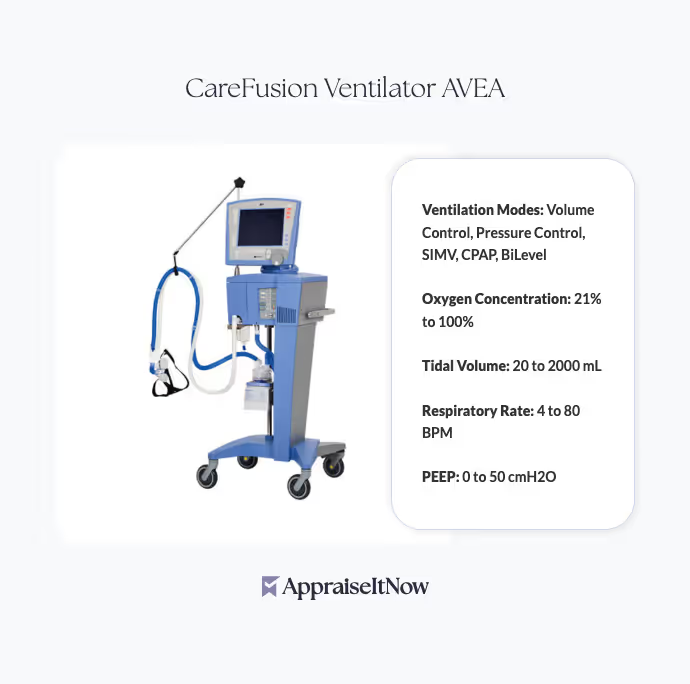
<p>The CareFusion Ventilator AVEA represents a significant investment in critical care infrastructure, with current market values ranging from <strong>$50,000 to $80,000</strong> depending on condition, age, and operational status. Whether you're evaluating the equipment for purchase, sale, insurance coverage, or asset valuation purposes, understanding the appraisal process and what drives AVEA valuations ensures you make informed decisions about this sophisticated medical device.</p>
<h2>Understanding the AVEA's Market Position</h2>
<p>Introduced in 2005 and approved for use in intensive care units, the CareFusion AVEA established itself as a trusted choice among healthcare providers for managing complex ventilation cases. The device's robust construction, intuitive user interface, and comprehensive safety features have contributed to its sustained demand in the secondary market. When you're asking "What is the Avea?" from an investment perspective, you're looking at one of the most advanced ventilators ever designed, which directly influences its appraisal value.</p>
<p>The AVEA's position in the <a href="/types/medical-equipment">medical equipment</a> market reflects its technological sophistication. Unlike basic ventilators, the AVEA integrates advanced sensor technology with customizable ventilation profiles, allowing healthcare facilities to optimize patient outcomes while streamlining hospital workflow processes. This comprehensive capability set supports valuations in the mid-range of critical care ventilator pricing, making it an important asset for facility evaluations.</p>
<div class="callout tip"><p><strong>Market Insight</strong></p>
<p>AVEA ventilators with documented maintenance records and recent calibrations typically command valuations 15-20% higher than units with incomplete service histories.</p></div>
<h2>Key Specifications Affecting AVEA Appraisal Value</h2>
<p>Your AVEA's specific features and current condition directly impact its professional appraisal. The ventilator's advanced sensor technology continuously monitors respiratory patterns and automatically adjusts settings for optimal gas exchange—a capability that distinguishes it from earlier generation devices and justifies premium valuations.</p>
<p>The AVEA's compatibility with a wide range of accessories enhances its utility value. Healthcare facilities can integrate the device with patient monitoring systems, data logging platforms, and other critical care equipment, making it a flexible solution for diverse clinical scenarios. This modularity positively influences appraisal results, particularly when evaluating units destined for ongoing clinical use.</p>
<p>When considering what ventilator readings matter most, the AVEA's comprehensive data logging capabilities provide unprecedented insight into patient respiratory mechanics. This feature set, combined with seamless integration capabilities, means your device maintains strong market appeal. Understanding these technical advantages helps explain why professional appraisers value the AVEA within its distinctive price range across the <a href="/types/equipment-and-machinery">equipment and machinery</a> category.</p>
<h2>Condition Assessment and Value Drivers</h2>
<p>Professional appraisals of ventilators depend on several condition factors beyond simple age. Is your AVEA still functioning according to manufacturer specifications? Operational units command full market valuations, while devices requiring repair or calibration adjustment see proportional value reductions.</p>
<p>The AVEA's durable construction means well-maintained examples frequently remain serviceable for 10+ years after manufacturing. However, specific factors influence appraisal outcomes:</p>
<ul>
<li><strong>Operational status</strong>: Fully functional units valued at the high range ($70,000-$80,000)</li>
<li><strong>Maintenance history</strong>: Complete service records support valuations; gaps may reduce value by 10-25%</li>
<li><strong>Cosmetic condition</strong>: Minor wear acceptable; significant damage affects appraisal results</li>
<li><strong>Calibration currency</strong>: Recent calibration certificates support full market valuations</li>
<li><strong>User interface condition</strong>: Display screen and control panel functionality directly impacts usability value</li>
</ul>
<p>Unlike questions about basic ventilator operation, the AVEA's complexity means appraisers require detailed technical assessments. Professional evaluators examine both electronic systems and mechanical components, ensuring accurate condition grading that reflects current market demand.</p>
<h2>Market Dynamics for Critical Care Ventilators</h2>
<p>Understanding what healthcare facilities currently pay for ventilators helps contextualize your AVEA's valuation. The average price of a ventilator has shifted significantly post-pandemic, with used critical care units like the AVEA representing compelling value propositions for budget-conscious healthcare organizations. Your device's 2005 introduction date actually supports its market position, as years of proven clinical outcomes create confidence among purchasing facilities.</p>
<p>The ventilator market encompasses three primary categories: portable units for transport, intensive care devices like the AVEA, and high-frequency oscillatory ventilators for specialized applications. The AVEA's intensive care classification positions it in the premium segment, where valuations reflect comprehensive functionality and proven reliability. When facilities evaluate equipment purchases through <a href="/blog/establishing-value-how-to-determine-the-worth-of-medical-equipment">professional asset appraisals</a>, the AVEA consistently ranks favorably against comparable alternatives.</p>
<div class="callout note"><p><strong>Professional Context</strong></p>
<p>Healthcare procurement teams specifically seek AVEA ventilators for ICU applications, supporting steady secondary market demand that maintains valuations within the $50,000-$80,000 range.</p></div>
<h2>Technical Capabilities That Support Valuations</h2>
<p>The AVEA's sophisticated ventilation modes deserve specific attention during appraisal discussions. When healthcare professionals ask about AVA mode functionality or other specialized features, they're evaluating the device's clinical utility. The AVEA supports multiple ventilation strategies including assist-control, synchronized intermittent mandatory ventilation (SIMV), and advanced spontaneous ventilation modes. This versatility directly supports its premium valuation compared to single-mode or limited-capability alternatives.</p>
<p>One common question in clinical settings asks whether ASV (Adaptive Support Ventilation) represents the same approach as SIMV. The AVEA integrates both modes, giving clinicians sophisticated options for different patient scenarios. This dual-capability positioning reflects modern critical care practices and justifies the device's market valuation. Appraisers understanding these clinical nuances can accurately explain value to both healthcare facilities and non-clinical buyers.</p>
<p>The four stages of ventilation—oxygenation, ventilation, circulation, and tissue perfusion—all depend on ventilator performance. The AVEA addresses these requirements through its comprehensive design, making it particularly valuable for complex patient cases. Facilities managing critically ill patients recognize the AVEA as instrumental for improving patient outcomes, supporting continued demand that maintains strong secondary market valuations.</p>
<h2>Documentation Requirements for Appraisal</h2>
<p>Professional appraisals of ventilators like the AVEA require specific documentation to support valuations. When working with AppraiseItNow's certified experts, prepare to provide maintenance records showing service history, calibration certificates confirming current accuracy specifications, and operational logs if available. This documentation directly influences appraisal outcomes and supports valuations at the higher end of the price range.</p>
<p>If you're uncertain about your AVEA's specific serial number, purchase history, or service records, experienced appraisers can still evaluate the device through comprehensive technical assessment. However, complete documentation expedites the appraisal process and often results in more favorable valuations. Healthcare facilities selling or transferring equipment should compile this information before seeking professional appraisals to maximize results.</p>
<h2>Determining Appraisal Timing and Purpose</h2>
<p>Your reason for seeking an AVEA appraisal influences timing and documentation requirements. Are you evaluating equipment for insurance coverage, planning a facility upgrade, managing estate assets, or preparing for sale? Each scenario benefits from professional <a href="/blog/the-importance-of-accurate-medical-equipment-appraisals">medical equipment appraisals</a> that provide USPAP-compliant documentation accepted by insurance providers, courts, and financial institutions.</p>
<p>Healthcare facility managers should consider periodic reappraisals as equipment ages. While the AVEA maintains valuations well due to its robust construction, market conditions and device utilization hours affect value over time. Facilities planning multi-year equipment investments benefit from documented valuations that inform capital planning decisions.</p>
<p>Estate executors managing healthcare professional assets or healthcare facility closures should prioritize professional appraisals early in their process. The AVEA's specialized nature means buyers exist specifically in the healthcare equipment market, and certified appraisals connect sellers with appropriate purchasers while establishing fair market values that withstand scrutiny.</p>
<div class="callout tip"><p><strong>Appraisal Strategy</strong></p>
<p>Obtain your AVEA appraisal well before planning sales or facility transitions—professional valuations provide competitive advantages in healthcare equipment markets where specialized knowledge commands premium pricing.</p></div>
<h2>Why Professional Appraisals Matter for Medical Equipment</h2>
<p>Attempting to value sophisticated medical equipment like the CareFusion AVEA without professional expertise often results in significant undervaluation or overestimation. The device's technical complexity, specialized market demand, and condition-dependent value fluctuations require appraiser expertise in healthcare equipment markets.</p>
<p>AppraiseItNow connects you with credentialed appraisers experienced in <a href="/blog/untangling-the-appraisal-process-how-to-successfully-valuate-medical-equipment">evaluating medical and laboratory equipment</a>, ensuring accurate valuations that reflect current market conditions. Our certified experts understand both the clinical capabilities that drive healthcare purchasing decisions and the financial metrics that influence institutional valuations. Whether you submit photographs and documentation through our secure online platform or arrange in-person assessment, our appraisers deliver the comprehensive evaluation your AVEA deserves.</p>
<p>Professional appraisals provide documentation suitable for insurance claims, equipment sales, facility valuations, estate planning, and asset management. The certified report establishes fair market value based on comparable sales data, condition assessment, and market demand analysis—information that protects your interests across multiple scenarios.</p>
<div class="callout note"><p><strong>Key Takeaway</strong></p>
<p>Your CareFusion Ventilator AVEA represents a significant asset valued between $50,000 and $80,000 in today's market. Professional appraisal through AppraiseItNow ensures accurate valuation, comprehensive documentation, and market-based pricing that reflects the device's sophisticated capabilities and clinical value to healthcare facilities seeking reliable critical care equipment.</p></div>