









<h1>How to Get Your American Range AR-6 Oven Appraised</h1>
<p>The American Range AR-6 Oven stands as a cornerstone of premium commercial cooking equipment, valued between <strong>$6,000 and $8,000</strong> in today's market. Whether you're liquidating restaurant assets, evaluating your kitchen investment, or preparing for insurance coverage, understanding how to properly appraise this heavy-duty appliance ensures you're making informed decisions backed by accurate market data.</p>
<h2>What Makes the American Range AR-6 Valuable</h2>
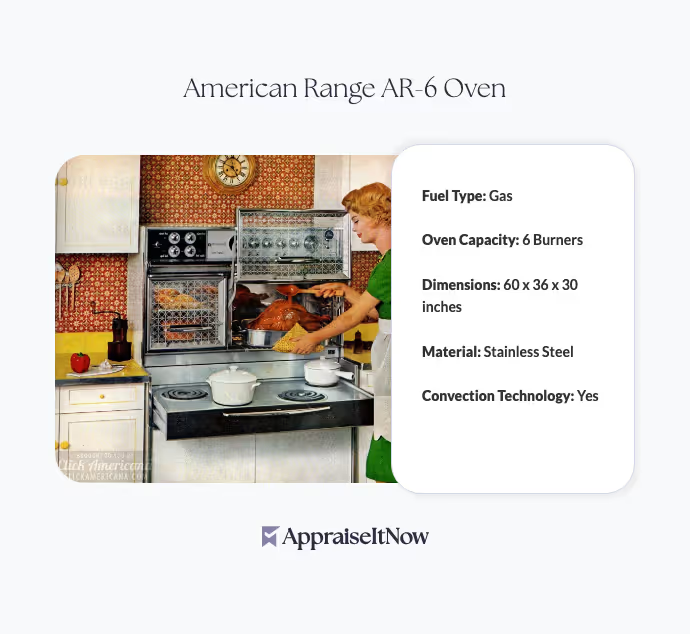
<p>Your AR-6 isn't just another commercial oven—it's a piece of engineering excellence that's been proven in professional kitchens since 1975. Made entirely from <strong>18-gauge stainless steel</strong> and equipped with <strong>40,000 BTU burners</strong> paired with dual-flow gas valves, this oven represents the kind of durability that justifies its premium positioning in the <a href="/types/restaurant-equipment">restaurant equipment</a> market. The AR-6's continuous grate top design and interior halogen lighting reflect thoughtful engineering decisions that professional chefs still appreciate today.</p>
<p>When you're evaluating <a href="/types/kitchen-appliance">kitchen appliances</a> or broader <a href="/types/equipment-and-machinery">commercial equipment</a>, the AR-6's reputation for consistent performance becomes a major value driver. Unlike newer models that might offer flashier features, your AR-6 delivers proven results with a track record spanning nearly five decades. This reliability isn't just reassuring—it's marketable to buyers who understand what they're getting.</p>
<div class="callout tip"><p><strong>Market Insight</strong></p>
<p>American Range AR-6 ovens with complete service records and recent maintenance documentation can command 10-15% premiums over comparable used models.</p></div>
<h2>Key Specifications That Impact Your Appraisal Value</h2>
<p>Several technical details directly influence what an appraiser will assess when evaluating your AR-6. Beyond the basic specifications, it's the configuration details and condition markers that separate premium valuations from standard ones. The continuous grate system, <strong>lifetime warranty on burners</strong>, and robust construction mean your oven likely has significant remaining service life—a critical factor appraisers consider when determining fair market value.</p>
<p>The model details most influencing your AR-6's value include whether all burners function properly, the condition of the stainless steel exterior, and the integrity of internal components like the halogen lighting system. Original components in working order typically add 5-10% to valuations compared to units requiring repairs or parts replacement. Understanding these nuances helps you prepare documentation that supports higher valuations before your appraisal appointment.</p>
<h2>Documentation That Strengthens Your Appraisal</h2>
<p>Professional appraisers need context to justify valuations, and you control much of that narrative through proper documentation. Service records demonstrating consistent maintenance establish that your AR-6 has received professional care rather than being neglected. If you have the original purchase invoice, that documentation anchors the appraisal with concrete historical data. Parts replacements documented over the years provide evidence of proper stewardship and ongoing investment in the equipment.</p>
<p>When buyers or insurers see comprehensive maintenance records, they gain confidence in both the equipment's current condition and its remaining operational life. This documentation becomes particularly valuable for <a href="/types/equipment-and-machinery">equipment and machinery</a> appraisals where age alone doesn't tell the complete story. Clean maintenance histories often justify valuations at the higher end of the range compared to units with questionable service backgrounds.</p>
<h2>Understanding Depreciation and Market Conditions</h2>
<p>Your AR-6's age—now nearly 50 years if purchased at introduction—might initially seem like a depreciation liability, but commercial cooking equipment follows different valuation principles than consumer goods. The question of how age and hours of use affect appraised value requires understanding that established commercial equipment often holds value better than newer models with unproven reliability records. A well-maintained 1990s AR-6 might appraise higher than a malfunctioning five-year-old competitor's oven because professional chefs prioritize proven performance over manufacturing date.</p>
<p>Hours of use matter considerably more than calendar age for commercial kitchen equipment. An AR-6 with documented moderate use over 30 years typically appraises higher than an identical model with heavy use compressed into just five years. Appraisers examine this through repair frequency, burner replacement patterns, and overall wear indicators. Understanding these depreciation dynamics helps you position your equipment appropriately in the current market when comparing it to competing models.</p>
<div class="callout note"><p><strong>Valuation Principle</strong></p>
<p>For commercial equipment like the AR-6, proven reliability and maintenance history often outweigh age as value determinants.</p></div>
<h2>Market Channels and Comparable Sales</h2>
<p>When establishing fair market value for your American Range AR-6, professional appraisers research recent comparable sales through multiple channels. Restaurant equipment auctions, online marketplaces specializing in <a href="/types/commercial-real-estate">commercial real estate assets</a>, and direct sales between operators provide data points that validate your specific valuation. The challenge lies in finding genuinely comparable transactions—not all AR-6 sales are equally relevant if they involved distressed sales, specialty configurations, or unusual circumstances.</p>
<p>Understanding typical market channels helps you appreciate how appraisers establish their conclusions. Direct sales between restaurant operators, commercial equipment dealers, and sealed-bid auctions each produce different price points depending on buyer motivation and market timing. Your appraiser investigates these channels to determine which comparables best reflect your AR-6's specific condition, configuration, and market position, then synthesizes that data into a defensible valuation supported by documented evidence.</p>
<h2>Condition Assessment and Missing Component Impact</h2>
<p>The condition of your AR-6's exterior stainless steel, functionality of all burners, and integrity of internal components directly impact final valuation. A dent in the side panel might seem minor but could indicate rough handling that suggests potential internal damage. Missing or malfunctioning burners reduce value substantially—not just because of replacement costs but because professional kitchens won't consider an oven without full operational capability. These condition factors often represent 15-25% variance within the overall valuation range.</p>
<p>Missing parts like original grates, thermostats that need recalibration, or damaged hinges affect valuation both directly (replacement cost approach) and indirectly (reduced attractiveness to potential buyers). Cosmetic issues matter less in commercial equipment than functional reliability, but visible surface corrosion or deterioration suggests inadequate maintenance that appraisers note as a red flag. Understanding how specific repair needs affect your valuation helps you decide whether investing in repairs before appraisal makes economic sense.</p>
<h2>When Remote Appraisal Works Versus In-Person Requirements</h2>
<p>The question of whether in-person inspection is necessary for AR-6 appraisals depends on several factors. For equipment in excellent condition with comprehensive documentation, high-resolution photographs combined with detailed specifications might support a defensible <a href="/blog/a-guide-to-navigating-restaurant-equipment-appraisals">remote appraisal</a>. However, professional appraisers typically recommend in-person inspection for items exceeding $5,000 in value because direct assessment of condition details influences conclusions significantly.</p>
<p>Physical inspection allows appraisers to verify that all components function properly, assess wear patterns that photographs might miss, and document any issues affecting valuation. For your AR-6, an in-person inspection typically adds 1-2 hours to the appraisal process but provides the certainty that supports USPAP-compliant valuations accepted by insurance companies and financial institutions. When appraisals involve potential disputes, financing requirements, or significant insurance coverage, in-person inspection becomes nearly mandatory to defend your valuation if challenged.</p>
<h2>Selecting the Appropriate Valuation Approach</h2>
<p>Professional appraisers typically employ multiple approaches when valuing commercial equipment like your AR-6, then reconcile those conclusions into a final estimate. The sales comparison approach examines recent market transactions for similar equipment in comparable condition. The cost approach calculates reproduction cost and depreciation, useful for insurance replacement value purposes. The income approach—while less directly applicable to a single piece of equipment—might factor in if you're operating the oven in a commercial business context where it generates revenue.</p>
<p>For your AR-6, the sales comparison approach typically provides the primary valuation support because comparable market transactions best reflect what a buyer would pay. The cost approach serves as a secondary check, particularly valuable when replacement new equipment significantly exceeds used market prices. Understanding which approaches your appraiser applies helps you comprehend their reasoning and defend the conclusion if needed for financing or dispute resolution purposes.</p>
<h2>Local and Regional Market Factors</h2>
<p>Your AR-6's appraised value may vary based on regional demand, shipping logistics, and local market conditions. Areas with concentrated restaurant industries or active commercial equipment dealers typically show higher local demand for premium cooking equipment. Conversely, regions with limited commercial food service infrastructure might see fewer buyers competing for the same equipment, potentially affecting fair market value. Shipping costs for heavy restaurant equipment like your AR-6 represent significant expenses that regional appraisers factor into valuations.</p>
<p>The difference between national and local demand becomes particularly pronounced for specialty commercial equipment. Your AR-6, recognized nationally for reliability, commands consistent demand across the country, though regional variations in competitive equipment availability might create 5-10% pricing fluctuations. Professional appraisers understand these geographic factors and research market conditions in your specific location to establish valuations reflecting actual sales activity relevant to where your equipment is marketed.</p>
<div class="callout tip"><p><strong>Regional Consideration</strong></p>
<p>Equipment marketed nationally through online platforms often achieves different valuations than the same items sold exclusively through local restaurant supply dealers.</p></div>
<h2>Documentation for Insurance, Financing, and Tax Purposes</h2>
<p>Buyers and financial institutions require different documentation when purchasing an appraised commercial oven. Insurance companies need valuations supporting adequate coverage that reflects replacement cost or actual cash value depending on policy type. Lenders evaluating equipment as collateral require appraisals following specific protocols that establish defensible value conclusions. Tax authorities may require documentation for depreciation calculations or asset valuation in business acquisitions or estate settlements.</p>
<p>Professional appraisers from AppraiseItNow provide USPAP-compliant reports that address these varied requirements within a single comprehensive document. Your report will include detailed descriptions of your AR-6, condition assessment, market analysis supporting the valuation, and conclusions appropriate for insurance, financing, and tax documentation purposes. This multi-purpose documentation saves time and expense compared to obtaining separate appraisals for different stakeholders, while ensuring consistency across all applications.</p>
<h2>The Timeline and Cost of Professional Appraisals</h2>
<p>Obtaining a USPAP-compliant appraisal for restaurant equipment typically takes 5-10 business days from scheduling through final report delivery, though this timeline varies based on appraiser availability and documentation complexity. The appraisal process itself—including research, inspection, analysis, and report preparation—generally requires 4-8 hours of professional time depending on condition complexity and documentation thoroughness. Costs typically range from $400-$800 for commercial equipment appraisals, a modest investment when determining fair market value for a $6,000-$8,000 asset or supporting insurance coverage.</p>
<p>Understanding this timeline helps you plan appropriately when appraisals are needed for specific business purposes. If you're selling your AR-6, scheduling appraisal early in the marketing process allows time to address any findings and support asking price. For insurance purposes, obtaining timely appraisals ensures your coverage accurately reflects current asset values. When appraisals support financing, lenders typically require completion before loan approval, making early scheduling essential to avoid transaction delays.</p>
<div class="callout note"><p><strong>Key Takeaway</strong></p>
<p>A professional appraisal of your American Range AR-6 Oven provides certified documentation that supports informed decision-making whether you're buying, selling, insuring, or financing this premium piece of commercial kitchen equipment. AppraiseItNow connects you with credentialed appraisers across the country who understand restaurant equipment valuations and deliver USPAP-compliant reports accepted by insurance companies, lenders, and financial institutions—giving you confidence that your AR-6's value is accurately documented and professionally supported.</p></div>