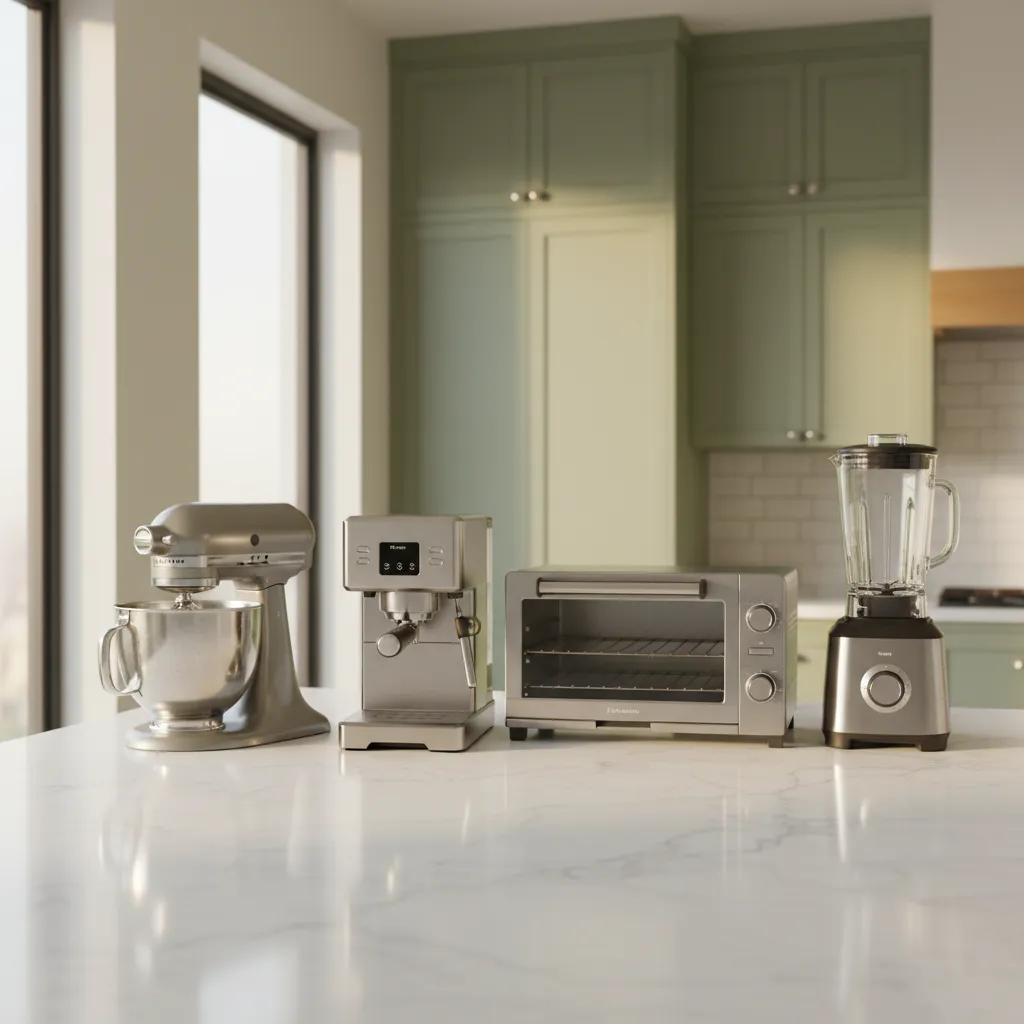
AppraiseItNow provides certified kitchen appliance appraisals for a range of purposes including insurance coverage and claims, estate tax reporting, charitable donation filings under IRS Form 8283, divorce asset division, and asset-based lending. Whether the subject is a single high-end residential appliance or a full suite of commercial kitchen equipment, our appraisers deliver accurate, well-supported valuations grounded in current market data. Kitchen appliance appraisals fall within our broader equipment and machinery appraisal services, which cover commercial, industrial, and individually owned assets across all categories. Our mission is to deliver defensible, USPAP-compliant valuations with exceptional speed, professionalism, and client service.
Our appraisers serve homeowners, estate executors, restaurant operators, commercial kitchen owners, attorneys, CPAs, and insurance professionals who need independent valuations for legal, tax, or financial purposes. Most kitchen appliance appraisals can be completed remotely using photographs, serial numbers, model documentation, and purchase records, though onsite inspection may be coordinated for large commercial installations or when condition verification is critical to value. We offer Fair Market Value (FMV), Orderly Liquidation Value (OLV), Forced Liquidation Value (FLV), and Replacement Value appraisals for various intended uses.
AppraiseItNow appraises both residential and commercial kitchen appliances across a wide range of categories. Subtypes covered include:
AppraiseItNow serves homeowners, restaurant and hospitality operators, estate attorneys, CPAs, insurance adjusters, and lenders who need credible, independent kitchen appliance valuations. We also work with individuals donating appliances to qualifying organizations and families navigating estate or divorce proceedings where appliance assets must be formally valued.
AppraiseItNow serves major businesses and commercial clients, including:
AppraiseItNow also serves individual consumers with projects large and small. These clients often include:
Given the USPAP-compliant nature of AppraiseItNow’s appraisal reports, we prepare our deliverables for major legal, tax, and financial reporting purposes for individual and commercial clients.
Popular uses of our appraisal reports include:
AppraiseItNow appraises a wide range of residential and commercial kitchen appliances, from individual units to full commercial kitchen buildouts. Common items include:
Yes. All AppraiseItNow kitchen appliance appraisals are developed and reported in compliance with USPAP Standards 7 and 8, which govern personal property appraisals and require impartial analysis, a defined scope of work, and clear reporting of methodologies and conclusions. Our appraisers hold credentials from recognized bodies such as the American Society of Appraisers (ASA) or the Association of Machinery and Equipment Appraisers (AMEA), meeting IRS requirements for qualified appraisals. Reports are defensible for use with the IRS, insurance carriers, lenders, and courts.
Kitchen appliance appraisals are needed across a wide range of personal, business, and legal situations, including:
Yes. Appraisers are trained to work with incomplete information and will document their assumptions and any extraordinary conditions within the report. For appliances with limited documentation, providing photos, serial numbers, and any available maintenance records helps improve accuracy, but the absence of records does not prevent a credible appraisal from being completed. Condition-based depreciation, including physical wear and functional obsolescence, is a standard part of the valuation methodology regardless of documentation quality.
Yes. AppraiseItNow regularly handles multi-unit appraisals, including full commercial kitchen inventories, restaurant equipment lots, and mixed residential appliance collections. Whether you have a single high-value built-in refrigerator or a 50-piece commercial kitchen from a restaurant closure, we can scope the project appropriately and provide volume pricing for larger assignments.
Most kitchen appliance appraisals are completed remotely using client-provided photos, serial numbers, model information, and purchase or maintenance records. Remote appraisals are efficient, cost-effective, and fully USPAP-compliant for most purposes. For larger commercial kitchen inventories, complex equipment sets, or situations where physical inspection is required by the intended use, we can coordinate an in-person appraiser anywhere in the United States.
Fees depend on the number of items, the complexity of the assignment, and the intended use of the appraisal. Standard appraisals for insurance, estate, or internal planning purposes start at $295, while advanced appraisals for IRS filings, charitable contributions, litigation, or M&A due diligence start at $395. Volume pricing by number of items is as follows:
All fees are quoted as a fixed price before work begins.
Yes. Volume pricing applies when appraising multiple kitchen appliances in a single engagement. The per-unit cost decreases significantly as the number of items increases, and larger commercial kitchen inventories of 50 or more items are priced starting at $5,000 and are frequently completed with an onsite inspection. Contact AppraiseItNow for a custom quote based on your specific inventory size and intended use.
Most remote kitchen appliance appraisals are completed within 7 to 10 business days from the time all required information is received. Onsite inspections or larger commercial kitchen inventories typically take 2 to 3 weeks to complete. Rush service is available for same-day or next-day turnaround upon request, which is useful for time-sensitive insurance claims, estate deadlines, or IRS filing needs.
Appraisal reports are prepared by credentialed machinery and equipment appraisers with specific experience valuing commercial and residential kitchen appliances. AppraiseItNow's team includes appraisers holding designations such as ASA and AMEA, and all reports are reviewed for USPAP compliance before delivery. The appraiser's qualifications, certification, and signature are included in every report as required by IRS and USPAP standards.
Yes. When the total value of donated noncash property to a single donee exceeds $5,000, IRS rules require a qualified appraisal completed by a credentialed appraiser, along with a signed appraiser declaration attached to Form 8283. AppraiseItNow prepares appraisals that meet these requirements for donated kitchen appliances, whether a single high-value commercial range or a collection of restaurant equipment donated to a nonprofit. The report will include all information required by the IRS, including the effective date of value, methodology, and appraiser credentials.
Yes. When a decedent's gross estate exceeds the federal exemption threshold (currently $13.61 million in 2025, indexed annually), kitchen appliances and other personal property must be reported at fair market value as of the date of death on IRS Form 706. AppraiseItNow prepares USPAP-compliant appraisals that document the fair market value of kitchen appliances for estate tax reporting, whether the items are high-end residential appliances or commercial kitchen equipment held as a business asset.
No. AppraiseItNow is an independent appraisal firm and does not buy, sell, or broker kitchen appliances. This independence is a core requirement of USPAP and IRS standards, ensuring that our valuations are objective and free from any financial interest in the outcome. If you need assistance connecting with buyers, sellers, or liquidators after receiving your appraisal, we can point you toward appropriate resources.
To begin a kitchen appliance appraisal, the following information is helpful:
Providing as much detail as possible upfront helps ensure an accurate and defensible valuation.
Yes. Remote appraisals are available nationwide and can be completed for kitchen appliances in any state using client-provided documentation and photos. For larger commercial kitchen inventories, complex equipment sets, or assignments where a physical inspection is required by the scope of work or intended use, AppraiseItNow can coordinate an in-person appraiser in any state across the country.
AppraiseItNow appraisals are USPAP-compliant, prepared by credentialed appraisers, and structured to meet the specific requirements of the intended use. For IRS purposes, reports include all elements required under Treasury Regulation 1.170A-13 and Revenue Procedure 96-28, including the appraiser's qualifications, effective date, and methodology. Insurance carriers and courts require independent, well-documented valuations, and our reports are prepared to withstand scrutiny in each of these contexts.
The IRS does not explicitly mandate a physical inspection in all cases, but desktop appraisals that lack photos, serial number verification, and condition documentation carry a significantly higher risk of rejection for donations exceeding $5,000. USPAP requires appraisers to disclose any extraordinary assumptions made when a physical inspection is not performed, and unsupported assumptions can void the appraiser's certification. For high-value appliances or commercial kitchen donations, a physical inspection or a thorough desktop review with detailed photographic evidence is strongly recommended to protect the deduction.
Functional obsolescence refers to a loss in value caused by outdated features, inefficiency, or technology that no longer meets current market standards. For kitchen appliances, this can include the absence of ENERGY STAR certification, lack of smart connectivity features, or designs that no longer match current installation standards, and this type of obsolescence can reduce appraised value by 20 to 40 percent compared to a newer equivalent model. Appraisers apply accrued depreciation models that account for physical wear, functional obsolescence, and economic obsolescence separately, which is why owner estimates based on purchase price alone often overstate current value.
Restaurant-grade and NSF-certified commercial appliances are typically appraised at 2 to 5 times the value of comparable residential units due to their durability, output capacity, and compliance with food service regulations. However, commercial appliances also depreciate faster when removed from active use or when the surrounding business closes, which is a common scenario in restaurant liquidations. Appraisers use realized auction prices from sources like HiBid, Proxibid, or Ritchie Bros. to establish market-supported values for commercial kitchen lots, and the chosen value type (fair market value, orderly liquidation value, or forced liquidation value) can significantly affect the final number depending on the circumstances of the sale or filing.