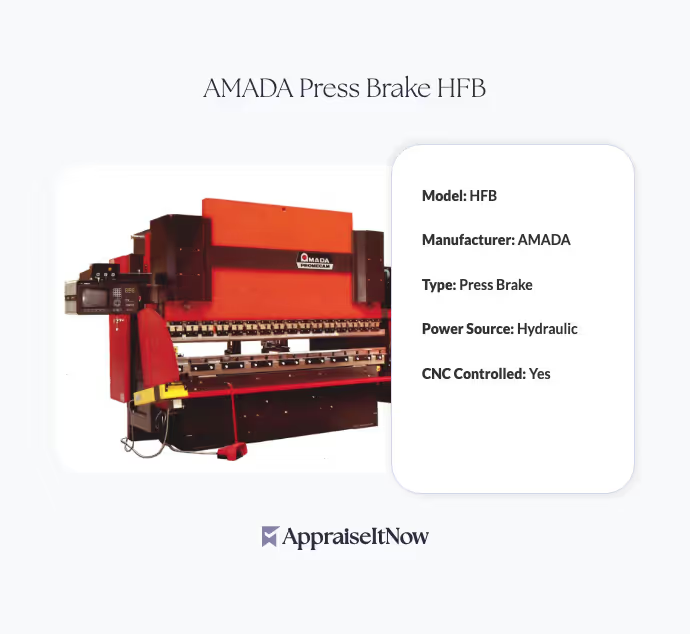










<h1>How to Get Your AMADA Press Brake HFB Appraised</h1>
<p>The AMADA Press Brake HFB represents a significant capital investment for manufacturing and fabrication operations, commanding estimated values between <strong>$70,000 and $100,000</strong> depending on condition, age, and operational history. Whether you're planning to sell, refinance, or verify insurance coverage for your equipment, understanding the appraisal process ensures you receive an accurate valuation that reflects the machine's true market worth.</p>
<h2>Why Professional Appraisal Matters for Press Brake Equipment</h2>
<p>Your AMADA HFB isn't just metal and hydraulics—it's a precision-engineered metal forming machine that demands specialized knowledge to properly evaluate. When you're considering selling industrial <a href="/types/metalworking-equipment">metalworking equipment</a> or establishing documented values for your <a href="/types/business-assets">business assets</a>, a certified appraisal provides credible documentation accepted by financial institutions, insurance carriers, and potential buyers.</p>
<p>The HFB model's advanced capabilities—including CNC controls, hydraulic clamping systems, and programmable bending sequences—make it valuable to aerospace, automotive, and construction manufacturers. However, these same technical features require appraisers with deep industry knowledge to accurately assess condition, functionality, and market demand.</p>
<div class="callout tip"><p><strong>Appraiser Expertise</strong></p>
<p>Look for appraisers familiar with AMADA equipment specifically. Their understanding of model-year variations and performance capabilities directly impacts valuation accuracy.</p></div>
<h2>Understanding Your AMADA HFB's Market Position</h2>
<p>First introduced in 1985, the AMADA Press Brake HFB established itself as a workhorse in metal fabrication shops worldwide. The machine's ability to bend metal up to one inch thick, combined with its modular design for customization, created strong demand across multiple industries. AMADA's industry-leading warranty backing and reputation for reliability further solidify the HFB's position in today's used equipment market.</p>
<p>When evaluating whether AMADA press brakes are good investments, the data speaks clearly. The question itself—"Are AMADA press brakes good?"—reflects the brand's established reputation for quality and performance. This market perception directly influences your machine's appraisal value, as buyers view AMADA equipment as a safe, productive choice for manufacturing operations.</p>
<p>The HFB's automated tool changing for efficiency and programmable bending sequences for complex parts mean your equipment can command premium pricing if these features remain fully operational. Appraisers will verify these systems work as designed, as functional CNC controls add significant value to the overall machine package.</p>
<h2>Key Factors That Impact Your HFB's Appraisal Value</h2>
<p>Several technical and operational elements directly determine where your AMADA Press Brake HFB falls within that <strong>$70,000-$100,000</strong> valuation range. Understanding these factors helps you prepare documentation and recognize what matters most to professional appraisers.</p>
<p><strong>Operational hours and maintenance history</strong> rank among the most critical factors. An AMADA HFB with well-documented preventive maintenance, regular servicing records, and moderate usage hours will appraise significantly higher than identical equipment with unclear history or heavy continuous operation. Hydraulic systems, in particular, benefit from maintenance documentation that demonstrates proper fluid changes and filter replacements.</p>
<p>The <strong>hydraulic clamping system's condition</strong> directly reflects your machine's precision and market value. If the clamping mechanism maintains consistent pressure, engages smoothly, and shows no leakage, appraisers note this favorably. Conversely, any hydraulic degradation or leaking cylinders will reduce valuation, as buyers anticipate repair costs.</p>
<p>Your HFB's <strong>CNC control system functionality</strong> significantly affects pricing. Machines with original AMADA controllers in working order, with accessible programming documentation, command higher values than units with outdated or non-functional controls. If your machine has been retrofitted with modern controls, documentation of this upgrade should be included in your appraisal package.</p>
<table class='appraisal-table'>
<thead>
<tr>
<th>Factor</th>
<th>Impact on Value</th>
<th>Details</th>
</tr>
</thead>
<tbody>
<tr>
<td>Operational hours</td>
<td>High</td>
<td>Under 10,000 hours preferred; heavy use reduces value</td>
</tr>
<tr>
<td>Maintenance records</td>
<td>High</td>
<td>Complete documentation supports premium valuation</td>
</tr>
<tr>
<td>Hydraulic system condition</td>
<td>High</td>
<td>Leaks or degradation reduce value 15-25%</td>
</tr>
<tr>
<td>CNC functionality</td>
<td>Medium</td>
<td>Operational controls maintain premium pricing</td>
</tr>
<tr>
<td>Tooling and accessories</td>
<td>Medium</td>
<td>Original or compatible tooling adds value</td>
</tr>
<tr>
<td>Physical condition</td>
<td>Medium</td>
<td>Rust, dents, or paint degradation affects desirability</td>
</tr>
</tbody>
</table>
<h2>Preparing Documentation for Your Appraisal</h2>
<p>Before meeting with an appraiser, compile comprehensive information about your AMADA Press Brake HFB. This documentation directly influences appraisal accuracy and often results in more favorable valuations when it demonstrates responsible equipment stewardship.</p>
<p>Start by gathering <strong>maintenance and service records</strong> spanning the machine's operational lifetime. Service logs showing regular hydraulic fluid changes, filter replacements, and annual inspections provide concrete evidence of proper care. AMADA's reputation for manufacturing reliable equipment only strengthens when owners can prove they maintained that quality through documented service.</p>
<p>Collect <strong>original purchase documentation</strong>, including the bill of sale, equipment manual, and any warranty certificates. These materials help appraisers verify the machine's manufacturing date and original specifications. Original AMADA manuals, in particular, assist in confirming that your HFB includes all standard features and hasn't been missing components over time.</p>
<p>Photograph your equipment from multiple angles, capturing the control panel, hydraulic connections, tool storage, and overall frame condition. Close-up images of any serial numbers, model plates, or identifying marks help appraisers cross-reference specifications. This visual documentation becomes especially valuable if your machine will be sold remotely or if buyers want preliminary assessment before visiting.</p>
<h2>Understanding Industrial Equipment Appraisal Standards</h2>
<p>Professional appraisers follow standardized methodologies when evaluating <a href="/types/equipment-and-machinery">equipment and machinery</a>, ensuring consistency and defensibility in their valuations. Understanding these standards helps you recognize quality appraisal work and appreciate the expertise involved in properly valuing your AMADA HFB.</p>
<p>Appraisers typically employ three approaches when valuing industrial equipment: the <strong>cost approach</strong> (reproduction or replacement cost), the <strong>market approach</strong> (comparable recent sales), and the <strong>income approach</strong> (revenue-generating potential for production facilities). For your AMADA Press Brake HFB, appraisers emphasize market approach data—what similar equipment actually sold for recently—combined with cost approach analysis for machines not frequently traded.</p>
<p>The appraiser will assess your machine's <strong>functional obsolescence</strong> relative to newer AMADA models or competing brands. Your 1985-era HFB may be fully functional yet lack features available in current press brakes. This distinction matters because buyers understand what they're gaining or sacrificing versus modern equipment, and appraisers quantify this through industry knowledge and comparable sales data.</p>
<div class="callout note"><p><strong>Valuation Methodology</strong></p>
<p>USPAP-compliant appraisals document the reasoning behind valuations, not just the final number. This transparency protects you whether selling, financing, or managing insurance.</p></div>
<h2>The Role of Comparable Sales in Your Valuation</h2>
<p>Market data drives accurate AMADA Press Brake HFB appraisals more than any other factor. Professional appraisers track recent sales of similar equipment, including machine age, condition, technical specifications, and final selling prices. This comparable sales approach provides the most defensible basis for your machine's valuation in today's market.</p>
<p>When appraisers search for comparable sales, they look beyond just AMADA press brakes to similar equipment from competing manufacturers. Understanding questions like "Who makes the best press brakes?" reveals the competitive landscape that affects your HFB's relative value. Machines from competing brands like Strippit, Trumpf, or Cincinnati may influence your equipment's pricing if they offer comparable capacity and features at different price points.</p>
<p>The timeframe of comparable sales matters significantly. Recent sales within the past 6-12 months carry more weight than historical transactions from years past, as market conditions, material costs, and manufacturing demand fluctuate. An appraiser who can cite specific recent sales of comparable AMADA press brakes provides more credible valuations than one relying on older transaction data.</p>
<div class="callout tip"><p><strong>Market Intelligence</strong></p>
<p>Equipment sales data comes from auction results, dealer listings, and private transaction documentation. Appraisers with established industry networks access more comprehensive data, resulting in more accurate valuations.</p></div>
<h2>Addressing Technical Questions About Your Machine</h2>
<p>As an AMADA Press Brake HFB owner, you may encounter technical questions from potential appraisers or buyers. Understanding these questions helps you provide context during the appraisal process. The "30-30-30 rule for brakes," for instance, relates to bending techniques—not your equipment's value—but demonstrates the technical sophistication required in fabrication operations.</p>
<p>Your HFB's <strong>capacity ratings</strong> directly relate to valuation. The machine can bend metal up to one inch thick, making it suitable for medium-to-heavy fabrication work. This capability positions the HFB in a specific market segment; lighter machines command lower prices while heavier-duty press brakes above the HFB's capacity cost substantially more. Understanding where your machine sits on the capacity spectrum helps contextualize its $70,000-$100,000 valuation range.</p>
<p>When researching press brake pricing, you might encounter questions about specific competing models—"What is the price of the Amada RG M2 1003?" or "What is the capacity of a 150-ton press brake?"—which reflect the industry's equipment diversity. Your HFB's specifications place it in relation to these alternatives, informing buyers and appraisers about its market positioning and competitive advantages.</p>
<h2>Partnering with Certified Appraisers</h2>
<p>Selecting the right appraiser for your AMADA Press Brake HFB ensures you receive a valuation that stands up to professional scrutiny and protects your interests whether selling, financing, or managing insurance. Look for appraisers with specific credentials in <a href="/blog/appraising-industrial-equipment-assessing-machinery-and-manufacturing-assets">industrial equipment valuation</a>.</p>
<p>Professional appraisers carry credentials from recognized organizations including AAA (American Association of Appraisers), ISA (International Society of Appraisers), ASA (American Society of Appraisers), and CAGA (Canadian Association of Geophysical Appraisers). These designations demonstrate commitment to USPAP (Uniform Standards of Professional Appraisal Practice) compliance and continuing education in valuation methodology.</p>
<p>When selecting an appraiser, verify their experience with metalworking equipment specifically. Someone with expertise across all machinery types may provide adequate services, but an appraiser who regularly values press brakes, hydraulic presses, and fabrication equipment brings specialized knowledge that enhances accuracy. Ask about their recent AMADA equipment appraisals and request references from previous clients in manufacturing.</p>
<div class="callout note"><p><strong>Credential Verification</strong></p>
<p>Independent appraisal companies like <strong>AppraiseItNow</strong> maintain networks of credentialed experts who specialize in specific equipment categories, ensuring your AMADA HFB receives appropriate expertise.</p></div>
<h2>When to Seek Professional Appraisal Services</h2>
<p>Several situations warrant professional appraisal of your AMADA Press Brake HFB. If you're <strong>selling the equipment</strong>, a certified appraisal provides pricing guidance and documentation that supports asking prices. Potential buyers increasingly request appraisals before making offers, and having professional documentation ready accelerates the sales process.</p>
<p><strong>Equipment financing or refinancing</strong> often requires current appraisals as collateral documentation. Lenders want independent verification of equipment value before committing capital, and your appraisal provides that assurance. If your business seeks lines of credit against manufacturing equipment, recent appraisals demonstrate good faith asset management.</p>
<p><strong>Insurance coverage verification</strong> represents another key reason for professional appraisal. Your business insurance should reflect your AMADA HFB's true replacement cost. Having a current, certified appraisal ensures adequate coverage limits and provides clear documentation if you need to file equipment damage claims.</p>
<p><strong>Estate planning or business succession</strong> scenarios benefit from documented equipment valuations. When transferring business assets to heirs or new owners, clear appraisals prevent disputes about asset values and facilitate smoother transitions.</p>
<h2>The Value of Industrial Equipment Investment</h2>
<p>Your AMADA Press Brake HFB represents more than just a production tool—it's a capital asset that holds measurable market value. Unlike general equipment that depreciates unpredictably, well-maintained precision machinery like your AMADA often maintains value surprisingly well, particularly if you can document consistent maintenance and moderate usage.</p>
<p>The manufacturing sector's continued reliance on metal bending and forming operations means demand for quality used press brakes remains steady. Whether you operate in aerospace, automotive, or construction fabrication, your equipment's specialized capabilities create ongoing market interest from buyers seeking proven, reliable machinery.</p>
<p>Understanding your machine's current market value through professional appraisal gives you control over your business's asset management. Whether you're planning equipment upgrades, evaluating business value, or simply understanding what you own, a certified appraisal of your AMADA Press Brake HFB provides the documentation and confidence you need for informed business decisions.</p>
<hr />
<div class="callout note"><p><strong>Key Takeaway</strong></p>
<p>Professional appraisal of your AMADA Press Brake HFB delivers accurate market valuation, defensible documentation, and peace of mind for selling, financing, or insurance purposes. By preparing comprehensive maintenance records and working with certified experts familiar with industrial equipment, you ensure your machine's true value is properly recognized and documented in today's competitive marketplace.</p></div>