









<h1>How to Get Your Ermaksan Press Brake Speed-Bend Appraised</h1>
<p>The Ermaksan Press Brake Speed-Bend represents a significant capital investment for metal fabrication shops, and understanding its current market value—typically <strong>$100,000 to $150,000</strong>—is essential whether you're buying, selling, refinancing, or insuring. If you're evaluating this Turkish-engineered precision machine, a professional appraisal provides the documented valuation that lenders, insurers, and buyers require.</p>
<h2>Why Your Ermaksan Speed-Bend Needs Professional Valuation</h2>
<p>The Speed-Bend model introduced in 2015 has become a cornerstone for high-volume metal fabrication operations, but its value depends on far more than its purchase price. A certified appraisal documents the machine's current condition, operational capacity, and market worth—critical whether you're securing equipment financing, filing an insurance claim, or planning an equipment sale. The specialized nature of hydraulic press brakes means <a href="/types/equipment-and-machinery">equipment and machinery appraisals</a> require expertise in both mechanical systems and industrial market dynamics.</p>
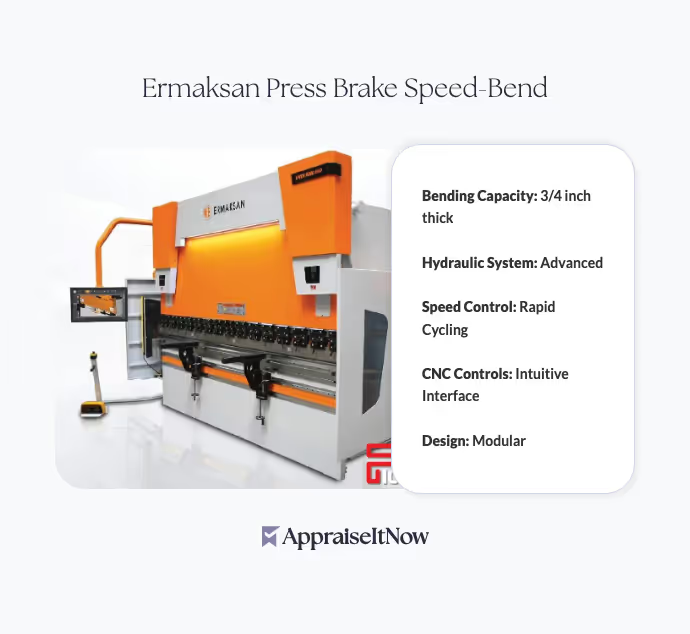
<p>Unlike general-use equipment, the Speed-Bend's value reflects its capabilities: bending capacity up to 3/4 inch thick metal, automated tool-changing systems, and intuitive CNC controls that command premium pricing in today's fabrication market. Buyers evaluating used Speed-Bend models specifically assess tonnage ratings, bending length, backgauge precision, and tooling compatibility—all factors that your professional appraiser must analyze to deliver an accurate valuation.</p>
<div class="callout tip"><p><strong>Pro Tip</strong></p>
<p>Speed-Bend machines with documented maintenance records and lower operating hours typically command 15-25% higher valuations than comparable units with incomplete service history.</p></div>
<h2>Key Specifications That Impact Your Appraisal Value</h2>
<p>When your appraiser evaluates your Ermaksan Speed-Bend, they examine specific technical parameters that directly influence market value. The machine's tonnage rating, bending length, CNC control type, and backgauge system determine which fabrication jobs it can handle—and therefore which buyers will pursue it.</p>
<p>The Speed-Bend's heavy-duty steel construction and customizable configurations mean no two machines have identical value profiles. Your appraiser must document whether your unit features Ermaksan's original specifications or upgraded components like newer CNC retrofits, advanced automation features, or enhanced safety systems. These upgrades typically increase value, though depreciation schedules vary based on upgrade age and technological obsolescence rates.</p>
<p>The machine's modular design—allowing integration into existing manufacturing workflows—adds value for job shops and mid-size fabricators but may matter less to specialized contract manufacturers. Understanding your Speed-Bend's market positioning within its target buyer segments helps appraisers identify appropriate comparable sales data. Our resource on <a href="/blog/appraising-industrial-equipment-assessing-machinery-and-manufacturing-assets">appraising industrial equipment</a> covers these nuanced valuation considerations in detail.</p>
<h2>Condition, Age, and Operating Hours: The Valuation Trinity</h2>
<p>Your Ermaksan Speed-Bend's age since introduction in 2015 positions it in the prime value range for used industrial equipment. However, operating hours and maintenance history fundamentally shape whether your unit commands $100,000 or $150,000 within that range. A machine with 5,000 well-documented operating hours and consistent preventive maintenance typically appraises 30-40% higher than an identical model with 15,000 unrecorded hours and spotty service records.</p>
<p>Professional appraisers examine wear patterns on hydraulic components, tool-changing mechanisms, and control systems to assess remaining useful life. The presence of complete maintenance logs, manufacturer service records, and documentation of repairs demonstrates responsible stewardship and supports higher valuations. Conversely, signs of deferred maintenance—corroded hydraulic lines, sluggish cycling, or worn tooling—can reduce value by 20-35% depending on repair costs required to restore full operational capacity.</p>
<p>Your appraisal report should specifically document the machine's current functional status, including bending accuracy tolerances, cycle speed performance, and CNC responsiveness. This operational assessment directly informs whether buyers view the Speed-Bend as ready for immediate production or as requiring downtime for recommissioning and calibration.</p>
<div class="callout note"><p><strong>Maintenance Matters</strong></p>
<p>Ermaksan's 5-year manufacturer warranty—often still valid on newer Speed-Bend units—can add 5-10% value premium by transferring warranty benefits to buyers or providing documented coverage history.</p></div>
<h2>Understanding Comparable Sales and Market Data</h2>
<p>Identifying comparable Ermaksan Speed-Bend sales requires your appraiser to access specialized machinery marketplaces, auction records, and dealer inventory. Recent listings and closed transactions provide crucial benchmarks, though geographic location, buyer proximity to installation sites, and local fabrication industry strength significantly affect pricing. A Speed-Bend listed in the Midwest industrial corridor may command different pricing than an identical unit in a secondary manufacturing market.</p>
<p>Your appraiser adjusts comparable sales for specification differences—tonnage, bending length, control systems—and condition variations to derive your machine's fair market value. If your Speed-Bend includes upgraded CNC systems, newer tooling packages, or automation enhancements not found in comparable units, these additions justify value adjustments. Conversely, machines requiring immediate repairs or featuring outdated control technology receive downward adjustments reflecting deferred maintenance costs or technological obsolescence.</p>
<p>The market for used press brakes has tightened in recent years as manufacturers consolidate operations and newer equipment incorporates superior efficiency. This dynamic means your appraiser must account for whether your Speed-Bend competes against newer models or against alternative fabrication technologies that might serve the same production functions. When exploring <a href="/blog/what-types-of-metalworking-equipment-are-usually-appraised">metalworking equipment appraisals</a>, understanding these competitive positioning factors becomes essential for realistic valuations.</p>
<h2>Documentation and Remote Appraisal Requirements</h2>
<p>Professional appraisals of your Ermaksan Speed-Bend typically begin with digital submissions including photographs, specifications, and maintenance records. Your appraiser will request high-resolution images showing the machine's overall condition, close-ups of the hydraulic system, CNC control panel, and tooling assembly. Include photos documenting any visible wear, modifications, or upgrades that differentiate your unit from stock specifications.</p>
<p>Compile documentation demonstrating your Speed-Bend's value fundamentals: original purchase invoice, maintenance log, CNC programming records, and any technical upgrades or repairs performed by certified technicians. Service bulletins from Ermaksan and proof of manufacturer-approved parts installation strengthen your appraisal's credibility. If your machine has been relocated or reinstalled, provide transportation and rigging documentation showing professional handling maintained mechanical integrity.</p>
<p>For remote appraisals, detailed specifications help your appraiser verify current market conditions. Supply tonnage rating, maximum bending length, minimum bending radius, CNC model and programming capacity, backgauge travel distance, and any customization modifications. Operating hour documentation—if available from machine logs or maintenance records—proves critical for establishing remaining useful life and justifying valuation within the $100,000-$150,000 range.</p>
<div class="callout tip"><p><strong>Documentation Checklist</strong></p>
<p>Complete maintenance records and manufacturer specifications are worth 10-15% valuation premiums over identical machines with incomplete paper trails, as documentation reduces buyer risk.</p></div>
<h2>Valuation Approaches: Which Methods Apply to Your Speed-Bend?</h2>
<p>Professional appraisers employ three primary valuation approaches, though their applicability varies for used press brakes like your Ermaksan Speed-Bend. The <strong>market approach</strong> compares your machine to recent sales of comparable units, making it the foundation for most metalworking equipment valuations. When sufficient comparable data exists, this method typically provides the most credible fair market value estimate aligned with actual buyer behavior.</p>
<p>The <strong>cost approach</strong> calculates what a buyer would pay to acquire equivalent functionality through new equipment, then subtracts depreciation to reflect your Speed-Bend's age and condition. This method matters when comparable sales data is limited or when your machine represents specialized configurations with few market matches. Your appraiser might reference new Ermaksan Speed-Bend pricing (typically $180,000-$220,000 for comparable tonnage/capacity) and apply depreciation schedules reflecting the machine's 8-9 year lifespan since introduction.</p>
<p>The <strong>income approach</strong> applies primarily to press brakes generating documented revenue through contract fabrication or leasing arrangements. If your Speed-Bend operates in a job shop environment with trackable production income, your appraiser may incorporate earnings potential into valuation. However, this approach rarely drives primary valuation for equipment typically owned for internal production rather than revenue-generating operations. Understanding these <a href="/blog/the-basics-of-equipment-and-machinery-appraisal">valuation methods for equipment</a> ensures your appraisal employs appropriate approaches for your specific circumstances.</p>
<h2>Transportation, Installation, and Logistics Considerations</h2>
<p>The physical realities of moving a 15-20 ton precision machine directly impact buyer willingness to pay and therefore affect your Ermaksan Speed-Bend's appraised value. Transportation costs typically range from $3,000-$8,000 depending on distance, rigging complexity, and destination infrastructure. Installation and recommissioning—calibrating bending accuracy, testing hydraulic systems, and programming CNC parameters—may require $2,000-$5,000 in professional labor.</p>
<p>These logistics costs factor into buyer calculations, meaning machines located in areas with established industrial moving and setup services may command modest premiums over identical units in regions requiring long-distance specialist transport. Your appraisal should reference your Speed-Bend's current location and any specific installation considerations (tight doorways, second-floor placement, specialized electrical requirements) that might complicate buyer repositioning.</p>
<p>Professional appraisers account for these practical realities when determining fair market value. A Speed-Bend appraised at $125,000 in a major manufacturing hub might sustain lower value in a rural location where qualified installation contractors demand premium rates. Your appraiser considers geographic market factors alongside machine specifications to deliver valuations reflecting buyer acquisition costs in your specific operating region.</p>
<h2>Regulatory, Safety, and Compliance Factors</h2>
<p>Your Ermaksan Speed-Bend's compliance with current safety and electrical standards directly affects its marketability and appraised value. Press brakes manufactured since 2015 typically meet CE markings and modern lockout/tagout (LOTO) compliance standards, supporting strong valuations. However, your appraiser verifies that control systems, hydraulic pressure relief settings, and guard configurations align with OSHA requirements and current industry standards.</p>
<p>Machines lacking current safety certifications or featuring non-standard electrical configurations may face 15-25% valuation reductions reflecting buyer costs for compliance upgrades. If your Speed-Bend has been modified with non-Ermaksan components or programming, your appraisal documents these alterations' effects on warranty status and insurance underwriting. Some insurance carriers impose higher premiums for equipment operating with unapproved modifications, reducing effective value by increasing ownership costs.</p>
<p>The question of regulatory compliance ties directly to <a href="/types/heavy-machinery">heavy machinery appraisals</a> where safety certifications increasingly influence buyer financing and insurance availability. Your appraiser notes compliance status specifically, as lenders frequently require proof that equipment meets current standards before extending purchase financing.</p>
<h2>Credentials, Standards, and Report Requirements</h2>
<p>Your professional appraisal should come from an appraiser certified through recognized credentials: <strong>AAA</strong> (American Association of Appraisers), <strong>ISA</strong> (International Society of Appraisers), <strong>ASA</strong> (American Society of Appraisers), <strong>CAGA</strong> (Casualty Actuarial Society), or <strong>AMEA</strong> (American Machinery Equipment Appraisers). These certifications demonstrate adherence to <strong>USPAP</strong> (Uniform Standards of Professional Appraisal Practice), the gold standard for appraisal reporting that lenders, insurers, and courts recognize uniformly.</p>
<p>Your appraisal report should follow USPAP format including purpose statement, property description, market analysis, condition assessment, and valuation conclusion. This structure ensures the report withstands scrutiny in financing decisions, insurance claims, or potential disputes. Reports prepared for lending purposes often require additional detail on collateral value calculations and remaining useful life assessments.</p>
<p>AppraiseItNow connects you with USPAP-compliant appraisers specializing in <a href="/blog/a-comprehensive-look-at-metalworking-equipment-appraisal">metalworking and industrial equipment</a>, ensuring your Speed-Bend valuation meets lender, insurer, and legal standards. Our expert network understands the nuances of press brake valuation and delivers documentation that supports your financial and operational decisions.</p>
<h2>When Upgrades and Retrofits Change Your Speed-Bend's Value</h2>
<p>Modern CNC retrofits, enhanced automation features, or safety system upgrades can substantially increase your Ermaksan Speed-Bend's value above baseline market rates. A machine retrofitted with newer control systems, improved tooling changers, or automated material handling integration may command 20-30% premiums reflecting enhanced production capability. Your appraiser must verify that upgrades were installed by qualified technicians using Ermaksan-approved components to justify value additions.</p>
<p>Conversely, outdated control systems or non-standard modifications can reduce value as buyers anticipate expensive replacement or compatibility challenges. Your appraisal documents the age and functionality of control systems specifically, as older CNC platforms may lack programming compatibility with modern design software or present parts availability concerns. Understanding how <a href="/blog/repair-costs-and-how-to-calculate-them-for-appraising-equipment-and-machinery">equipment upgrades affect depreciation</a> helps you position your Speed-Bend appropriately within current market conditions.</p>
<div class="callout note"><p><strong>Upgrade Impact</strong></p>
<p>Newer automation and enhanced CNC systems represent the fastest-appreciating component investments in press brake upgrades, often holding value better than traditional mechanical improvements.</p></div>
<h2>Your Speed-Bend as a Production Asset and Insurance Consideration</h2>
<p>Your Ermaksan Speed-Bend likely represents your operation's most valuable single machine, making proper insurance coverage essential. Professional appraisals provide the detailed valuation insurers require for <strong>agreed value coverage</strong>, ensuring replacement cost documentation if damage or theft occurs. Standard property policies often undervalue specialized equipment, leaving you underinsured when catastrophic loss happens.</p>
<p>Your appraisal becomes the reference document for setting appropriate coverage limits, calculating depreciation schedules for tax purposes, and establishing fair market value for equipment sales. Whether you're financing through equipment loans, pursuing insurance coverage, or planning business valuations for lending decisions, your certified Speed-Bend appraisal provides the professional documentation that financial institutions require.</p>
<p>Understanding your equipment's true value through professional appraisal supports better business decisions around equipment replacement timing, production investment prioritization, and insurance adequacy. Our guide on <a href="/blog/understand-the-value-of-your-equipment-and-machinery-with-an-appraisal">understanding equipment and machinery appraisal benefits</a> explores how regular valuations strengthen your financial and operational planning.</p>
<h2>The Value of Professional Expertise for Your Ermaksan Speed-Bend</h2>
<p>Your Ermaksan Press Brake Speed-Bend occupies a specific position in the metalworking equipment market—valuable enough to justify professional valuation, specialized enough to require industry expertise. The $100,000-$150,000 valuation range reflects market realities for well-maintained machines with solid operational histories, but your specific unit's circumstances—age, operating hours, maintenance records, location, and technical specifications—determine where within that range your Speed-Bend's fair market value sits.</p>
<p>Professional appraisers bring specialized knowledge of Turkish-manufactured press brake capabilities, comparable sales analysis from machinery marketplaces, and understanding of buyer segments (job shops, contract manufacturers, metal fabrication contractors) who actively pursue Speed-Bend equipment. This expertise translates directly into accurate, defensible valuations that support your financial, insurance, and business decisions.</p>
<p>Whether you're buying a Speed-Bend and need confidence in your investment, selling equipment and want to understand fair market value, or managing your balance sheet and require certified documentation, professional appraisal services deliver the credible, standardized valuation your business needs.</p>
<div class="callout note"><p><strong>Key Takeaway</strong></p>
<p>A certified USPAP-compliant appraisal of your Ermaksan Press Brake Speed-Bend provides accurate market valuation, professional documentation for lending and insurance purposes, and confidence that your $100,000-$150,000 equipment investment is properly understood and protected in today's metalworking market.</p></div>