







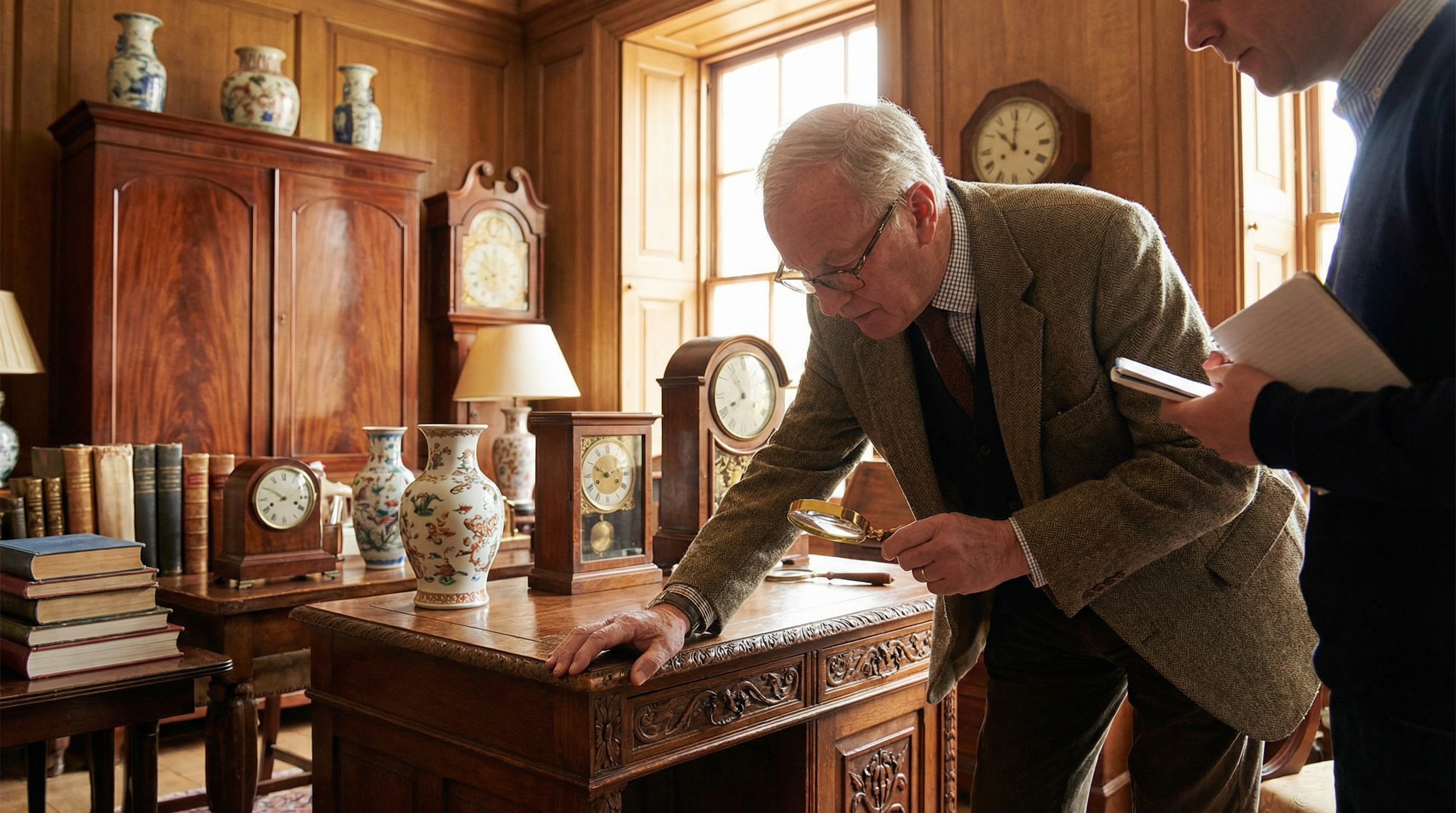
Have you ever wondered if that old wooden chest in your attic could be worth thousands? Getting your antique furniture professionally appraised is the only way to know its true value, whether you're planning to sell, insure, or settle an estate.
An antique furniture appraisal is a professional assessment that determines the fair market value of pieces typically over 100 years old. The process involves examining construction methods, materials, provenance, and current market conditions to establish an accurate valuation. Professional appraisers consider factors like maker signatures, historical significance, and comparable sales to provide USPAP-compliant reports accepted by insurance companies, courts, and the IRS.
Key insight: A proper appraisal can reveal hidden value - like the 2009 discovery of a Thomas Chippendale chest in an English barn that sold for over $3 million after being mistaken for common pine furniture.
This guide walks you through everything you need to know about the appraisal process, from preparing your furniture to understanding different types of valuations and finding the right professional for your needs.
Not all appraisals serve the same purpose, and understanding the differences can save you time and money. The type you need depends entirely on why you're getting the appraisal done.
Fair market value appraisals determine what your piece would sell for between willing buyers and sellers in the current market. This is what you need for estate planning, charitable donations, or if you're considering selling. Insurance replacement value, on the other hand, estimates what it would cost to replace your piece with something of similar quality and characteristics today.
Appraisal TypeBest Used ForTypical Value RangeFair Market ValueEstate, donation, sellingMarket-based pricingInsurance ReplacementCoverage planning25-40% higher than FMVLiquidation ValueQuick sale scenarios40-60% of FMV
The purpose matters because values can vary significantly. Insurance replacement values are typically higher since they account for retail markups and the difficulty of finding exact replacements. Understanding the basics of antique furniture appraisal helps you determine which type best suits your needs.
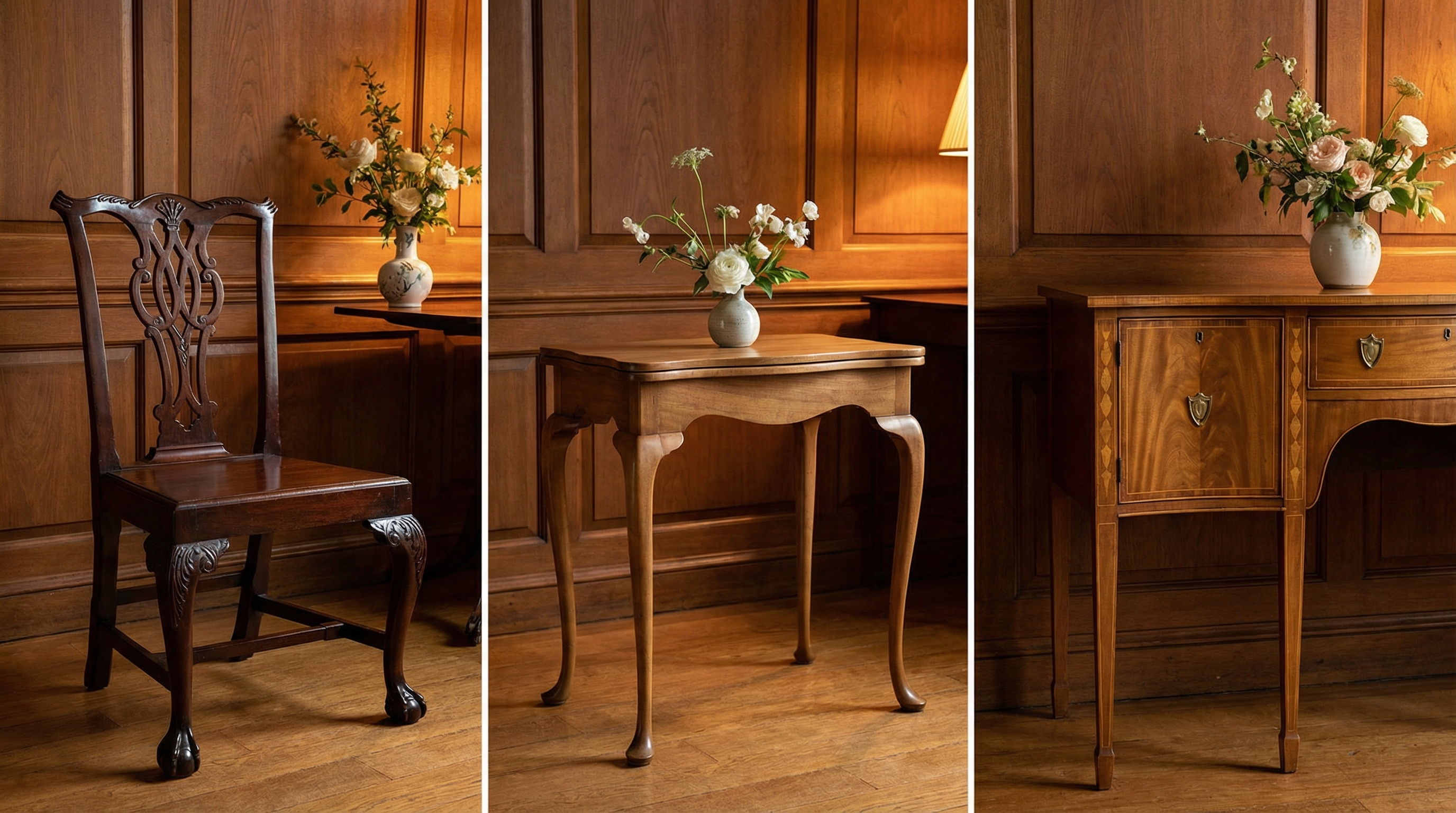
Proper preparation can make the difference between an accurate appraisal and one that undervalues your piece. Start by gently cleaning your furniture with appropriate methods for the materials involved, but avoid any restoration attempts that could actually decrease value.
Document everything you know about the piece's history. Gather purchase receipts, family stories about its origin, previous appraisals, and any documentation about repairs or modifications. Take detailed photographs from multiple angles, including close-ups of any maker's marks, construction details, or damage.
Pro tip: Never attempt repairs or refinishing before an appraisal - original patina and even minor damage can be crucial indicators of authenticity and age that significantly impact value.
Create a written summary of what you know, including when and where you acquired the piece, any family history, and notable features you've observed. This background information helps appraisers focus their research and can uncover important details about provenance. For more detailed guidance, check out how to prepare for an antique furniture appraisal.
A qualified appraiser will conduct a thorough examination that goes far beyond what most people can do on their own. They start by assessing the overall condition, noting any damage, repairs, or modifications that affect value.
The appraiser examines construction techniques, looking for hand-cut dovetails, mortise and tenon joints, and other indicators of quality craftsmanship and historical period. They'll inspect materials, identifying wood types, hardware styles, and finishing techniques that help establish age and origin.
Research follows the physical examination. Professional appraisers access databases of auction results, museum collections, and specialized references to find comparable pieces. They investigate maker's marks, style characteristics, and historical context to build a complete picture of your piece's significance and market position.
The final step involves synthesizing all this information into a comprehensive report that documents findings, methodology, and final valuation. USPAP-compliant reports include detailed photographs, condition assessments, and market analysis that supports the concluded value. Learn more about the process of an antique furniture appraisal to know what to expect.
Not all appraisers are created equal, and choosing the right professional is crucial for getting an accurate, defensible valuation. Look for appraisers with specific credentials from recognized organizations like the American Society of Appraisers (ASA) or International Society of Appraisers (ISA).
Verify that your appraiser specializes in antique furniture and follows Uniform Standards of Professional Appraisal Practice (USPAP). Ask about their experience with pieces similar to yours and request examples of their work. Legitimate appraisers will happily discuss their qualifications and methodology.
Be wary of appraisers who quote fees based on a percentage of the item's value, as this creates a conflict of interest. Professional appraisers charge flat fees or hourly rates regardless of what they determine your piece is worth. For expert guidance on choosing an antique furniture appraiser, consider factors like credentials, experience, and reputation.
AppraiseItNow connects you with USPAP-compliant appraisers licensed in all 50 states who specialize in antique furniture. Our network includes experts qualified to handle everything from colonial American pieces to European antiques, with options for both onsite and online appraisals depending on your needs.
Understanding the antique furniture appraisal process empowers you to make informed decisions about your valuable pieces. Whether you're planning for insurance coverage, considering a sale, or settling an estate, a professional appraisal provides the documentation and peace of mind you need to move forward confidently. Before you proceed, be sure to avoid common mistakes during an antique furniture appraisal that could impact your results.
Antique furniture appraisal costs typically range from $200-$500+ per item, based on flat fees or hourly rates of $100-$300 per hour. Factors affecting cost include research complexity, travel requirements, and specialized testing needs. Always avoid appraisers who charge a percentage of the item's value, as this creates a conflict of interest and violates professional standards.
Gather all available documentation including purchase receipts, bills of sale, certificates of authenticity, previous appraisals, repair records, and provenance letters. Also prepare detailed photographs from multiple angles, family history or stories about the piece, and any documentation about modifications or restorations. This background information helps appraisers conduct thorough research and can significantly impact the final valuation.
The initial physical inspection typically takes 30-60 minutes per item, depending on complexity. However, the complete appraisal process, including research, market analysis, and report preparation, usually takes 1-4 weeks. Complex pieces requiring extensive provenance research or authentication may take longer. USPAP-compliant reports require thorough documentation and cannot be rushed.
USPAP (Uniform Standards of Professional Appraisal Practice) compliance ensures ethical, unbiased reporting that meets legal standards. USPAP-compliant appraisals are accepted by courts, the IRS, insurance companies, and other institutions for legal purposes. These standards require appraisers to maintain objectivity, use appropriate methodology, and provide detailed documentation supporting their conclusions, making the appraisal legally defensible.




