







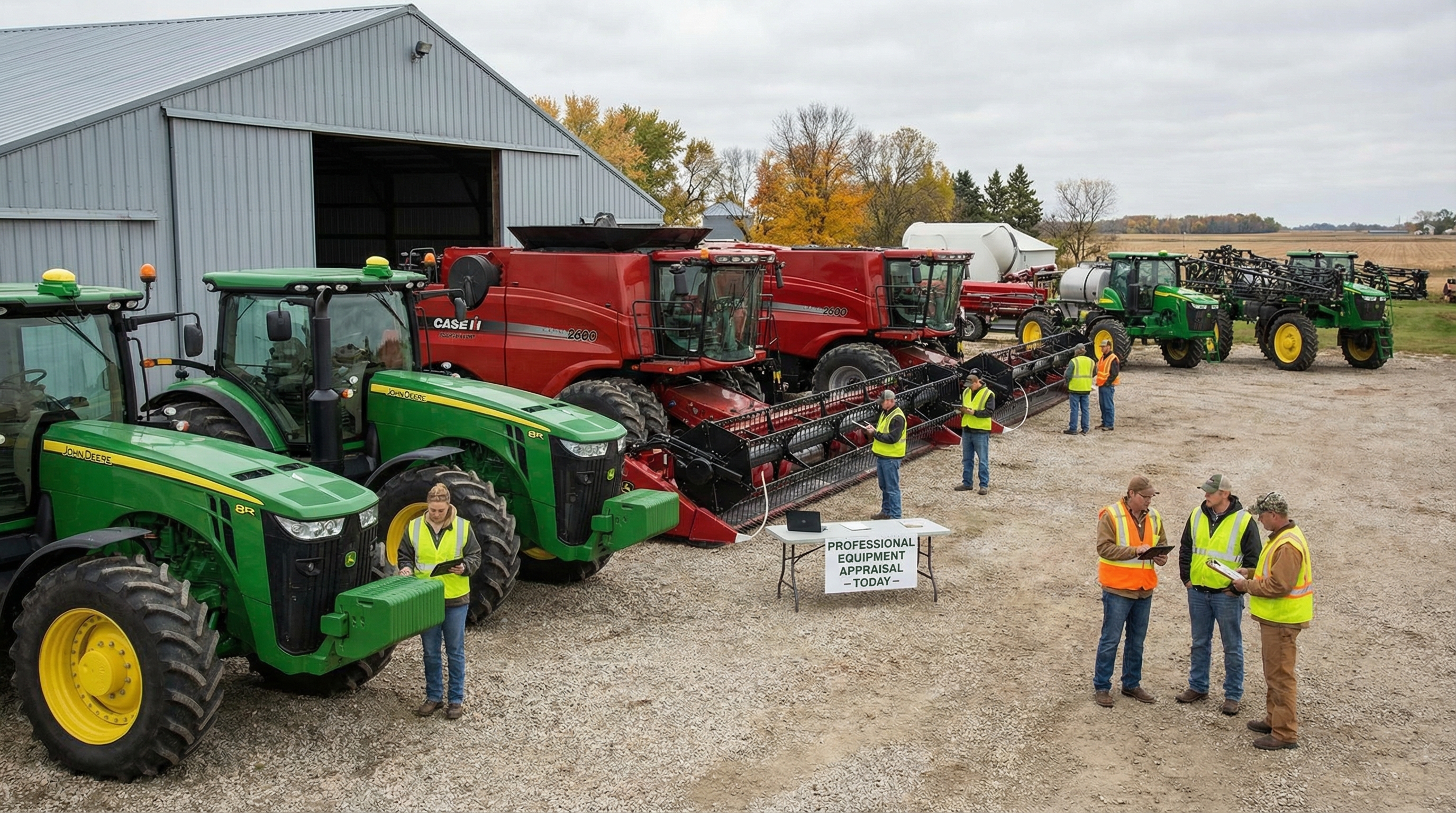
Getting a farm equipment appraisal can feel overwhelming, especially when you're dealing with financing deadlines, insurance claims, or estate planning. The truth is, proper preparation can make the difference between a smooth, accurate appraisal and a frustrating experience that delays your plans and costs you money.
A farm equipment appraisal determines the fair market value of agricultural machinery like tractors, combines, and implements through professional evaluation. Most farmers need appraisals for loan applications, insurance coverage, tax reporting, or when buying and selling equipment. The key to success lies in gathering the right documentation, preparing your equipment properly, and understanding what appraisers look for during their evaluation.
Quick Fact: Well-prepared equipment appraisals typically take 7-10 business days to complete, while unprepared ones can stretch to 3-4 weeks due to missing documentation and follow-up requirements.
In this guide, you'll learn exactly how to prepare for your farm equipment appraisal, what documentation you need, and how to avoid common mistakes that slow down the process. Whether you're seeking financing for expansion or settling an estate, proper preparation ensures you get accurate valuations that serve your needs.
A farm equipment appraisal provides a professional assessment of your machinery's current market value. Unlike informal estimates or online calculators, certified appraisals follow industry standards and are accepted by lenders, insurance companies, courts, and tax authorities.
The appraisal process involves three main approaches. Market comparison looks at recent sales of similar equipment in your region. Cost approach calculates replacement cost minus depreciation based on age and condition. Income approach, used less frequently, considers revenue-generating potential for specialized equipment.
Different situations require different value definitions. Fair Market Value represents what equipment would sell for between willing buyers and sellers. Orderly Liquidation Value assumes a reasonable marketing period but motivated sale. Forced Liquidation Value reflects quick-sale scenarios like auctions. Understanding which value type you need helps ensure you get the right appraisal for your specific purpose.
Most farmers need appraisals for loan collateral, SBA financing, insurance coverage updates, estate planning, divorce proceedings, or tax reporting. Each use case may require different value definitions and documentation levels, so clarifying your purpose upfront streamlines the entire process.
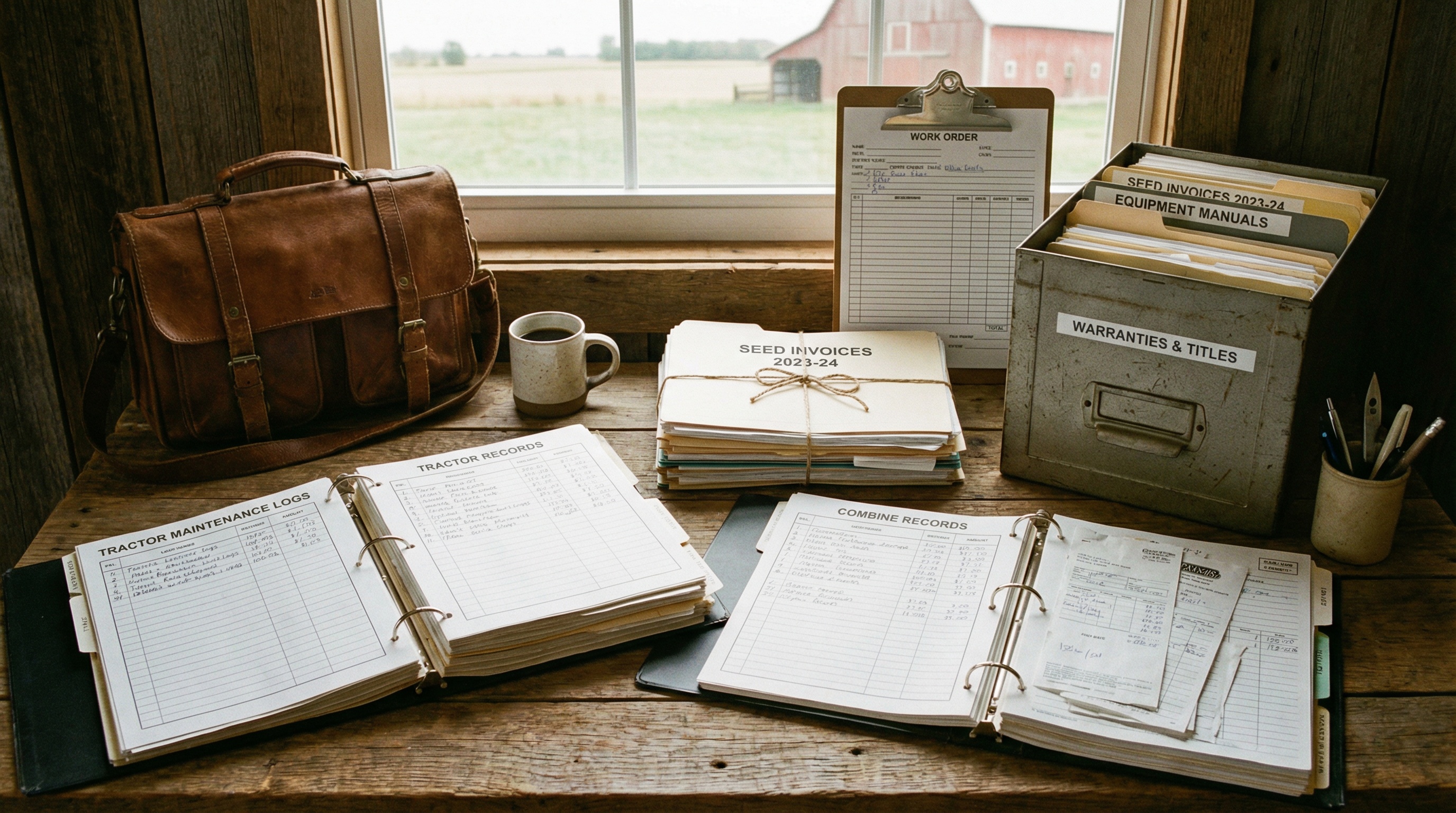
Gathering complete documentation before your appraiser arrives saves time and ensures accuracy. Start with basic identification information for each piece of equipment including make, model, serial number, year manufactured, and current location on your property.
Ownership documents prove clear title and help appraisers verify equipment history. Bring original titles, bills of sale, loan documents, and any lien information. If you're still making payments, include current loan balances and payment histories.
Maintenance records demonstrate how well you've cared for your equipment, directly impacting value assessments. Collect service receipts, repair invoices, parts replacement records, and oil change logs for at least the past two years. Hour meter readings or usage logs help appraisers understand wear patterns and remaining useful life.
Document TypeWhat to IncludeWhy It MattersIdentificationMake, model, serial number, yearConfirms exact equipment specificationsOwnershipTitles, bills of sale, loan docsProves clear ownership and purchase priceMaintenanceService records, repair receiptsShows care level and current conditionUsageHour meter readings, usage logsIndicates wear and remaining life
Purchase documentation and previous appraisals provide valuable baseline information. Include original purchase agreements, trade-in allowances, and any modifications or upgrades you've made. Previous appraisal reports help track value changes over time and identify any significant improvements or deterioration. For a comprehensive overview of what to bring, review our checklist for preparing your agricultural equipment for appraisal.
Physical preparation of your equipment significantly impacts the appraisal outcome. Clean machinery allows appraisers to properly assess condition, identify serial numbers, and spot potential issues that dirty equipment might hide.
Start by washing each piece of equipment, paying special attention to serial number plates, hour meters, and control panels. Remove any debris from air filters, radiators, and engine compartments. Check fluid levels and top off as needed, but don't attempt major repairs unless they're safety-related.
Organize your equipment in accessible locations where appraisers can safely inspect all sides. Move machinery out of cramped storage areas if possible, and ensure adequate lighting for detailed examination. If equipment is stored in multiple locations, create a simple map showing where each piece can be found.
Important Note: Never attempt to hide known problems or recent damage. Professional appraisers will discover issues during inspection, and transparency builds credibility that can actually help your appraisal outcome.
Test basic functions like starting, hydraulics, and power take-off systems. You don't need everything running perfectly, but knowing what works and what doesn't helps appraisers make accurate assessments. Document any known issues beforehand so you can discuss them openly during the inspection.
Arrange for knowledgeable staff to be available during the appraisal visit. Someone familiar with each piece of equipment can answer questions about usage patterns, maintenance history, and any modifications. This person should understand your operation well enough to provide context about how equipment fits into your overall farming system. Learn more about what to expect during a farm equipment appraisal to ensure you're fully prepared.
The appraisal process typically begins with a consultation where you discuss the purpose, scope, and timeline for your appraisal. Your appraiser will explain which value definition applies to your situation and what level of detail the final report will include.
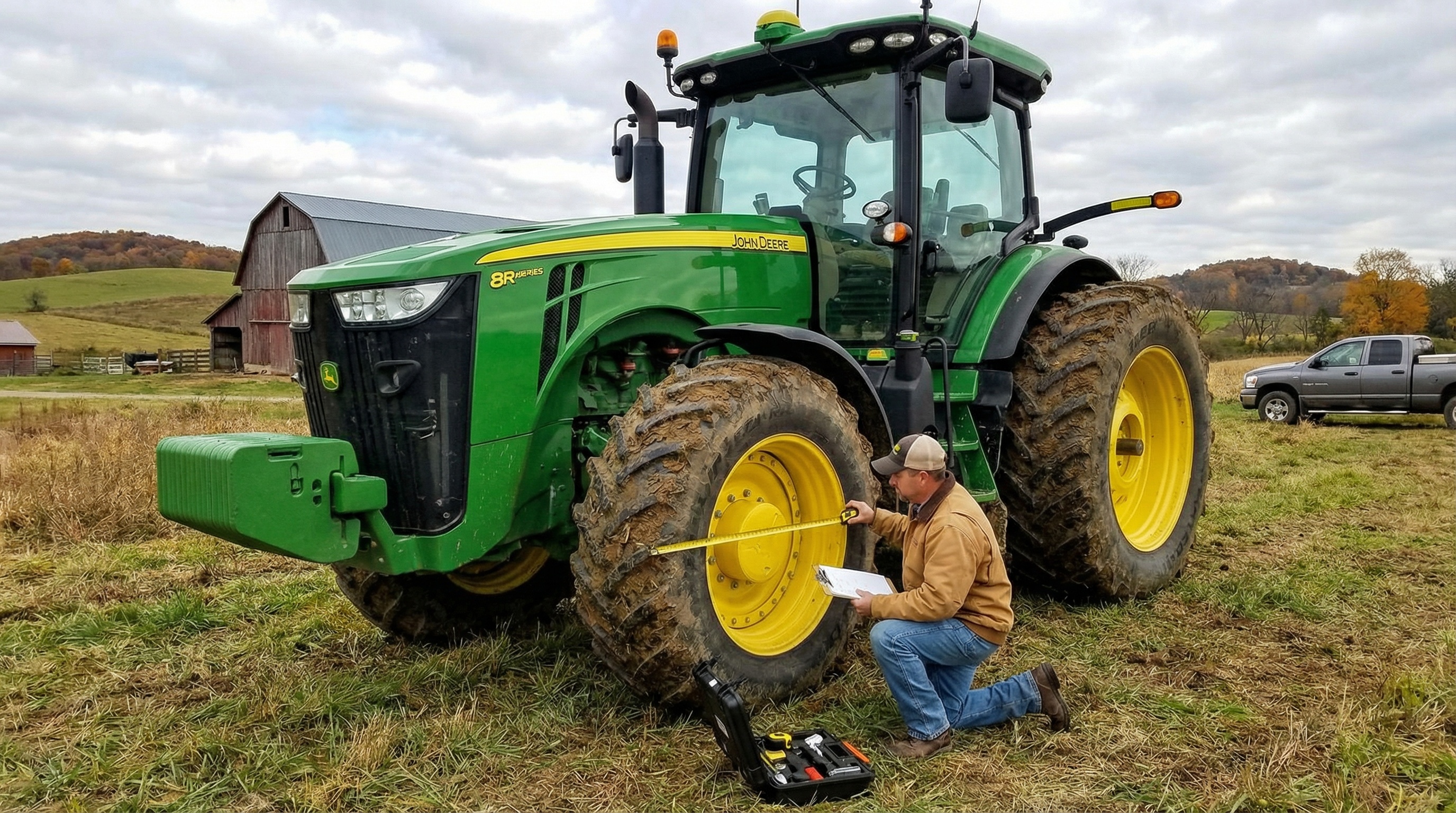
During the site visit, expect appraisers to spend 2-4 hours examining your equipment, depending on the number and complexity of items being valued. They'll photograph each piece from multiple angles, verify serial numbers, record hour meter readings, and assess overall condition. Don't be surprised if they ask detailed questions about maintenance practices, usage patterns, and any modifications you've made.
After the inspection, appraisers conduct market research to identify comparable sales and current market conditions. This research phase typically takes 5-7 business days and involves analyzing dealer listings, auction results, and industry databases to support their value conclusions.
The final appraisal report includes detailed descriptions of each item, photographs, condition assessments, and value conclusions with supporting market data. Reports also explain the valuation methodology used and include appraiser credentials and certifications. Most reports range from 15-30 pages depending on the number of items and complexity of the assignment.
Professional appraisers follow Uniform Standards of Professional Appraisal Practice and maintain credentials through organizations like the American Society of Appraisers or American Society of Farm Managers and Rural Appraisers. These standards ensure consistent, defensible valuations that meet legal and financial industry requirements. Before selecting an appraiser, consider asking these 10 essential questions to ask your farm equipment appraiser.
Proper preparation for your farm equipment appraisal protects your interests whether you're seeking financing, updating insurance coverage, or planning for the future. By gathering complete documentation, preparing your equipment properly, and understanding the process, you set yourself up for accurate valuations that serve your specific needs. Remember that professional appraisers are there to help you achieve your goals, and transparency throughout the process leads to the best possible outcomes for your operation. To avoid setbacks, be sure to review common mistakes to avoid during a farm equipment appraisal.
Essential documents include ownership titles, bills of sale, maintenance records, service receipts, and hour meter readings for each piece of equipment. You should also gather purchase documentation, loan information if applicable, and any previous appraisal reports. Having complete documentation ready before the appraiser arrives ensures a more accurate valuation and faster turnaround time.
A well-prepared farm equipment appraisal typically takes 7-10 business days from inspection to final report. The on-site inspection itself usually takes 2-4 hours depending on the number of machines being evaluated. Unprepared appraisals can take 3-4 weeks due to missing documentation and follow-up requirements, which is why proper preparation is crucial.
Clean your equipment to allow proper condition assessment, ensuring serial number plates and hour meters are visible. Move machinery to accessible locations where appraisers can inspect all sides safely, and organize equipment by type if possible. Test basic functions like starting and hydraulics, and have knowledgeable staff available to answer questions about usage patterns and maintenance history.
Professional appraisers evaluate multiple factors including the equipment's age, make and model, hours of use, physical and mechanical condition, maintenance history, and any modifications or upgrades. They also consider current market demand, comparable sales data, and remaining useful life. Well-maintained equipment with complete documentation typically receives higher valuations than similar machines with poor maintenance records.




