When you're preparing to sell your combine harvester or need to secure financing for new equipment, knowing the exact value of your farm machinery becomes critical. Without accurate valuations, you might leave thousands of dollars on the table during a sale or struggle with insurance claims after equipment damage.
A farm equipment appraisal is a professional assessment that determines the fair market value of agricultural machinery based on current market conditions, equipment condition, and comparable sales data. This process provides defensible documentation for insurance purposes, tax compliance, estate planning, and legal disputes.
Quick Answer: Farm equipment appraisals typically cost between $300-800 per piece and take 1-3 business days to complete, providing USPAP-compliant reports prepared for insurance companies, the IRS, and courts nationwide.
Whether you're a farm owner preparing for retirement, a lender evaluating collateral, or an attorney handling an estate dispute, this guide walks you through when you need an appraisal, how the process works, what affects equipment value and appraisal cost, and how to choose the right appraiser for your situation.
When Do You Need a Farm Equipment Appraisal
Understanding when to get professional valuations can save you significant money and legal complications down the road.
Buying or Selling Used Farm Machinery
Before purchasing that used tractor from a neighbor or listing your planter for sale, an appraisal helps establish fair pricing. This prevents overpaying as a buyer or underpricing valuable equipment as a seller, and a neutral third-party value helps prevent disputes after the sale, especially for high-value or specialized machines.
Estate Planning and Inheritance Disputes
When a farm owner passes away, heirs often disagree about equipment values during asset division. Professional appraisals provide neutral, defensible valuations that hold up in court and help families avoid disputes that can drag on for months and cost far more in legal fees than the appraisal. Understanding common challenges in probate appraisal and how to overcome them can help you navigate these difficult situations more effectively.
Insurance Coverage and Claims
Your insurance company requires accurate valuations to determine proper coverage limits. After theft, fire, or storm damage, appraisals prove your equipment's pre-loss value for claim settlements, rather than leaving the settlement to depreciated book values.
Financing and Business Valuations
Banks and lenders require professional appraisals when farm equipment serves as loan collateral, including equipment financing, SBA loans, and farm operating loans. Business valuations for partnerships, divorces, or sales also need accurate equipment assessments.
Important Note: IRS regulations require qualified appraisals for charitable donations of farm equipment valued over $5,000 and for estate tax purposes when equipment values exceed certain thresholds.
Types of Value Used in Farm Equipment Appraisals
Different situations require different value definitions, and understanding these distinctions helps you request the right type of appraisal.
Fair Market Value represents what a willing buyer would pay a willing seller in an open market transaction. This is the most common value type for estate planning, tax purposes, and insurance coverage.
Orderly Liquidation Value assumes equipment sells within a reasonable timeframe through normal marketing channels but under some pressure to sell. Banks often use this value when evaluating loan collateral.
Forced Liquidation Value reflects quick-sale scenarios like auctions or bankruptcy situations where time pressure reduces selling prices. This typically yields the lowest valuations.
Replacement Cost estimates what it would cost to replace the equipment with comparable machinery today. Insurers use it when setting coverage limits, since a claim paid at market value may not buy a working replacement.
| Value Type | Definition | Typical Use |
|---|---|---|
| Fair Market Value | Open market transaction | Estate, tax, insurance |
| Orderly Liquidation | Normal sale with time pressure | Loan collateral evaluation |
| Forced Liquidation | Quick sale, auction conditions | Bankruptcy, urgent sales |
| Replacement Cost | Cost to replace with comparable equipment today | Insurance coverage limits |
How Farm Equipment Appraisals Work
The appraisal process follows established professional standards to ensure accuracy and defensibility. Before you begin, it's helpful to review what to expect during a farm equipment appraisal so you can prepare accordingly.
Step 1: Defining the Assignment
Your appraiser clarifies the purpose, value type needed, and effective date for the valuation. This determines which methodology and standards apply to your specific situation.
Step 2: Equipment Documentation
You provide detailed equipment lists including make, model, year, serial numbers, hour readings, and any available maintenance records. Complete documentation improves accuracy. Our checklist for preparing your agricultural equipment for appraisal can help ensure you have everything ready.
Step 3: Physical Inspection
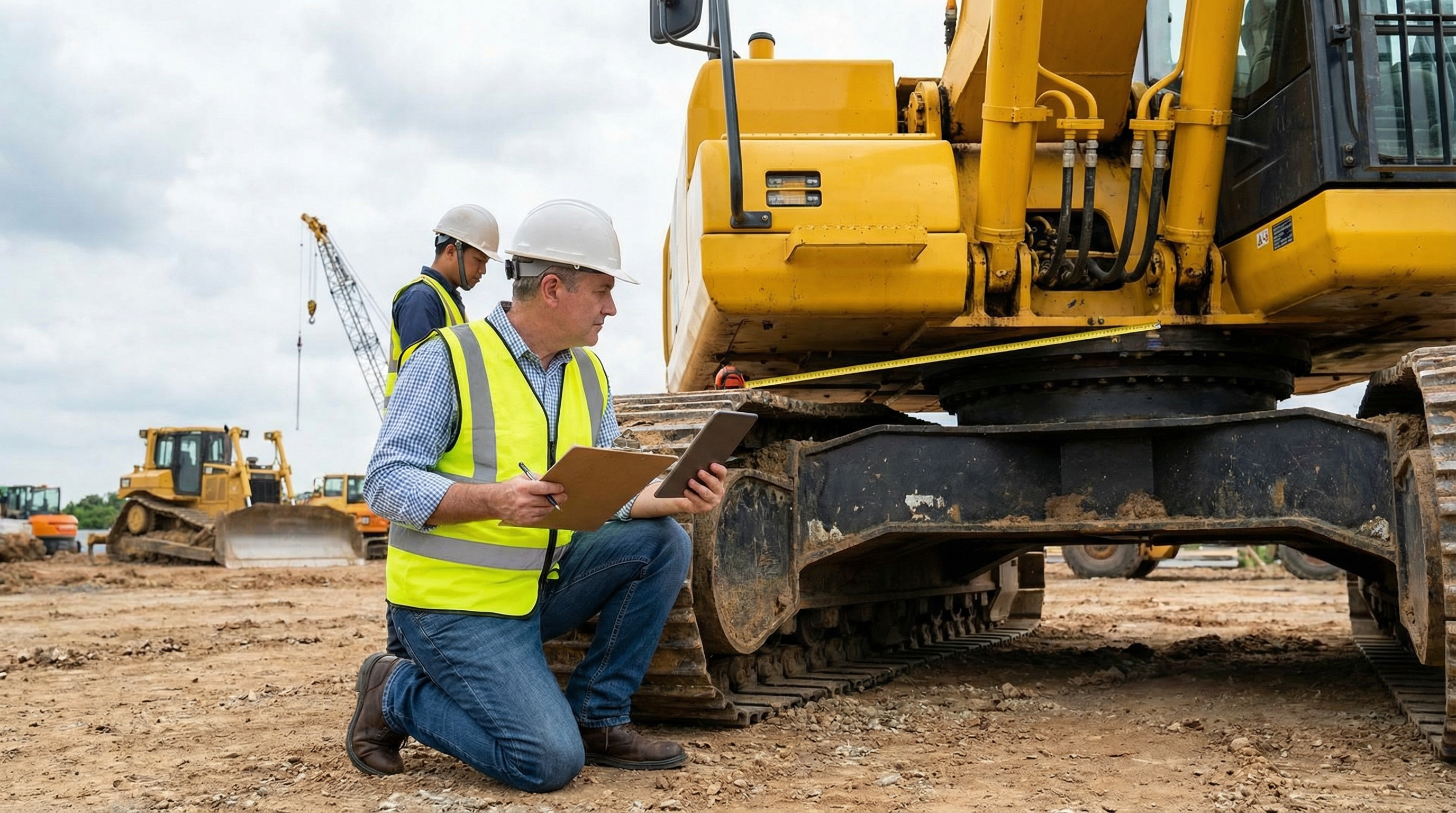
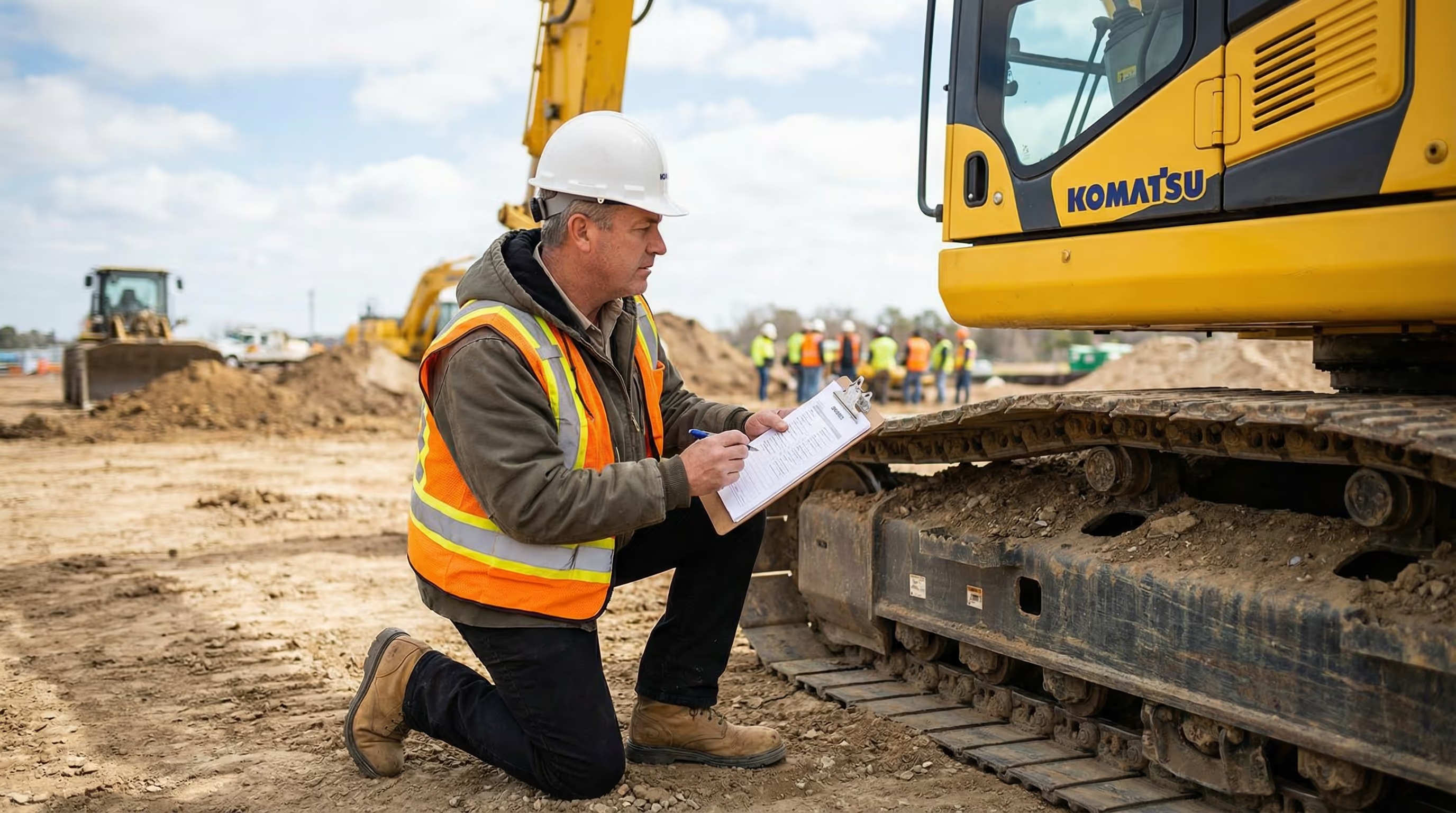
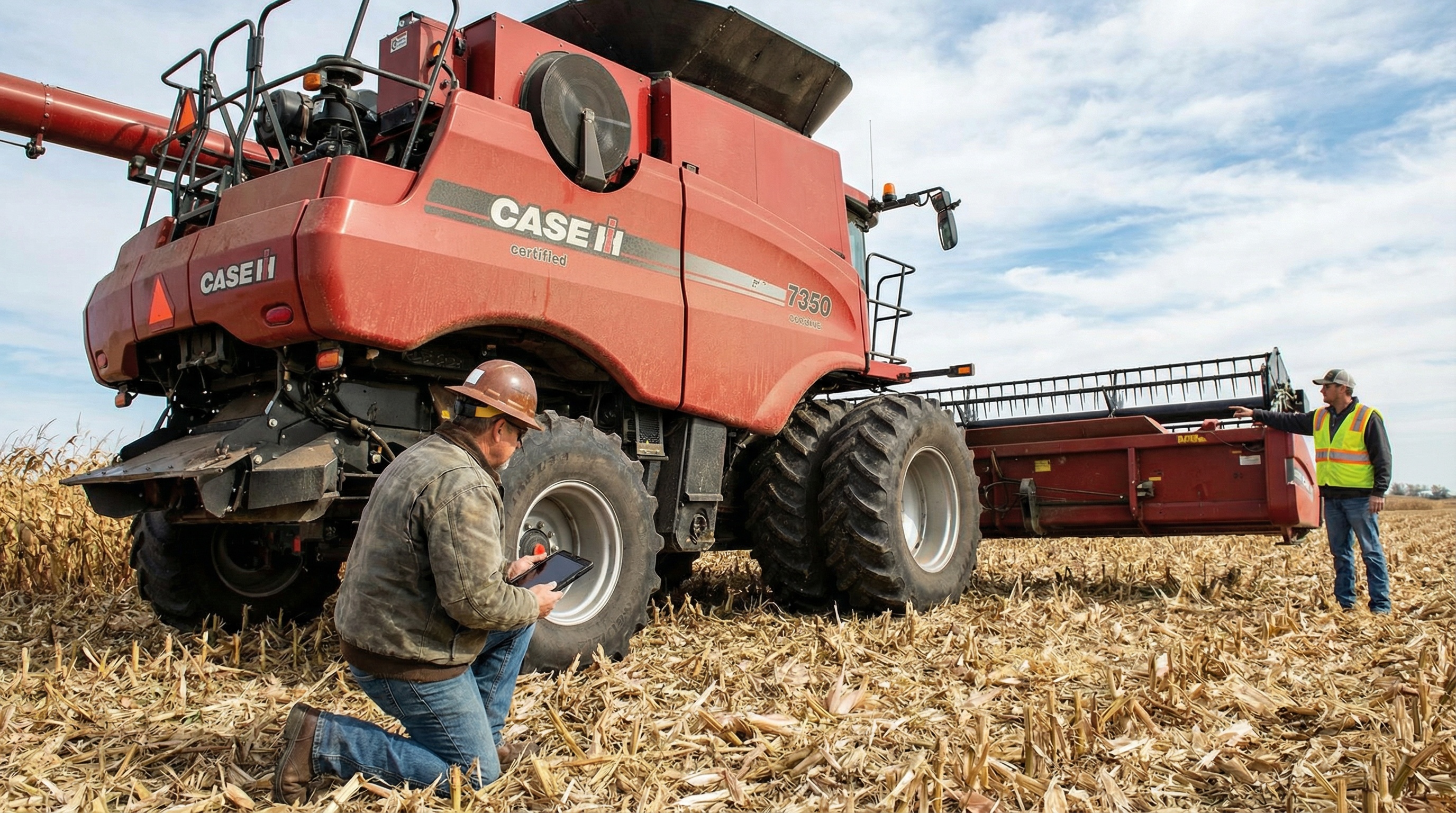
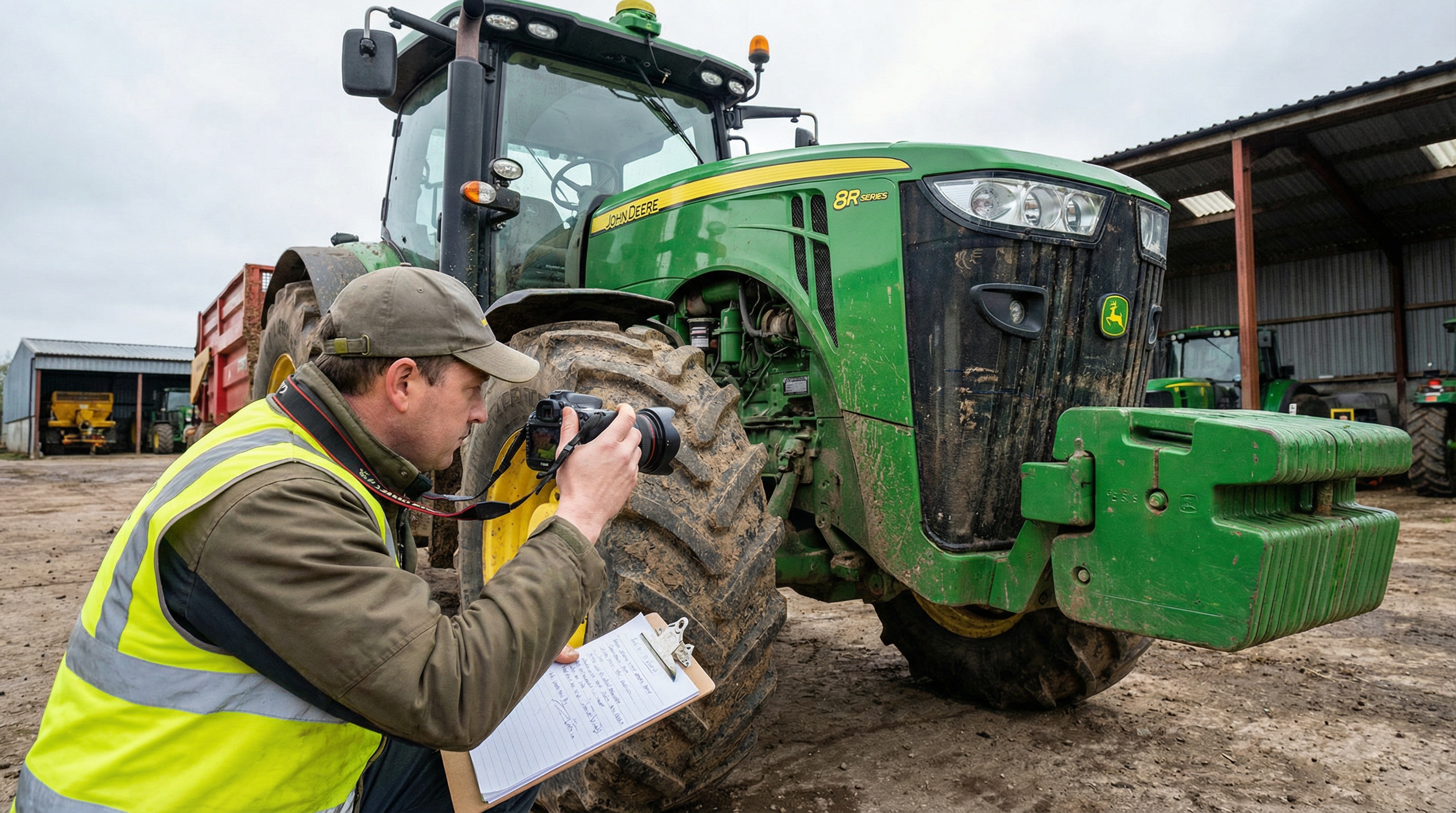
For on-site appraisals, the appraiser examines each piece of equipment, documenting condition, functionality, and any modifications or damage. Desktop appraisals rely on photos and detailed descriptions you provide.
Step 4: Market Research
The appraiser researches comparable sales, dealer pricing, auction results, and industry publications to establish current market values for similar equipment, and considers economic obsolescence where market conditions have reduced demand for a machine type.
Step 5: Final Report Delivery
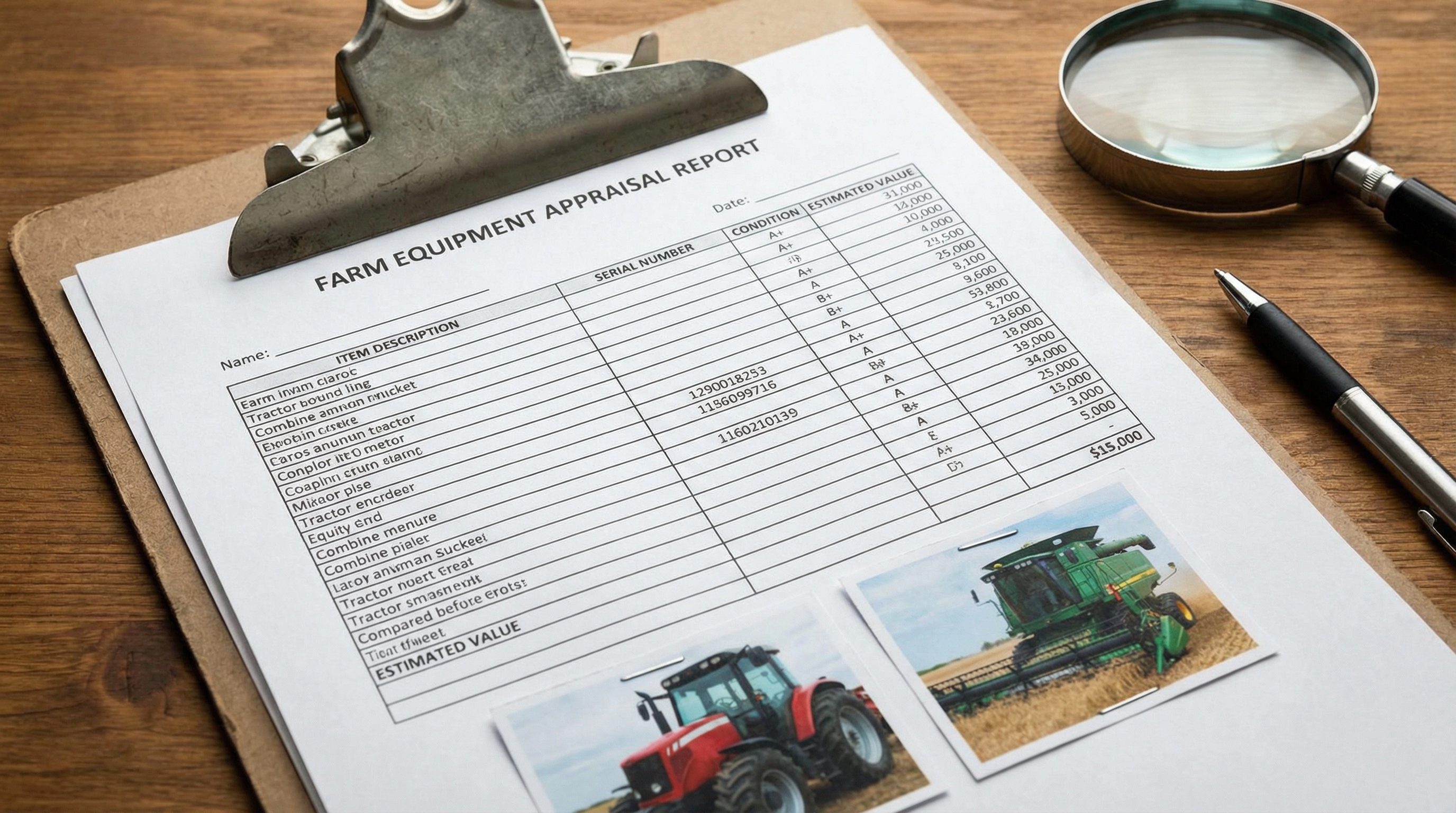
You receive a written report detailing the appraiser's findings, methodology, and final value conclusions. USPAP-compliant reports include photographs, market data, and the appraiser's qualifications.
What Drives the Cost of a Farm Equipment Appraisal
Appraisal fees follow the amount of work the assignment requires, not the value of the machinery. Appraising a single tractor in one yard is a very different job from valuing a fleet spread across several properties. These are the factors that shape the quote:
- Number and complexity of assets. A standard utility tractor takes less research than a harvester with custom modifications, while several similar machines inspected in one visit are more efficient to value.
- Location and accessibility. Remote sites, equipment spread over multiple locations, and machines that must be moved before they can be inspected all add time and travel.
- Documentation quality. Complete maintenance records, purchase invoices, and legible serial numbers reduce the research needed to confirm specifications and history.
- Purpose and deadline. Appraisals for litigation or IRS filings usually require more detailed reports than routine lending appraisals, and rush deadlines add to the fee.
How to Prepare Your Farm Machinery for an Appraisal
A little preparation shortens the inspection, improves accuracy, and helps keep the cost down.
Organize Your Documentation
Gather serial numbers, model information, purchase receipts, maintenance records, and any previous appraisals. A simple spreadsheet listing each machine with its location, approximate age, hour reading, and any known issues gives the appraiser a head start.
Make Equipment Accessible
Clear pathways, move machinery into open areas where you can, and clean equipment enough for a proper look. The appraiser needs to read serial plates, check fluid levels, and judge overall condition, which is hard when a machine is buried in storage or caked in mud. Consolidating equipment in one place for a single visit also cuts travel time.
Choose the Right Scope
Desktop appraisals based on photos and documentation cost less than on-site inspections, but some lenders and courts expect an inspection. Confirm what the receiving party requires before you choose. If your deadline is flexible, avoiding a rush request also avoids rush fees, but don't delay when a loan closing or court date is fixed.
Key Factors That Affect Farm Equipment Value
Multiple variables influence your equipment's final appraised value, and understanding these helps you maintain asset values over time.
Age and Operating Hours significantly impact value, with newer equipment commanding higher prices. However, well-maintained older equipment can retain substantial value, especially for popular models with strong demand.
Brand and Model Reputation affects resale values differently across manufacturers. John Deere, Case IH, and New Holland typically hold values better than lesser-known brands, though specialty equipment may buck this trend.
Condition and Maintenance History heavily influences valuations. Equipment with complete service records, recent repairs, and good cosmetic condition appraises higher than neglected machinery.
Market Demand and Seasonality create value fluctuations throughout the year. Planting equipment values peak in spring, while harvest equipment commands top prices in late summer and fall.
Pro Tip: Keeping detailed maintenance records and addressing minor repairs promptly can increase your equipment's appraised value by 10-15% compared to similar machinery without documentation.
Why Professional Appraisals Beat DIY Valuations
While online pricing guides and auction results provide rough estimates, professional appraisals offer several critical advantages for important financial decisions.
An Appraisal Is Not a Price Quote
A dealer's trade-in offer reflects what that dealer wants to pay, and an auction estimate reflects one sale channel on one day. A farm equipment appraisal is a documented opinion of value under a defined value standard, with the research and reasoning written out so a lender, insurer, or court can follow it.
USPAP Compliance and Legal Defensibility
Certified appraisers follow Uniform Standards of Professional Appraisal Practice, ensuring their reports meet the requirements for court proceedings, IRS submissions, and insurance claims.
Comprehensive Market Analysis
Professional appraisers access multiple data sources including dealer networks, auction houses, and industry databases that aren't available to the general public. Learn more about exploring agricultural equipment appraisal processes to understand the depth of analysis involved.
Risk Management
Inaccurate valuations can cost thousands in overpaid taxes, insufficient insurance coverage, or unfavorable sale prices. Professional appraisals minimize these financial risks through expert analysis and defensible documentation. Be sure to avoid common mistakes to avoid during a farm equipment appraisal to protect your investment.
At AppraiseItNow, our certified appraisers specialize in farm equipment valuations with nationwide service capabilities. We prepare USPAP-compliant reports for the IRS, insurance companies, lenders, and courts. Whether you need on-site inspections or desktop appraisals, our experienced team delivers accurate valuations that protect your financial interests and meet your specific requirements.
Getting professional farm equipment appraisals ensures you make informed decisions about your valuable agricultural assets. The investment in proper documentation pays dividends through better insurance coverage, fair sale prices, and compliance with legal requirements.