






USPAP-compliant appraisals by best-in-class appraisers
.avif)
Joe Kattan

Anne Hay, ISA AM

Jason Dolph, CAGA

Ashley Innes, ISA AM

Aron Blue
About AppraiseItNow's Antiques Appraisal Services
AppraiseItNow provides professional antiques appraisals for estate tax reporting, charitable donation filings (IRS Form 8283), insurance coverage and claims, divorce proceedings, probate, and pre-sale valuation. Antiques present unique valuation challenges due to age, provenance, condition, and shifting collector markets, which is why our appraisals are prepared by credentialed specialists with deep expertise in decorative arts, period furniture, ceramics, silver, and other antique categories. As a specialized subset of professional personal property valuations, antiques appraisals require a level of category knowledge that goes well beyond general household goods assessments. Our mission is to deliver defensible, USPAP-compliant valuations with exceptional speed, professionalism, and client service.
Our appraisers serve individual collectors, families managing estates, attorneys, CPAs, auction houses, and nonprofit organizations requiring documented valuations for IRS submissions or insurance purposes. Many antiques appraisals are completed remotely using photographs and provenance documentation, though onsite inspections are coordinated when collection size, condition assessment complexity, or lender requirements make in-person review necessary. We offer Fair Market Value (FMV), Replacement Value, and Actual Cash Value (ACV) appraisals for various intended uses.
What Types of Antiques Do We Appraise?
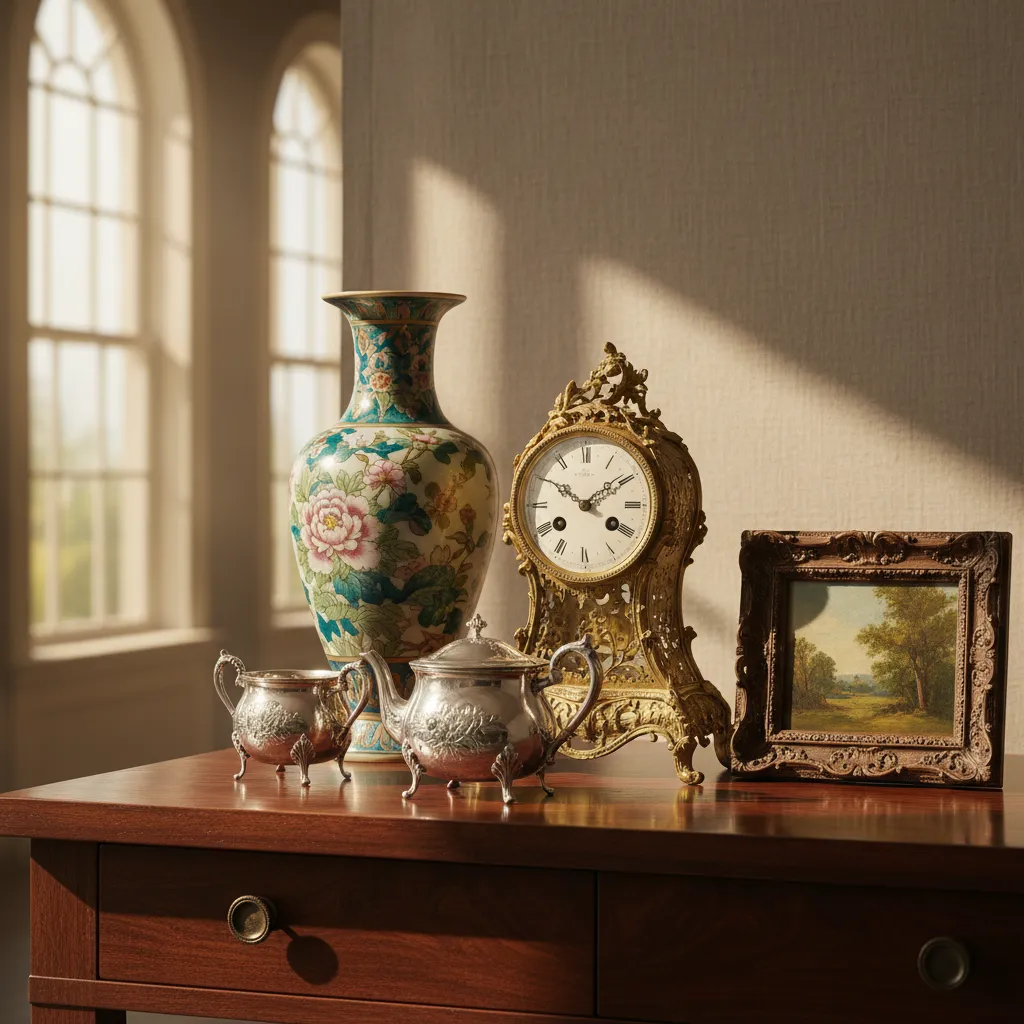
AppraiseItNow appraises a wide range of antique categories, with particular depth in furniture, decorative arts, and collectibles from the 18th century through the early 20th century. Subtypes we commonly appraise include:
- Period and antique furniture (American, European, and Asian)
- Porcelain, pottery, and ceramics including majolica, Meissen, and transferware
- Antique silver and silverplate, including flatware sets and hollowware
- Clocks, barometers, and scientific instruments
- Antique maps, globes, and cartographic items
- Folk art and Americana
- Vintage lighting, including oil lamps and early electric fixtures
- Antique textiles, samplers, and needlework
- Bronze, iron, and decorative metalwork
- Vintage toys, automata, and mechanical antiques
Who Does AppraiseItNow Serve?
AppraiseItNow serves individual collectors, families settling estates, and dealers seeking independent valuations, as well as attorneys, CPAs, and estate planners who require credentialed appraisal reports for legal, tax, or insurance purposes.
How much does an Antiques appraisal cost?
Appraisal Type
Standard Fee Range
Pricing By Volume
What Drives Cost?
.svg)
5-Star Valuation Services, Loved by Hundreds
{{sectionName}}

{{sectionName}}
{{sectionName}}
{{sectionName}}
.svg)
View all Locations
How our Valuation Process Works
Written USPAP-compliant personal property appraisals for when defensibility matters.
Given the USPAP-compliant nature of AppraiseItNow’s appraisal reports, we prepare our deliverables for major legal, tax, and financial reporting purposes for individual and commercial clients.
Popular uses of our appraisal reports include:
Taxes, Estates & Financial Planning
- Gift Tax - IRS Form 709
- Estate Tax - IRS Form 706
- Charitable Donations - IRS Form 8283
- Estate planning, equitable distribution, and probate
- Loan Purposes
Life Events & Special Circumstances
- Divorce
- Social Security reporting or Medicaid Application Filings
- E-2 visa applications
Insurance & Risk Management
- Insurance coverage
- Insurance claims
- Third-party & legal damage claims


What types of antiques does AppraiseItNow appraise?
AppraiseItNow appraises a wide range of antiques across furniture, decorative arts, and collectibles categories. Our appraisers work with items including:
- American and European furniture from periods such as Federal, Chippendale, Victorian, and Arts and Crafts
- Ceramics, porcelain, and pottery including maker-marked and unmarked examples
- Silver, pewter, and metalwork
- Clocks, scientific instruments, and mechanical antiques
- Textiles, rugs, and tapestries
- Folk art and Americana
- Decorative objects, lighting, and architectural antiques
- Estate collections combining multiple categories
Are your antique appraisals USPAP-compliant?
Yes. All appraisals prepared by AppraiseItNow follow USPAP Standards 7 and 8, which govern the development and reporting of personal property appraisals. Standard 7 requires systematic research, authentication analysis, and market verification for items like antiques, while Standard 8 mandates clear, accurate documentation of methodology and conclusions. Our reports are qualified for IRS submissions, insurance purposes, legal proceedings, and estate administration.
What are common reasons someone needs an antique appraisal?
There are several situations that call for a professional antique appraisal, including:
- Insurance coverage to establish accurate replacement values
- Estate tax reporting on IRS Form 706
- Charitable donation deductions requiring a qualified appraisal for items valued over $5,000 (IRS Form 8283)
- Probate and estate distribution to ensure fair division among heirs
- Divorce proceedings requiring independent valuations
- Damage or loss claims filed with an insurer
- Pre-sale valuation before consigning to an auction house or dealer
Can you appraise antiques in poor condition, with unknown provenance, or with limited documentation?
Yes. Appraisers regularly work with items that have incomplete histories, missing maker's marks, or significant wear. Condition, provenance, and documentation all factor into value, but their absence does not prevent a credible appraisal from being completed. Our appraisers use construction methods, materials analysis, stylistic elements, and comparable market data to authenticate and value items even when records are sparse.
Can you appraise large collections or multiple antiques?
Yes. AppraiseItNow handles everything from single-item appraisals to estate collections spanning hundreds of pieces across multiple categories. For large collections, we offer volume pricing and can coordinate systematic cataloging, photography, and condition documentation. Onsite inspections are available for collections where physical examination is required by scope or complexity.
Do you provide online or remote antique appraisals?
Most antique appraisals are completed remotely using photographs, descriptions, and supporting documentation submitted by the client. Remote appraisals are efficient, cost-effective, and suitable for the majority of items and purposes. For larger estate collections, complex authentication questions, or situations requiring hands-on examination, we can coordinate an in-person appraiser anywhere in the United States.
How much does a antique appraisal cost?
Antique appraisal fees depend on the number of items, the purpose of the appraisal, and the complexity of the work involved. Standard appraisals for insurance coverage, personal use, probate, and estate distribution start at $195, while advanced appraisals for charitable donations, estate tax, divorce, and legal proceedings start at $295. Volume pricing is available for collections:
- 1 item: $195 to $495
- 10 items: $695 to $1,200
- 50 to 100 or more items: $1,600 to $3,500 or more
All fees are quoted as a fixed price before work begins.
Do you offer discounted pricing for large volumes?
Yes. Collection pricing is significantly discounted compared to per-item rates. A single antique appraisal typically ranges from $195 to $495, while a collection of 50 to 100 or more items is priced between $1,600 and $3,500 or more, representing a meaningful reduction per item. Contact AppraiseItNow for a custom quote based on your collection size and appraisal purpose.
How long does an antique appraisal take?
Most remote antique appraisals are completed within 7 to 10 business days from the time all required information is received. Onsite inspections or larger estate collections typically take 2 to 3 weeks to complete. Rush service is available for same-day or next-day turnaround upon request, which is useful for time-sensitive probate filings, insurance claims, or legal deadlines.
Who prepares the appraisal report?
Appraisal reports are prepared by credentialed personal property appraisers with specialized knowledge in antiques and decorative arts. Each report is reviewed for accuracy, completeness, and USPAP compliance before delivery. AppraiseItNow's appraisers maintain professional memberships and continuing education requirements to stay current with market trends and appraisal standards.
Are your appraisers ISA, ASA, or AAA credentialed?
Yes. AppraiseItNow's personal property appraisers hold credentials from recognized professional organizations including the International Society of Appraisers (ISA). ISA Accredited Member (ISA AM) designation requires demonstrated competency, adherence to USPAP, and ongoing education. These credentials are recognized by the IRS, insurance carriers, and courts as indicators of qualified appraiser status.
Do you prepare appraisals for IRS Form 8283 (Noncash Charitable Contributions)?
Yes. When donating antiques to a qualifying organization, the IRS requires a qualified appraisal for any item or group of similar items with a claimed deduction exceeding $5,000. AppraiseItNow prepares fully compliant Form 8283 appraisals that include detailed item descriptions, photographs, methodology explanations, market comparables, and a signed appraiser certification. Our reports are prepared by qualified appraisers as defined under IRS regulations.
Do you prepare appraisals for IRS Form 706 (Estate Tax)?
Yes. Antiques included in a taxable estate must be appraised at fair market value for IRS Form 706 reporting. The 2024 federal estate tax exemption is $13.61 million, and estates exceeding that threshold must include defensible valuations for all personal property. Undervaluation carries penalties of up to 40%, making an accurate, well-documented appraisal critical for compliance.
Do you buy, sell, or broker antiques?
No. AppraiseItNow is an independent appraisal firm and does not buy, sell, or broker antiques. This independence is essential to USPAP compliance, which prohibits appraisers from charging contingent fees or having a financial interest in the items they appraise. Our sole role is to provide objective, defensible valuations for our clients.
What information do you need to get started?
To begin an antique appraisal, it helps to provide:
- Clear photographs from multiple angles, including any marks, signatures, labels, or damage
- Dimensions and a physical description of the item
- Known history of ownership or provenance documents if available
- Any prior appraisals, receipts, or auction records
- The intended purpose of the appraisal (insurance, estate, donation, etc.)
- Your preferred timeline or any filing deadlines
Our team will review your submission and confirm the scope and fee before work begins.
Can AppraiseItNow appraise antiques located anywhere in the U.S.?
Yes. Remote appraisals are available to clients nationwide, with no geographic restrictions. For larger estate collections, complex authentication needs, or situations where a physical inspection is required, AppraiseItNow can coordinate an in-person appraiser in any state. Whether you are in a major metro area or a rural location, we can accommodate your appraisal needs.
Will my appraisal be accepted by the IRS, insurers, or courts?
AppraiseItNow's appraisal reports are prepared to meet the documentation and qualification standards required by the IRS, insurance carriers, probate courts, and legal proceedings. Our reports include all elements required under USPAP Standards 7 and 8, including item descriptions, photographs, methodology, market comparables, an effective valuation date, and a signed appraiser certification. While no appraisal firm can guarantee acceptance in every circumstance, our reports are specifically structured to withstand scrutiny in tax filings, claims, and litigation.
Does restoration or repair affect the appraised value of an antique?
Yes, and the impact depends heavily on the quality and type of work performed. Professional, documented restoration can increase value by 20 to 50 percent for high-end antiques, but amateur repairs or aggressive cleaning that removes original patina can reduce value by half or more. Appraisers evaluate whether modifications are reversible, document all known restorations, and adjust value accordingly, so disclosing any repair history upfront leads to a more accurate result.
How does provenance affect an antique's appraised value?
Provenance, meaning the documented ownership history of an item, can have a dramatic effect on value. A piece with strong exhibition records, notable prior ownership, or authentication certificates can command two to three times the price of a comparable item without that history, and the IRS and probate courts give significant weight to verifiable lineage when evaluating estate valuations. Appraisers research provenance through ownership documents, auction records, and published references, and even partial documentation can meaningfully support a higher valuation.
Do antique values vary by region, and does that affect my appraisal?
Yes. Regional market conditions play a significant role in antique valuations, and a qualified appraiser accounts for these differences. American Federal furniture and other East Coast styles, for example, can command premiums of 30 to 50 percent over comparable pieces sold in Midwest markets due to differences in collector density and regional demand. AppraiseItNow's appraisers apply regionally appropriate market comparables to ensure your valuation reflects what the item would actually sell for in the relevant market, which is especially important for estate distributions and IRS filings that may face scrutiny.
APPRAISEITNOW APPRAISERS ARE BEST-IN-CLASS & CREDENTIALED BY LEADING APPRAISAL ORGANIZATIONS LIKE THE ISA, ASA, & MORE.




