






USPAP-compliant appraisals by best-in-class appraisers
.avif)
Joe Kattan

Anne Hay, ISA AM

Jason Dolph, CAGA

Ashley Innes, ISA AM

Aron Blue
About AppraiseItNow's Silverware Appraisal Services
AppraiseItNow provides professional silverware appraisals for estate tax reporting, charitable donations, insurance coverage, divorce proceedings, and probate. Whether you own a complete sterling flatware service, a collection of antique silver hollowware, or inherited pieces of uncertain origin, our appraisers deliver accurate, documented valuations that satisfy IRS requirements, insurance carriers, and legal proceedings. Our mission is to deliver defensible, USPAP-compliant valuations with exceptional speed, professionalism, and client service.
Our appraisers serve individual collectors, families settling estates, attorneys, CPAs, and donors contributing silver to qualifying organizations, as a specialized subset of professional personal property valuations. Most silverware appraisals are completed remotely using photographs, hallmark documentation, and maker records, though onsite inspection may be arranged for large collections, museum-quality pieces, or items requiring physical testing to confirm silver content. We offer Fair Market Value (FMV), Replacement Value, and Actual Cash Value (ACV) appraisals for various intended uses.
What Types of Silverware Do We Appraise?
Silverware spans a wide range of forms, periods, and makers. Our appraisals cover:
- Sterling silver flatware sets and individual serving pieces
- Silver-plated flatware by makers such as Reed and Barton, Oneida, and International Silver
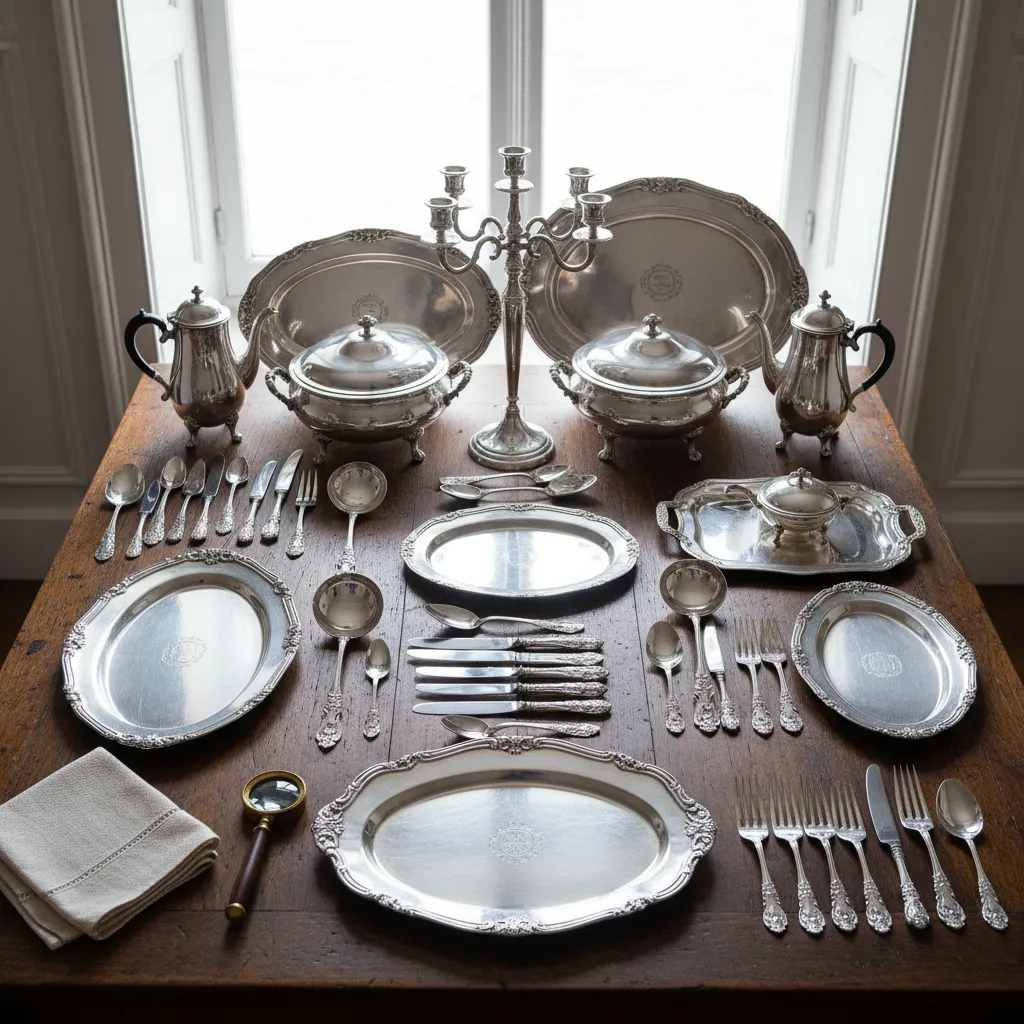
- Antique and Victorian sterling hollowware including tea services, trays, and pitchers
- American coin silver pieces from the 18th and 19th centuries
- English hallmarked silver with assay office marks
- Georg Jensen, Tiffany and Co., and other designer or luxury silver
- Monogrammed or custom-commissioned silver services
- Weighted sterling decorative pieces
- Souvenir spoons and commemorative silver collectibles
- Mixed silver lots from estate collections
Who Does AppraiseItNow Serve?
AppraiseItNow serves individuals, families, and collectors who need silverware appraised for estate settlement, insurance, or donation purposes, as well as attorneys, CPAs, and estate professionals requiring independent, IRS-qualified valuations for legal and tax filings.
5-Star Valuation Services, Loved by Hundreds
{{sectionName}}

{{sectionName}}
{{sectionName}}
{{sectionName}}
.svg)
View all Locations
How our Valuation Process Works
Written USPAP-compliant personal property appraisals for when defensibility matters.
Given the USPAP-compliant nature of AppraiseItNow’s appraisal reports, we prepare our deliverables for major legal, tax, and financial reporting purposes for individual and commercial clients.
Popular uses of our appraisal reports include:
Taxes, Estates & Financial Planning
- Gift Tax - IRS Form 709
- Estate Tax - IRS Form 706
- Charitable Donations - IRS Form 8283
- Estate planning, equitable distribution, and probate
- Loan Purposes
Life Events & Special Circumstances
- Divorce
- Social Security reporting or Medicaid Application Filings
- E-2 visa applications
Insurance & Risk Management
- Insurance coverage
- Insurance claims
- Third-party & legal damage claims
What types of silverware does AppraiseItNow appraise?
AppraiseItNow appraises a wide range of silver and silver-related items, from complete flatware services and hollowware to individual antique pieces. This includes:
- Sterling silver flatware sets and partial services
- Silver hollowware such as tea sets, trays, pitchers, and candelabra
- Antique and period silverware from Georgian, Victorian, and Art Nouveau eras
- Pieces by notable makers including Gorham, Tiffany, Reed and Barton, and others
- Electroplated silverware (EPNS) where composition and value need to be established
- Monogrammed, engraved, or custom-commissioned silver pieces
Are your silverware appraisals USPAP-compliant?
Yes. All appraisals prepared by AppraiseItNow follow USPAP Standards 7 and 8, which govern personal property appraisals. Standard 7 requires appraisers to identify the property's characteristics, analyze the relevant market, and reach a credible value conclusion, while Standard 8 mandates clear, accurate reporting of all methods and data used. Our reports are also prepared in accordance with IRS Treasury Regulations where applicable, making them suitable for tax filings, insurance, and legal proceedings.
What are common reasons someone needs a silverware appraisal?
There are several situations that call for a professional silverware appraisal, including:
- Insurance scheduling to establish replacement value for high-value sets
- Estate settlement and probate requiring fair market value for equitable distribution
- Charitable donation substantiation, which the IRS requires for contributions valued at $5,000 or more
- Estate tax reporting on Form 706 for estates exceeding the applicable exemption threshold
- Divorce and legal proceedings requiring an independent, defensible valuation
- Pre-sale evaluation to understand current market value before listing
Can you appraise silverware in poor condition, with unknown provenance, or with limited documentation?
Yes. Appraisers regularly work with pieces that have wear, damage, missing documentation, or uncertain history. Condition factors such as polishing damage, dents, and repairs are accounted for in the valuation, and appraisers can use hallmark analysis, maker's marks, and auction database comparisons to establish value even without provenance records. Pieces with limited documentation are still appraisable, and the report will clearly note any limitations in the scope of work.
Can you appraise large collections or multiple pieces of silverware?
Yes. AppraiseItNow handles everything from single heirloom pieces to large estate collections with dozens or hundreds of items. For larger collections, we offer volume pricing and can coordinate the most efficient approach, whether remote or onsite, based on the size and complexity of the collection.
Do you provide online or remote silverware appraisals?
Most silverware appraisals are completed remotely using photographs, descriptions, and any available documentation you provide. For larger collections, complex estates, or situations where physical inspection is necessary to verify hallmarks, weight, or composition, we can coordinate an in-person appraiser anywhere in the United States.
How much does a silverware appraisal cost?
Pricing depends on the purpose and scope of the appraisal. Standard appraisals for insurance coverage, personal use, probate, and estate distribution start at $195, while advanced appraisals for charitable donations, estate tax, divorce, and legal proceedings start at $295. Volume pricing by collection size is as follows:
- 1 item: $195 to $495
- 10 items: $695 to $1,200
- 50 to 100 or more items: $1,600 to $3,500 or more
Do you offer discounted pricing for large volumes?
Yes. Collections of 50 items or more qualify for discounted collection pricing, with fees ranging from $1,600 to $3,500 or more depending on scope. This makes professional appraisal practical for large estate inventories or significant flatware services that would otherwise be cost-prohibitive to appraise piece by piece.
How long does a silverware appraisal take?
Most remote silverware appraisals are completed within 7 to 10 business days. Onsite inspections or larger collections typically take 2 to 3 weeks from the time of inspection. If you have a deadline for an insurance filing, estate proceeding, or tax submission, rush service is available for same-day or next-day turnaround upon request.
Who prepares the appraisal report?
Reports are prepared by credentialed personal property appraisers with specific expertise in silver, antiques, and decorative arts. Each appraiser follows USPAP Standards 7 and 8 throughout the development and reporting process, and all reports are reviewed for accuracy and defensibility before delivery.
Are your appraisers ISA, ASA, or AAA credentialed?
Yes. AppraiseItNow's personal property appraisers hold credentials from recognized professional bodies including the International Society of Appraisers (ISA) and meet the competency requirements set by the American Society of Appraisers (ASA) and the Appraisers Association of America (AAA). These credentials are particularly relevant for silverware, where expertise in hallmark identification, maker attribution, and decorative arts market analysis is essential to a credible valuation.
Do you prepare appraisals for IRS Form 8283 (Noncash Charitable Contributions)?
Yes. If you are donating silverware to a qualifying organization and claiming a deduction of $5,000 or more for a single item or group of similar items, the IRS requires a qualified appraisal and a completed Form 8283 Section B attached to your return. AppraiseItNow prepares qualified appraisals that meet Treasury Regulations §1.170A-17, providing the documentation needed to support your deduction and withstand IRS scrutiny.
Do you prepare appraisals for IRS Form 706 (Estate Tax)?
Yes. When a decedent's gross estate exceeds the applicable federal exemption, silverware and other personal property must be valued at fair market value as of the date of death and reported on Form 706 Schedule A. AppraiseItNow prepares estate tax appraisals that meet IRS requirements, and our appraisers are also familiar with the alternate valuation date election available six months after death, which can reduce tax liability if silver prices have declined.
Do you buy, sell, or broker silverware?
No. AppraiseItNow is an independent appraisal firm and does not buy, sell, or broker silverware. This independence is a requirement of USPAP's Ethics Rule and ensures that our valuations are impartial and free from any conflict of interest.
What information do you need to get started?
To begin a silverware appraisal, it helps to provide:
- Clear photographs of each piece, including close-ups of hallmarks, maker's marks, and any damage
- A description of each item including approximate dimensions and any known history
- The pattern name or maker if known (such as Gorham, Tiffany, or Reed and Barton)
- The number of pieces in the set and whether the service is complete
- Any prior appraisals, receipts, or documentation of purchase or inheritance
- The intended purpose of the appraisal (insurance, estate, donation, divorce, etc.)
Can AppraiseItNow appraise silverware located anywhere in the U.S.?
Yes. Remote appraisals are available to clients nationwide, and the majority of silverware appraisals can be completed using photographs and documentation without any travel required. For larger estate collections, complex hollowware, or situations requiring physical inspection for hallmark verification or XRF composition testing, we can coordinate an in-person appraiser in any state.
Will my appraisal be accepted by the IRS, insurers, or courts?
Yes. AppraiseItNow's reports are USPAP-compliant and prepared by qualified appraisers, meeting the standards required by the IRS, insurance carriers, probate courts, and other legal bodies. Our reports document the property's characteristics, the valuation methodology used, comparable market data, and the appraiser's qualifications, providing the defensible foundation that agencies and courts require.
How do appraisers determine whether my silverware is sterling or electroplated, and does it matter for value?
It matters significantly. Sterling silver carries a melt value floor based on its silver content, while electroplated nickel silver (EPNS) has essentially no precious metal value. Appraisers distinguish between the two using hallmark analysis, magnet tests, and in some cases XRF (X-ray fluorescence) testing, which can detect plating without damaging the piece. The IRS has rejected overclaimed charitable deductions where plated silverware was valued as sterling, so accurate identification is critical for any tax-related appraisal.
How does the completeness of a flatware service affect its appraised value?
A complete, matched flatware service commands a meaningful premium over a partial or mismatched set. Appraisers evaluate whether all standard place settings and serving pieces are present, whether pieces match in pattern and maker, and whether replacement pieces are still available through the manufacturer. Registered patterns such as Reed and Barton's Francis I can trade 30 to 50 percent higher than comparable patterns because lifetime replacement availability makes completing a partial set possible, which is a factor appraisers account for when valuing incomplete services.
Can monograms or engravings reduce the value of my silverware, and will an appraiser account for this?
Yes, and this is one of the more commonly misunderstood aspects of silverware valuation. While personalized engraving may carry sentimental value, it typically reduces resale and fair market value because it limits the pool of buyers willing to purchase the piece. Appraisers apply a deduction for monogrammed pieces when determining fair market value, though this deduction is generally not applied when establishing replacement value for insurance purposes, since replacement cost reflects the cost of acquiring a comparable new or equivalent item regardless of personalization.
APPRAISEITNOW APPRAISERS ARE BEST-IN-CLASS & CREDENTIALED BY LEADING APPRAISAL ORGANIZATIONS LIKE THE ISA, ASA, & MORE.




