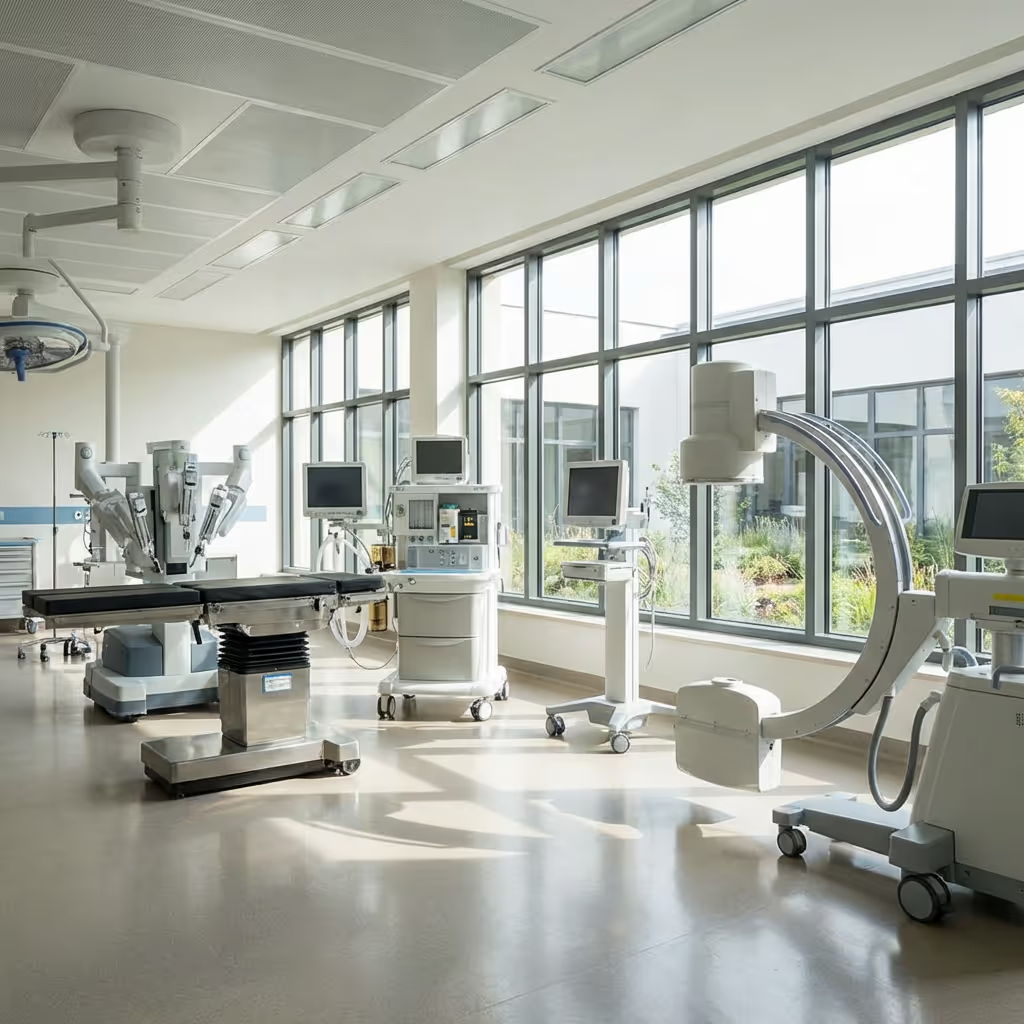
Medical Equipment Appraisal for Insurance Coverage

Thank you! Your submission has been received!
Oops! Something went wrong while submitting the form.
Medical Equipment Appraisal Cartoon Image from AppraiseItNow
Nationwide Service
Onsite or Online
USPAP-Compliant
IRS Qualified
DEFENSIBLE, USPAP-COMPLIANT APPRAISAL REPORTS — ACCEPTED BY 10,000+ ORGANIZATIONS

5-Star Service, Trusted & Loved by Hundreds

I was in dire need of an appraisal for my father's mobile home, which he needed for Medicaid approval. I couldn’t find anyone to do it for a long time, but then I found this company online and decided to give them a try. I’m so glad I did. They were wonderful to work with. I sent the pictures, and within just a few days I received the appraisal. They are absolutely worth the money.

The appraisal was done very well. Since he was a local artist here in Charleston, SC, they took the time to study and review Jim Booth’s art. His work has made him extremely famous, which can make an appraisal challenging, but they did a superb job and clearly explained how they arrived at the appraisal value. I highly recommend Appraise It Now and will use them again for all my artwork.

These guys were phenomenal. Joe was very responsive and gave clear instructions on how to submit my information for the appraisal, which he completed in a very quick timeframe. The appraisal itself was extremely detailed and included a thorough explanation of how they arrived at the value. It came with extensive documentation, and it’s clear they did a significant amount of research. They were also very responsive through text and email and always available to answer any questions. I had them appraise my fifth-wheel RV for resale, and I highly recommend their services. I will definitely use them again.

It is a pleasure to work with Joe and his team. They communicate every step along the way and made the process simple for us to have more than 35 firearms appraised. It was all done in a timely manner and the final report is easy to understand. I highly recommend their services.

I was very happy with the work put in on my totaled car appraisal. They did the appraisal quickly and VERY thoroughly. I felt like my insurance company gave a very low appraisal and Appraise It Now was very competitive, realistic and true to my expectations. The best part was they did a stellar job negotiating with my insurance company. I feel great about their work.

I was very pleased with the service from AppraiseItNow. They responded quickly, offered fair pricing and turnaround, and the appraisal was done by a highly qualified expert. I provided details, photos, and records, and the final report was exactly what I needed. Fantastic service. I’d definitely use them again.

Very thorough and professional — great communication and outstanding service. Highly impressed with their work!

AppraiseItNow Inc. is the best company I was lucky to find by accident. I was looking for someone to appraise cabinets for a donation to charity. I asked for multiple referrals, called multiple appraisal services, etc., and no one could help me. I found AppraiseItNow and from the moment I started working with them, they were wonderful! Joe guided me on what I needed to send him, what needed to be done and stayed in touch with me the entire time. Their customer service is OUTSTANDING and a welcome surprise in today’s world where good customer service is an anomaly! They returned an appraisal in a timely manner, it was clear, concise, cost-effective and exactly what I needed. They followed up with me multiple times to ensure that I received it and everything was OK. My CPA is also thrilled to have them as an accredited appraisal service he can use for other clients. I rarely leave reviews, but I could not pass giving them 5 stars and I’d give 10 if possible! THANK YOU JOE AND ALL AT APPRAISEITNOW!!👊🏼

We were amazed at their professionalism in working with us and the quality of the final appraisal report. And all for thousands less than other appraisers.

I asked AppraiseItNow to value a piece of sports memorabilia for purposes of a charitable donation. The item is rarely sold. Their research unearthed an important recent sale of a similar item, which I had not found previously, and which the first appraiser I used had not found either. AppraiseItNow was a good deal more expensive than the first service, but they crafted a detailed report in which I have much more confidence. They also helped me make sure the correct tax forms are used. Thank you!

Your Appraiser Search Ends Here

Your Appraiser Search Ends Here

A man and woman looking at a cell phone.

Nationwide Coverage – Appraisals Anywhere in the US

Our extensive network of professional appraisers ensures you receive accurate, trusted valuations wherever you are.

Get it done Onsite or Online

Choose between a seamless online process—preferred by most clients—or in-person service for complex assignments.

Any Asset, Covered

Nationwide appraisers for every asset— from buildings & businesses to vehicles & valuables.

Defensible for Any Purpose

For donations, estates, insurance, and more—our USPAP-compliant reports are built to meet the highest standards.

About Medical Equipment Appraisals for Insurance Coverage

Medical Equipment appraisal for Insurance: If you need an appraisal to set insurance coverage, support a damage or total-loss claim, document a charitable donation, or prepare equipment for sale, begin with a USPAP-compliant appraisal that separates Replacement Cost New (RCN) from Fair Market Value (FMV) and documents condition, maintenance, and technological obsolescence. Insurance-focused appraisals establish coverage limits, support negotiations with carriers, and provide defensible evidence for auditors and courts; donors should note the IRS requires a qualified appraisal for non-cash gifts over $5,000 and related guidance is available from the IRS ([IRS Publication P561](https://www.irs.gov/publications/p561)). USPAP compliance increases a report's acceptance by insurers and regulators ([USPAP compliance](/blog/uspap-compliance)). Typical medical equipment appraisal fees range from about $695 to $2,200 for standard assignments, with higher fees for complex imaging systems or multi-unit inventories. Online appraisals commonly return results in 3 to 5 business days while onsite inspections require hours to multiple days depending on scope. Appraisers weight age, functional and cosmetic condition, maintenance history, market demand, and technological obsolescence when determining value, using RCN and FMV as primary metrics. To speed the process and strengthen defensibility, gather purchase invoices, maintenance logs, serial numbers, depreciation schedules, and clear photos before you submit a request. For prep and next steps see our resources on [Appraisal Insurance](/purposes/appraisal-insurance), [Medical Equipment](/types/medical-equipment), and our practical guide on [getting accurate medical equipment appraisals](/blog/how-to-receive-the-most-accurate-results-from-medical-equipment-appraisals). Use this FAQ to get concise answers on timelines, costs, documentation, and USPAP requirements before requesting an insurance-ready, defensible appraisal.

Frequently Asked
Questions

No Frequently Asked Questions Found.

What is Insurance Coverage?

Insurance coverage represents a critical financial protection mechanism that shields individuals and businesses from potential economic losses. At its fundamental core, this concept transfers specific risks from policyholders to insurance companies through a structured agreement.

The essential mechanism involves policyholders paying regular premiums in exchange for financial protection against predefined potential losses. This risk management strategy allows people and organizations to navigate uncertain circumstances with greater confidence and stability.

Coverage operates across multiple dimensions, addressing diverse potential scenarios ranging from property damage to personal liability. The breadth and depth of protection depend entirely on the specific policy's terms, which outline precisely what circumstances and financial losses are eligible for compensation.

When evaluating insurance coverage, individuals must carefully assess their unique risk profile, considering factors like personal assets, potential liabilities, and financial vulnerabilities. Different types of insurance—such as property, health, auto, and liability policies—offer targeted protections designed to address specific potential challenges.

The value of comprehensive insurance coverage extends beyond immediate financial compensation. It provides psychological reassurance, enabling policyholders to pursue personal and professional activities with reduced anxiety about potential catastrophic losses. By strategically transferring risk, individuals can maintain financial resilience even when unexpected events occur.

Understanding policy details becomes paramount in maximizing coverage effectiveness. Policyholders should meticulously review limitations, exclusions, deductibles, and coverage limits to ensure their protection aligns precisely with their individual needs and potential risk exposures.

Why do I need an appraisal for Insurance Coverage?

Understanding the importance of an appraisal for insurance coverage is a critical step in comprehensive risk management. This professional assessment provides a precise valuation of property, assets, and collections, ensuring that insurance policies offer comprehensive financial protection.

The primary purpose of an insurance coverage appraisal is to establish an accurate and current value of insured items. This valuation serves as a crucial benchmark for determining appropriate coverage levels and potential reimbursement in the event of loss or damage. Without a professional appraisal, policyholders risk significant financial vulnerability.

Accurate appraisals offer multiple strategic advantages. They help prevent underinsurance by revealing potential gaps between current market value and existing policy limits. Property values fluctuate continuously, and what was an appropriate coverage amount years ago may now be substantially different. Regular professional assessments ensure that insurance protection remains aligned with actual asset values.

For specialty items like fine art, jewelry, antiques, and unique collections, standard insurance valuations often fall short. Professional appraisals provide nuanced assessments that capture the true worth of these distinctive assets. This becomes particularly important when standard valuation methods cannot adequately capture an item's intrinsic or market value.

Moreover, a comprehensive appraisal serves as an objective documentation tool. In potential claim scenarios, these professional evaluations provide credible evidence supporting the claimed value of damaged or lost property. This documentation can be instrumental in expediting claims processes and preventing disputes between policyholders and insurance providers.

Beyond immediate insurance considerations, appraisals offer valuable insights into market trends and asset appreciation. They help policyholders make informed decisions about insurance coverage, potential investments, and long-term asset management strategies.

Ultimately, an insurance coverage appraisal is more than a bureaucratic requirement—it's a strategic financial tool. By providing precise, current valuations, these assessments empower property owners to protect their assets effectively and navigate potential risks with confidence.

What is a Medical Equipment appraisal?

A medical equipment appraisal is a sophisticated, comprehensive professional evaluation that determines the precise fair market value of medical devices and technologies within healthcare environments. This meticulous process involves a nuanced assessment of multiple critical factors that collectively influence the equipment's overall monetary worth.

The valuation encompasses a holistic examination of the equipment's current condition, operational functionality, technological relevance, and potential market demand. Professional appraisers conduct an in-depth analysis that goes beyond simple numerical calculations, integrating complex considerations such as equipment age, technological sophistication, compliance with current healthcare standards, and potential future utility.

Specialized appraisers utilize advanced methodological approaches to establish an accurate and defensible valuation. This involves extensive market research, comparative analysis of similar equipment, thorough inspection of physical and operational characteristics, and careful consideration of industry-specific depreciation standards.

The appraisal process considers multiple dimensions that impact equipment value, including technological obsolescence, maintenance history, regulatory compliance, and potential for future use. Each piece of medical equipment is evaluated with precision, recognizing that medical technology represents a significant financial investment for healthcare institutions.

These comprehensive assessments serve critical functions across the healthcare ecosystem, providing essential insights for financial planning, asset management, insurance documentation, and strategic decision-making. By offering an objective, detailed evaluation, medical equipment appraisals enable healthcare organizations to make informed choices about their technological resources and investments.

Can I get a Medical Equipment appraisal done online?

Medical equipment appraisals have successfully transitioned into the digital era, offering clients comprehensive and accurate valuations through online platforms. The modern appraisal process leverages advanced technological tools to deliver precise assessments without requiring traditional in-person evaluations.

Clients can initiate an online appraisal by submitting detailed documentation about their medical equipment. This typically includes high-resolution photographs, precise model numbers, equipment specifications, and a comprehensive description of its current condition. Professional appraisers utilize these digital submissions to conduct thorough and reliable assessments.

Advanced digital platforms now enable interactive appraisal experiences through video conferencing technologies. These virtual consultations allow direct communication between appraisers and clients, facilitating real-time equipment demonstrations and immediate clarification of technical details. Such approaches ensure a transparent and comprehensive valuation process.

Every online medical equipment appraisal adheres to the Uniform Standards of Professional Appraisal Practice (USPAP), guaranteeing professional integrity and compliance across different states. The digital methodology maintains the same rigorous standards as traditional in-person assessments, providing clients with reliable and legally recognized valuation documentation.

The online appraisal process offers significant advantages, including convenience, reduced wait times, and broader accessibility. Clients can now receive professional equipment valuations from anywhere, streamlining what was once a complex and time-consuming process.

What are the different types of Medical Equipment appraisals?

Medical equipment appraisers are specialized professionals who meticulously evaluate the value of medical devices and equipment across various healthcare contexts. These experts play a critical role in numerous scenarios, including insurance assessments, financial transactions, and strategic organizational planning.

Different types of appraisers bring unique perspectives and skill sets to their evaluations. Clinical appraisers concentrate on equipment actively used in patient care environments, examining performance, technological capabilities, and regulatory adherence. They often develop expertise in specific domains like diagnostic imaging, surgical technologies, or patient monitoring systems.

Financial appraisers apply a quantitative lens, analyzing market dynamics, economic trends, and potential return on investment. Their assessments are particularly valuable for healthcare organizations seeking precise valuation for resale, financial reporting, or strategic asset management.

Technical appraisers leverage deep engineering and technical knowledge to comprehensively assess medical device functionality. They scrutinize equipment age, maintenance history, operational performance, and technical specifications to determine comprehensive market value.

Regulatory appraisers specialize in ensuring medical equipment meets stringent health and safety standards. Their evaluations consider compliance history, certification requirements, and alignment with current regulatory frameworks, providing crucial insights for healthcare providers navigating complex compliance landscapes.

Estate appraisers focus on medical equipment valuation during asset distribution scenarios, such as professional retirement or estate settlements. They provide objective, market-aligned assessments that support fair and accurate asset valuation.

The selection of an appropriate medical equipment appraiser depends on the specific evaluation objectives, ensuring stakeholders receive precise, contextually relevant valuations that support informed decision-making.

Why should I get a Medical Equipment appraisal?

Medical equipment appraisals serve as a critical tool for healthcare organizations, offering comprehensive insights into the financial and operational landscape of medical assets. These assessments go far beyond simple valuation, providing strategic advantages across multiple business dimensions.

Financial reporting relies heavily on accurate equipment valuation. By establishing precise current market values, healthcare providers can optimize depreciation calculations, enhance asset management strategies, and create more transparent financial statements. This precision supports better budgeting and resource allocation decisions.

Taxation compliance represents another crucial aspect of medical equipment appraisals. When organizations consider equipment donations or need to document asset values, a professional appraisal becomes indispensable. These assessments help prevent potential tax complications and ensure regulatory adherence, particularly for donations exceeding specific monetary thresholds.

Insurance coverage requires meticulous valuation to protect significant medical equipment investments. An accurate appraisal guarantees that insurance policies genuinely reflect replacement costs, mitigating risks of underinsurance during potential loss, damage, or theft scenarios.

Legal proceedings often demand objective third-party equipment valuations. Whether resolving partnership disputes, managing organizational transitions, or navigating complex litigation, a professional appraisal provides authoritative documentation of asset worth, facilitating fair negotiations and informed decision-making.

Mergers, acquisitions, and equipment transactions also benefit significantly from comprehensive appraisals. Buyers and sellers can establish fair market values, negotiate confidently, and understand the true economic implications of medical equipment investments.

By embracing systematic medical equipment appraisals, healthcare organizations transform asset evaluation from a routine administrative task into a strategic management tool that supports financial integrity, operational efficiency, and long-term organizational planning.

How much does a Medical Equipment appraisal cost?

What is a Medical Equipment Appraisal?

A medical equipment appraisal is a comprehensive evaluation that determines the fair market value of medical devices and instruments. This appraisal process is vital for insurance purposes, as it helps healthcare facilities understand the worth of their equipment when making claims or in case of a loss. By providing an accurate and reliable estimate, appraisals ensure that stakeholders can make informed decisions regarding insurance coverage and financial planning.

The appraisal involves examining various factors, including the condition, age, and functionality of the equipment, as well as any applicable regulations and market conditions. Professional appraisers utilize sales data and market trends to establish values that are fair and reflective of current industry standards. Ultimately, a thorough medical equipment appraisal fosters financial stability and risk management for healthcare providers navigating the complexities of insurance and asset management.

Importance of Medical Equipment Appraisals for Insurance

Medical equipment appraisals are crucial for insurance purposes as they establish the true market value of healthcare assets. Accurate appraisals ensure that medical facilities have adequate coverage in case of loss, damage, or theft. This protects not just the financial interests of the facility, but also ensures continuity of care by allowing for timely replacements or repairs of critical equipment.

As technology and equipment specifications evolve, the value of medical equipment can fluctuate significantly. An updated appraisal reflects these changes, providing an essential component for insurance underwriting and risk assessment. By having a current appraisal, healthcare providers can avoid potential disputes with insurance companies during claims processes, thereby facilitating smoother resolutions when incidents occur.

Moreover, medical equipment appraisals can play a vital role during mergers, acquisitions, or sales of healthcare facilities. Potential buyers or investors require thorough evaluations to make informed decisions and to gauge the financial health of the operation. Consequently, objective appraisals not only enhance credibility but also bolster the overall marketability of the medical facility in an ever-competitive landscape.

Types of Medical Equipment Typically Appraised

Medical equipment encompasses a wide range of devices utilized in healthcare settings, making appraisals crucial for various reasons, including insurance coverage and asset management. Commonly appraised items include imaging equipment such as MRI machines, CT scanners, and X-ray equipment, which are vital for diagnostic purposes and typically represent significant investments. Additionally, surgical equipment, including operating tables, surgical microscopes, and anesthesia machines, are often appraised to ensure proper valuation, facilitating accurate insurance claims and financial planning.

Diagnostic and therapeutic equipment, such as ultrasound machines and dialysis machines, also frequently undergo appraisals. These devices are essential for patient care and have specific market values that can fluctuate based on technology advancements and condition. Furthermore, specialized medical devices like infusion pumps and ventilators, crucial during medical emergencies, require precise appraisals to determine replacement costs and to meet insurance requirements effectively.

In addition to these categories, durable medical equipment (DME) such as wheelchairs, hospital beds, and oxygen equipment are also subject to appraisal processes. These items, while often more affordable than high-tech machinery, can still represent considerable investment over time. Understanding the types of medical equipment typically appraised helps stakeholders make informed decisions regarding insurance coverage, asset management, and compliance with financial reporting standards.

The Appraisal Process: Step-by-Step Overview

The appraisal process for medical equipment typically begins with an initial consultation between the appraiser and the client to understand the specific needs and objectives of the appraisal. This step is crucial as it allows the appraiser to gather relevant details about the equipment, including its age, condition, and any modifications that may have been made. The appraiser may also inquire about the equipment’s intended use, the environment in which it operates, and its compliance with industry standards, all of which can influence its value.

Once the necessary information is collected, the appraiser conducts a thorough evaluation of the equipment. This evaluation may encompass inspecting the condition of the machinery, reviewing maintenance records, and comparing it with similar items in the market to establish a fair market value. The appraiser then compiles a detailed report that outlines the findings, including the methodologies used for valuation and any factors that impacted the final appraised value, which is essential for the insurance process.

Factors Affecting the Value of Medical Equipment

The value of medical equipment can be influenced by a variety of factors, including its age, condition, and technological advancements. Newer models typically command higher prices due to their enhanced features and efficiency. Conversely, older equipment may have depreciated significantly or become obsolete, which can further impact its overall market value. Regular maintenance and proper care also play a crucial role, as well-maintained devices are more likely to retain value while poorly maintained ones can incur a reduction in worth.

Another significant factor impacting the value of medical equipment is its original cost and brand reputation. High-end, reputable manufacturers often produce equipment that sustains higher market values even after usage, thanks to their established reliability and history of performance. In contrast, lesser-known brands may depreciate more quickly, leading to lower appraised values. Additionally, the original purchase price serves as a baseline for determining depreciation and current market value when appraising equipment.

Market demand and regulatory changes are also critical factors that can affect the value of medical equipment. At times, certain equipment may experience a surge in demand due to changes in health regulations or increased medical procedures requiring specific technologies. However, fluctuations in healthcare delivery models can shift the focus toward newer technologies, impacting the desirability of existing equipment. Staying informed about industry trends and consumer preferences can greatly aid in understanding the current valuation of medical equipment in the insurance landscape.

Common Myths About Medical Equipment Appraisals

One common myth surrounding medical equipment appraisals is that they are only necessary when selling equipment. In reality, appraisals serve a variety of purposes beyond a simple transaction. They are essential for understanding the actual value of medical equipment for insurance coverage, asset management, and financial reporting, helping healthcare facilities make informed decisions about their resources.

Another prevalent misconception is that all appraisals provide the same valuation, regardless of the appraiser's qualifications or experience. The truth is that the value of medical equipment can greatly differ based on the appraiser's knowledge of the specific market dynamics and technology trends. Accredited appraisers possess the expertise to assess factors such as equipment condition, age, and demand, leading to more accurate and reliable valuations.

Many people also believe that medical equipment appraisals are overly complicated and time-consuming. However, with the right appraiser and streamlined processes, obtaining an appraisal can be efficient and manageable. Understanding the nuances of medical equipment, as well as the intricacies of insurance requirements, can significantly simplify the appraisal process, making it accessible for healthcare providers of all sizes.

Regulatory Standards and Compliance in Medical Equipment Appraisals

Medical equipment appraisals are subject to a variety of regulatory standards and compliance requirements that ensure accuracy and credibility in the valuation process. These standards can arise from federal agencies, state laws, and industry-specific regulations, all of which aim to provide a framework for fair and reliable appraisals. Understanding these regulations is crucial for both appraisers and clients, as failure to comply can lead to legal consequences and undermine the validity of the appraisal.

One important aspect of compliance involves adhering to guidelines set forth by organizations such as the American Society of Appraisers (ASA) and the International Society of Appraisers (ISA). These organizations establish ethical standards, promote best practices, and encourage continuous education in the field of appraisal. This adherence not only enhances the professional reputation of appraisers but also reassures clients that the assessment will meet all necessary legal and ethical obligations.

Additionally, appraisers must ensure that their evaluations reflect current market conditions and technological advancements in the medical field. Regular updates to training and knowledge about new devices, regulations, and market trends are essential. This ongoing education helps to ensure appraisals are not only compliant but also relevant, providing accurate valuation that can support insurance claims, financial assessments, and investment decisions.

The Role of Qualified Appraisers in Medical Equipment Valuation

Qualified appraisers play a crucial role in accurately assessing the value of medical equipment for insurance purposes. Their expertise ensures that equipment is evaluated based on current market trends, condition, age, and usage. This thorough evaluation is vital not just for insurance coverage, but also for compliance with regulatory standards and for making informed decisions during equipment transactions.

The appraisal process involves a meticulous examination of the medical equipment, often requiring specialized knowledge of the technology and its functionality. Qualified appraisers utilize various methodologies, such as cost analysis, income analysis, and market comparison, to derive a comprehensive value assessment. Their insights help insurance companies set appropriate premiums and assist policyholders in understanding the true market value of their assets.

In addition to providing valuation insights, qualified appraisers also serve as impartial third parties in disputes over equipment worth. Their objective assessments can help facilitate negotiations between insurers and insured parties, minimizing conflicts and promoting transparency. Ultimately, the expertise of qualified appraisers is essential in ensuring that medical equipment is accurately valued and adequately protected under insurance policies.

How to Prepare for a Medical Equipment Appraisal

Preparing for a medical equipment appraisal involves several key steps to ensure an accurate and fair valuation. Start by compiling detailed records of the equipment, including invoices, maintenance logs, and any warranty information. Providing appraisers with thorough documentation allows them to understand the condition and history of the devices, which directly impacts their valuation. Additionally, organizing this information prior to the appraisal can significantly streamline the process and minimize the time spent on data collection during the evaluation.

Next, it is essential to assess the current market conditions that may influence the value of your medical equipment. Research similar equipment sales, recent technological advancements, and market demand to gain insight into potential valuation trends. Understanding these factors will not only prepare you for discussions with the appraiser but also help in setting realistic expectations for the appraisal outcome. Taking these proactive measures will aid in maximizing the accuracy and relevance of the appraisal conducted.

Understanding Different Valuation Methods

When it comes to appraising medical equipment for insurance purposes, understanding different valuation methods is crucial. The most common approaches include market value, replacement cost, and income approach. Market value assesses what similar equipment is currently selling for in the market, while replacement cost estimates the expense of acquiring an equivalent item new. Each method considers various factors such as equipment condition, age, and technological advances, making it essential to select the appropriate one based on the specific situation.

In addition to these primary methods, it is important to recognize that each valuation approach can be influenced by the type of medical equipment in question. For example, specialized diagnostic machines may require a more extensive analysis of their operational life and efficiency, while standard hospital furnishings might be valued more straightforwardly based on contemporary selling prices. Understanding these nuances provides a more accurate representation of the equipment's worth, ensuring that it is adequately covered under insurance policies. Ultimately, the choice of valuation method can significantly impact insurance costs and coverage, making thorough appraisals vital.

The Impact of Depreciation on Appraised Value

Depreciation is a critical factor in determining the appraised value of medical equipment, as it accounts for the reduction in value that occurs over time due to wear and tear, obsolescence, and market demand. Unlike real estate, which may appreciate in value, medical equipment often loses value more quickly, particularly due to advances in technology. This decline can affect insurance coverage and replacement costs, making it essential for stakeholders to understand how depreciation impacts the overall appraisal process.

There are several methods used to calculate depreciation, including straight-line depreciation, declining balance methods, and market-based approaches. Each method provides insight into how much value the equipment loses over time, helping both insurers and owners to establish a fair and accurate replacement value. Knowing the depreciation rate can also help businesses make informed decisions regarding maintenance, upgrades, and potential sales of their medical assets.

For insurance purposes, having a clear understanding of depreciated value can significantly affect policy limits and premium costs. Accurate appraisals that take into account proper depreciation methods can ensure that medical facilities are adequately insured while avoiding overinsurance, which can inflate policy costs unnecessarily. Consequently, regular appraisals are essential not only for establishing current value but also for adapting to changes in both market dynamics and the condition of the medical equipment.

Frequently Asked Questions About Medical Equipment Appraisals for Insurance

Medical equipment appraisals for insurance purposes serve a critical role in determining the replacement value of equipment, aiding both insurers and policyholders in understanding the worth of their assets. These appraisals ensure that sufficient coverage is in place, which can be especially vital in the event of theft, damage, or loss. An accurate valuation involves a detailed analysis of the equipment’s condition, age, and market demand, which may vary significantly depending on technological advancements and regulatory changes within the healthcare industry.

When seeking a medical equipment appraisal, it is important to understand the qualifications of the appraiser. A certified appraiser with experience in the medical field possesses the expertise to evaluate the specific nuances associated with various types of medical devices. Additionally, policyholders should inquire about the methods used in the appraisal process, as different approaches can lead to varying valuations. Being well-informed about the appraisal process not only equips stakeholders with knowledge but also fosters trust and clarity in the insurance coverage they intend to secure.

Medical Equipment Appraisals Anywhere in the US

Wisconsin
Wyoming
West Virginia
Washington
Vermont
Virginia
Utah
Tennessee
Texas
South Dakota
South Carolina
Rhode Island
Oregon
Pennsylvania
Oklahoma
Ohio
North Dakota
North Carolina
New Jersey
New York
New Mexico
New Hampshire
Nevada
Mississippi
Nebraska
Missouri
Montana
Minnesota
Michigan
Massachusetts
Kentucky
Maryland
Maine
Louisiana
Kansas
Indiana
Iowa
Idaho
Illinois
District of Columbia
Hawaii
Georgia
Florida
Delaware
Connecticut
Alabama
Colorado
Alaska
California
Arizona
Arkansas
View all Locations

BEST-IN-CLASS APPRAISERS, CREDENTIALED BY: