Does Oregon layer state rules on top of federal donation appraisal requirements?
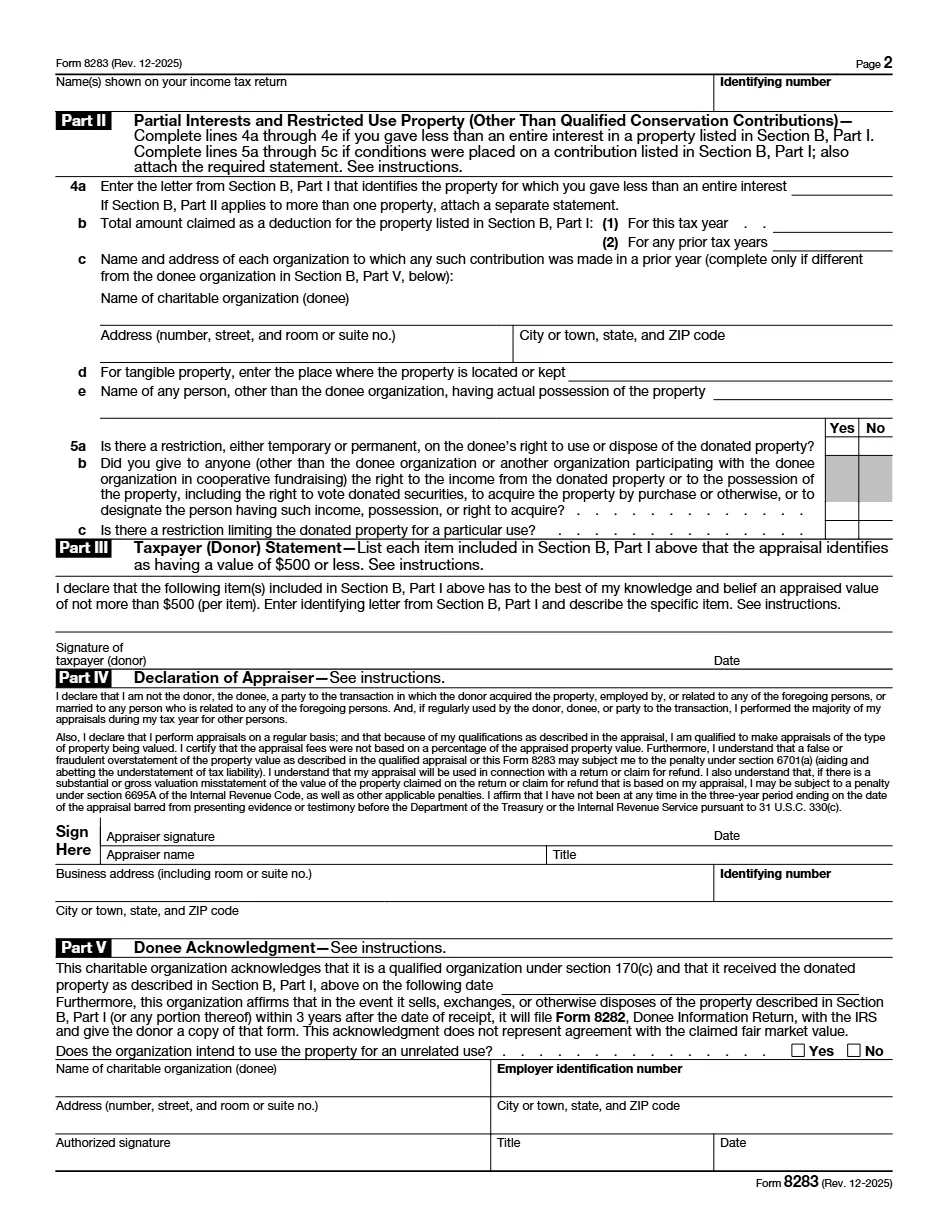
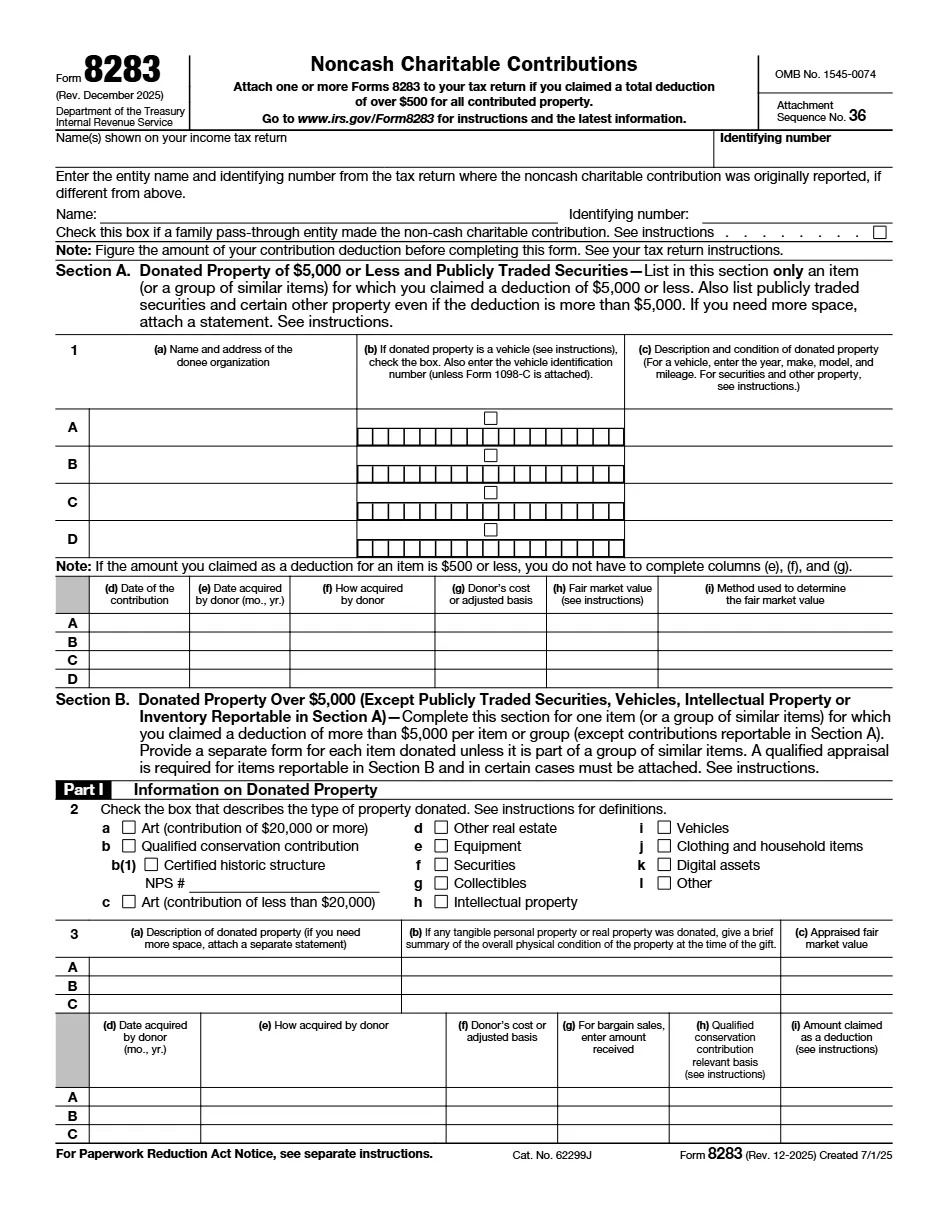
No. Oregon has no separate charitable donation appraisal statute, so the federal substantiation ladder controls: a written acknowledgment at $250, Form 8283 reporting above $500, and a qualified appraisal for property over $5,000. Oregon donors of art, equipment, and collectibles work entirely within those federal thresholds.
What applies when donating property to an Oregon state agency?
Agency policy can add its own appraisal trigger. The Oregon Department of Corrections, for example, requires donations to be approved by the functional unit manager, acknowledged on its Receipt for Contribution or Donation form (CD 1609), and supported by an independent appraisal, at the donor's cost, once the item is valued at $5,000 or more.
Where do Oregon personal property valuations actually get filed?
It depends on the purpose, which surprises people expecting one office. Charitable donation appraisals stay with the donor and charity and support the federal return to the IRS; estate tax valuations go to the Oregon Department of Revenue; probate inventories are filed with the circuit court. No county assessor receives donation valuations.
Which household items force an expert appraisal in Oregon probate?
Articles of marked artistic or intrinsic value worth more than $3,000 in the aggregate. Oregon's probate inventory rule requires an expert appraisal under oath when household and personal effects include such items, naming jewelry, furs, silverware, paintings, antiques, books, statuary, oriental rugs, and coin or stamp collections as examples. Donors who inherit these pieces often hold an appraisal already, though a later charitable gift still needs its own qualified appraisal.
How must an Oregon estate back up the values it reports?
With substantiation attached to the return. OAR 150-118-0100 requires the Oregon estate tax return to explain how each value was determined and attach any appraisals used; if no appraisal exists, the executor must file a statement explaining the valuation, and a county property-tax statement alone is not sufficient evidence of value. That standard is worth remembering when the same property later supports a charitable deduction.

.png)







.jpeg)