









<h1>How to Get Your Yamaha YAS-62 Professional Saxophone Appraised</h1>
<p>The Yamaha YAS-62 Professional Saxophone represents one of the most respected instruments in the jazz and classical performance world. Whether you're considering selling, insuring, or establishing its value for estate purposes, understanding the appraisal process for your YAS-62 ensures you receive an accurate market valuation. Current estimates place quality examples between <strong>$1,200 and $2,500</strong>, though condition, age, and accessories significantly influence final value.</p>
<h2>Understanding Your Yamaha YAS-62's Market Position</h2>
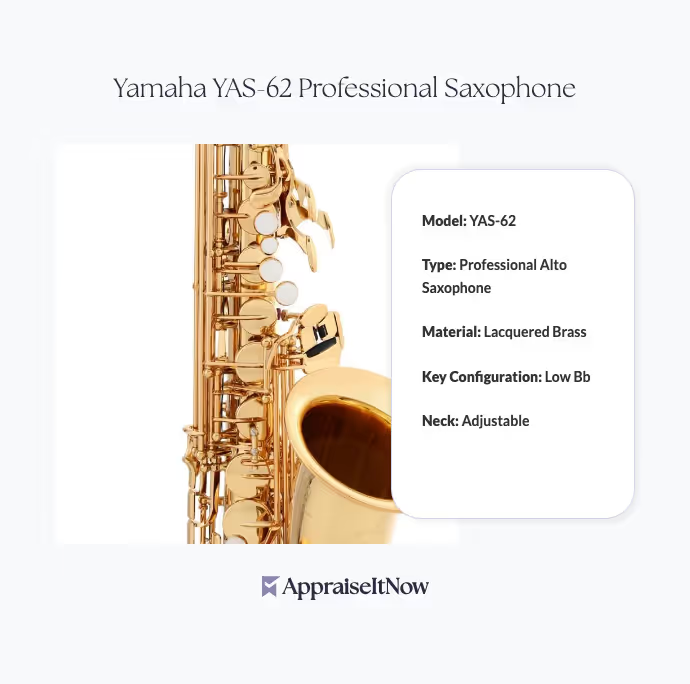
<p>First introduced in 1982, the Yamaha YAS-62 established itself as the professional standard for saxophonists seeking responsive keys, lightweight construction, and exceptional tonal qualities. Manufactured in Japan with precision craftsmanship, this alto saxophone has been used by top saxophonists worldwide, making it a coveted instrument on both the performance stage and the collector's market.</p>
<p>When asking "How much is a Yamaha YAS-62?" the answer depends on several variables beyond the base model designation. Your specific instrument's manufacturing year, condition, and service history all factor into professional appraisal. The YAS-62 has remained in continuous production since its debut, meaning you might own an earlier vintage model or a recent manufacture—each with distinct market characteristics.</p>
<div class="callout tip"><p><strong>Pro Tip</strong></p>
<p>Manufacturing year significantly affects saxophone value. Earlier 1980s models often command premiums when in excellent condition compared to recent productions.</p></div>
<h2>Key Factors Affecting Your Saxophone's Appraisal Value</h2>
<p>Professional appraisers evaluating your YAS-62 examine specific technical and condition elements. The innovative key design and ergonomic features that define this model can show wear patterns unique to experienced players. Unlike asking "What's my saxophone worth?" in isolation, a comprehensive appraisal considers the instrument's complete condition profile.</p>
<p><strong>Physical condition takes precedence</strong> in professional valuations. Pad condition, spring alignment, dent history, and original finish all directly impact market value. An instrument showing minimal playing wear with original pads may command premium pricing within the $1,200-$2,500 range, while one requiring extensive service work typically falls toward the lower end. Your YAS-62's receiver—the top joint of the saxophone—deserves particular attention, as dents in visible areas reduce value more significantly than internal wear.</p>
<p>The presence of original accessories enhances appraisal value. A YAS-62 sold with its original hard case, documentation, or service records demonstrates proper maintenance history. Professional appraisers at firms like <strong>AppraiseItNow</strong> provide detailed documentation of all these elements in their certified reports, which proves valuable when seeking <a href="/types/personal-property">personal property appraisals</a> for insurance or sale purposes.</p>
<h2>Determining Your Saxophone's Vintage and Production Year</h2>
<p>The question "How do I find out what year my saxophone is?" can be answered by examining the saxophone's serial number. Yamaha uses a sequential numbering system that correlates to production periods. Your YAS-62's serial number appears on the bell and body, and professional appraisers maintain databases connecting these numbers to specific manufacturing years.</p>
<p>Understanding generations matters when considering value. The Yamaha 62 has evolved through several iterations, with earlier models occasionally commanding premiums among collectors seeking vintage instruments. If you're wondering about "the generations of Yamaha 62," distinctions primarily involve key spring design, pad materials, and aesthetic details rather than fundamental construction changes. A certified appraiser can identify your specific generation and explain how it positions your instrument within the current market.</p>
<h2>Comparative Valuation and Market Dynamics</h2>
<p>Many saxophone owners ask "What is the difference between the YAS-52 and 62?" Understanding these distinctions helps contextualize your YAS-62's valuation. The YAS-52 serves as Yamaha's intermediate student model, typically valued between $400-$800, while the professional-grade YAS-62 commands substantially higher prices due to superior materials, refined key mechanisms, and enhanced tonal qualities. This positioning establishes the YAS-62 as a serious musician's investment rather than a beginner instrument.</p>
<p>The broader question "Are second hand saxophones worth it?" receives an affirmative answer particularly for YAS-62 models. Yamaha saxophones maintain strong resale value compared to lesser-known brands, making your instrument a practical asset. When considering used instrument purchases, professional appraisals through services offering <a href="/blog/what-you-need-to-know-about-personal-property-appraisals">personal property valuations</a> protect buyers from overpricing and sellers from undervaluing quality instruments.</p>
<div class="callout note"><p><strong>Market Insight</strong></p>
<p>Yamaha's reputation for quality manufacturing means even older YAS-62 models in good condition often outperform newer instruments from less established brands.</p></div>
<h2>Condition Assessment for Accurate Appraisal</h2>
<p>Professional appraisal specialists examine your YAS-62 systematically to establish fair market value. The assessment begins with visual inspection of the lacquer finish, looking for wear patterns that indicate performance history. Saxophonists with extensive playing experience may show subtle finish wear that actually validates the instrument's professional use history—paradoxically sometimes adding value for serious musicians seeking "broken-in" instruments.</p>
<p>Mechanical function receives equal attention during appraisal. The innovative key design that defines the YAS-62 should respond precisely with minimal resistance. A certified appraiser tests each key for proper alignment, spring tension, and pad contact. Pad replacement costs—typically ranging from $300-$600 for professional repadding—factor into final valuation. An instrument with original pads in good condition may justify premium pricing, while one requiring immediate repadding adjusts downward proportionally.</p>
<p>The mouthpiece and reed situation also matters. Original Yamaha mouthpieces add value compared to aftermarket options, while quality reeds included in the appraisal package enhance perceived worth. Professional appraisers document these accessories in their reports, supporting <a href="/blog/the-importance-of-appraisals-for-insurance">insurance coverage</a> that accurately reflects replacement costs.</p>
<h2>Why Professional Appraisals Matter for Musical Instruments</h2>
<p>When evaluating musical instruments, the question becomes: "Should I get my saxophone appraised professionally?" The answer is unequivocally yes if you're selling, insuring, or establishing value for estate purposes. A certified appraisal provides the objective documentation that personal estimates cannot match. Unlike casual marketplace pricing, professional appraisals follow established valuation methodologies and provide detailed reasoning for their conclusions.</p>
<p>Professional appraisers specializing in <a href="/blog/appraising-musical-instruments-determining-the-worth-of-melodic-investments">musical instruments</a> bring expertise that identifies subtle value differentiators invisible to untrained observers. They understand how manufacturing transitions affected instrument quality, recognize which accessories add genuine value, and position your YAS-62 accurately within current market dynamics. This expertise proves especially valuable during transactions, insurance claims, or when addressing <a href="/blog/appraisal-101-everything-you-need-to-know-before-buying-or-selling">appraisal 101 concepts</a> like fair market value determination.</p>
<h2>Building Comprehensive Documentation</h2>
<p>Before seeking appraisal, gather available documentation about your YAS-62. Service records indicating pad replacement or professional maintenance support higher valuations. Purchase receipts, certificates of authenticity, or correspondence with Yamaha establish provenance. Photographs taken from multiple angles—including the bell, neck joint, keywork detail, and serial number—assist remote appraisals or support future sale listings.</p>
<p>Documentation also addresses the question "Where is the Yamaha Yas 62 made?" by confirming your instrument's Japanese manufacture through original markings and serial numbers. Instruments bearing authentic "Made in Japan" designations command premium valuations compared to instruments manufactured in other locations, reflecting Yamaha's reputation for quality control in their primary production facilities.</p>
<div class="callout tip"><p><strong>Documentation Tip</strong></p>
<p>Maintain organized records of any professional maintenance, including receipts and photographs of work performed. This documentation directly supports higher appraisal values.</p></div>
<h2>Investment Potential and Value Trends</h2>
<p>The question "Do saxophones increase in value?" receives a nuanced answer. Vintage professional-grade saxophones from established manufacturers like Yamaha generally maintain or appreciate in value, particularly when properly maintained. The YAS-62's introduction in 1982 places it at the threshold of genuine collectibility—old enough to be considered vintage by some enthusiasts, yet recent enough that examples remain readily available.</p>
<p>Saxophones valued as <a href="/types/memorabilia-and-collectibles">memorabilia and collectibles</a> typically appreciate when associated with notable performers or specific historical periods. While not all YAS-62s attract this premium status, instruments with documented performance histories or strong provenance command enhanced valuations. When you wonder "What is considered a vintage saxophone?" professional appraisers help establish whether your instrument qualifies for vintage designations that potentially increase market appeal.</p>
<h2>Specialized Considerations for Insurance and Estate Planning</h2>
<p>If you're seeking appraisal specifically for insurance purposes, professional documentation ensures your coverage aligns with actual replacement costs. The value range of $1,200-$2,500 for typical YAS-62s represents significant coverage requirements. Your homeowner's insurance may not adequately cover musical instruments, necessitating specialized riders or separate policies. Professional appraisals provide the documentation insurers require to establish <a href="/tags/insurance-claim">insurance claim</a> values and <a href="/tags/fair-market-value">fair market value</a> determinations.</p>
<p>For estate planning purposes, appraisals establish valuations for will provisions and inheritance distribution. When multiple heirs must value an estate's musical instruments, certified appraisals prevent disputes by providing objective third-party assessment. This approach mirrors how professional appraisers handle <a href="/types/business-assets">business assets</a> and <a href="/tags/personal-use">personal use</a> property—applying consistent standards to protect all parties' interests.</p>
<h2>The Appraisal Report You'll Receive</h2>
<p>A professional appraisal from AppraiseItNow delivers a detailed, USPAP-compliant report documenting your YAS-62's characteristics and market position. This report includes photographs, condition description, relevant market data, and a clearly stated fair market value conclusion. You'll receive documentation explaining the reasoning behind the valuation, making it transparent and defensible in any transaction or insurance situation.</p>
<p>Reports include identification of your instrument's specific generation and manufacturing year, detailed condition assessment, and itemization of accessories included in the valuation. This level of detail supports <a href="/blog/using-an-appraisal-to-maximize-your-insurance-claim">using appraisals for insurance claims</a> and provides clear communication about your saxophone's market position to potential buyers or insurance providers.</p>
<div class="callout note"><p><strong>Key Takeaway</strong></p>
<p>A certified appraisal of your Yamaha YAS-62 provides the professional documentation necessary for confident buying, selling, or insurance decisions. Whether your instrument falls at the $1,200 entry level or commands the $2,500 premium, professional valuation ensures you understand its true market worth and can protect your investment accordingly.</p></div>