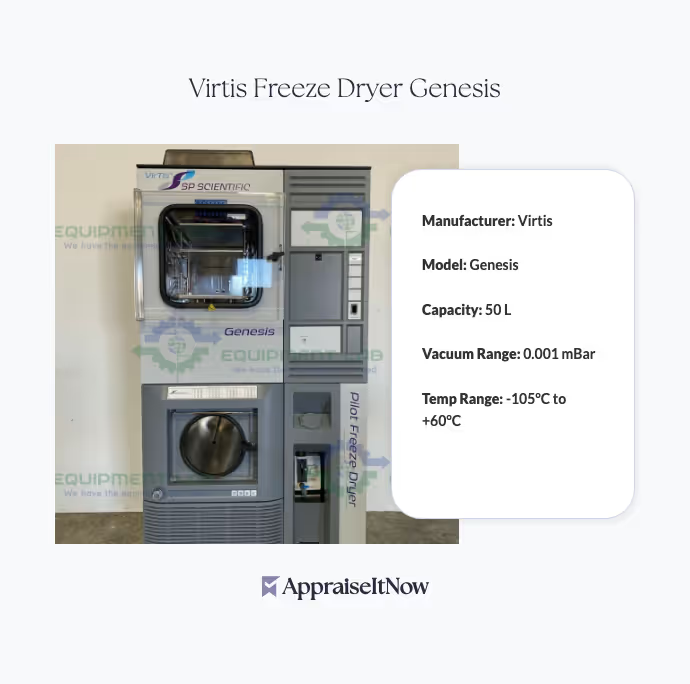










<h1>How to Get Your Virtis Freeze Dryer Genesis Appraised</h1>
<p>The Virtis Freeze Dryer Genesis represents a significant investment for pharmaceutical companies, research institutions, and food manufacturers. Whether you're evaluating this specialized laboratory equipment for sale, insurance purposes, or asset documentation, understanding the appraisal process and current market value is essential. Professional appraisals for this equipment typically range from <strong>$80,000 to $110,000</strong>, but several factors determine where your specific unit falls within that spectrum.</p>
<h2>Why Professional Appraisal Matters for Freeze-Drying Equipment</h2>
<p>Your Virtis Genesis isn't just equipment—it's a precision instrument that requires specialized knowledge to value correctly. Unlike standard <a href="/types/equipment-and-machinery">equipment and machinery</a> appraisals, freeze-drying technology demands expertise in pharmaceutical and food processing applications. Professional appraisers familiar with <a href="/types/lab-equipment">laboratory equipment</a> can accurately assess both the technical specifications and market demand that influence valuation.</p>
<p>When seeking an appraisal, you're looking for credentials that matter: certifications from AAA, ISA, ASA, CAGA, or AMEA. These designations ensure your appraiser understands both USPAP compliance and the specialized nature of <a href="/types/chemical-equipment">chemical equipment</a> valuation. This becomes particularly important if you're using the appraisal for insurance coverage, where accuracy directly protects your investment.</p>
<p><strong>Pro Tip:</strong> Market demand for Virtis Genesis models remains strong, with pharmaceutical and biotech sectors actively seeking reliable equipment—this favorable demand environment supports valuations at the higher end of the range for well-maintained units.</p>
<h2>Key Factors That Influence Your Genesis Freeze Dryer's Value</h2>
<p>The condition of your Virtis Genesis dramatically affects its appraised value. A working unit with recent service records and validated certifications commands significantly more than a non-functioning model requiring repairs. This creates substantial price variation even among Genesis models from the same production year. Your appraiser will examine whether the unit operates properly, passes performance validation tests, and maintains GMP and FDA compliance certifications.</p>
<p>Serial numbers and model year matter considerably because they establish when your equipment was manufactured and which technological generation you own. First introduced in 1980, the Genesis has evolved through multiple iterations, with newer models featuring enhanced controls and improved efficiency. Your unit's specific configuration—including the programmable freezing and drying cycles, temperature precision, and vacuum control capabilities—directly impacts marketability and pricing.</p>
<p>Service history and maintenance documentation can increase your Genesis's appraised value by 15-25%. Units with complete maintenance records, recent calibrations, and manufacturer service tickets demonstrate meticulous stewardship. Conversely, equipment lacking documentation or showing deferred maintenance typically receives lower valuations, sometimes dropping 20-30% below comparables due to uncertainty about remaining operational life.</p>
<h2>Understanding Current Market Demand and Regional Variations</h2>
<p>The market for used Virtis Genesis equipment reflects strong demand from pharmaceutical manufacturers, contract research organizations, and academic research institutions. Current asking prices for comparable units range from $75,000 to $125,000 depending on condition and specifications, with typical transaction prices settling in the $80,000-$110,000 range. This demand remains steady because replacing freeze-drying capacity often requires multi-unit purchases, making used equipment attractive for cost-conscious organizations.</p>
<p>Regional variations affect pricing due to shipping complexity and logistics costs. Units located in pharmaceutical hubs like New Jersey, North Carolina, and California typically command slight premiums because buyers avoid cross-country transportation expenses. Conversely, equipment in remote locations may see modest discounts, though specialized equipment like the Genesis remains highly portable enough that regional factors remain secondary to condition and documentation.</p>
<p><strong>Market Insight:</strong> Specialized markets—particularly pharmaceutical companies and biotech research institutions—consistently pay premiums for Genesis units compared to general industrial equipment buyers, sometimes offering 5-10% above standard market rates for properly documented, working examples.</p>
<h2>The Role of Documentation and Compliance Certifications</h2>
<p>Your Virtis Genesis's appraisal defensibility depends heavily on documentation supporting regulatory compliance. Units validated to GMP and FDA regulations command significantly higher prices because they're immediately deployable in regulated manufacturing environments. This compliance certification essentially eliminates buyer risk and qualification costs, making such units substantially more valuable than non-validated equipment.</p>
<p>Comprehensive documentation includes original manuals, parts lists, software versions, and validation certificates. Some buyers specifically seek Genesis units with particular software iterations known for stability in pharmaceutical applications. Your appraiser will assess whether original documentation exists or has been lost, as this significantly impacts buyer confidence and negotiating position.</p>
<p>Accessories and options directly affect your equipment's market positioning and value. Manifolds, collection trays, cold traps, and specialized vacuum pumps can represent 10-20% of the unit's total value. A Genesis configured for lyophilization of sensitive pharmaceuticals with full accessory packages commands noticeably higher prices than a basic unit, sometimes adding $15,000-$25,000 to the appraised value depending on specific options included.</p>
<p><strong>Valuation Insight:</strong> Complete manifold configurations and integrated vacuum pump systems significantly increase appraised value—accessories representing 15-20% of total unit value are common for specialized laboratory configurations.</p>
<h2>Condition Assessment and Functional Verification</h2>
<p>Professional appraisers conduct thorough condition assessments examining stainless steel construction integrity, chamber seals, temperature sensor accuracy, and vacuum pump performance. Any corrosion, pitting, or seal degradation reduces value, as these represent repair costs buyers will consider. A unit displaying pristine stainless steel construction with clear manufacturer markings and minimal cosmetic wear commands premium pricing, while equipment showing surface deterioration typically receives discounts of 10-15%.</p>
<p>When evaluating your Genesis, appraisers test vacuum performance, verify temperature control precision, and confirm that programmable cycle parameters execute correctly. Equipment passing all performance validations receives "working" designations that substantially boost value. Non-functional units or those requiring significant repair—such as vacuum pump replacement or chamber seal servicing—may see valuations drop to $50,000-$70,000 range, making functional status perhaps the single most important value driver.</p>
<h2>Specialized Markets and Premium Pricing Opportunities</h2>
<p>Understanding which buyer segments value the Genesis most helps position your equipment strategically. Pharmaceutical manufacturers seeking lyophilization capacity for product development often pay 5-10% premiums over equipment purchased by contract research organizations or academic institutions. These buyers view the Genesis as established, reliable technology with proven performance records they can incorporate into validated production processes.</p>
<p>Food manufacturers utilizing freeze-drying for premium product development—particularly in organic and specialty supplement markets—represent an emerging buyer category supporting strong demand. However, pharmaceutical buyers generally command higher market prices due to regulatory compliance value and stringent operational requirements. Research institutions seeking Genesis equipment sometimes negotiate on price due to institutional budget constraints, though academic buyers value equipment with published research credentials.</p>
<p>When seeking appraisals for <a href="/types/food-processing-equipment">food processing equipment</a> applications, your appraiser should understand these market segmentation differences. An identical Genesis unit may appraise higher when presented to pharmaceutical buyers versus food industry purchasers, even though the actual equipment and specifications remain identical.</p>
<h2>Shipping, Installation, and Net Value Considerations</h2>
<p>Your Virtis Genesis's net sale value requires accounting for logistics and installation costs often underestimated by sellers. Professional movers specializing in laboratory equipment typically charge $3,000-$8,000 for careful decommissioning, packing, and transport depending on distance. Installation at a new facility adds another $2,000-$5,000, and installation turnaround times range from 3-6 weeks for complex configurations.</p>
<p>These costs reduce net proceeds from any sale but are typically borne by buyers negotiating purchase prices downward to account for logistics. Your appraisal should explicitly address whether the valuation represents "as-is where-is" pricing or includes assumptions about installation readiness. Equipment requiring decommissioning and careful transportation may see appraised values reduced by 5-8% to reflect buyer expectations about total cost of ownership.</p>
<p><strong>Important Consideration:</strong> Account for installation and logistics costs when calculating net proceeds—these often represent $5,000-$13,000 in combined expenses that affect your actual net value even if appraised value remains steady.</p>
<h2>Professional Appraisal Timing and Turnaround</h2>
<p>Professional appraisals of specialized laboratory equipment like the Virtis Genesis typically require 2-4 weeks from initial engagement through final report delivery. Appraisers need time to research market comparables, conduct physical assessment, verify documentation, and prepare detailed reports meeting USPAP standards. Turnaround varies based on appraiser availability and report complexity, so planning ahead prevents delays if you have specific sale or transaction timelines.</p>
<p>Most professional appraisers provide written preliminary estimates within a few days of initial contact, allowing you to budget for appraisal costs (typically $1,500-$3,500 for specialized equipment like the Genesis). This investment provides certified documentation accepted by insurance companies, accountants, and financial institutions, protecting your interests whether you're buying, selling, or managing assets for institutional purposes.</p>
<h2>Documentation You Should Gather Before Appraisal</h2>
<p>Preparing comprehensive documentation before your appraisal substantially improves accuracy and reduces turnaround time. Gather your original purchase documentation, maintenance records from the past 3-5 years, any validation or certification documents, and current performance test results if available. Serial numbers, manufacturing dates clearly marked on the equipment, and software version information help appraisers verify authenticity and match your specific unit against comparable sales data.</p>
<p>User manuals, parts lists, and photographs documenting the equipment's current condition provide essential reference materials. If your Genesis was previously in regulatory-controlled facilities, compliance certifications and validation protocols substantially support valuation. Conversely, incomplete documentation doesn't disqualify appraisal—experienced appraisers work within available information constraints—but thorough records enable more confident valuations and defensible appraisal conclusions.</p>
<p>Professional appraisals for <a href="/types/medical-equipment">medical equipment</a> and laboratory instruments require understanding both technical specifications and market dynamics. When you're ready to obtain certified valuations meeting USPAP standards, our guides on <a href="/blog/guidelines-for-selecting-a-professional-appraiser-for-lab-equipment">selecting professional appraisers for lab equipment</a> and <a href="/blog/a-guide-to-understanding-the-value-of-laboratory-equipment">understanding laboratory equipment appraisals</a> provide additional insights into the process.</p>
<h2>The Value of Certified Documentation</h2>
<p>A certified appraisal provides legally defensible documentation of your Virtis Genesis's fair market value, essential whether you're managing equipment for tax purposes, insurance coverage, or transaction documentation. This professional assessment carries weight in institutional contexts, regulatory proceedings, and financial reporting—contexts where informal estimates or list prices provide insufficient credibility.</p>
<p>Your appraisal becomes particularly valuable if regulatory audits, insurance claims, or asset valuations require documented proof of equipment worth. Professional appraisers understand both technical assessment and market positioning, delivering reports that satisfy institutional requirements while accurately reflecting current market conditions.</p>
<p><strong>Key Takeaway:</strong> A professional appraisal of your Virtis Freeze Dryer Genesis—typically valued at $80,000-$110,000—provides certified, defensible documentation of fair market value suitable for insurance, tax, transaction, or regulatory purposes. Gathering complete documentation, understanding market demand across specialized sectors, and working with credentialed appraisers ensures accurate valuation reflecting your equipment's true market positioning in today's pharmaceutical and research laboratory markets.</p>