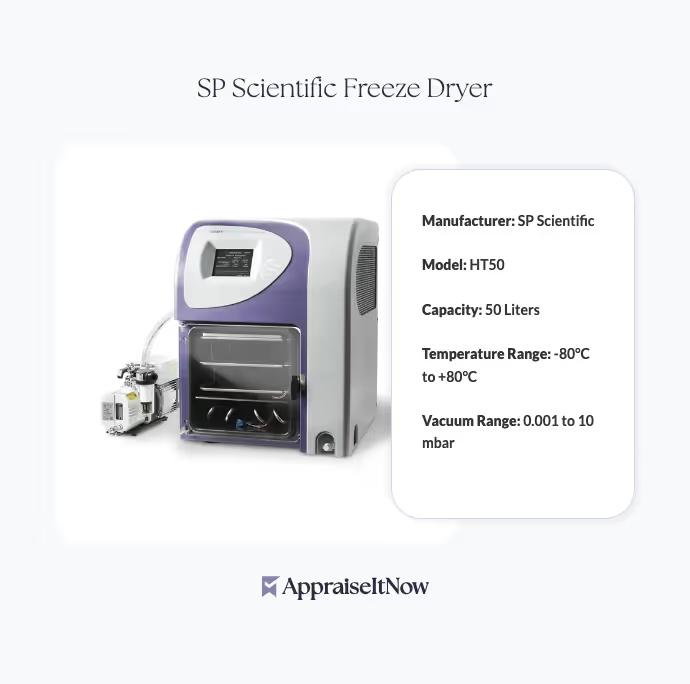










<h1>How to Get Your SP Scientific Freeze Dryer Appraised</h1>
<p>An SP Scientific Freeze Dryer represents a significant capital investment in laboratory infrastructure, with market values ranging from <strong>$50,000 to $100,000</strong> depending on model year, condition, and operational specifications. Whether you're acquiring one for your research facility, liquidating equipment, or managing insurance coverage, obtaining a professional appraisal ensures you understand its true market value and can make informed financial decisions.</p>
<h2>Understanding Your SP Scientific Freeze Dryer's Value</h2>
<p>The SP Scientific Freeze Dryer commands substantial value in the secondary market because it performs a specialized function critical to life sciences research. These sophisticated instruments use rapid freezing and vacuum dehydration to preserve delicate biological samples—from pharmaceuticals and food products to research specimens—while maintaining structural integrity and biological activity. This capability makes freeze dryers essential tools in biotechnology, pharmaceutical development, and advanced research institutions across the globe.</p>
<p>The freeze drying process itself offers significant advantages over traditional preservation methods. By removing moisture under controlled vacuum conditions, your freeze dryer prevents degradation that would otherwise compromise sample viability. The SP Scientific brand, backed by decades of engineering refinement since the company first introduced these instruments in <strong>1985</strong>, has earned trust among leading research institutions worldwide. Their patented condenser design combined with fully automated programmable controls positions SP Scientific equipment among the most reliable in the industry.</p>
<div class="callout tip"><p><strong>Valuation Insight</strong></p>
<p>Equipment with GMP and FDA compliance validation can command 10-15% premiums over comparable non-certified models, as regulatory compliance reduces purchasing friction for institutional buyers.</p></div>
<h2>Key Features That Determine Appraisal Value</h2>
<p>Your freeze dryer's specific worth within the $50,000-$100,000 range depends on multiple technical and operational factors. The model year matters significantly, as does the presence of original stainless steel construction—a durability feature that justifies premium pricing in institutional procurement decisions. When appraisers evaluate <a href="/types/lab-equipment">laboratory equipment</a>, they examine whether your unit maintains full automation capabilities with programmable controls, as manual systems command lower values.</p>
<p>Energy efficiency also influences market positioning. SP Scientific freeze dryers were engineered for low operating costs, a selling point that resonates with budget-conscious research facilities. Units demonstrating proven energy efficiency through operational records or manufacturer documentation may support valuations at the higher end of the range. Similarly, equipment that clearly shows minimal operational hours or has been well-maintained typically outperforms heavily-used equipment in secondary markets.</p>
<p>The presence of original documentation—including purchase records, maintenance logs, calibration certificates, and operational manuals—directly impacts appraisal confidence and final valuation. Professional appraisers conducting assessments of <a href="/types/equipment-and-machinery">equipment and machinery</a> can verify specifications more reliably when comprehensive documentation exists, often resulting in 5-10% valuation increases compared to units lacking complete records.</p>
<h2>Why Freeze Drying Technology Remains Valuable</h2>
<p>Answering "<em>What's the average price of a freeze dryer?</em>" requires understanding that costs vary dramatically by capacity and specialization. Industrial-scale units like the SP Scientific models cost substantially more than tabletop freeze dryers used in smaller research settings, reflecting their capacity to process larger sample batches. The question "<em>Who has the best freeze dryer?</em>" consistently leads to SP Scientific and a handful of other premium manufacturers—companies whose equipment commands stronger secondary market demand.</p>
<p>The question "<em>Why is freeze-dried so expensive?</em>" reveals key value drivers. The energy requirements for creating and maintaining vacuum conditions, combined with precise temperature control mechanisms and advanced condenser technology, represent significant engineering complexity. Your SP Scientific unit's manufacturing pedigree and validated compliance with GMP and FDA standards justify premium positioning, as research facilities purchasing used equipment face regulatory scrutiny.</p>
<div class="callout note"><p><strong>Market Context</strong></p>
<p>Specialized laboratory instruments like freeze dryers maintain relatively strong depreciation curves compared to general equipment, typically retaining 50-70% of original value after 5-10 years depending on condition and usage intensity.</p></div>
<h2>Condition and Operational Status Matter Significantly</h2>
<p>When evaluating whether to pursue an appraisal, understand that a freeze dryer's operational status heavily influences value. Fully functional units with documented maintenance records command the highest valuations. Equipment with minor cosmetic wear but verified operational performance typically falls in the mid-range of the valuation spectrum. Units requiring repairs, parts replacement, or recalibration may still retain 40-60% of fully functional values, though appraisers will flag restoration costs in detailed reports.</p>
<p>The question "<em>What is the lifespan of a freeze dryer?</em>" matters to appraisers assessing remaining useful life. Well-maintained SP Scientific equipment often performs reliably for 15-20 years or longer, meaning a unit from 2010 still holds substantial value if maintenance records demonstrate proper care. Conversely, equipment showing signs of deferred maintenance or irregular use patterns may face steeper valuation discounts. For institutions considering your equipment for acquisition, technological obsolescence rarely affects laboratory freeze dryers—they represent proven, reliable technology rather than rapidly-evolving electronics.</p>
<h2>Market Applications and Demand Drivers</h2>
<p>Your freeze dryer's value reflects genuine market demand across multiple sectors. Pharmaceutical companies use these instruments in drug development and preservation processes. Food processing facilities employ freeze-dried preservation for extending shelf life while maintaining nutritional quality. Research institutions depend on freeze dryers for maintaining sample viability in molecular biology, microbiology, and other life sciences disciplines. This diverse demand landscape supports sustained valuations for quality used equipment.</p>
<p>The question "<em>Is freeze drying a profitable business?</em>" extends to commercial freeze-dried food production, where equipment quality directly impacts product margins. This commercial adoption reinforces institutional demand for reliable, validated equipment like your SP Scientific unit. Equipment that can simultaneously serve pharmaceutical research and commercial food preservation applications often commands stronger valuations than specialized-purpose equipment.</p>
<h2>Regulatory Compliance and Its Valuation Impact</h2>
<p>SP Scientific freeze dryers validated for GMP (Good Manufacturing Practice) and FDA compliance carry substantial premiums in institutional purchasing. These certifications indicate your equipment meets stringent regulatory standards for pharmaceutical and life sciences applications. When appraisers from AppraiseItNow evaluate <a href="/types/chemical-equipment">chemical equipment</a> and related laboratory instruments, they specifically assess whether certification documentation accompanies the unit, as this directly impacts institutional buyer confidence.</p>
<p>Regulatory validation affects not just valuation but marketability. A certified freeze dryer faces fewer purchasing restrictions than uncertified equipment, expanding your potential buyer pool when considering sale. Institutions with regulatory obligations will preferentially purchase equipment with existing compliance documentation, sometimes paying 20% premiums to avoid costly recertification processes.</p>
<div class="callout tip"><p><strong>Documentation Priority</strong></p>
<p>Maintain complete regulatory compliance documentation, calibration certificates, and maintenance records separate from the equipment itself. This documentation often represents 5-10% of total equipment value in secondary market transactions.</p></div>
<h2>Determining When to Pursue Professional Appraisal</h2>
<p>You should obtain a professional appraisal of your SP Scientific Freeze Dryer in several situations: before selling laboratory equipment through used equipment dealers or private sale; for insurance coverage verification ensuring replacement cost documentation; when dividing <a href="/types/business-assets">business assets</a> in partnership dissolution or estate settlements; or when claiming depreciation for tax purposes on owned equipment. Professional appraisers understand the specialized market for laboratory instruments and provide USPAP-compliant valuations accepted by insurance companies, courts, and financial institutions.</p>
<p>The appraisal process for laboratory equipment typically involves comprehensive physical assessment of the unit's condition, verification of operational specifications, review of maintenance and calibration documentation, and comparison against recent market transactions for similar equipment. Our expert appraisers possess specific knowledge of freeze drying technology and can accurately assess wear patterns, validate functional status, and position your equipment appropriately in the current secondary market. Understanding the distinction between depreciated book value and actual market value helps you make informed decisions—professional appraisals resolve this distinction with certified documentation.</p>
<h2>Insurance and Regulatory Documentation</h2>
<p>Whether your freeze dryer is owned by a research institution, pharmaceutical company, or startup laboratory, proper insurance coverage requires accurate documented valuation. Insurance policies use professional appraisals to establish agreed-upon replacement costs, protecting your institution against underinsurance in loss situations. Beyond insurance, documented appraisals provide institutional records essential for audit trails and regulatory compliance.</p>
<p>When institutions question "<em>Do freeze dryers use a lot of electricity?</em>", they're often evaluating total cost of ownership—a factor that influences both operational budgets and equipment maintenance scheduling. Professional appraisals sometimes note energy consumption characteristics, helping buyers estimate long-term operating costs alongside acquisition expenses.</p>
<div class="callout note"><p><strong>Key Takeaway</strong></p>
<p>A professional USPAP-compliant appraisal of your SP Scientific Freeze Dryer provides accurate market valuation ($50,000-$100,000 range), essential documentation for insurance or institutional records, and confidence in financial decision-making whether you're buying, selling, or managing laboratory assets. AppraiseItNow connects you with credentialed equipment appraisers who understand specialized laboratory instrumentation and deliver certified valuations accepted across institutional, legal, and financial contexts.</p></div>