









<h1>How to Get Your Rolex GMT-Master II 16710 Appraised</h1>
<p>The Rolex GMT-Master II 16710 stands as one of the most sought-after and collectible timepieces on the market, commanding values between <strong>$15,000 and $25,000</strong> depending on condition, year of production, and market factors. Whether you're planning to sell, verify authenticity, obtain insurance coverage, or simply understand what your watch is worth, a professional appraisal provides the certified documentation you need.</p>
<h2>Understanding Your GMT-Master II 16710's Market Position</h2>
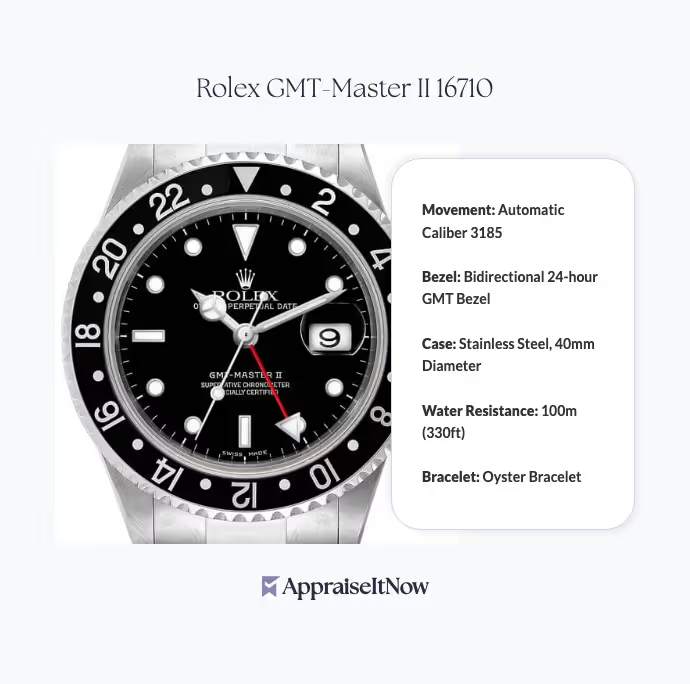
<p>Your 16710 represents a golden era in Rolex design—introduced in 1989 and produced through the early 2000s, it bridges classic heritage with modern manufacturing. The iconic <strong>Pepsi-style bezel</strong> (red and blue) combined with Rolex's in-house caliber 3185 automatic movement creates a timepiece that serious collectors actively seek. Unlike many vintage watches that depreciate, the 16710 has demonstrated remarkable value retention and appreciation over time, making it both a functional luxury item and a tangible investment asset.</p>
<p>The question of whether Rolex watches appreciate in value finds a clear answer in the 16710's track record. Over the past decade, quality examples have consistently outpaced inflation, with well-preserved specimens often gaining 5-10% annually. This trajectory positions your watch alongside other <a href="/types/memorabilia-and-collectibles">memorabilia and collectibles</a> known for strong performance as alternative investments.</p>
<div class="callout tip"><p><strong>Market Insight</strong></p>
<p>The 16710 remains one of Rolex's most stable value holders, particularly models produced between 1989-1995 when manufacturing techniques remained largely consistent.</p></div>
<h2>Key Specifications That Impact Your Appraisal Value</h2>
<p>The GMT-Master II 16710 shares several technical characteristics that directly influence what appraisers evaluate. The <strong>40mm stainless steel case</strong> houses the legendary caliber 3185 movement—a self-winding mechanical mechanism known for precision and longevity. Your watch's dual time-zone capability tracks two separate time zones simultaneously through its distinctive 24-hour GMT hand, functionality that remains relevant whether you're an actual world traveler or a collector valuing technical sophistication.</p>
<p>The Oyster bracelet construction with secure clasp and end links provides both comfort and visual impact. However, condition here matters significantly—bracelet stretch from decades of wear directly affects appraisal value, as does the state of the original dial and case surfaces. A watch with minimal bracelet stretch, preserved lume (the luminous material on hands and markers), and an unblemished dial commands premium pricing compared to examples showing obvious patina or refinishing.</p>
<h2>What Documentation You'll Need for Accurate Appraisal</h2>
<p>Professional appraisers require specific documentation to establish your 16710's value. Original <strong>box and papers</strong> substantially enhance valuation—typically adding 10-15% compared to identical watches without them. The guarantee card (warranty papers), original purchase receipt, and any service documentation create a documented ownership chain that collectors prize and that insurers require for coverage verification.</p>
<p>Your serial number, found on the watch's side case between the lugs, tells an important story. Rolex serial numbering correlates directly with production year, allowing appraisers to verify authenticity and production timing. When was the Rolex 16710 discontinued? Production ended in the early 2000s when Rolex introduced the updated 16710 GMT-Master II variants, but the exact year varies by serial range—something professional appraisers decode as part of their expertise.</p>
<p>This documentation process parallels <a href="/types/jewelry">jewelry appraisal</a> standards where provenance substantially influences value. Without original papers, qualified appraisers can still provide accurate valuations, but the appraisal typically reflects a modest discount reflecting the inability to independently verify original owner and service history.</p>
<div class="callout note"><p><strong>Documentation Priority</strong></p>
<p>Even if you've lost the original box and papers, photographs showing the watch from multiple angles, including the caseback and dial markings, help appraisers establish authenticity and condition grade.</p></div>
<h2>How Condition Directly Affects Your 16710's Value</h2>
<p>Condition assessment represents the most significant variable in determining your GMT-Master II 16710's appraisal value. Unlike some collectibles where restoration adds value, watch aficionados typically prefer original, unrefined examples even with visible patina. The distinction between light wear and moderate refinishing can mean a <strong>$3,000-$5,000 difference</strong> in valuation.</p>
<table class='appraisal-table'>
<thead>
<tr>
<th>Condition Grade</th>
<th>Typical Price Range</th>
<th>Key Characteristics</th>
</tr>
</thead>
<tbody>
<tr>
<td>Excellent (95%+)</td>
<td>$22,000-$25,000</td>
<td>Barely worn, original lume, full bracelet, no service history issues</td>
</tr>
<tr>
<td>Very Good (80-94%)</td>
<td>$18,000-$22,000</td>
<td>Light wear, original dial, minor bracelet stretch, documented service</td>
</tr>
<tr>
<td>Good (65-79%)</td>
<td>$15,000-$18,000</td>
<td>Moderate wear, possible dial refinishing, bracelet wear, service history unknown</td>
</tr>
<tr>
<td>Fair (Below 65%)</td>
<td>$12,000-$15,000</td>
<td>Heavy wear, dial damage, significant bracelet stretch, restoration required</td>
</tr>
</tbody>
</table>
<p>The crucial factors appraisers examine include case polish history (has it been refinished?), dial condition (original printing or replacement?), and lume coloration. Early 16710 models featured tritium lume that develops specific patina patterns over decades—something experts recognize as either authentic aging or suspicious restoration. Service history matters too; watches with documented full services from authorized Rolex dealers command confidence premiums compared to pieces with unknown maintenance backgrounds.</p>
<h2>Dial and Bezel Variants: Premium Pricing Explained</h2>
<p>The 16710 came in multiple dial and bezel configurations, each commanding different market values. The classic <strong>Pepsi-style bezel</strong> (red and blue) remains the most desirable and typically represents the baseline for market pricing. However, the rarer <strong>Coke-style bezel</strong> (red and black) or all-black variants can shift values considerably.</p>
<p>Collectors frequently ask which variants command premiums—Pepsi examples serve as the market standard, while Coke variants often trade 5-10% higher due to reduced production numbers. All-black bezels, though less common than Pepsi models, typically trade at or slightly below Pepsi pricing depending on dial pairing and condition. When seeking professional <a href="/blog/everything-you-need-to-know-about-jewelry-appraisals">jewelry and watch appraisals</a>, appraisers account for these variant preferences through comparable sales analysis.</p>
<p>Dial markings also affect value. The dial text ("Rolex," "GMT-Master II," "Superlative," etc.) should be crisp and original. Faded printing suggests either legitimate lume degradation or suspicious refinishing, both factors that lower appraisal values. Some collectors prefer the character of aged dials, while institutional buyers (insurance companies, auction houses) often require pristine examples—this creates a bifurcated market where your watch's value depends partly on intended buyer type.</p>
<div class="callout tip"><p><strong>Variant Insight</strong></p>
<p>While Pepsi remains the most common 16710 configuration, specific dial combinations (particularly with exotic dial refinishes from Rolex's service centers) can create unique value opportunities if documented properly.</p></div>
<h2>Authenticating Your 16710: What Appraisers Verify</h2>
<p>Professional appraisers employ specific authentication techniques to confirm your watch's legitimacy and justify the appraisal value. The first check examines the movement—removing the caseback to verify the caliber 3185 movement characteristics, serial number alignment, and manufacturing quality. Counterfeit watches typically show inconsistencies in finishing, decoration, or component quality that trained experts immediately recognize.</p>
<p>Engravings on the caseback require scrutiny too. Authentic 16710s show consistent depth and font in "ROLEX," "OYSTER PERPETUAL," and case reference engravings. The bracelet codes, found on end links, should correlate with production dates and show appropriate wear patterns. Lume inspection under ultraviolet light confirms original tritium application versus modern luminous materials—tritium exhibits specific decay patterns that counterfeiters struggle to replicate authentically.</p>
<p>Documentation comparison provides another authentication layer. Your watch's serial number should fall within known production ranges for the 16710 era. Rolex serial numbering follows patterns that changed periodically—something only recognized by specialists and something that appraisers document as part of their certification process.</p>
<h2>The Appraisal Report: What You'll Receive</h2>
<p>A professional appraisal of your Rolex GMT-Master II 16710 yields a comprehensive USPAP-compliant report suitable for insurance, sale, or estate planning purposes. The document includes detailed condition photographs from multiple angles, complete technical specifications, market analysis establishing the valuation, and the appraiser's certification and credentials.</p>
<p>Insurance companies require this documentation to establish replacement cost for coverage purposes. Should your watch require a claim, the appraisal provides the benchmark they use to calculate settlements. When selling through auction houses or private channels, the appraisal serves as marketing documentation, lending credibility to your asking price. For estate planning, the certified valuation becomes part of your asset documentation, simplifying inheritance distribution and tax calculations.</p>
<p>The appraisal timeline typically spans 5-10 business days from submission to delivery, though rush services often available for additional fees. AppraiseItNow's process involves photographing your watch and documentation, conducting thorough condition assessment, researching comparable recent sales, and preparing the certified report—all conducted by appraisers credentialed through organizations like AAA, ISA, and ASA who specialize in <a href="/blog/appraising-luxury-watches-determining-the-value-of-timepiece-investments">luxury watch valuations</a>.</p>
<h2>Regional Market Trends and Your 16710's Value</h2>
<p>Market dynamics significantly influence what your specific 16710 might fetch. Different geographic regions show varying demand for vintage Rolex sports watches. European collectors, particularly in Switzerland and the UK, often command different pricing structures than U.S. markets due to local currency, regulatory factors, and collector density. Asian markets have shown increasing appetite for vintage Rolex sports models, sometimes paying premiums for examples with documented service histories and original components.</p>
<p>Recent comparable sales provide the most reliable valuation foundation. Over the past 18 months, 16710 Pepsi examples in very good condition averaged $19,000-$21,000 at major auction houses, with exceptional examples exceeding $22,000. Coke variants traded slightly higher, while all-black examples showed more variance depending on dial configuration. However, these auction prices typically reflect buyer premiums and transaction fees—private sales often achieve different pricing. Understanding where your watch fits within these ranges requires the comparative analysis that professional appraisers provide.</p>
<div class="callout note"><p><strong>Market Context</strong></p>
<p>The 16710 market has shown remarkable stability even during broader economic uncertainty, suggesting enduring collector appeal and value resilience compared to more speculative luxury goods.</p></div>
<h2>Preserving Your Investment: Storage and Maintenance Considerations</h2>
<p>Once you understand your 16710's appraisal value, protecting that investment becomes paramount. Proper storage in controlled temperature (ideally 50-70°F) and humidity (45-50%) prevents movement lubricant degradation and case material changes. Unlike some <a href="/types/personal-property">personal property</a> that benefits from regular use, watches stored for long periods require occasional winding to maintain movement health and prevent lubricant from congealing.</p>
<p>Maintenance records enhance your appraisal value over time. Authorized Rolex service at documented intervals demonstrates responsible stewardship, something buyers and appraisers value. The caliber 3185 movement typically requires service every 10 years to maintain accuracy and prevent wear to critical components. Avoiding unauthorized repair shops—a temptation given the 16710's value and the availability of informal servicing—protects both functionality and resale value.</p>
<p>Insurance coverage becomes essential once your appraisal establishes the 16710's monetary value. Standard homeowners policies typically cap watch coverage at modest amounts; specialized collectors' insurance or riders ensure full replacement cost protection. The appraisal report provides your insurance carrier with the documentation needed to issue appropriate coverage.</p>
<h2>Why Professional Appraisal Matters for Your 16710</h2>
<p>Understanding your Rolex GMT-Master II 16710's true value requires expertise that extends beyond casual research or online pricing databases. While you might find various 16710 watches listed online with asking prices ranging widely, certified appraisals provide the objective, documented valuation that meets professional standards. Whether you're selling to a collector, securing insurance coverage, settling an estate, or simply satisfying your curiosity, professional appraisals deliver accuracy and credibility.</p>
<p>The difference between informed valuation and guesswork often amounts to thousands of dollars on a watch worth $15,000-$25,000. An appraiser trained in recognizing authentic patina versus restoration, in understanding variant pricing premiums, and in analyzing comparable market data provides insurance that your valuation withstands scrutiny from buyers, institutions, and tax authorities.</p>
<div class="callout note"><p><strong>Key Takeaway</strong></p>
<p>A certified appraisal of your Rolex GMT-Master II 16710 provides authoritative documentation of value, authenticity, and condition—whether you're buying, selling, insuring, or simply understanding what this iconic timepiece represents in today's market.</p></div>