









<h1>How to Get Your Nissan Skyline Hakosuka Appraised</h1>
<p>The Nissan Skyline Hakosuka stands as one of the most iconic Japanese sports cars ever built, commanding significant attention in today's collector market. Whether you're considering buying, selling, or insuring this legendary vehicle, understanding what drives its <strong>$20,000 to $30,000</strong> valuation helps you make informed decisions about your investment in automotive history.</p>
<h2>Understanding Hakosuka Market Value</h2>
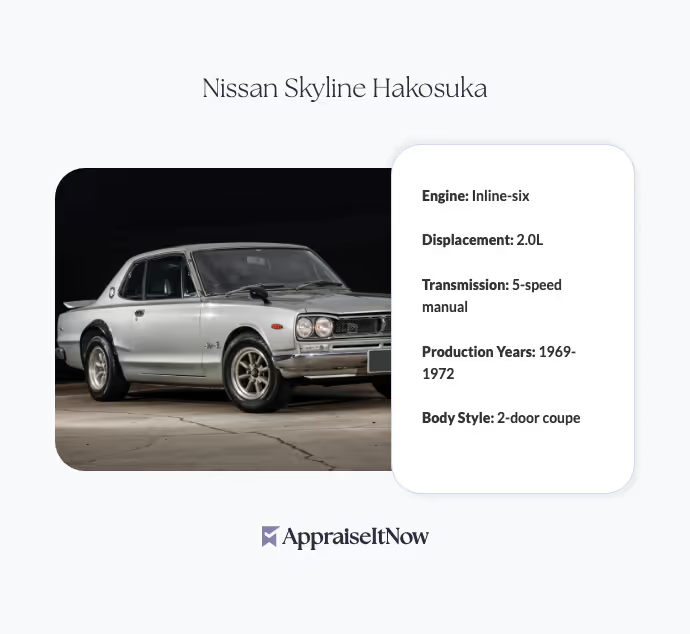
<p>The Nissan Skyline Hakosuka's value stems from its extraordinary rarity and cultural significance in Japanese automotive heritage. First introduced in 1969, only <strong>1,945 units</strong> were produced during its production run, making it one of the most limited Japanese sports cars from that era. This scarcity, combined with its revolutionary boxy design and legendary performance, creates a compelling collector proposition that continues to appreciate.</p>
<p>What makes the Hakosuka particularly valuable? Its role in establishing Japanese car culture cannot be overstated. With its distinctive chrome accents, rear-wheel drive layout, and tuned inline-six engine developed by legendary Nissan engineers, the Hakosuka represents the golden age of automotive design. This heritage explains why collectors worldwide actively seek these vehicles, and why proper appraisal becomes essential when evaluating your potential purchase or existing ownership.</p>
<div class="callout tip"><p><strong>Collector's Insight</strong></p>
<p>Hakosuka models with documented racing history or rare factory configurations can command premiums of 15-25% above standard market prices.</p></div>
<h2>Key Specifications That Impact Appraisal Value</h2>
<p>When assessing a Nissan Skyline Hakosuka, appraisers examine specific technical and historical factors that directly influence market worth. The Hakosuka's iconic boxy silhouette wasn't merely aesthetic—it represented a fundamental shift in automotive philosophy that influenced Japanese sports car design for decades.</p>
<p>Your Hakosuka's condition assessment focuses on several critical areas. Original paint and interior materials, even with patina, often command premiums over fully restored examples among sophisticated collectors, much like considerations in <a href="/types/antique-artwork">antique artwork</a> appraisals where originality carries significant weight. The integrity of the inline-six engine, transmission, and chassis components determines mechanical soundness, which directly correlates to value. Matching original body panels, unrepaired accident history, and correct factory specifications all factor into professional valuations.</p>
<table class='appraisal-table'>
<thead>
<tr>
<th>Condition Grade</th>
<th>Estimated Value</th>
<th>Key Characteristics</th>
</tr>
</thead>
<tbody>
<tr>
<td>Excellent (95%+)</td>
<td>$28,000-$30,000</td>
<td>Original finish, matching numbers, minimal wear</td>
</tr>
<tr>
<td>Very Good (80-94%)</td>
<td>$24,000-$28,000</td>
<td>Light wear, all original components, clear markings</td>
</tr>
<tr>
<td>Good (60-79%)</td>
<td>$20,000-$24,000</td>
<td>Moderate wear, possible minor replacements, fully functional</td>
</tr>
<tr>
<td>Fair (Below 60%)</td>
<td>$15,000-$20,000</td>
<td>Heavy wear, restoration needed, parts concerns</td>
</tr>
</tbody>
</table>
<h2>How Rarity Influences Hakosuka Pricing</h2>
<p>The production statistics tell the story of why your Hakosuka matters. With only 1,945 examples built worldwide, the Hakosuka achieved approximately one-tenth the production volume of its successor generations. This finite supply drives ongoing collector demand, particularly as these vehicles age and examples in good condition become increasingly difficult to locate.</p>
<p>Your Hakosuka's specific variant affects its appraisal value significantly. Early models from 1969 command premium pricing due to their historical significance as the nameplate's first year. Later examples, while more numerous, still maintain strong values given the overall production constraint. When evaluating <a href="/types/automobile">automobile appraisal</a> considerations, understanding these production details becomes crucial for establishing fair market value.</p>
<h2>Regional Market Dynamics and Demand Factors</h2>
<p>The Hakosuka's value landscape varies considerably depending on geographic location and collector markets. In Japan, where the car holds deep cultural significance and influenced an entire generation of automotive enthusiasts, demand remains consistently strong. North American demand has intensified significantly over the past decade as Japanese classic cars gained appreciation among collectors previously focused on European imports.</p>
<p>The 25-year rule frequently comes up in Hakosuka discussions, as this import regulation dramatically affected vehicle availability in the United States. Cars manufactured in 1969 became legally importable to the U.S. around 1994, creating a surge of interest and availability that shaped current market dynamics. Understanding these regulatory considerations helps explain regional pricing variations when seeking professional <a href="/blog/a-simple-guide-to-automobile-appraisal-services">automobile appraisal</a> services.</p>
<div class="callout note"><p><strong>Market Consideration</strong></p>
<p>U.S.-imported Hakosuka examples may command different valuations than Japan-market vehicles depending on documentation, originality, and import history.</p></div>
<h2>Documentation and Provenance Requirements</h2>
<p>Professional Hakosuka appraisals require comprehensive documentation that establishes authenticity and ownership history. Your vehicle's title, import records, service history, and any originality documentation significantly impact appraisal outcomes. Unlike determining <a href="/types/personal-property">personal property</a> value in isolation, automotive appraisals depend heavily on verifiable history and chain of custody.</p>
<p>Original factory records, ownership documentation, and maintenance logs become particularly valuable when appraising vehicles now several decades old. Restoration records, if applicable, should detail the scope of work performed, materials used, and professional credentials of the restorer. This documentation parallels requirements in <a href="/types/memorabilia-and-collectibles">memorabilia and collectibles</a> appraisals, where provenance directly influences market positioning.</p>
<h2>Comparative Analysis: Hakosuka Versus Other Japanese Classics</h2>
<p>When collectors ask about the rarest Skyline, the Hakosuka consistently ranks among the top responses. Its combination of limited production, historical significance, and automotive performance creates unique market positioning compared to contemporary Japanese sports cars. While early Toyota 2000GTs command higher absolute values, the Hakosuka's accessibility and strong appreciation trajectory make it a more practical collector investment.</p>
<p>The Hakosuka's influence on Japanese car culture extends beyond mere specifications. It established design language that persists in modern Nissan sports cars and inspired generations of automotive engineers. This cultural significance, when combined with genuine scarcity and performance credentials, explains why Hakosuka values have appreciated steadily over the past two decades.</p>
<div class="callout tip"><p><strong>Investment Perspective</strong></p>
<p>Hakosuka appreciation rates have outpaced general inflation and many alternative investments, making them compelling for collectors seeking both passion and financial returns.</p></div>
<h2>When to Seek Professional Appraisal Services</h2>
<p>You should obtain a professional Nissan Skyline Hakosuka appraisal when buying, selling, establishing insurance coverage, or managing estate assets. Professional appraisers provide detailed condition assessments, market analysis, and USPAP-compliant documentation accepted by insurance companies and financial institutions. Our team at <strong>AppraiseItNow</strong> connects you with certified automotive appraisers who specialize in Japanese classics and <a href="/blog/appraising-vintage-and-collectible-cars-determining-their-true-worth">vintage collectible cars</a>.</p>
<p>The appraisal process typically involves comprehensive photographic documentation, mechanical inspection, originality assessment, and comparison analysis of recent market transactions. For high-value vehicles like the Hakosuka, professional documentation proves essential for insurance purposes, protecting your investment against loss or damage. Whether you're positioning your vehicle for sale or simply establishing accurate value for portfolio assessment, certified appraisals provide the credible foundation necessary for informed decision-making.</p>
<h2>Preservation and Value Retention Strategies</h2>
<p>Maintaining your Hakosuka's value requires thoughtful preservation practices that respect the vehicle's historical significance. Climate-controlled storage at stable temperatures and humidity levels prevents mechanical and cosmetic deterioration. Regular but gentle maintenance using period-appropriate products preserves originality while ensuring mechanical reliability.</p>
<p>Many Hakosuka owners face the classic preservation dilemma: whether to drive their vehicles regularly or maintain them in climate-controlled storage. Unlike concerns about vehicles known for mechanical unreliability, the Hakosuka's robust engineering means regular, measured driving can maintain mechanical health while actually enhancing the car's investment appeal to knowledgeable collectors who value cars meant to be driven.</p>
<div class="callout note"><p><strong>Key Takeaway</strong></p>
<p>A certified appraisal of your Nissan Skyline Hakosuka provides essential documentation for buying, selling, or insuring this legendary Japanese sports car, ensuring you understand both its historical significance and current market value within the $20,000-$30,000 range.</p></div>