









<h1>How to Get Your Moto Guzzi California Vintage Appraised</h1>
<p>The <strong>Moto Guzzi California Vintage</strong> stands as one of motorcycling's most iconic machines, combining Italian heritage with timeless engineering that continues to captivate collectors and enthusiasts worldwide. Whether you're considering selling your bike, securing insurance coverage, or documenting its value for estate planning purposes, understanding how to properly appraise this legendary motorcycle ensures you get accurate, defensible valuations backed by professional expertise.</p>
<h2>Understanding Your Moto Guzzi California Vintage's Market Position</h2>
<p>Since its introduction in <strong>1971</strong>, the Moto Guzzi California has occupied a unique position in motorcycle history. Designed by the legendary <strong>Lino Tonti</strong>, this Italian cruiser established itself as a symbol of craftsmanship and distinctive style that remains relevant decades later. Today, well-maintained examples typically command <strong>$5,000 to $8,000</strong> in the collector's market, though specific values depend heavily on condition, mileage, originality, and documentation.</p>
<p>The California Vintage's current market strength reflects growing demand for well-preserved vintage motorcycles among collectors who appreciate both mechanical reliability and historical significance. Unlike some vintage bikes that suffer from rust, unreliability, or dated design, the California's robust V-twin engine and shaft-drive system have proven remarkably durable, making quality examples increasingly desirable as investment pieces. Understanding this market context becomes essential when preparing your motorcycle for professional valuation.</p>
<div class="callout tip"><p><strong>Market Insight</strong></p>
<p>Moto Guzzi values have shown consistent appreciation over the past decade, with particularly strong demand for examples featuring original components and documented service histories.</p></div>
<h2>Key Features That Influence Appraisal Value</h2>
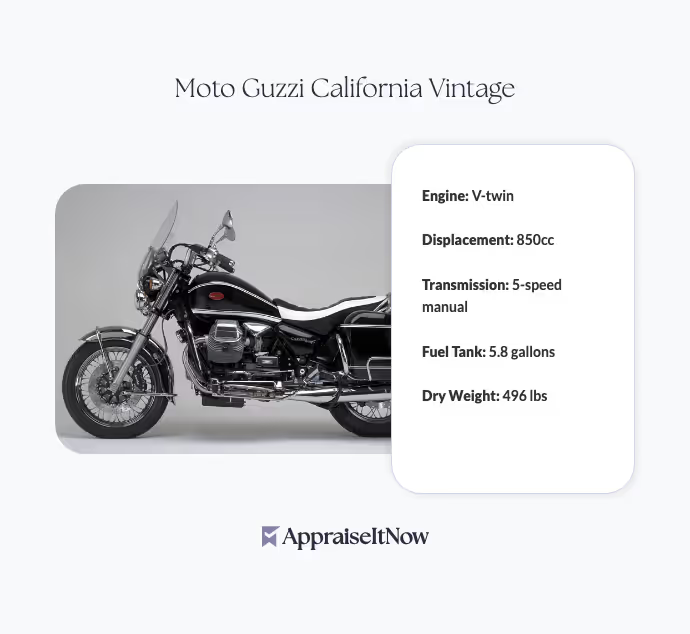
<p>When assessing your California Vintage for professional valuation, appraisers examine specific technical and aesthetic characteristics that directly impact market worth. The <strong>distinctive round headlight</strong>, <strong>chromed fenders and tank</strong>, and <strong>dual exhaust pipes</strong> represent not merely cosmetic details but defining features that collectors specifically seek when evaluating these motorcycles.</p>
<p>Your bike's <strong>shaft drive system</strong>—still somewhat uncommon in motorcycles today—provides both practical advantages and collector appeal. This engineering choice, combined with the legendary <strong>V-twin engine</strong> that produced commanding torque across the powerband, established the California as a genuinely different proposition from Japanese competitors of its era. The presence of <strong>hydraulic disc brakes</strong>, advanced for a motorcycle introduced in 1971, further demonstrates the California's forward-thinking engineering that has aged remarkably well.</p>
<p>Original matching components matter significantly during appraisal. Motorcycles with <strong>original engine numbers</strong>, unmodified VIN plates, and factory specifications typically command premiums of 15-25% over modified examples. If your California retains its original Italian manufacture details and hasn't undergone major restoration, professional appraisers will assign higher values based on authenticity and preservation. For those wondering about motorcycle values more broadly, exploring resources on <a href="/blog/appraising-classic-and-vintage-motorcycles-determining-collectible-bike-worth">appraising classic and vintage motorcycles</a> provides context for how different models compete in today's collector market.</p>
<h2>Condition Assessment and Valuation Factors</h2>
<p>The condition of your Moto Guzzi California Vintage directly determines where your specific appraisal falls within the $5,000-$8,000 range. Professional appraisers evaluate several interconnected elements during inspection, each contributing to the overall assessment.</p>
<p><strong>Engine condition</strong> represents perhaps the most critical evaluation point. Appraisers examine compression readings, listen for unusual noises during startup and operation, and assess whether the legendary Guzzi V-twin runs smoothly without excessive vibration or smoking. Original paint, chrome condition, and overall cosmetic preservation signal how carefully previous owners maintained the motorcycle. Rust development on exposed metal, cracked seat covers, or faded fuel tank livery indicate neglect that reduces values accordingly.</p>
<p>Documentation history proves equally important. Service records demonstrating regular maintenance, original purchase papers when available, and photographic evidence of the bike's condition throughout its life substantially enhance appraisal values. Motorcycles with clear ownership chain, odometer readings that align with claimed mileage, and mechanical consistency between components typically appraise 20-30% higher than similar bikes lacking such documentation. This mirrors how <a href="/types/automobile">automobile appraisals</a> prioritize maintenance records and ownership verification.</p>
<h2>Comparing Your Moto Guzzi to Related Motorcycle Values</h2>
<p>Understanding how your California Vintage positions relative to other vintage motorcycles helps establish realistic value expectations. The question "<em>How much is a Moto Guzzi worth?</em>" lacks a single answer because values vary dramatically based on model year and specific variant. For context, related models from the same era command different market prices:</p>
<p>A <strong>1972 Moto Guzzi Eldorado</strong> typically appraises between $4,000-$7,000 depending on condition, slightly below California prices due to lower collector demand. The <strong>1977 Moto Guzzi 850 T3</strong> occupies similar valuation territory, with examples ranging from $3,500-$6,500 based on originality and preservation. Meanwhile, the rare <strong>1976 Moto Guzzi V1000 Convert</strong> can command $7,000-$12,000 for exceptional examples due to its limited production run and distinctive engineering.</p>
<p>These comparisons reveal that the California Vintage holds particularly strong value position within the Moto Guzzi lineup, commanding respect from both enthusiasts and serious collectors. This strength partly explains why professional appraisal becomes especially worthwhile—the differential between well-appraised values and casual estimates can easily exceed several thousand dollars.</p>
<div class="callout note"><p><strong>Valuation Context</strong></p>
<p>Vintage motorcycles generally hold value better than modern bikes due to rarity and collectibility, though this principle applies selectively within the market rather than universally across all models.</p></div>
<h2>Why Professional Appraisal Matters for Your Motorcycle</h2>
<p>Securing a <strong>USPAP-compliant appraisal</strong> from a credentialed expert serves multiple important purposes that justify the investment in professional evaluation. Whether you're selling your California Vintage privately, trading it at a dealership, or managing it as a valued asset, an independent appraisal provides objective, defensible valuation backed by market analysis and professional expertise.</p>
<p>Insurance companies increasingly require certified appraisals for vintage motorcycles valued above $5,000, as standard policies typically provide limited coverage for collectible bikes. Your appraisal documents the replacement cost should your California Vintage suffer damage or theft, ensuring you're not underinsured. Estate planners and financial advisors rely on professional appraisals to accurately value assets for tax purposes, inheritance distribution, or financial reporting. For those managing collections of <a href="/types/personal-property">personal property</a>, professional valuations create essential documentation.</p>
<p>AppraiseItNow connects you with credentialed appraisers holding credentials from organizations like <strong>AAA, ISA, ASA, CAGA, and AMEA</strong>, ensuring your evaluation meets industry standards. These certified professionals employ standardized methodologies for assessing <a href="/types/motorcycle">motorcycles</a> that go far beyond simple online research or price guides. They access comparable sales data, understand regional market variations, and can articulate precisely why your specific California Vintage commands its particular valuation.</p>
<div class="callout tip"><p><strong>Pro Tip</strong></p>
<p>Request a detailed appraisal report that includes high-resolution photographs of your motorcycle from multiple angles, noted condition details, and the appraiser's comparable sales analysis—this documentation proves invaluable if you later need to defend the appraisal value.</p></div>
<h2>The Role of Rarity and Production History</h2>
<p>Your Moto Guzzi California Vintage benefits from interesting production history that appraisers consider during valuation. The California line's introduction in 1971 marked a significant moment in motorcycle design, establishing a model that remained in production (with various iterations and modifications) for decades. However, original 1970s examples increasingly command premiums as those years become more distant in history and fewer unmolested examples survive.</p>
<p>Production numbers matter in motorcycle collecting, though perhaps less dramatically than in automobile markets where 1962 Ferrari 250 GTOs command $40-70 million precisely because only 36 were made. Still, documentation showing your California emerged from limited production runs of specific year-models appeals to serious collectors. The distinction between early 1970s models and later variants affects appraisal outcomes, with pre-1975 examples generally commanding higher values due to perceived superiority of early engineering and design refinement.</p>
<h2>Documentation You Should Gather Before Appraisal</h2>
<p>Preparing your Moto Guzzi California Vintage for professional appraisal involves gathering relevant documentation that demonstrates ownership, maintenance history, and originality. This preparation process, while seemingly straightforward, directly impacts the quality and defensibility of your eventual appraisal report.</p>
<p>Begin by locating your original purchase paperwork, registration documents, and any title transfers that establish your ownership chain. Service records—even incomplete ones—demonstrate that you or previous owners maintained the motorcycle conscientiously rather than neglecting basic maintenance. Photographs documenting your California's condition over time, particularly before any restoration work, provide valuable context for appraisers assessing whether components are original or replacements.</p>
<p>Original receipts for parts, repair bills, or restoration work create a documented history that justifies maintained or enhanced values. For example, if you invested in professional engine rebuilding using period-correct components, that documentation supports higher valuations than an engine of unknown maintenance history. Similarly, documentation of any cosmetic restoration using authentic materials and techniques appeals directly to collectors who understand the difference between proper restoration and careless modification.</p>
<h2>Preparing Your Motorcycle for the Appraisal Appointment</h2>
<p>When your scheduled appraiser arrives to evaluate your California Vintage, presentation matters significantly. A freshly cleaned motorcycle that demonstrates respect for the machine makes a positive first impression and facilitates thorough inspection. However, avoid any cleanup that suggests you're hiding condition issues—appraisers are experienced professionals who notice inconsistencies between cosmetic presentation and underlying condition.</p>
<p>Ensure your motorcycle starts reliably and runs smoothly for at least the initial startup and inspection period. Appraisers expect to hear the engine run and observe how it responds to throttle inputs, as mechanical performance directly influences valuations. Have all relevant documentation organized and readily available—registration papers, maintenance records, receipts, and photographs should be compiled for easy reference during the appraisal discussion.</p>
<p>Prepare a list of any known issues, modifications, or restoration work you've undertaken. Transparency about your motorcycle's condition and history builds appraiser confidence and typically results in more accurate, defensible valuations. Appraisers appreciate owners who understand their machines and can articulate specific details about maintenance, previous owners, or modifications that might affect value interpretation.</p>
<h2>Regional Market Variations in Motorcycle Appraisals</h2>
<p>Vintage motorcycle values fluctuate based on regional collector density, local market conditions, and regional preferences for specific models. Your Moto Guzzi California Vintage may appraise differently depending on whether it's evaluated in California, where Italian motorcycles maintain particular appeal, versus rural regions where vintage American cruisers command stronger premium positions. Understanding these regional dynamics helps you interpret appraisal results in proper context.</p>
<p>Coastal regions and areas with strong motorcycle enthusiast communities typically support higher vintage motorcycle values than markets where riding seasons are limited or collector interest concentrates on different machine types. Northern climates where winter storage extends the off-season may see somewhat lower values than areas supporting year-round riding. Professional appraisers factor these regional considerations into their market analysis, ensuring your valuation reflects realistic local conditions rather than applying generic national averages.</p>
<h2>Investment Perspective and Future Valuations</h2>
<p>Vintage motorcycles occupy an interesting position in alternative asset markets. Unlike new motorcycles that depreciate immediately upon purchase, well-maintained classics often appreciate or maintain value over extended periods. Your Moto Guzzi California Vintage represents more than just a collection piece—it's a tangible asset with genuine collectibility appeal that transcends mere nostalgia.</p>
<p>Historical appreciation trends for vintage Moto Guzzis show consistent growth in values over the past two decades as collector appreciation for Italian motorcycles expands globally. Several factors support continued appreciation: decreasing supply as original examples become older, growing international collector base seeking distinctive European motorcycles, and cultural recognition of the California's iconic status in motorcycle history. That said, future market performance depends on your motorcycle's condition, maintenance during your ownership, and broader economic factors affecting the collectible vehicle market.</p>
<p>Consider reappraisal every 3-5 years if you own significant <a href="/types/recreational-vehicle">recreational vehicles</a> or plan eventual sale. Market values shift as comparable sales data accumulates and collector preferences evolve. Periodic appraisals serve both practical purposes—updating insurance coverage and estate valuations—and provide satisfying confirmation that your careful stewardship maintains or enhances your California's monetary worth.</p>
<hr />
<div class="callout note"><p><strong>Key Takeaway</strong></p>
<p>A professional appraisal of your Moto Guzzi California Vintage provides objective, defensible valuation whether you're selling, insuring, or managing your asset. By gathering complete documentation, understanding key value drivers, and working with credentialed appraisers, you ensure accurate valuations that reflect your motorcycle's true market position within the vibrant vintage motorcycle collecting community.</p></div>