









<h1>How to Get Your Kohler Campbell KFM280 Piano Appraised</h1>
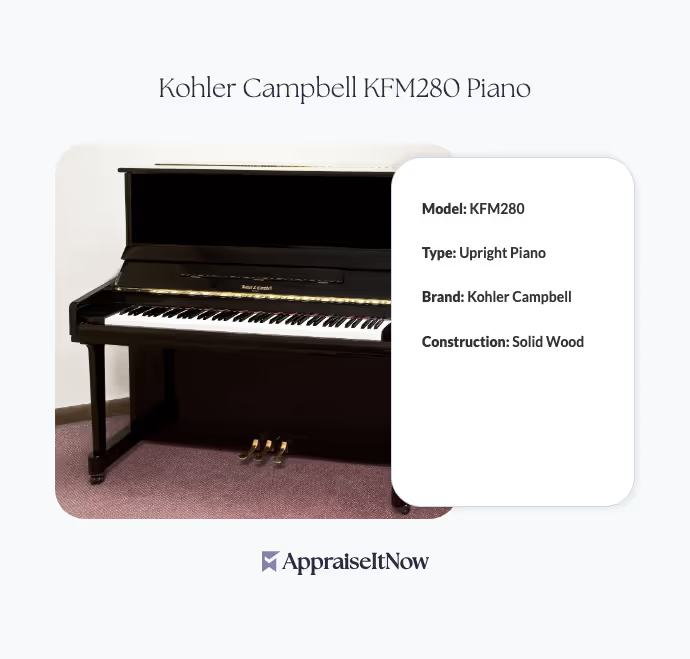
<p>If you own a Kohler Campbell KFM280 upright piano, understanding its current market value is essential whether you're considering selling, insuring, or simply documenting your assets. This classic American piano, valued between <strong>$2,000 and $3,500</strong> depending on condition and local demand, deserves professional evaluation to ensure you have accurate pricing information.</p>
<h2>Understanding the Kohler Campbell KFM280's Market Value</h2>
<p>The Kohler Campbell KFM280 represents a solid mid-range upright piano built to last. First introduced in 1980, this instrument combines quality craftsmanship with American manufacturing heritage—a factor that adds genuine value in today's market. With its 88 keys, full iron plate, and spruce soundboard, the KFM280 was designed for both amateur and professional pianists seeking reliable performance in a compact footprint.</p>
<p>What determines your piano's specific value within that $2,000–$3,500 range? Condition is paramount. A well-maintained KFM280 with original finish, responsive action, and excellent tone will command premium pricing, while instruments requiring restoration or showing significant wear may fall toward the lower end. The 10-year warranty originally included with new purchases has long since expired, so you'll need a current assessment to understand restoration costs that might affect resale value.</p>
<div class="callout tip"><p><strong>Valuation Insight</strong></p>
<p>Kohler Campbell pianos from the 1980s-1990s generally hold their value better than imported budget brands due to American construction quality and solid engineering.</p></div>
<h2>Why Professional Piano Appraisal Matters</h2>
<p>Many piano owners wonder how to find out what their instrument is worth, and the answer lies in professional appraisal. Unlike guitars or other instruments you might price quickly online, pianos require specialized knowledge to evaluate properly. A certified appraiser examines your KFM280's structural integrity, mechanical condition, tone quality, and cosmetic appearance—factors that significantly impact both selling price and insurance value.</p>
<p>When you're planning to sell an old piano, accurate appraisal prevents two costly mistakes: pricing too high (making your piano unsellable) or pricing too low (leaving money on the table). Professional appraisers provide documentation suitable for insurance claims, estate settlement, or sales transactions. If you're exploring <a href="/types/personal-property">personal property appraisals</a> as part of broader asset evaluation, pianos deserve the same attention as <a href="/types/furniture">furniture</a> or <a href="/types/household-goods">household goods</a>.</p>
<p>The question "are pianos hard to sell?" reflects a genuine concern among owners—they absolutely can be challenging to move in residential markets. However, an appraised, well-documented instrument with clear pricing backed by professional evaluation increases buyer confidence significantly.</p>
<h2>Determining Your KFM280's Actual Age and Condition</h2>
<p>To assess your Kohler Campbell KFM280 properly, you first need to determine its exact age. The piano's serial number reveals its manufacturing date, and professional appraisers know how to decode these numbers to confirm authenticity and production year. Your KFM280 was manufactured sometime between 1980 (introduction year) and whenever the company ceased production, so the specific date matters for valuation purposes.</p>
<p>The instrument's condition directly affects value. A piano manufactured in the 1980s-1990s is now 30-40+ years old, which raises important questions about internal mechanisms. How often have the strings been replaced? Has the action been regulated or overhauled? Does the soundboard show cracks? These factors determine whether potential buyers see your KFM280 as a performer-ready instrument or a restoration project.</p>
<div class="callout note"><p><strong>Age Consideration</strong></p>
<p>A 30-50 year old piano isn't necessarily worthless—many vintage and antique pianos appreciate in value if properly maintained. However, restoration costs can significantly impact net proceeds from sale.</p></div>
<h2>The Real Cost of Piano Restoration</h2>
<p>Before finalizing your appraisal, understand that restoration costs dramatically affect your KFM280's net value if sale is your goal. Professional piano technicians can perform complete overhauls for $3,000–$8,000 or more, depending on needed repairs. A piano that appears to be in good condition cosmetically might have internal issues that require addressing before sale.</p>
<p>This is where professional appraisal becomes invaluable. Certified appraisers identify restoration needs and can often estimate costs, allowing you to make informed decisions about investment versus return. Some piano owners decide to restore instruments before selling to maximize value, while others accept lower offers from buyers willing to handle restoration themselves.</p>
<h2>Kohler Campbell's Manufacturing Heritage and Brand Value</h2>
<p>Kohler Campbell pianos carry legitimacy because they were manufactured in the United States, primarily in North Carolina, during an era when American piano manufacturing still represented a credible alternative to imported European instruments. The company was established in the early 20th century and maintained quality standards throughout its production run.</p>
<p>This American manufacturing heritage adds value compared to many imported pianos of equivalent age. When collectors and musicians evaluate older pianos, they distinguish between respected domestic brands (like Kohler Campbell) and foreign imports, often valuing the former more highly. The KFM280's solid wood construction and traditional design approach further support its market position.</p>
<h2>Comparing Your KFM280 to Other Used Pianos</h2>
<p>Understanding comparable instruments helps you contextualize your KFM280's value. Similar-aged upright pianos from brands like Baldwin, Mason & Hamlin, or Steinway often command higher prices due to stronger brand recognition, though they may occupy the same age range and condition category. Conversely, newer imported brands might sell for less despite modern manufacturing, reflecting the value placed on heritage and craftsmanship.</p>
<p>When evaluating "which piano brand holds its value best," the answer depends heavily on maintenance and condition. A neglected Mason & Hamlin becomes worthless quickly, while a meticulously maintained Kohler Campbell remains valuable. This highlights why insurance coverage based on appraisal matters—you're protecting not just the piano's monetary value but your investment in its care.</p>
<h2>Insurance Documentation and Estate Planning</h2>
<p>Many piano owners seek appraisals specifically for insurance purposes. Your homeowner's or renter's policy typically covers pianos under standard personal property coverage, but that coverage may be inadequate if your KFM280 requires replacement. A professional appraisal provides the documentation insurers need to establish accurate replacement cost, ensuring you're neither over-paying premiums nor under-insured.</p>
<p>Estate planning also frequently requires piano appraisal. If you're including your KFM280 in a will or trust, executors and beneficiaries need documented values for distribution purposes. Professional <a href="/types/memorabilia-and-collectibles">memorabilia and collectibles appraisals</a> provide the legal foundation that handwritten estimates cannot match.</p>
<div class="callout tip"><p><strong>Insurance Advantage</strong></p>
<p>Having a current professional appraisal on file with your insurance carrier can significantly streamline claims if your piano is damaged or lost.</p></div>
<h2>Understanding Piano Removal and Disposal Challenges</h2>
<p>If your situation involves relocating or disposing of your KFM280, you'll quickly discover that pianos present unique challenges. The question "why are pianos hard to get rid of?" reveals a market reality: pianos are heavy (your KFM280 weighs 400 pounds), require specialized moving equipment, and generate surplus supply relative to demand in most residential markets.</p>
<p>Some owners ask "who will pick up my piano for free?" hopeful of easy removal, but reality is more complex. Schools, churches, and nonprofits occasionally accept donated pianos, though they're often selective about condition and location. Professional moving costs typically range from $500–$2,000 depending on distance and access requirements. This reality reinforces why accurate valuation matters—you're making informed decisions about whether selling, donating, or disposing represents the best option for your circumstances.</p>
<h2>Market Dynamics: Kohler Campbell Production History</h2>
<p>One common question among piano owners is "are Kohler and Campbell pianos still made?" The answer is complicated. The original Kohler & Campbell company ceased independent production, though the brand name was acquired by other manufacturers at different points in history. This discontinuation means no new KFM280 models are entering the market, which theoretically supports value retention for older examples.</p>
<p>However, market reality is nuanced. Discontinued instruments don't automatically appreciate; instead, their value depends entirely on condition and demand. A well-maintained KFM280 from 1985 might sell for $3,200, while an identical model from 1992 in poor condition might bring only $1,500. This variance is precisely why professional appraisal separates guesswork from actionable data.</p>
<h2>Choosing the Right Appraisal Professional</h2>
<p>When seeking appraisal services for your KFM280, look for appraisers with specific piano expertise and recognized credentials. The American Society of Appraisers (ASA) and other professional organizations maintain directories of qualified specialists. Your appraiser should understand piano construction, mechanics, and market dynamics—not just general antique or <a href="/types/equipment-and-machinery">equipment appraisals</a>.</p>
<p>A qualified piano appraiser will spend 1–2 hours thoroughly examining your KFM280, testing action responsiveness, evaluating tone quality across all registers, checking for cracks or structural issues, and documenting condition with photographs. They'll research comparable sales in your region and provide written documentation suitable for insurance, sale, or estate purposes. This level of expertise ensures your appraisal reflects genuine market value rather than inflated or deflated estimates.</p>
<p><strong>AppraiseItNow</strong> connects you with certified appraisers across the U.S. who specialize in <a href="/types/household-goods">household goods</a> and <a href="/types/personal-property">personal property</a> including musical instruments. Our USPAP-compliant appraisals provide professional documentation accepted by insurers, courts, and financial institutions.</p>
<div class="callout note"><p><strong>Key Takeaway</strong></p>
<p>A professional appraisal of your Kohler Campbell KFM280 transforms uncertainty into confidence, providing accurate valuation whether you're insuring, selling, or planning your estate. In a market where pianos can be challenging to move and restoration costs are substantial, professional documentation ensures informed decision-making and fair pricing.</p></div>