









<h1>How to Get Your Jupiter JSL636 Trombone Appraised</h1>
<p>The Jupiter JSL636 Trombone represents a solid intermediate-level instrument trusted by students, amateur musicians, and seasoned professionals alike. Whether you're evaluating its worth for insurance, sale, or donation purposes, understanding how to obtain an accurate, credible appraisal is essential. With current market values ranging from <strong>$1,500 to $2,500</strong>, knowing the factors that drive pricing and how to work with qualified appraisers ensures you get the documentation and valuation your instrument deserves.</p>
<h2>Understanding the Jupiter JSL636's Market Position</h2>
<p>Since its introduction in 2010, the Jupiter JSL636 has established itself as a respected choice in the intermediate trombone market. The instrument's exceptional reputation stems from its combination of quality construction, responsive slide action, and rich, resonant tone—qualities that make it equally suited for classical performances, jazz ensembles, and marching band applications. When evaluating "Is Jupiter a good brand of trombone?" or wondering about its standing compared to other intermediate models, the JSL636 consistently receives praise from educators and performers.</p>
<p>Jupiter's positioning in the market reflects the brand's commitment to quality without premium pricing. Unlike professional-level trombones that can exceed $8,000, the JSL636 offers intermediate musicians a reliable instrument that grows with their skills. This accessibility, combined with the instrument's durability and performance characteristics, explains why Jupiter maintains strong demand in the used instrument market.</p>
<div class="callout tip"><p><strong>Market Insight</strong></p>
<p>The JSL636's versatility across musical genres—from classical to contemporary styles—means it appeals to a broad buyer base, supporting stable resale values.</p></div>
<h2>Key Features That Impact Your JSL636's Appraisal Value</h2>
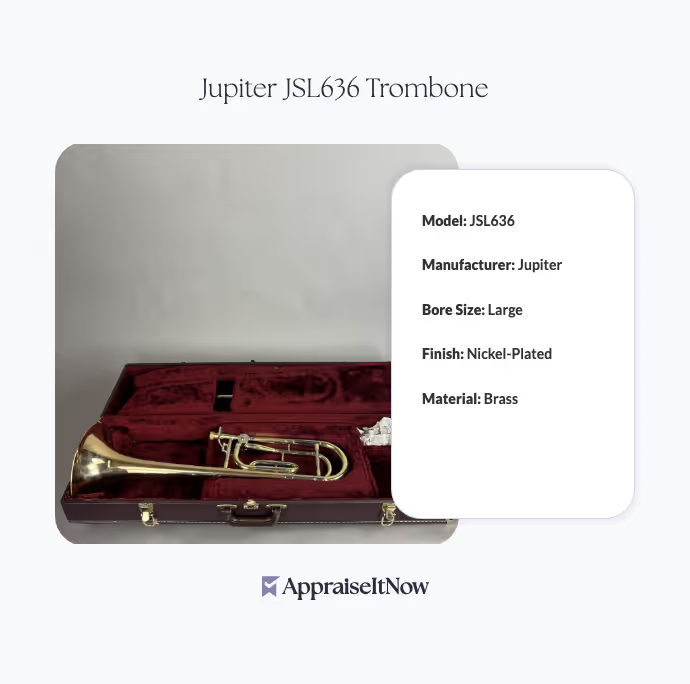
<p>When appraisers evaluate your Jupiter trombone, several technical and physical characteristics directly influence its worth. The JSL636's large-bore design produces the resonant tone that distinguishes it from student-level instruments, while its responsive slide action and comfortable trigger grip appeal to musicians seeking professional-quality playability at an intermediate price point.</p>
<p>The instrument's construction materials matter significantly in valuation. Your JSL636 features a durable brass body with nickel-plated finish—specifications that resist corrosion and maintain appearance across years of regular use. These material choices affect both the instrument's longevity and its appeal to potential buyers. An appraiser will assess whether the nickel plating shows wear, damage, or heavy patina, as these conditions influence market value within the stated range.</p>
<p>Slide responsiveness and mechanical function represent critical evaluation points during appraisal. A properly functioning trigger mechanism, smooth slide action without excessive wear, and intact valve components all contribute to maintaining top-tier valuations. Conversely, instruments requiring repairs or showing mechanical issues typically fall toward the lower end of the $1,500–$2,500 spectrum.</p>
<h2>Factors Professional Appraisers Examine</h2>
<h3>Condition and Wear Assessment</h3>
<p>Your Jupiter JSL636's physical condition directly determines where it sits within the $1,500–$2,500 valuation range. Appraisers conduct thorough inspections examining bore cleanliness, slide wear patterns, external finish quality, and any dents or damage affecting both appearance and function. An instrument showing minimal wear with consistent maintenance records may achieve valuation closer to $2,500, while examples requiring professional cleaning or minor repairs typically appraise lower.</p>
<p>The instrument's overall playability—whether the slide moves smoothly, the trigger operates correctly, and the tone production remains consistent—significantly impacts value. When asking "How to value a trombone?" a qualified appraiser recognizes that a well-maintained instrument with pristine mechanical function commands premium pricing within its category.</p>
<h3>Originality and Accessories</h3>
<p>Jupiter trombones that include original accessories, cases, and documentation typically appraise higher than instruments sold alone. Your JSL636's original hard case, mouthpiece, and any warranty documentation add approximately 10-15% to base valuation. Appraisers verify authenticity of these items and assess their condition, as damaged cases or incompatible accessories reduce overall value.</p>
<p>Replacement parts used during the instrument's life also factor into appraisal calculations. While professional repairs and maintenance enhance value when documented, non-original slides or internal components may reduce appraisal figures slightly compared to fully original examples.</p>
<h2>How to Identify Your Jupiter JSL636</h2>
<p>Determining "How do I tell what year my trombone is?" requires examining several identifying factors. Your JSL636's serial number, located on the bell or slide, provides crucial dating information. Jupiter maintained consistent serial number systems beginning in 2010, allowing appraisers to verify production dates and confirm model authenticity.</p>
<p>Physical identification markers include the Jupiter logo engraving on the bell, the specific construction of the trigger mechanism introduced in later intermediate models, and the nickel-plated brass finish specification. These details distinguish the JSL636 from earlier Jupiter models or competitor instruments, ensuring accurate valuation by qualified experts.</p>
<div class="callout note"><p><strong>Identification Tip</strong></p>
<p>Professional appraisers use maker's marks, serial numbers, and construction specifications to distinguish Jupiter models, ensuring accurate categorization and valuation.</p></div>
<h2>Jupiter's Quality and Brand Reputation</h2>
<p>The question "Are Jupiter instruments good quality?" receives consistent affirmation from musicians, educators, and appraisers alike. Jupiter's reputation for producing reliable, well-constructed instruments at accessible price points has made the company a preferred choice across educational institutions and professional ensembles worldwide. This brand equity directly supports strong resale values for instruments like your JSL636.</p>
<p>Jupiter trombones compare favorably with competitors when considering the relationship between price and performance. While professional-tier brands command higher initial investment, the JSL636 occupies a sweet spot for intermediate players seeking substantial quality improvement over student instruments without the premium pricing of fully professional models. Understanding this positioning helps appraisers contextualize your instrument's value within the broader brass instrument market.</p>
<h2>Understanding the Broader Trombone Market</h2>
<p>When considering "How much does a good trombone cost?" across all categories, you'll find enormous range. Student instruments typically value between $400–$800, intermediate models like your JSL636 range from $1,500–$2,500, and professional-level trombones often exceed $5,000. This tiered market structure reflects differences in materials, construction techniques, and performance characteristics. Your JSL636's placement in the intermediate category positions it as an instrument with professional-quality tone and mechanics accessible to developing musicians.</p>
<p>The question "Where are Jupiter trombones made?" matters to collectors and players evaluating quality. Jupiter manufactures instruments across multiple facilities, primarily in Japan and Taiwan, with consistent quality control standards applied across production. This manufacturing consistency supports stable valuations, as appraisers can confidently reference comparable sales and market data.</p>
<h2>Why Professional Appraisal Matters for Your Jupiter JSL636</h2>
<p>Obtaining a professional appraisal provides certified documentation of your trombone's value for multiple purposes. Whether you're pursuing insurance coverage, estate planning, charitable donation, or a private sale, a credentialed appraiser delivers the documentation that financial institutions, insurers, and buyers require. Unlike casual estimates, professional appraisals follow USPAP standards and carry weight in legal and financial contexts.</p>
<p>When you explore resources on <a href="/blog/appraising-musical-instruments-determining-the-worth-of-melodic-investments">appraising musical instruments and determining the worth of melodic investments</a>, you'll recognize that brass instruments present specific valuation challenges requiring specialized knowledge. Appraisers with <a href="/blog/what-you-need-to-know-about-personal-property-appraisals">personal property appraisal expertise</a> understand how musical instruments age, how maintenance affects value, and what market factors influence pricing. This specialized knowledge ensures accurate valuations that reflect current market conditions.</p>
<div class="callout tip"><p><strong>Pro Tip</strong></p>
<p>Schedule professional appraisals every 3–5 years if you own valuable instruments, as market conditions and instrument condition can shift valuation significantly.</p></div>
<h2>Choosing a Qualified Appraiser</h2>
<p>Not all appraisers possess the expertise necessary for accurate musical instrument valuation. When selecting someone to appraise your Jupiter JSL636, seek credentials indicating <a href="/blog/how-to-choose-the-right-personal-property-appraiser">specialized knowledge in personal property and musical instruments</a>. Look for appraisers affiliated with professional organizations like AAA, ISA, ASA, CAGA, or AMEA—credentials that indicate rigorous training and adherence to professional standards.</p>
<p>Your ideal appraiser combines musical knowledge with valuation expertise. Ideally, they should play trombone or possess deep familiarity with brass instruments, enabling them to assess mechanical function and tonal qualities beyond visual inspection. AppraiseItNow connects you with certified appraisers experienced in <a href="/blog/how-to-accurately-determine-the-value-of-your-memorabilia-and-collectibles">memorabilia and collectibles valuation</a>, including musical instruments, ensuring you receive expert assessment and documentation.</p>
<h2>Preparing Your JSL636 for Appraisal</h2>
<p>To maximize the accuracy of your appraisal, provide your instrument in clean, functional condition and gather supporting documentation. Compile any maintenance records, purchase receipts, or warranty documentation that establishes provenance and care history. Photograph your trombone from multiple angles, highlighting any distinctive features, markings, or condition issues.</p>
<p>Clean your Jupiter JSL636 thoroughly but gently before appraisal—a well-maintained appearance positively influences valuation impressions. However, avoid aggressive polishing or repairs immediately before appraisal, as appraisers need to assess the instrument's natural condition and any previous restoration work. Document any repairs or maintenance you've had performed, as this information impacts valuation calculations and demonstrates investment in preservation.</p>
<h2>Appraisal Purposes: Insurance, Donation, and Sale</h2>
<p>Your appraisal serves distinct purposes depending on your needs. For insurance purposes, you need documentation establishing replacement value—what you'd need to spend acquiring an equivalent instrument today. For charitable donations, appraisals provide the certified valuation necessary for tax deduction purposes, with guidance available through resources on <a href="/blog/personal-property-appraisals-for-charitable-donations-maximizing-tax-benefits-through-accurate-valuations">personal property appraisals for charitable donations and maximizing tax benefits</a>.</p>
<p>When selling your Jupiter JSL636, an appraisal establishes fair market value, helping you price competitively while ensuring you understand the instrument's true worth. Private sales, consignment through music retailers, or auction through online platforms all benefit from professional valuation establishing realistic expectations and pricing credibility.</p>
<h2>Market Trends in Intermediate Brass Instruments</h2>
<p>The intermediate trombone market has remained relatively stable, with Jupiter maintaining consistent demand due to the brand's reputation and instrument quality. Understanding broader trends helps contextualize your JSL636's valuation. As musicians globally continue pursuing brass instruction and ensemble participation, reliable intermediate instruments like the JSL636 retain strong appeal and predictable resale values.</p>
<p>Remote music instruction expansion post-2020 has actually strengthened the used brass instrument market, as students seeking quality instruments at reasonable costs drive demand for intermediate models. This market dynamic supports valuations within the $1,500–$2,500 range, suggesting your JSL636 maintains stable—and potentially appreciating—value over time when properly maintained.</p>
<div class="callout note"><p><strong>Key Takeaway</strong></p>
<p>A professional appraisal of your Jupiter JSL636 Trombone provides certified documentation essential for insurance, sale, donation, or estate planning purposes. With market values ranging from $1,500 to $2,500, understanding your instrument's specific condition, features, and provenance through expert assessment ensures you make informed decisions and receive fair value, whether you're buying, selling, or protecting your investment.</p></div>