









<h1>How to Get Your Hatteras 70 GT SportFish Appraised</h1>
<p>The Hatteras 70 GT SportFish represents a substantial investment in luxury offshore fishing capability, with current market values ranging from <strong>$475,000 to $495,000</strong>. Whether you're buying, selling, refinancing, or insuring this premium vessel, obtaining a professional appraisal ensures you understand its true worth and have documentation that holds up under scrutiny.</p>
<h2>Understanding What Makes Your Hatteras 70 GT Valuable</h2>
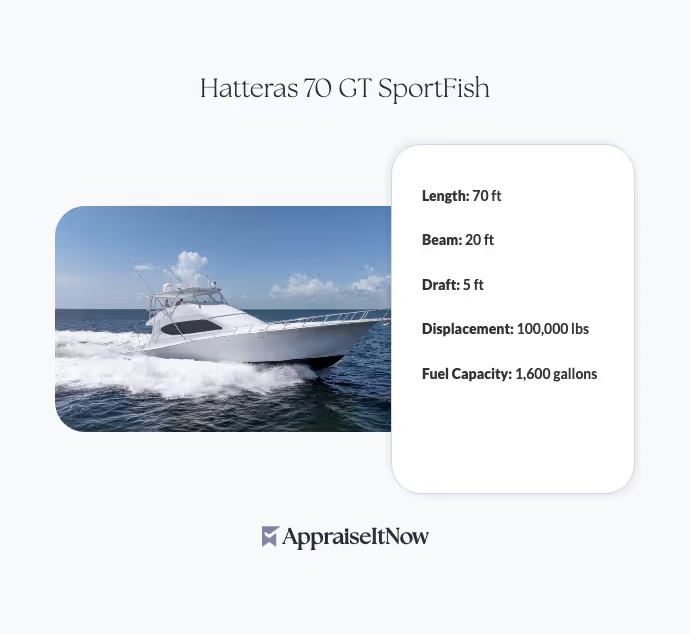
<p>Your Hatteras 70 GT isn't just another fishing boat—it's a carefully engineered offshore platform that commands premium pricing for specific reasons. First introduced in 2010, this model combines aggressive styling with proven performance, powered by twin <strong>MTU 16V2000 engines</strong> capable of pushing the vessel to 38 knots while maintaining exceptional seaworthiness in rough conditions.</p>
<p>The value drivers for your SportFish extend beyond raw horsepower. The spacious interior features a plush stateroom, gourmet galley, and generous entertaining spaces that appeal to both serious charter operators and owner-operators. A large fighting chair and bait prep station address the fishing-specific requirements that distinguish this platform from mere cruising yachts. When you're ready to appraise your vessel, understanding these engineering and design elements helps contextualize the professional valuation process.</p>
<div class="callout tip"><p><strong>Appraiser's Note</strong></p>
<p>Hatteras 70 GT vessels with original engines and complete service records typically command valuations at the higher end of the $475,000-$495,000 range.</p></div>
<h2>Factors That Directly Impact Your Hatteras 70 GT's Appraisal Value</h2>
<p>The age, condition, engine hours, refits, equipment, and hull material all significantly influence what your vessel is worth. While production began in 2010, the market distinguishes between earlier models and more recent builds based on engine wear, electronics sophistication, and market demand curves over the past 14 years.</p>
<p>Engine hours represent perhaps the most crucial valuation factor. Twin MTU engines are built for longevity, but hours directly correlate with remaining useful life. A Hatteras 70 GT with 1,500 hours will appraise differently than one with 5,000 hours, even if both operate perfectly. Original engines with full service documentation carry premiums over replacements or rebuilt units.</p>
<p>Hull material quality, fiberglass construction details, and evidence of osmosis or structural issues significantly affect value. Professional appraisers conduct detailed inspections examining the hull below the waterline, through-hull fittings, and structural integrity. Any history of collision damage, even if properly repaired, requires documentation and typically reduces valuation. Recent refits of major systems—particularly updated navigation and fishing electronics reflecting current <a href="/types/boat">boat appraisal</a> standards—can positively influence your vessel's market position.</p>
<h2>Gathering Documentation for Accurate Valuation</h2>
<p>Before scheduling your appraisal, compile comprehensive documentation that establishes your vessel's history and condition. Title and registration showing clear ownership history, maintenance logs detailing engine service, haul-outs, and equipment upgrades, professional surveys evaluating structural condition, and high-resolution photographs documenting the current state all contribute to an accurate appraisal.</p>
<p>Recent comparable sales data matters tremendously when appraisers determine market value. Your appraiser will research similar Hatteras 70 GT models sold in recent months, examining how comparable vessels priced relative to their specifications. A properly documented Hatteras with recent refit and low engine hours positioned against a vessel requiring significant work creates the context for your specific valuation.</p>
<p>Equipment lists identifying everything from navigation systems to fishing gear, backup power generation to climate control specifics help appraisers understand your vessel's actual market appeal. A fully equipped SportFish with state-of-the-art GPS, fishfinder, autopilot, and outriggers appeals differently than a base configuration. When working toward an insurance replacement value or fair market value determination, complete equipment documentation proves essential.</p>
<div class="callout note"><p><strong>Documentation Essential</strong></p>
<p>The more thorough your records, the faster your appraisal process moves and the more defensible your final valuation becomes.</p></div>
<h2>Understanding Different Types of Vessel Valuations</h2>
<p>Your appraisal needs depend largely on why you're seeking valuation. <strong>Market value</strong> represents what your Hatteras would likely sell for in a competitive market—typically the most common request for purchase or sale transactions. <strong>Fair market value</strong> mirrors this for tax or legal purposes, usually requiring independent, certified appraisers meeting specific standards.</p>
<p><strong>Retail value</strong> reflects what a dealer or broker might ask, typically higher than market value and useful when considering trade-in situations. <strong>Insurance replacement value</strong> addresses what it would cost to replace your vessel with a comparable new or used example, often influencing premium calculations. <strong>Loan or lending value</strong> represents what financial institutions will accept as collateral, frequently 70-80% of fair market value for refinancing purposes.</p>
<p><strong>Estate value</strong> matters when distributing assets after a death or during divorce proceedings, requiring appraisals meeting specific legal standards. For those engaging in <a href="/blog/a-guide-to-understanding-appraisal-for-purchase-and-sale">purchase and sale transactions</a>, understanding which valuation type your transaction requires ensures the appraiser delivers what you actually need.</p>
<h2>Professional Appraiser Credentials and Standards</h2>
<p>Look for appraisers holding credentials from recognized marine industry organizations: <strong>ASA (American Society of Appraisers), ISA (International Society of Appraisers), AAA (American Association of Appraisers), CAGA (Collegiate Association of Graduate Appraisers),</strong> or <strong>AMEA (American Merchant Exam Association)</strong>. These certifications indicate the appraiser has completed rigorous training, maintained continuing education, and committed to USPAP (Uniform Standards of Professional Appraisal Practice) compliance—the standard your report needs to withstand professional scrutiny or legal challenge.</p>
<p>USPAP compliance matters significantly when your appraisal might be used in litigation, insurance disputes, or financial lending situations. An appraiser certified in marine vessels specifically understands the nuances of older Hatteras models, recognizes engine and systems variations, and can credibly defend valuations in formal proceedings. When seeking <a href="/blog/what-to-look-for-in-a-boat-appraiser">professional appraisal services</a>, verify credentials before engagement.</p>
<h2>On-Site Inspection Versus Remote Appraisals</h2>
<p>For a vessel valued at $475,000 to $495,000, on-site inspection and sea trial should be strongly considered. While photo-based appraisals cost less initially, in-person evaluation allows appraisers to assess engine performance, sea trial capabilities, systems integration, and structural condition with their own observations rather than relying solely on images and seller claims.</p>
<p>A sea trial specifically reveals whether engines perform as claimed, whether the vessel maintains proper trim and weight distribution, and whether systems respond as documented. Salt water intrusion indicators, corrosion patterns, and equipment functionality cannot be thoroughly assessed remotely. For vessels of this size and value, the marginal cost of on-site inspection typically justifies the increased accuracy and defensibility it provides.</p>
<div class="callout tip"><p><strong>Appraisal Strategy</strong></p>
<p>Schedule your on-site inspection during favorable weather and with the vessel in its normal operational condition to ensure the most accurate performance assessment.</p></div>
<h2>Timeline and Process Expectations</h2>
<p>A typical Hatteras 70 GT appraisal involves multiple stages spanning 2-4 weeks from initial engagement to final report delivery. Initial consultation and documentation gathering requires 3-5 business days as you compile records and photos. The on-site inspection itself typically occupies 4-8 hours depending on the vessel's condition and whether a sea trial is included.</p>
<p>Report preparation and market analysis follows the inspection, with appraisers researching comparable sales, analyzing condition factors, and preparing detailed documentation. This phase usually requires 5-10 business days depending on how readily comparable sales data becomes available and whether follow-up questions arise. Rushing the process can result in incomplete analysis or defensibility issues later, so plan accordingly when your timeline involves upcoming transactions or financial deadlines.</p>
<p>Professional appraisers can sometimes accelerate certain phases when you prioritize speed, though this may increase fees. When <a href="/blog/understanding-the-value-of-your-boat-with-a-professional-boat-appraisal">refinancing your vessel</a>, discussing timeline requirements upfront ensures lenders receive reports when needed without sacrificing quality or accuracy.</p>
<h2>How Modifications and Damage Affect Your Valuation</h2>
<p>Aftermarket electronics, custom fishing gear, and upgraded interior features require careful analysis during valuation. High-quality modern electronics often add dollar-for-dollar value when properly installed by qualified technicians, while poorly executed modifications can actually reduce value by suggesting deferred maintenance or quality concerns.</p>
<p>Custom fishing gear like fighting chairs, specialized outriggers, or enhanced bait prep stations appeal to charter operators and serious anglers, typically adding measurable value when professionally installed. However, owner-specific modifications lacking broad appeal—such as unusual interior color schemes or personalized artwork—may not translate to equivalent market value increases.</p>
<p>Known damage history substantially impacts valuation depending on severity and repair quality. Previous collision damage, even if professionally repaired with documentation, typically results in 5-15% value reduction depending on structural involvement. Osmosis or blistering in the hull, particularly if inadequately addressed, creates significant valuation challenges. Engine issues like cylinder liner scoring or transmission problems require professional assessment and proper documentation throughout any appraisal process, similar to evaluating <a href="/blog/determining-the-true-market-value-of-your-boat">other marine assets</a>.</p>
<h2>Appraisal Costs and Fee Structures</h2>
<p>Professional appraisals for a Hatteras 70 GT typically range from $1,500 to $3,500 depending on complexity, location, and whether sea trials are included. Flat fees for standard evaluations provide cost certainty, while hourly rates ($250-$400 per hour) accommodate unusual situations requiring extended analysis. Remote photo-based appraisals cost substantially less—typically $800-$1,500—but sacrifice the accuracy and defensibility that on-site inspection provides.</p>
<p>Location affects pricing, as appraisers travel to reach your vessel. West Coast, Southeast, and Florida-based yachts often cost less due to higher appraiser density in those markets. Remote locations may incur travel surcharges. Rush appraisals requiring accelerated timelines typically add 20-30% to standard fees. Insurance company requirements sometimes offset costs by providing discounts for documented professional valuations, making the investment worthwhile when considering overall coverage optimization.</p>
<div class="callout note"><p><strong>Cost Consideration</strong></p>
<p>The cost of professional appraisal represents less than 0.5% of your vessel's value but provides essential documentation protecting your financial interests across multiple scenarios.</p></div>
<h2>Using Your Completed Appraisal Report</h2>
<p>Once you receive your certified appraisal, it serves multiple purposes depending on your situation. For <strong>buying decisions</strong>, an independent appraisal protects against overpaying and provides objective justification for your purchase price. When <strong>selling</strong>, a professional valuation supports your asking price and builds buyer confidence through third-party documentation.</p>
<p><strong>Refinancing scenarios</strong> require lenders to verify collateral value, and USPAP-compliant appraisals meet institutional requirements. <strong>Insurance companies</strong> use appraisals to establish replacement value, ensuring adequate coverage without overpaying premiums. <strong>Estate planning</strong> necessitates professional valuations for tax purposes and equitable asset distribution among heirs. <strong>Divorce proceedings</strong> benefit from neutral professional assessment when dividing marital assets.</p>
<p>When <a href="/blog/using-boat-appraisals-to-insure-your-boat">using appraisals for insurance purposes</a>, update your valuation every 3-5 years as market conditions evolve. Vessel values fluctuate based on interest rates, fuel costs, new model releases, and broader economic conditions. A current appraisal ensures your coverage remains adequate and your premiums reflect actual value rather than outdated information.</p>
<h2>Getting Started with Your Hatteras 70 GT Appraisal</h2>
<p>Contact certified marine appraisers in your region or through national services like <strong>AppraiseItNow</strong>, which connects you with USPAP-compliant professionals experienced in luxury sportfishing vessels. Provide preliminary information including hull number, current engine hours, major upgrades or repairs, recent comparable sales you're aware of, and your timeline requirements.</p>
<p>Most appraisers offer complimentary initial consultations to discuss your specific needs, fee structures, and scheduling. This conversation helps ensure you select an appraiser whose expertise aligns with your vessel's particulars and your transaction requirements. Professional <a href="/blog/a-step-by-step-guide-to-boat-appraisals">boat appraisal services</a> provide the documentation and confidence needed to move forward confidently whether you're buying, selling, refinancing, or insuring your Hatteras 70 GT.</p>
<div class="callout note"><p><strong>Key Takeaway</strong></p>
<p>A certified appraisal of your Hatteras 70 GT SportFish provides accurate market positioning, defensible documentation, and professional confidence whether you're navigating purchase, sale, refinancing, or insurance scenarios. The investment in professional valuation protects your interests and ensures you understand the true value of your offshore fishing platform.</p></div>