









<h1>How to Get Your Hans Wegner Peacock Chair Appraised</h1>
<p>The Hans Wegner Peacock Chair stands as one of the most iconic pieces of mid-century modern design, commanding appraisal values between <strong>$4,000 and $8,000</strong> depending on condition, provenance, and market conditions. Whether you're considering selling this remarkable furniture piece, need documentation for insurance purposes, or simply want to understand what your chair is worth, a professional appraisal provides the expert assessment and documentation you need.</p>
<h2>Understanding the Hans Wegner Peacock Chair's Market Value</h2>
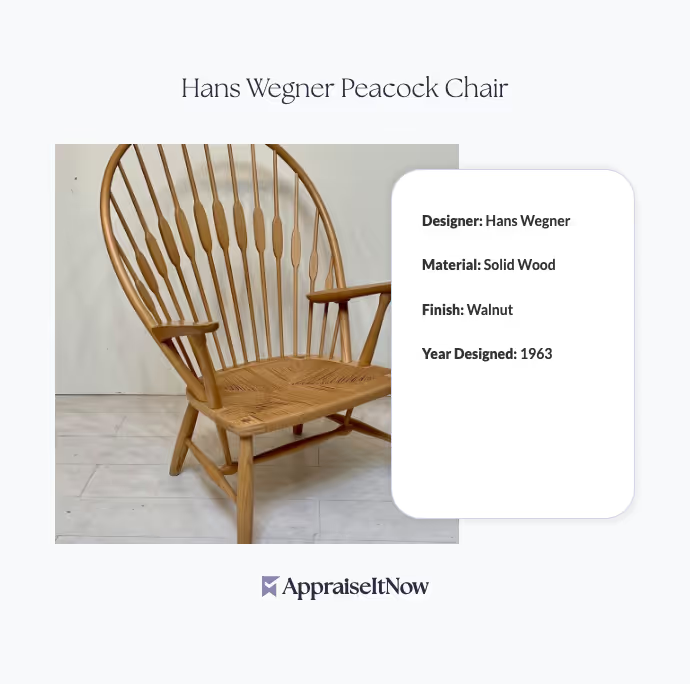
<p>When Danish designer Hans Wegner introduced the Peacock Chair in 1963, he created something extraordinary: a furniture masterpiece that blends organic sculptural form with exceptional craftsmanship. The chair's distinctive high back, which fans outward like a peacock's tail, immediately became a sought-after piece among design enthusiasts and collectors. Today, the piece commands significant value in the <a href="/types/antique-furniture">antique furniture</a> market.</p>
<p>Your Peacock Chair's appraisal value reflects several converging factors. First, limited production—only a few hundred were ever made—creates genuine scarcity. Second, Wegner's international reputation and the piece's prominence in design history have only grown since its debut. Third, the chair's superior construction using premium solid wood and steam-bent components ensures durability and longevity that appeals to serious collectors. These combined factors position the Peacock Chair as a valuable <a href="/types/antiques">antique and collectible</a> asset rather than merely functional furniture.</p>
<div class="callout tip"><p><strong>Market Insight</strong></p>
<p>Original Peacock Chairs with documented maker's marks and museum-quality condition have recently approached the upper end of the $4,000–$8,000 range, with some exceptional examples exceeding these estimates.</p></div>
<h2>What Makes Your Peacock Chair Valuable</h2>
<p>Several specific characteristics determine where your individual chair falls within the appraisal range. Understanding these factors helps you evaluate your piece before seeking professional assessment.</p>
<p><strong>Originality and authenticity</strong> are paramount. An original Peacock Chair with matching manufacturer marks, original finish, and unaltered construction will appraise significantly higher than later reproductions or heavily restored versions. The question of how to tell if a Hans Wegner chair is real becomes critical—genuine examples feature specific joinery techniques, wood selection, and finishing methods that distinguishing them from reproductions.</p>
<p><strong>Condition directly impacts value.</strong> A Peacock Chair in excellent condition with minimal wear, original upholstery (if present), and all original components will achieve premium pricing. Conversely, chairs requiring significant restoration or featuring replacement parts will appraise lower. Professional appraisers assess wood integrity, joint stability, and any previous repairs when determining condition grades.</p>
<p><strong>Provenance strengthens value considerably.</strong> If you possess documentation of the chair's ownership history, particularly if it comes from a notable design collection or passed through reputable dealers, this provenance increases appraisal value by 15-25%. Chairs with clear purchase documentation, design exhibition history, or institutional records command premium prices from discerning collectors.</p>
<p>The materials themselves matter greatly. Wegner's choice of premium solid wood—whether teak, oak, or other select lumber—and the chair's robust construction mean authentic examples have survived decades without deterioration. This longevity, when combined with authenticated originality, creates furniture worth preserving and professionally documenting through <a href="/types/furniture">furniture appraisals</a>.</p>
<h2>Why Professional Appraisal Matters</h2>
<p>Determining whether your chair is worth money requires more than visual inspection. Professional appraisers bring specialized knowledge of mid-century modern design, manufacturer variations, market comparables, and authentication methods. When you wonder how to know if your chair is worth money, the answer involves comprehensive evaluation by someone with demonstrated expertise in this specific design category.</p>
<p>A certified appraisal provides multiple benefits beyond simple valuation. You receive detailed documentation suitable for insurance companies, legal proceedings, estate planning, or sale purposes. Insurance companies specifically require certified appraisals to establish replacement cost coverage for valuable furniture pieces. If you're navigating <a href="/blog/heritage-and-antique-furniture-appraisals-what-you-need-to-know">estate planning</a> or <a href="/blog/understanding-the-interplay-between-condition-and-value-in-personal-property-appraisals">asset division</a>, professional documentation becomes essential.</p>
<p>The appraisal process itself employs standardized methodology. Appraisers following USPAP (Uniform Standards of Professional Appraisal Practice) standards examine your Peacock Chair comprehensively, document all findings photographically, research comparable recent sales, and provide written analysis explaining the valuation. This rigorous approach means your appraisal carries weight in professional and legal contexts.</p>
<div class="callout note"><p><strong>Professional Standard</strong></p>
<p>USPAP-compliant appraisals from credentialed experts (AAA, ISA, ASA, CAGA, AMEA) are recognized by insurance companies, courts, and financial institutions as authoritative valuations.</p></div>
<h2>Authenticating Your Peacock Chair</h2>
<p>Questions about authenticity naturally arise with valuable mid-century modern pieces. How can you tell if a Hans Wegner chair is real before investing in professional appraisal? While detailed authentication requires expert examination, several preliminary indicators help guide you.</p>
<p>Genuine Peacock Chairs feature specific construction details that reproductions often miss. The steam-bent wooden components show particular wood grain patterns and joinery techniques distinctive to Wegner's era production. Original finishes, whether natural wood or stained, display aging characteristics consistent with 1960s materials and application methods. Maker's marks, when present, should match documented manufacturers—typically Johannes Hansen or other authorized Danish producers.</p>
<p>Reproductions, while sometimes well-made, typically show inconsistencies in wood selection, joinery precision, or finishing techniques. Contemporary reproductions may use different materials or construction shortcuts that experienced appraisers immediately recognize. This is why professional authentication becomes valuable—appraisers understand these subtle but definitive differences.</p>
<p>The question "how old are peacock chairs?" helps establish authenticity parameters. Original examples date to 1963 onward, so any documentation confirming mid-1960s production strengthens authenticity. Chairs from verified Johannes Hansen production runs command particular confidence among collectors and appraisers alike.</p>
<h2>Comparable Sales and Current Market Trends</h2>
<p>Understanding recent market activity for similar pieces helps establish realistic expectations for your appraisal. Mid-century modern furniture, particularly pieces by renowned designers like Wegner, has appreciated significantly over the past decade as interest in design history grows among collectors and interior designers.</p>
<p>Recent Peacock Chair sales through auction houses and private dealers consistently fall within the <strong>$4,000–$8,000</strong> range, with variations reflecting condition, provenance, and market timing. Museum-quality examples with exceptional provenance have occasionally exceeded these estimates, while pieces requiring restoration fall toward the lower end. These market comparables directly inform professional appraisers' valuation methodologies.</p>
<p>What is Hans Wegner's most famous chair? While the Peacock Chair ranks among his iconic designs, the Wishbone Chair and Round Chair also command significant collector interest. This diversity in Wegner's portfolio means the Peacock Chair maintains distinct market positioning. Its relative rarity compared to the more widely produced Wishbone Chair actually supports stronger appreciation trends.</p>
<p>Contemporary design enthusiasts recognize that mid-century modern pieces represent genuine <a href="/types/artwork">artwork</a> in functional form. This perspective has elevated furniture appraisal standards significantly, with <a href="/blog/appraising-contemporary-design-and-furniture-evaluating-modern-artistry">contemporary design and furniture evaluation</a> now employing methods comparable to fine art appraisal for significant pieces.</p>
<h2>Preparing Your Chair for Appraisal</h2>
<p>When you decide to seek professional valuation, proper preparation ensures the appraiser can conduct thorough assessment. Begin by gathering any available documentation—purchase receipts, previous appraisals, exhibition catalogs, or family records. Even informal documentation helps establish provenance.</p>
<p>Photograph your chair thoroughly from multiple angles, capturing details of joinery, wood finish, maker's marks, and any restoration work. Include close-ups of the underside, joints, and any distinguishing features. This photographic record helps appraisers conduct preliminary research and determines whether in-person examination is necessary for accurate valuation.</p>
<p>Clean your chair gently using appropriate methods for its materials and finish. Remove surface dust with soft brushes or microfiber cloths—never use harsh cleaners or abrasive materials. Preserve the chair's original condition as much as possible; appraisers specifically assess whether pieces have been inappropriately restored or modified.</p>
<p>Document any condition issues honestly. Professional appraisers expect to find wear, aging, and patina on 60-year-old furniture. Attempting to hide damage or over-restore pieces actually undermines appraisal accuracy and can raise authenticity questions. Transparency about condition allows appraisers to provide fair, defensible valuations.</p>
<div class="callout tip"><p><strong>Preparation Step</strong></p>
<p>Arrange your appraisal in a well-lit space where the appraiser can examine all aspects of the chair thoroughly. Natural light best reveals wood grain, finish characteristics, and wear patterns that inform valuation.</p></div>
<h2>Selecting the Right Appraiser</h2>
<p>Finding qualified appraisers experienced in mid-century modern furniture requires deliberate effort. Your appraiser should demonstrate specific expertise in Danish mid-century design and authenticated knowledge of Hans Wegner's work. General furniture appraisers may lack the specialized background necessary for accurate Peacock Chair valuation.</p>
<p>Look for appraisers holding credentials from recognized organizations: American Society of Appraisers (ASA), International Society of Appraisers (ISA), American Association of Appraisers (AAA), or similar bodies. These credentials indicate formal training, ethical standards compliance, and continuing education requirements. When seeking expertise on <a href="/blog/how-to-get-an-accurate-antique-furniture-appraisal">getting an accurate antique furniture appraisal</a>, credential verification provides essential assurance.</p>
<p>Ask potential appraisers about their specific experience with Hans Wegner pieces and mid-century modern design. Request references from previous clients and examples of their appraisal reports. Quality appraisers provide detailed written documentation with photographic records, valuation methodology explanation, and market analysis supporting their conclusions. Services like <strong>AppraiseItNow</strong> connect you with USPAP-compliant appraisers specializing in furniture and decorative arts across certified professional networks.</p>
<p>Interview appraisers about their fee structure—typically hourly rates ranging from $150–$400 depending on expertise and location. Avoid appraisers offering valuations without examining your chair or those providing estimates based solely on descriptions. Professional appraisal requires hands-on assessment and detailed research.</p>
<h2>Using Your Appraisal</h2>
<p>Once you receive your certified appraisal, understanding its applications helps maximize its value. Insurance companies require appraisals exceeding specific thresholds (often $2,500–$5,000) to establish replacement cost coverage. Your Peacock Chair appraisal ensures proper coverage for loss, damage, or theft.</p>
<p>Estate planning documents benefit from current appraisal values, particularly when distributing property among multiple heirs. Fair market values established through professional appraisal reduce disputes and ensure equitable distribution. If you're selling, an appraisal supports asking price justification and attracts serious buyers understanding the piece's legitimate value.</p>
<p>For collectors maintaining detailed inventories, appraisals provide crucial documentation for <a href="/types/personal-property">personal property</a> tracking and portfolio evaluation. Some collectors update appraisals every 3-5 years to reflect market appreciation. Understanding your collection's total value helps with financial planning and insurance adequacy assessment.</p>
<div class="callout note"><p><strong>Key Takeaway</strong></p>
<p>A professional appraisal of your Hans Wegner Peacock Chair provides certified documentation of its $4,000–$8,000 market value, ensuring accurate insurance coverage, supporting sales transactions, and preserving the historical significance of this mid-century design masterpiece for future appreciation.</p></div>