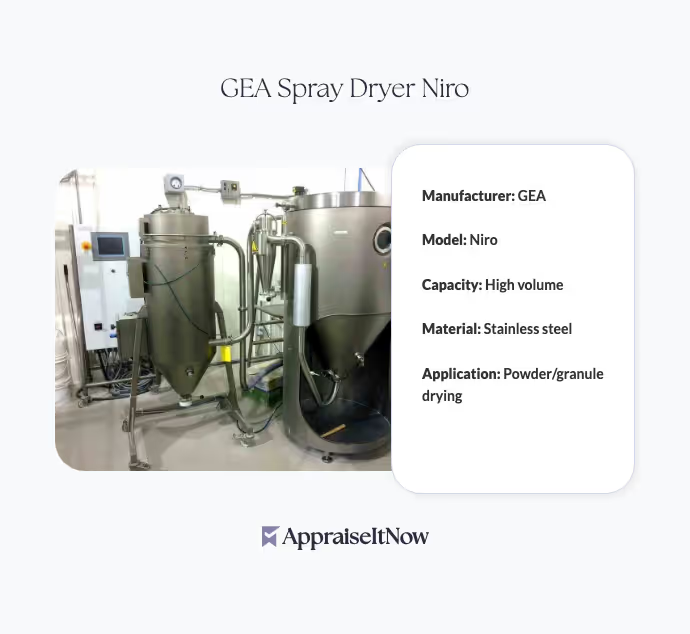










<h1>How to Get Your GEA Spray Dryer Niro Appraised</h1>
<p>The GEA Spray Dryer Niro is a critical piece of <strong><a href="/types/equipment-and-machinery">industrial equipment and machinery</a></strong> used across food, pharmaceutical, and chemical manufacturing. If you're buying, selling, refinancing, or managing one of these assets, understanding how to obtain an accurate appraisal is essential. With estimated values ranging from <strong>$200,000 to $250,000</strong>, getting professional valuation right matters significantly to your bottom line.</p>
<h2>Understanding Your GEA Niro's Market Position</h2>
<p>The GEA Spray Dryer Niro isn't just equipment—it's a specialized asset with decades of proven performance. First introduced in the 1970s, this system represents mature, reliable technology that companies rely on for drying liquids, slurries, and pastes into powdered or granulated forms. The advanced atomization technology, precise temperature and airflow controls, and robust stainless-steel construction make it a workhorse for high-capacity drying operations.</p>
<p>What drives the $200,000–$250,000 valuation range? The answer lies in the machine's ability to handle diverse materials while maintaining product quality—a combination that commands premium pricing in secondary markets. Unlike some older <strong><a href="/types/chemical-equipment">chemical equipment</a></strong>, the Niro's design hasn't become obsolete; instead, it remains a sought-after asset for companies upgrading capacity or replacing aging systems.</p>
<div class="callout tip"><p><strong>Market Insight</strong></p>
<p>GEA Niro spray dryers with documented maintenance history and verified operational throughput often command valuations at the higher end of the range, sometimes exceeding estimates when condition and documentation are exceptional.</p></div>
<h2>Key Factors That Shape Your Appraisal</h2>
<p>When an appraiser evaluates your GEA Spray Dryer Niro, they examine a specific constellation of factors that determine where your machine falls within—or potentially outside—the standard valuation range. Understanding these drivers helps you prepare for the appraisal process and ensures you're providing complete information.</p>
<h3>Model Specifics and Configuration</h3>
<p>The Niro product line included various models with different capacities, configurations, and upgrade packages. Your specific model designation matters significantly because capacity directly correlates with market value. A Niro system rated for 500 kg/hour output will appraise differently than one handling 2,000 kg/hour. Similarly, the spray head type—rotary disc atomizers versus pressure nozzle systems—affects both functionality and secondary market desirability.</p>
<p>Upgrades made during the equipment's life also influence valuation. Systems retrofitted with modern process control systems, improved dust collection, or enhanced exhaust treatment may command premiums reflecting these enhancements. Conversely, machines retaining only original controls may see slight adjustments downward if potential buyers would face modernization costs.</p>
<h3>Age, Serial Number, and Operational History</h3>
<p>Your GEA Niro's serial number tells a precise story about when it was manufactured and where it entered service. Production year matters because it establishes the equipment's technological generation and remaining useful life expectations. A well-maintained unit from the 1990s operating flawlessly still commands strong value, while machines requiring significant repairs see corresponding deductions.</p>
<p>Operational history documentation becomes your strongest asset in appraisal. Service logs showing regular maintenance, replacement of wear components, performance curve testing, and production throughput records provide appraisers with objective evidence of the machine's condition. Without this documentation, appraisers must assume average wear patterns, potentially reducing your valuation.</p>
<div class="callout note"><p><strong>Documentation Importance</strong></p>
<p>Preserving P&IDs (Process & Instrumentation Diagrams), maintenance records, and performance test results can justify valuations $10,000–$25,000 above estimates for machines with documented operational excellence.</p></div>
<h2>The Valuation Approaches Explained</h2>
<p>Industrial spray dryers like your GEA Niro can be appraised using three primary methods, and understanding which approach your appraiser employs helps you evaluate the final valuation. Different purposes sometimes require different approaches, so knowing the distinction matters when you're working toward a specific outcome like financing approval or sale negotiation.</p>
<p><strong>The Cost Approach</strong> starts with replacement cost—what it would cost to purchase a comparable new spray dryer system today—and deducts for depreciation, obsolescence, and physical deterioration. For <strong><a href="/types/food-processing-equipment">food processing equipment</a></strong> like spray dryers, this method provides a floor value but may underestimate demand-driven premium pricing.</p>
<p><strong>The Market Approach</strong> relies on comparable sales data from similar GEA or Niro units that have sold recently in the secondary market. This method directly reflects what buyers are actually paying for equivalent machines. However, comparable spray dryer sales can be sparse, making this approach challenging without strong market intelligence.</p>
<p><strong>The Income Approach</strong> applies when the equipment generates ongoing revenue. If your GEA Niro is being leased, used in a contract manufacturing operation, or generates documented throughput value, an appraiser can capitalize expected earnings to establish value. This method often produces the highest valuations when income documentation is strong.</p>
<p>Professional appraisers typically employ all three methods and reconcile findings, with emphasis varying based on your specific situation and available documentation.</p>
<h2>Documentation That Matters for Your Appraisal</h2>
<p>When you contact AppraiseItNow or another certified appraiser, here's what accelerates the process and strengthens valuation accuracy:</p>
<p><strong>Performance and technical documentation</strong> forms the foundation. Gather P&IDs showing system configuration, capacity specifications, and operating parameters. Recent throughput tests proving the machine's actual output capacity provide objective performance evidence. Service logs documenting maintenance intervals, component replacements, and any repairs establish operational continuity and care history.</p>
<p><strong>Photographic documentation</strong> showing the equipment from multiple angles, including spray chamber internals, product collection systems, and control panels, helps appraisers assess condition without necessarily requiring on-site inspection. High-resolution images of any visible wear, corrosion, or upgrade installations become particularly valuable for remote valuations.</p>
<p><strong>Spare parts inventory</strong> affects your machine's value. If you have replacement spray heads, gasket sets, control system components, or other wear parts in stock, these add tangible value that appraisers factor into the overall assessment. Documenting parts availability transforms a standalone piece of equipment into a more complete asset.</p>
<div class="callout tip"><p><strong>Preparation Strategy</strong></p>
<p>Compile documentation in a single folder before contacting an appraiser. Having all service records, P&IDs, recent throughput tests, and high-quality photos reduces turnaround time and often results in more confident valuations.</p></div>
<h2>Location and Logistics Impact on Value</h2>
<p>Your GEA Niro's physical location affects its appraised value in ways many equipment owners overlook. Equipment located in accessible industrial facilities with standard electrical and utility connections appraaises at higher values than machines in remote locations, basements, or non-standard configurations.</p>
<p>Shipping and teardown costs represent real economic factors that reduce your effective sale price if the equipment must be relocated. A spray dryer valued at $225,000 sitting in your facility might net $185,000 after $40,000 in professional teardown, transportation, and reinstallation expenses. Appraisers account for these location-specific factors when establishing fair market value.</p>
<p>Environmental and regulatory considerations also matter. Equipment located in jurisdictions with strict emissions or wastewater discharge requirements may require upgrades for continued operation. An appraiser examining your Niro considers whether a buyer would face regulatory compliance investments that effectively reduce what they'd pay.</p>
<h2>On-Site Inspection Versus Remote Appraisal</h2>
<p>You might wonder whether your GEA Spray Dryer Niro appraisal requires an appraiser to visit in person. For <strong><a href="/types/heavy-machinery">heavy machinery</a></strong> like spray dryers, appraisers typically provide two options with different scopes and costs.</p>
<p><strong>Desktop appraisals</strong> rely on your photographs, equipment specifications, documentation, and market research. These are faster, less expensive, and suitable when you have comprehensive documentation and the equipment is in relatively standard condition. Remote valuations work well for preliminary estimates or situations where you're seeking restricted-use summaries for internal decision-making.</p>
<p><strong>On-site inspections</strong> involve the appraiser visiting your facility to physically examine the equipment, test operational systems, assess wear patterns, and understand the specific installation context. On-site appraisals cost more and require schedule coordination, but they generate USPAP-compliant full reports that withstand legal scrutiny and institutional review.</p>
<p>The limitation of remote valuations becomes apparent when equipment condition requires hands-on assessment or when potential buyers need confidence that the appraiser has personally verified specifications. For high-value transactions, financing arrangements, or litigation contexts, expect your lender or opposing counsel to require on-site appraisal.</p>
<h2>Accounting for Obsolescence and Compatibility</h2>
<p>Your GEA Niro's production date influences how appraisers assess its relevance to modern manufacturing. Equipment designed in the 1970s–1990s still performs its fundamental drying function excellently, but contemporary manufacturers increasingly integrate digital process controls, IoT connectivity, and advanced monitoring systems.</p>
<p><strong>Technological obsolescence</strong> doesn't mean your Niro is worthless—instead, it means the appraiser calculates a reasonable cost for buyers to implement modern controls and monitoring. A machine with original mechanical controls might see a $15,000–$30,000 adjustment reflecting the cost to retrofit digital instrumentation. Similarly, spare parts availability for vintage Niro units is generally strong due to the equipment's extensive production history, which protects valuation compared to more obscure machinery.</p>
<div class="callout note"><p><strong>Compatibility Consideration</strong></p>
<p>Despite original controls, the robust spray chamber design and proven atomization technology mean that compatibility with modern process systems is excellent, supporting valuation stability across the $200,000–$250,000 range.</p></div>
<h2>Understanding Report Formats and Delivery</h2>
<p>When you receive your GEA Spray Dryer Niro appraisal from a certified appraiser, the format depends on your intended use and budget. A <strong>USPAP-compliant full appraisal report</strong> provides comprehensive methodology, supporting data, photographs, market analysis, and detailed condition assessment. These reports satisfy lenders, insurance companies, tax authorities, and courts—they're the gold standard but require more time and expense.</p>
<p>A <strong>restricted-use summary</strong> gives you a valuation number and brief supporting rationale, typically used for internal business decisions or preliminary negotiations. These summaries are faster and less expensive but carry limitations for formal transactions or legal proceedings.</p>
<p>Expedited delivery options exist if you need valuation within 48–72 hours, though these command premium fees reflecting the appraiser's prioritized attention. Standard turnaround typically runs 7–14 business days depending on inspection requirements and documentation completeness.</p>
<h2>Professional Credentials That Matter</h2>
<p>When selecting an appraiser for your <strong><a href="/types/equipment-and-machinery">equipment and machinery</a></strong>, verifying credentials matters significantly. Look for appraisers holding AAA (American Association of Appraisers), ISA (International Society of Appraisers), ASA (American Society of Appraisers), CAGA (Canadian Association of General Appraisers), or AMEA (American Machinery Appraisers) credentials.</p>
<p>These certifications indicate the appraiser has met education requirements, demonstrated competency through examination, and maintains professional standards and continuing education. Appraisers working through established platforms like AppraiseItNow undergo additional verification, ensuring you're working with vetted professionals familiar with industrial equipment valuation.</p>
<h2>Fee Structure and What to Expect</h2>
<p>Industrial equipment appraisals don't follow a simple per-hour or flat-fee model. Your GEA Spray Dryer Niro appraisal fee depends on several factors: whether on-site inspection is required, equipment accessibility and location, documentation completeness, desired turnaround time, and whether you need a full USPAP report or summary valuation.</p>
<p>Typical industrial equipment appraisal fees range from $1,000–$5,000+ depending on these variables. An on-site inspection in a remote location with complex equipment requiring extensive analysis costs more than a desktop appraisal supported by complete documentation. Expedited delivery carries premium fees, sometimes 25–50% above standard rates.</p>
<div class="callout tip"><p><strong>Fee Efficiency</strong></p>
<p>Providing complete documentation and photos upfront can reduce appraisal fees by 15–30% because appraisers spend less time gathering information and can focus directly on valuation analysis.</p></div>
<h2>Use Cases for Your Appraisal</h2>
<p>Once you obtain your GEA Niro appraisal, it serves multiple purposes in different contexts, though some uses require specific credential levels or report formats.</p>
<p><strong>Financing and leasing</strong> require USPAP-compliant appraisals from credentialed appraisers. Lenders use these valuations to establish collateral value and lending limits. Banks typically won't lend against equipment without institutional-quality appraisals.</p>
<p><strong>Insurance claims</strong> need detailed valuations with condition photography and specification documentation. If your spray dryer is damaged, an appraisal establishes replacement value for claim settlement.</p>
<p><strong>Tax reporting</strong> for depreciation schedules, asset valuations, or estate planning requires documented appraisals signed by qualified appraisers. Tax authorities increasingly scrutinize unsupported valuations, making professional appraisals essential for compliance.</p>
<p><strong>Sale negotiations</strong> benefit from independent appraisals establishing objective third-party valuations. Buyers and sellers can reference professional valuations rather than relying on individual estimates, accelerating deal closure.</p>
<p><strong>Litigation and asset division</strong> in bankruptcy, divorce, or partnership dissolution contexts require detailed reports meeting strict USPAP standards that withstand cross-examination and court scrutiny.</p>
<p>Understanding your intended use helps you select the appropriate appraisal format and appraiser credentials, ensuring the valuation serves your specific purpose effectively.</p>
<hr />
<div class="callout note"><p><strong>Key Takeaway</strong></p>
<p>Your GEA Spray Dryer Niro represents a significant asset worth <strong>$200,000–$250,000</strong> in today's market. A professional, certified appraisal documents this value, supports your financial and operational decisions, and provides the credible third-party validation that lenders, insurers, and buyers require. Whether you're buying, selling, refinancing, or managing this equipment, investing in a quality appraisal pays dividends through informed decision-making and documented asset protection.</p></div>