









<h1>How to Get Your Eurocopter EC130 Appraised</h1>
<p>The Eurocopter EC130 has earned its reputation as a versatile light utility helicopter favored by operators worldwide. Whether you're buying, selling, or managing your asset for insurance purposes, understanding the appraisal process ensures you get an accurate valuation of your aircraft. Current market estimates place the EC130 value at <strong>$350,000 to $420,000</strong>, though individual aircraft values depend significantly on condition, maintenance history, and operational factors.</p>
<h2>Why Professional Appraisal Matters for Your EC130</h2>
<p>Your EC130 represents a substantial investment requiring precise valuation. Unlike standard <a href="/types/automobile">automobile appraisals</a> or <a href="/types/equipment-and-machinery">equipment valuations</a>, aircraft appraisals demand specialized expertise. Professional appraisers understand the nuanced factors affecting helicopter values, from maintenance records to avionics systems, ensuring your appraisal reflects true market conditions.</p>
<p>The reasons to obtain a professional EC130 appraisal extend beyond casual curiosity. Insurance companies require certified valuations to establish replacement coverage. Banks need documented appraisals for financing or refinancing decisions. Estate planning requires accurate asset documentation for beneficiary distribution. Divorce proceedings demand independent valuations to fairly divide marital assets. When selling, a professional appraisal establishes credibility with serious buyers and supports your asking price.</p>
<div class="callout tip"><p><strong>Key Insight</strong></p>
<p>Insurance underwriters specifically look for recent appraisals from credentialed professionals, ensuring your coverage accurately reflects current market value.</p></div>
<h2>What Makes the EC130 Valuable</h2>
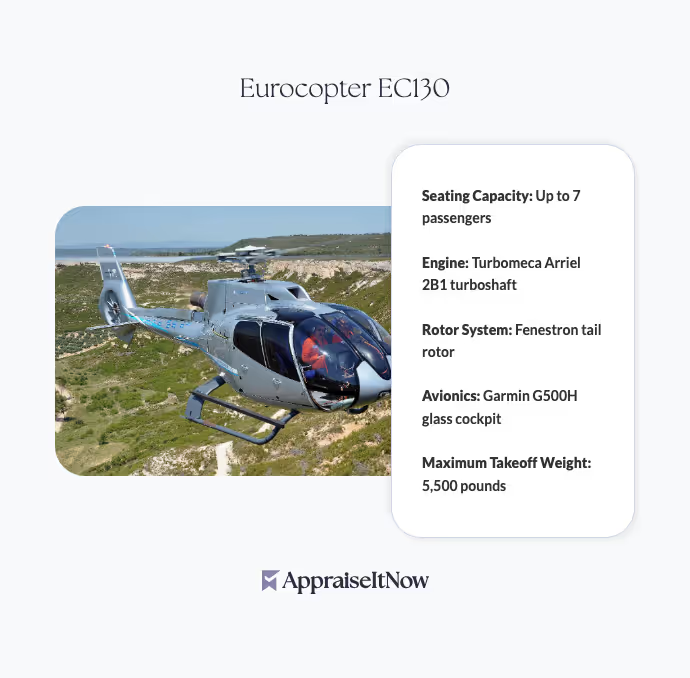
<p>Introduced in 1998, the Eurocopter EC130 has delivered over 1,000 units worldwide, establishing itself as a trusted platform for commercial tourism, private transportation, and utility operations. Understanding what drives EC130 values helps you appreciate why professional appraisal requires technical aviation knowledge.</p>
<p>The aircraft's <strong>Turbomeca Arriel 2B1 turboshaft engine</strong> provides reliable power and maneuverability, while the distinctive <strong>Fenestron tail rotor design</strong> offers reduced noise and enhanced safety compared to conventional tail rotors. These engineering features directly influence operating costs and appeal to potential buyers. The <strong>Garmin G500H glass cockpit</strong> and integrated autopilot system enhance safety while reducing pilot workload, making the EC130 particularly attractive for demanding operations requiring long flight hours.</p>
<p>Your EC130's spacious cabin accommodates up to seven passengers plus pilot, making it competitive for charter and commercial applications where payload capacity affects profitability. The combination of modern technology, passenger comfort, and proven reliability positions the EC130 favorably against comparable <a href="/types/aircraft">aircraft types</a> in the light helicopter market.</p>
<h2>Understanding EC130 Market Factors</h2>
<p>Several elements significantly affect your specific aircraft's value within the $350,000-$420,000 range. Flight hours represent perhaps the most critical factor—a low-time EC130 with under 1,000 hours commands premium pricing, while aircraft approaching major inspection intervals may face value reductions. Professional appraisers examine logbooks meticulously, calculating the remaining useful life and projected maintenance costs that affect buyer interest.</p>
<p>Engine condition and remaining time before overhaul directly impacts valuation. The Arriel 2B1 engine typically requires significant overhaul investment around 3,600 hours, making this milestone a critical value inflection point. A recently overhauled engine can add $30,000-$50,000 to your aircraft's value, while an engine approaching overhaul limits may reduce value by similar amounts.</p>
<p>Avionics and equipment upgrades substantially influence EC130 values. Original equipment package versus late-model glass cockpit installations can create $40,000-$80,000 valuation differences. For those wondering about operating costs, the EC130's relatively efficient fuel consumption and straightforward maintenance contribute to its appeal and value retention compared to older <a href="/types/helicopter">helicopter designs</a>.</p>
<div class="callout note"><p><strong>Market Driver</strong></p>
<p>Well-maintained EC130s in active charter or tourism operations often command higher values than similar aircraft retired from commercial service.</p></div>
<h2>Maintenance Documentation and Its Impact</h2>
<p>Your EC130's maintenance records directly influence appraisal outcomes. Professional appraisers review detailed logbooks, maintenance records, and service bulletins to establish the aircraft's mechanical condition and compliance status. Consistent maintenance at authorized service centers typically supports higher valuations than sporadic or in-house maintenance histories.</p>
<p>Documentation requirements include airframe and engine logs, major component overhaul records, avionics software updates, and compliance with applicable airworthiness directives. Aircraft with comprehensive documentation demonstrating adherence to manufacturer recommendations typically achieve higher appraisals than comparable aircraft with incomplete records. Consider that this mirrors the documentation needs for other valuable <a href="/types/equipment-and-machinery">commercial equipment and machinery</a>—detailed records establish authenticity and value.</p>
<h2>Selecting Your Professional Appraiser</h2>
<p>When seeking an EC130 appraisal, appraiser credentials matter significantly. Look for professionals holding certifications from recognized aviation organizations including <strong>AAA (American Society of Appraisers), ISA (International Society of Appraisers), ASA (American Society of Appraisers), CAGA (Canadian Aerial Applicators Guild), or AMEA (Aircraft Mechanics Association)</strong>. These credentials indicate specialized knowledge, adherence to professional standards, and participation in ongoing education.</p>
<p>The appraiser should possess specific experience with turbine-powered helicopters and ideally with the EC130 platform specifically. Ask about their familiarity with current market conditions and recent comparable sales. An appraiser who can discuss recent EC130 transactions, understand Fenestron technology, and evaluate Garmin avionics demonstrates the specialized expertise your valuation requires. For context on evaluating professional expertise, review our guidance on <a href="/blog/how-to-choose-the-right-appraiser-for-your-equipment-and-machinery">choosing the right appraiser</a> to understand credential standards applicable to specialized assets.</p>
<div class="callout tip"><p><strong>Appraiser Selection</strong></p>
<p>Request references from other helicopter owners and verify USPAP (Uniform Standards of Professional Appraisal Practice) compliance—this ensures your appraisal meets legal and financial institution standards.</p></div>
<h2>What the Appraisal Process Involves</h2>
<p>A comprehensive EC130 appraisal typically includes physical inspection of the aircraft, detailed review of maintenance records, and market analysis comparing recent sales. The appraiser will examine the airframe for corrosion, cracks, or damage; evaluate engine condition through borescope inspection if warranted; assess avionics functionality and upgrade status; and review all available documentation.</p>
<p>The physical inspection covers both the exterior—looking for signs of hard landings, exposure, or inadequate maintenance—and the interior cabin condition, including upholstery, windows, and equipment functionality. Avionics systems receive particular attention, as recent upgrades or necessary modernization significantly affect both value and marketability to commercial operators.</p>
<p>The appraisal report itself should provide clear documentation suitable for insurance companies, financial institutions, or legal proceedings. A quality appraisal details the aircraft's specifications, condition assessment, comparable sales analysis, and final valuation with supporting rationale. This documentation proves invaluable whether you're obtaining insurance coverage, applying for financing, or preparing for a transaction.</p>
<h2>Timeline and Practical Considerations</h2>
<p>How long does an aircraft appraisal take? For most EC130 aircraft, expect the complete process to require one to two weeks from initial inspection through final report delivery. The actual physical inspection typically takes four to six hours, though this varies based on the aircraft's storage location and accessibility. Additional time accounts for record review, market research, and report preparation.</p>
<p>Planning your appraisal timing strategically matters when coordinating with other aviation activities. Schedule appraisals between inspection cycles, after completed maintenance rather than before, and before major overhauls if timing permits. This ensures your appraisal reflects the aircraft in its optimal condition and documentation state.</p>
<p>Can you get an appraisal online or is an in-person inspection required? While preliminary information can be gathered remotely—reviewing logbooks, discussing configuration, and establishing baseline values—a professional appraisal for insurance, legal, or significant financial purposes requires physical inspection. The visual and mechanical assessment components cannot be accurately completed without hands-on evaluation of your specific aircraft.</p>
<h2>Valuation Within the Market Range</h2>
<p>Understanding where your EC130 falls within the $350,000-$420,000 range requires considering multiple factors. A high-time aircraft in basic configuration with older avionics might appraise near the lower range, while a low-time EC130 with recent avionics upgrades and excellent documentation could exceed $420,000 in certain markets. The specialized nature of aircraft valuation makes the appraiser's professional judgment and market knowledge invaluable.</p>
<p>For context on how specialized assets are valued, explore our resources on <a href="/blog/understand-the-value-of-your-equipment-and-machinery-with-an-appraisal">understanding equipment and machinery appraisals</a>. While aircraft present unique complexities beyond standard machinery, the fundamental principles—condition assessment, market analysis, and documentation review—apply similarly.</p>
<h2>Beyond Purchase and Sale</h2>
<p>Consider timing your appraisal strategically for estate planning, insurance updates, or tax purposes. Many helicopter owners should update valuations every two to three years to reflect market changes and individual aircraft condition evolution. This proactive approach ensures your insurance coverage remains adequate and your financial documentation stays current.</p>
<div class="callout note"><p><strong>Key Takeaway</strong></p>
<p>A certified EC130 appraisal from a credentialed professional provides accurate valuation documentation essential for insurance, financing, legal proceedings, or transaction purposes. By understanding what drives helicopter values and selecting an appraiser with specialized aviation expertise, you gain confidence in your aircraft's worth and protect your significant investment.</p></div>