









<h1>How to Get Your Dodge Viper RT10 Appraised</h1>
<p>The Dodge Viper RT10 represents one of America's most iconic sports cars, and understanding its current value is essential whether you're buying, selling, or seeking insurance coverage. With market estimates ranging from <strong>$12,000 to $22,000</strong>, getting a professional appraisal ensures you have accurate documentation backed by market expertise and credentialed appraisers.</p>
<h2>Understanding Dodge Viper RT10 Value</h2>
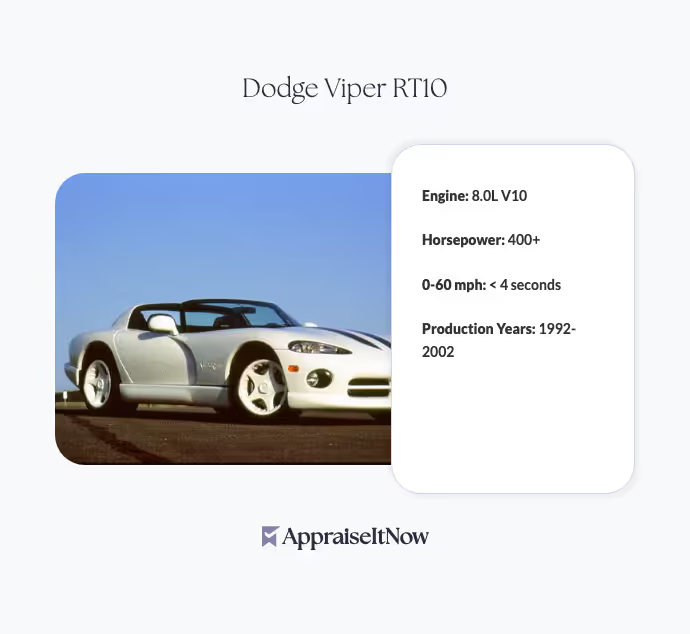
<p>The Dodge Viper RT10's worth hinges on a legendary reputation built over three decades. Produced from 1992 to 2002, this roadster commands attention through its raw performance and distinctive design. The original roadster configuration—featuring that signature long hood, low-slung stance, and iconic side exhaust pipes—has become highly sought-after among collectors and enthusiasts who appreciate uncompromising automotive engineering.</p>
<p>What makes determining Dodge Viper RT10 value so critical? The price spread between a well-maintained example and one requiring restoration can easily exceed <strong>$5,000 to $10,000</strong>. Market value depends heavily on condition, mileage, provenance, and mechanical integrity rather than simply the year of manufacture. A 2001 Dodge Viper RT 10 in excellent condition can fetch prices at the higher end of the spectrum, while a 1994 Dodge Viper RT 10 with higher mileage might appraise considerably lower despite its earlier production date.</p>
<div class="callout tip"><p><strong>Market Insight</strong></p>
<p>Dodge Vipers with documented service records, low mileage, and original components typically command 15-25% premiums over comparable vehicles with incomplete maintenance histories.</p></div>
<h2>The V10 Engine: Heart of RT10 Value</h2>
<p>At the core of every Dodge Viper RT10 sits a <strong>8.0-liter V10 engine</strong> producing over <strong>400 horsepower</strong>—a specification that fundamentally drives both the vehicle's legendary status and its appraisal value. This powerplant accelerates the RT10 from 0 to 60 mph in under 4 seconds, making it competitive with supercars commanding triple the price. The mechanical condition of this engine directly impacts your appraisal, as rebuilding or significant repairs can cost $15,000 to $30,000.</p>
<p>The V10 engine configuration is uniquely Viper; no other American sports car of that era offered this displacement and performance combination. This exclusivity creates a stable collector base and strong market demand. If you're wondering whether the Dodge Viper has a V10 or V12 engine, rest assured—it's definitively a V10, and this specification alone contributes substantially to the vehicle's identity and value.</p>
<h2>Performance Specifications and Appraisal Factors</h2>
<p>When appraisers evaluate your Dodge Viper RT10, they examine performance data that distinguishes it from competitors. The top speed of a 1992 Dodge Viper RT 10 reaches approximately <strong>185 mph</strong>, representing remarkable capability for a car now 30+ years old. This performance pedigree attracts collectors seeking authentic driving experiences rather than merely collectible status.</p>
<p>Professional appraisers also assess how the RT10 compares to contemporary competitors. Is a Viper faster than a Hellcat? Modern comparisons favor the Hellcat's acceleration, but the RT10's lightweight roadster design and V10 character create an entirely different driving proposition that appeals to different market segments. Similarly, asking whether a Corvette or Viper is faster depends on specific model years and configurations, but the Viper's raw, unfiltered driving experience maintains devoted collector followings that support strong market values.</p>
<p>The mechanical condition of your specific vehicle—whether it's a 2000 Dodge Viper RT 10, a mid-1990s model, or an early production example—significantly influences appraisal results. Transmission integrity, cooling system performance, and electrical components all affect the valuation, as does the presence of common Viper problems that experienced collectors understand.</p>
<div class="callout note"><p><strong>Appraiser Focus</strong></p>
<p>Certified appraisers examine engine compression ratios, transmission synchronization, and suspension geometry to establish mechanical soundness beyond simple cosmetic assessment.</p></div>
<h2>Why Dodge Vipers Are Rare: Rarity Drives Value</h2>
<p>Production scarcity fundamentally supports Dodge Viper RT10 valuations. Fewer than 400 first-generation roadsters were produced each year during the model's 11-year production run, making well-maintained examples increasingly difficult to locate. This rarity—often prompting the question "Why are Dodge Vipers so rare?"—stems from limited market demand relative to more conventional sports cars and the Viper's extreme nature that appeals only to dedicated enthusiasts.</p>
<p>The original RT10 design, produced from 1992 through 1997, represents the purest expression of Viper philosophy. These earliest examples often command premiums when condition permits, as they represent the model's foundational achievement. Production numbers ensure that unlike mass-market vehicles with thousands of examples available, your Dodge Viper RT10 possesses inherent scarcity value that professional appraisers recognize and document.</p>
<h2>Professional Appraisal for Your Dodge Viper RT10</h2>
<p>Getting your Dodge Viper RT10 appraised involves more than visual inspection; it requires expertise in vintage and collectible vehicles, understanding of market trends, and knowledge of the specific factors that differentiate valuable examples from mediocre ones. AppraiseItNow connects you with certified appraisers credentialed through organizations like ASA, AAA, and ISA who specialize in automotive valuation.</p>
<p>During a professional appraisal, your RT10 undergoes comprehensive evaluation covering mechanical systems, cosmetic condition, interior preservation, paint integrity, undercarriage assessment, and historical documentation. This mirrors the detailed approach used when <a href="/blog/appraising-vintage-and-collectible-cars-determining-their-true-worth">appraising vintage and collectible cars</a>, ensuring nothing affecting value receives overlooked status. Appraisers document findings with high-resolution photography and detailed condition notes suitable for insurance purposes, sale listings, or collection management.</p>
<h2>Valuation in Context: The $12,000–$22,000 Range</h2>
<p>The <strong>$12,000 to $22,000</strong> appraisal range reflects the spectrum between well-used examples requiring cosmetic restoration and excellent condition vehicles with complete service histories. A Dodge Viper appraised at $15,000 typically shows honest wear, strong mechanical function, and honest mileage in the 80,000-mile range. Examples commanding $20,000+ typically demonstrate low mileage (under 40,000 miles), excellent paint and interior, full service records, and minimal prior accident history.</p>
<p>Your specific appraisal value depends on factors beyond simple model year. The 1994 Dodge Viper RT 10 commands different pricing than the 2002 model year despite both falling within the same RT10 designation. Early production examples benefit from originality premiums, while later models may offer modernized features and improved reliability. Professional appraisers navigate these distinctions through detailed market analysis and comparable sales research.</p>
<h2>Insurance and Legal Documentation</h2>
<p>One critical reason to obtain a professional appraisal involves insurance protection. Standard auto policies typically cap coverage at actual cash value based on industry databases, which often undervalue specialty vehicles like the RT10. Working with AppraiseItNow ensures your <a href="/types/automobile">automobile appraisal</a> provides documentation accepted by insurance companies, creating agreed-value or stated-value policies that protect your full investment.</p>
<p>Legal situations—including divorce settlements, estate distribution, or charitable donations—frequently require certified appraisals from credentialed professionals. These formal assessments carry weight with courts and financial institutions that informal market estimates cannot match. Professional documentation proves particularly valuable when the difference between accurate valuation and undervaluation represents thousands of dollars.</p>
<div class="callout tip"><p><strong>Documentation Value</strong></p>
<p>Keep your professional appraisal report alongside maintenance records, photographs, and purchase documentation—this comprehensive file maximizes both insurance protection and resale appeal.</p></div>
<h2>Condition Assessment Components</h2>
<p>When you submit your Dodge Viper RT10 for professional appraisal, expect evaluation across multiple condition categories. Engine bay cleanliness, hose integrity, and fluid levels signal maintenance history. Paint depth measurement and clear coat assessment reveal refinish history. Interior preservation—including steering wheel condition, seat fabric integrity, and dashboard cracking—directly affects value. Mechanical testing confirms engine starting, transmission engagement, and brake responsiveness.</p>
<p>Understanding how each component contributes to overall value helps you prioritize any pre-appraisal maintenance. Addressing fluid leaks, replacing worn wiper blades, or addressing interior wear costs far less than allowing these issues to suppress appraisal results. However, avoid cosmetic work immediately before appraisal, as appraisers recognize and document recent refreshing that may temporarily mask underlying concerns.</p>
<h2>Market Trends and Future Outlook</h2>
<p>The collectible sports car market has shown steady appreciation, particularly for American domestic legends like the Dodge Viper RT10. Younger collectors increasingly appreciate the mechanical simplicity and analog driving experience the RT10 provides compared to modern computer-mediated vehicles. This demographic shift supports stable or appreciating values, though the RT10's niche market means demand won't match mass-market collectibles.</p>
<p>Professional appraisers monitor market trends through comparative sales analysis, auction results, and collector community activity. When seeking professional evaluation through AppraiseItNow, you benefit from this ongoing market intelligence, ensuring your appraisal reflects current conditions rather than outdated assumptions. This contemporary market perspective proves invaluable whether you're planning to sell soon or establishing long-term portfolio value.</p>
<h2>Getting Started with Your Appraisal</h2>
<p>The process of getting your Dodge Viper RT10 appraised begins with documenting vehicle specifics—model year, mileage, current condition description, and location. You'll submit photographs showing the overall vehicle, engine bay, interior, and any known damage or concerns. Experienced appraisers then schedule an in-person inspection, typically requiring 1-2 hours for thorough assessment.</p>
<p>Throughout the <a href="/blog/a-simple-guide-to-automobile-appraisal-services">automobile appraisal process</a>, maintain open communication with your appraiser about the appraisal's purpose—insurance, sale preparation, estate purposes, or collection documentation. This context helps appraisers focus on aspects most relevant to your needs while ensuring comprehensive coverage of value-determining factors. The result is a detailed, credible report that serves your specific objectives.</p>
<div class="callout note"><p><strong>Key Takeaway</strong></p>
<p>A professional Dodge Viper RT10 appraisal provides certified documentation supporting insurance coverage, resale confidence, or legal proceedings. Whether your RT10 represents a cherished collection piece or an investment vehicle, expert valuation ensures you understand its true market position and can make informed decisions about ownership, sale, or estate planning.</p></div>